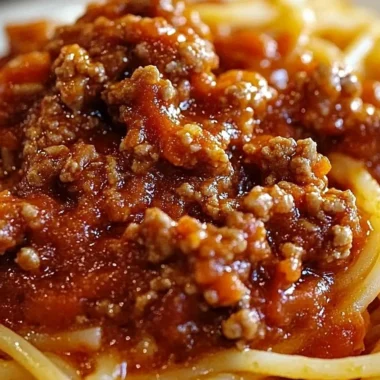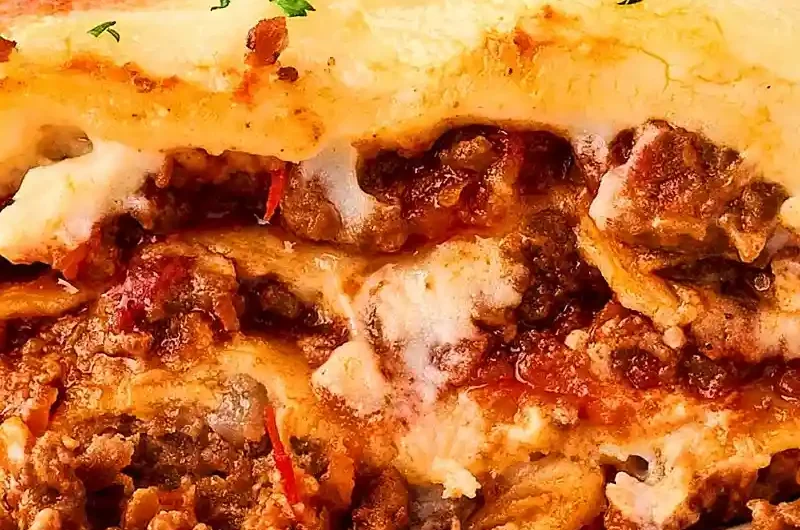
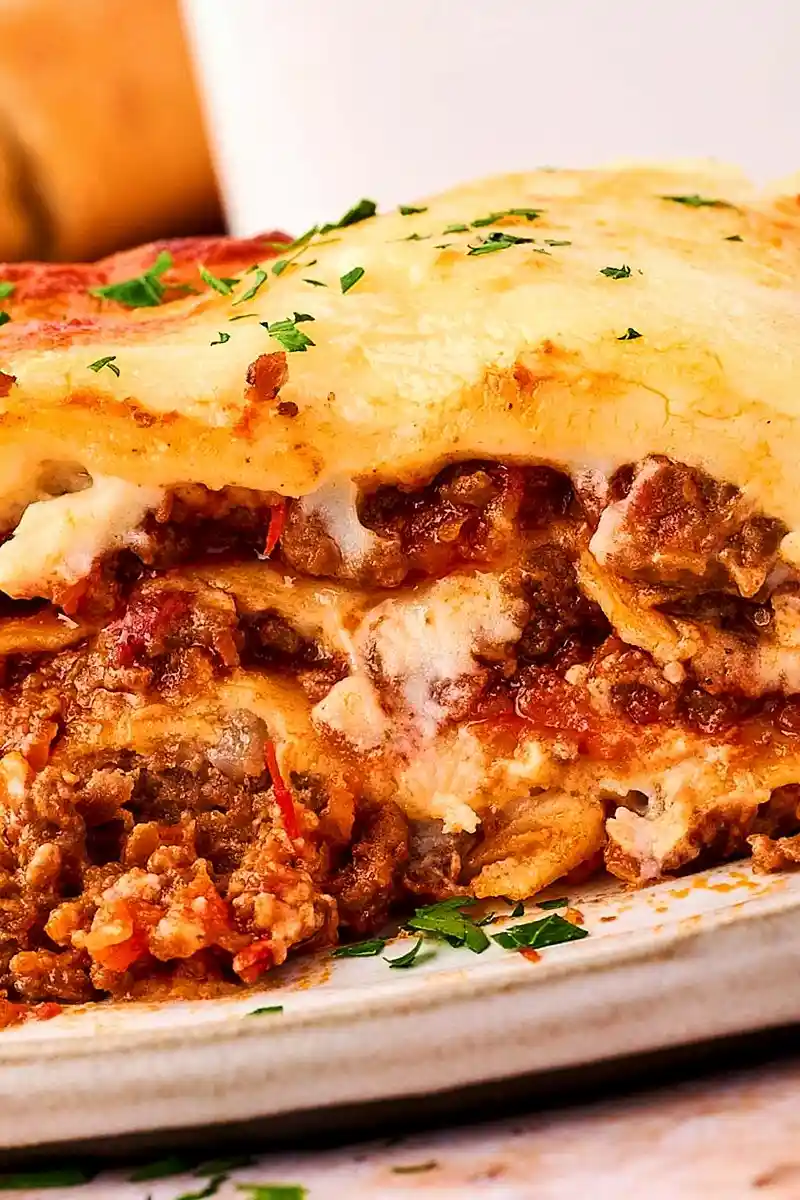
This hearty lasagna features a slow-simmered meat sauce and a rich, creamy Béchamel for a traditional taste. It is a filling, reliable meal that provides excellent leftovers for the week.
List of ingredients
- 2 tablespoons olive oil – used for sautéing the base vegetables.
- 1 medium onion, finely chopped (about 1 cup) – adds aromatic depth.
- 2 medium carrots, very finely diced (about 3/4 cup) – adds subtle sweetness.
- 2 sticks celery, very finely diced (about 3/4 cup) – provides a savory base.
- 3 cloves garlic, minced – for pungent, aromatic flavor.
- 1 pound ground beef – the primary protein for the sauce.
- 1 pound ground turkey or beef – replaces pork sausage for safety.
- 1/4 cup tomato paste – thickens the sauce and concentrates flavor.
- 2 teaspoons Italian seasoning – a blend of dried herbs.
- 1 cup beef broth – replaces red wine for an alcohol-free liquid.
- 1 (28-oz) can crushed tomatoes – the main body of the sauce.
- 2 teaspoons balsamic vinegar – adds a touch of acidity.
- 2 bay leaves – adds a herbal note during simmering.
- 1 teaspoon sugar – optional, used to balance acidity.
- Salt and pepper – to taste.
- 8 tablespoons butter – base for the white sauce roux.
- 3/4 cup flour – thickener for the Béchamel sauce.
- 5 cups milk – the liquid base for the creamy sauce (use 4-1/2 cups if adding ricotta).
- 1 cup grated Parmesan – for saltiness in the Béchamel (reduce to 1/2 cup if using ricotta).
- 1 cup ricotta cheese – optional for extra creaminess.
- 1/8 teaspoon ground nutmeg – adds a classic nutty flavor to the white sauce.
- 1 (16-oz) box oven-ready lasagna sheets – about 20 noodles total.
- 1 cup grated Parmesan cheese – for the final topping.
- 1 cup shredded mozzarella cheese – for the top and optional layering.
- 2 tablespoons finely chopped fresh parsley – for optional garnish.
step-by-step instructions
- Sauté the Aromatics: Heat olive oil in a large, wide pan over medium heat. Add the onion, carrot, celery, and garlic, cooking slowly until the onion is fully softened, which usually takes 8-10 minutes.
- Brown the Meat: Increase heat to medium-high and add the ground beef and ground turkey. Cook while breaking up the meat with a spoon until it is thoroughly browned.
- Concentrate the Flavor: Lower heat to medium and stir in the tomato paste, Italian seasoning, salt, and pepper. Cook for 1-2 minutes without burning the paste to allow the flavor to roast.
- Deglaze and Reduce: Pour in the beef broth, scraping any browned bits from the bottom of the pan. Simmer the liquid until it has reduced by about one-third.
- Simmer the Sauce: Stir in the crushed tomatoes and balsamic vinegar, then add the bay leaves. Bring the mixture to a boil once, then cover and simmer on low for 1-2 hours. Remove the lid and simmer for another 15 minutes until the sauce is thick and rich, then season with sugar, salt, and pepper. Let it cool to room temperature.
- Prepare the Roux: Melt butter in a saucepan over medium heat. Whisk in the flour and cook for 2-4 minutes, ensuring the flour does not brown.
- Thicken the White Sauce: Gradually whisk in the milk to prevent lumps. Reduce heat to medium-low and simmer, whisking constantly, until the sauce thickens and just begins to bubble.
- Finish the Béchamel: Stir in the Parmesan cheese and ricotta (if using), then season with ground nutmeg, salt, and pepper. Allow the sauce to cool for 15-20 minutes.
- Prepare for Assembly: Preheat your oven to 360°F (180°C). Prepare the lasagna noodles according to the package instructions and set aside 1 cup of the Béchamel sauce for the final layer.
- Begin Layering: Spread a few tablespoons of Béchamel in a 9×13 inch casserole dish. Place one layer of lasagna noodles on top.
- Add Sauce Layers: Spread one-third of the meat sauce over the noodles, then top with one-third of the remaining Béchamel sauce. You may sprinkle mozzarella here if desired.
- Repeat Process: Repeat the layers of noodles, meat sauce, and Béchamel two more times.
- Final Top Layer: Add a final layer of lasagna noodles and press down gently to ensure the sauce rises around the edges. Spread the reserved 1 cup of Béchamel over the top, then cover with the remaining Parmesan and mozzarella.
- Bake and Set: Bake for 30-45 minutes until the top is bubbly and lightly browned. Let the lasagna rest on a cooling rack for 15-20 minutes before slicing. Garnish with fresh parsley if desired.
Expert Tips for the Perfect Consistency
Use a Scale for Precise Flour Measurement
Measuring flour with a cup can lead to packing, which results in too much flour in your Béchamel. This can make the white sauce too thick or paste-like. Spoon the flour into the cup and level it with a knife, or use a digital scale for accuracy.
Maintain Low Heat During the Roux Stage
When cooking the flour and butter, ensure the heat remains at a medium level. The goal is to cook the raw taste out of the flour without browning it. If the roux browns, it will change the color and flavor of your white sauce.
Allow Sufficient Cooling Time for Sauces
Layering hot sauces directly onto noodles can sometimes lead to a mushy texture. Allow the Bolognese to cool to room temperature and the Béchamel to cool for at least 20 minutes. This helps the layers stay distinct and stable during baking.
Apply Gentle Pressure to the Final Layer
After adding the last layer of noodles, press down firmly with your palms or a spatula. This forces the sauce upward and ensures the noodles are fully submerged. This technique prevents the edges from drying out and helps the slices hold their shape.
Meat and Dairy Substitutions
Choosing the Right Meat Blend
While ground beef is standard, a mix of beef and ground turkey provides a lighter flavor while maintaining the hearty texture. Ensure the turkey is seasoned with a bit of extra salt to mimic the savoriness of traditional Italian sausages.
Alternative Milk Options for Béchamel
Whole milk provides the creamiest result, but 2% milk also works well. For a non-dairy alternative, use an unsweetened soy or oat milk, though the thickening properties may vary slightly, and you may need to simmer it longer.
Deciding Between Ricotta and No Ricotta
Traditional Italian lasagna often relies solely on Béchamel for creaminess. Adding ricotta creates a thicker, grainier texture common in American versions. If you use ricotta, remember to reduce the amount of milk and Parmesan in the Béchamel to avoid an overly loose sauce.
Using Different Pasta Sheets
If oven-ready sheets are unavailable, use traditional dried lasagna noodles. Boil them in salted water until slightly under-al dente, as they will continue to cook in the oven. Ensure they are drained thoroughly to prevent excess water in the dish.
Flavor Enhancements and Variations
Adding Garden Vegetables to the Sauce
For extra nutrition, finely dice zucchini, spinach, or mushrooms and sauté them with the onion and carrots. Ensure the vegetables are cooked down completely so they do not release too much moisture during the long simmering process.
Adjusting the Acidity of the Tomatoes
Depending on the brand of crushed tomatoes, the sauce may be more acidic than others. If the sauce tastes too sharp, add the sugar one-quarter teaspoon at a time until the flavor is balanced. Balsamic vinegar also helps round out the acidity.
Exploring Different Cheese Toppings
While mozzarella and Parmesan are classic, you can substitute some mozzarella with Provolone or Fontina for a sharper taste. Use a mix of hard and soft cheeses to get both a good stretch and a rich flavor.
Incorporating Fresh Herbs
Dried Italian seasoning is convenient, but adding fresh basil or oregano at the end of the simmering process adds a bright, fresh note. Stir in chopped fresh basil just before the sauce cools to preserve its aromatic oils.
Storage and Reheating Guidelines
Refrigerating Leftovers
Allow the lasagna to cool completely before covering it with an airtight lid or plastic wrap. Store it in the refrigerator for up to 4-5 days. Slicing the lasagna into individual portions before storing makes reheating much easier.
Freezing for Future Meals
You can freeze the assembled lasagna before baking or after it has been cooked. Wrap the dish tightly in plastic wrap and then a layer of aluminum foil to prevent freezer burn. Frozen lasagna can be kept for up to 3 months.
Best Reheating Methods
For the best texture, reheat individual slices in the oven at 350°F (175°C) covered with foil. This prevents the top from drying out while heating the center. If using a microwave, cover the slice with a damp paper towel to keep the pasta moist.
Baking from Frozen
If baking a frozen, unassembled lasagna, increase the oven temperature to 375°F (190°C). Keep the dish covered with foil for the first 30 minutes, then uncover and bake until the cheese is bubbly and the center is piping hot.
Troubleshooting Common Lasagna Issues
Preventing Watery Layers
Wateriness often occurs if the meat sauce is not simmered long enough or if the noodles were not drained. Ensure the Bolognese is thick enough to hold its shape on a spoon before layering. Additionally, ensure the Béchamel is simmered until it coats the back of a spoon.
Avoiding Dry or Hard Edges
The edges of the pasta often dry out because they are exposed to direct heat. To prevent this, ensure the sauce reaches the very edges of the pan. Covering the dish with foil for the first half of the baking time also helps trap steam.
Fixing a Lumpy White Sauce
If your Béchamel has lumps, do not panic. You can use a whisk vigorously over medium-low heat to smooth it out. If the lumps persist, pour the sauce through a fine-mesh strainer or use an immersion blender for a perfectly smooth texture.
Correcting an Overly Thick Sauce
If the Béchamel becomes too thick or paste-like, whisk in a small amount of warm milk one tablespoon at a time. Continue stirring over low heat until the sauce reaches a creamy, pourable consistency.
Serving Suggestions and Pairings
Choosing the Right Side Salad
Because lasagna is rich and heavy, a crisp, acidic salad provides a necessary balance. A leafy green salad with a balsamic vinaigrette or a cucumber and tomato salad with lemon juice works best.
Vegetable Side Dish Options
Sautéed zucchini or roasted asparagus offer a light contrast to the pasta. Garlic roasted broccoli is another excellent choice that complements the Parmesan and garlic flavors in the lasagna.
Bread Pairings for the Table
Garlic bread or a toasted baguette is a traditional accompaniment for soaking up extra sauce. For a lighter option, serve with warm focaccia seasoned with rosemary and sea salt.
Plating for Neat Slices
To serve neat slices, use a blunt knife to cut the lasagna rather than a spatula. Gently slide a thin offset spatula under the slice to release it from the pan before lifting it carefully onto the plate.
Frequently Asked Questions
How many layers do you need for lasagna?
This recipe uses four layers of pasta sheets and Béchamel, with three layers of meat sauce in between. This ratio ensures a balanced distribution of creaminess and heartiness in every bite.
What layer goes first in Lasagna?
A thin layer of Béchamel sauce should go on the bottom. This prevents the bottom layer of noodles from sticking to the pan or drying out during the baking process.
Can I assemble lasagna and cook later?
Yes, you can assemble the lasagna up to 24 hours in advance. Store it tightly covered in the refrigerator. When baking a pre-assembled dish, you may need to increase the bake time by 15-20 minutes to ensure the center is hot.
How long should you let lasagna sit before cutting?
You must let the lasagna rest for 15-20 minutes. This allows the sauces to set and the layers to firm up, which prevents the lasagna from collapsing into a messy heap when sliced.
Why does Lasagna get watery?
Common causes include undercooking the meat sauce, making the Béchamel too thin, or not draining boiled noodles properly. Resting the dish after baking also helps the structure absorb any excess moisture.
How do I serve Lasagna without it collapsing?
Follow the layering process exactly and ensure you allow the full resting time. Use a knife for cutting and a wide spatula for lifting the slice carefully onto the plate.
Does authentic lasagna have ricotta?
Classic Italian recipes typically use Béchamel instead of ricotta. However, many American versions include ricotta for added creaminess. This recipe is flexible and works well with or without it.
Print
Hearty Homemade Classic Lasagna
- Total Time: 5 hours
- Yield: 8 servings 1x
- Diet: General
Description
This is a reliable, from-scratch lasagna made with meat sauce, béchamel, and cheese. It’s not complicated, just takes a little time, and makes a solid, comforting meal with good leftovers.
Ingredients
- 2 tablespoons olive oil
- 1 medium onion, finely chopped (about 1 cup)
- 2 medium carrots, very finely diced (about 3/4 cup)
- 2 sticks celery, very finely diced (about 3/4 cup)
- 3 cloves garlic, minced
- 1 pound ground beef
- 1 pound ground beef or turkey Italian sausage
- 1/4 cup tomato paste
- 2 teaspoons Italian seasoning
- 1 cup beef broth
- 1 (28-oz) can crushed tomatoes
- 2 teaspoons balsamic vinegar
- 2 bay leaves
- 1 teaspoon sugar
- salt and pepper to taste
- 8 tablespoons butter
- 3/4 cup flour
- 5 cups milk
- 1 cup grated Parmesan
- 1 cup ricotta cheese (optional)
- 1/8 teaspoon ground nutmeg
- 1 (16-oz) box oven-ready lasagna sheets
- 1 cup grated Parmesan cheese
- 1 cup shredded mozzarella cheese
- 2 tablespoons finely chopped fresh parsley
Instructions
- Sauté Vegetables: Heat olive oil in a large pan over medium heat. Add onion, carrot, celery, and garlic; sauté until onion is softened, about 8-10 minutes.
- Brown Meat: Add ground beef and beef or turkey sausage; brown over medium-high heat, breaking up the meat.
- Season: Reduce heat to medium. Stir in tomato paste, Italian seasoning, salt, and pepper. Cook for 1-2 minutes.
- Deglaze: Pour in beef broth, scraping browned bits from the bottom. Simmer until reduced by 1/3.
- Simmer Sauce: Stir in crushed tomatoes, balsamic vinegar, and bay leaves. Bring to a boil, then simmer covered for 1-2 hours. Remove lid and simmer for 15 more minutes until thick. Season with sugar, salt, and pepper; cool to room temperature.
- Make Roux: Melt butter in a saucepan over medium heat. Whisk in flour and cook for 2-4 minutes without browning.
- Thicken Béchamel: Gradually whisk in milk. Simmer on medium-low, whisking constantly, until the sauce has thickened.
- Finish Béchamel: Stir in parmesan cheese, ricotta (if using), ground nutmeg, salt, and pepper. Allow to cool for 15-20 minutes.
- Prepare for Baking: Heat oven to 360°F (180°C). Prepare lasagna noodles according to package directions. Set aside 1 cup of Béchamel sauce.
- Layer Lasagna: Spread a thin layer of Béchamel in a 9×13 inch dish. Top with noodles, 1/3 of meat sauce, and 1/3 of remaining Béchamel (add mozzarella if desired). Repeat these layers two more times.
- Final Layer: Add a final layer of noodles, press down gently, then top with the reserved 1 cup of Béchamel, 1 cup Parmesan, and 1 cup mozzarella.
- Bake and Rest: Bake for 30-45 minutes until bubbly and browned. Let rest on a cooling rack for 15-20 minutes before slicing. Garnish with parsley.
Notes
Set aside 1 cup of Béchamel specifically for the top layer to prevent the lasagna from drying out. Do not skip the resting time after baking, or the slices may collapse.
- Prep Time: 4 hours 15 minutes
- Cook Time: 45 minutes
- Category: Main Course
- Method: Baking
- Cuisine: Italian
Nutrition
- Serving Size: 1 serving
- Calories: 818 kcal
- Sugar: 15 g
- Sodium: 1324 mg
- Fat: 55 g
- Saturated Fat: 27 g
- Unsaturated Fat: 27 g
- Trans Fat: 1 g
- Carbohydrates: 32 g
- Fiber: 4 g
- Protein: 45 g
- Cholesterol: 171 mg
Keywords: lasagna, béchamel, bolognese, Italian dinner, comfort food, oven-ready pasta