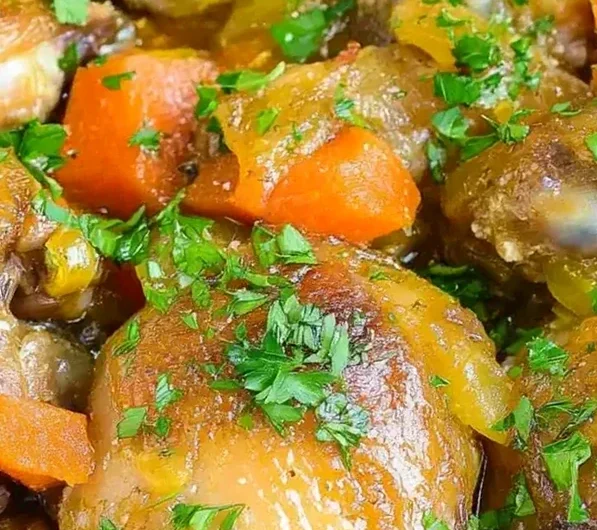
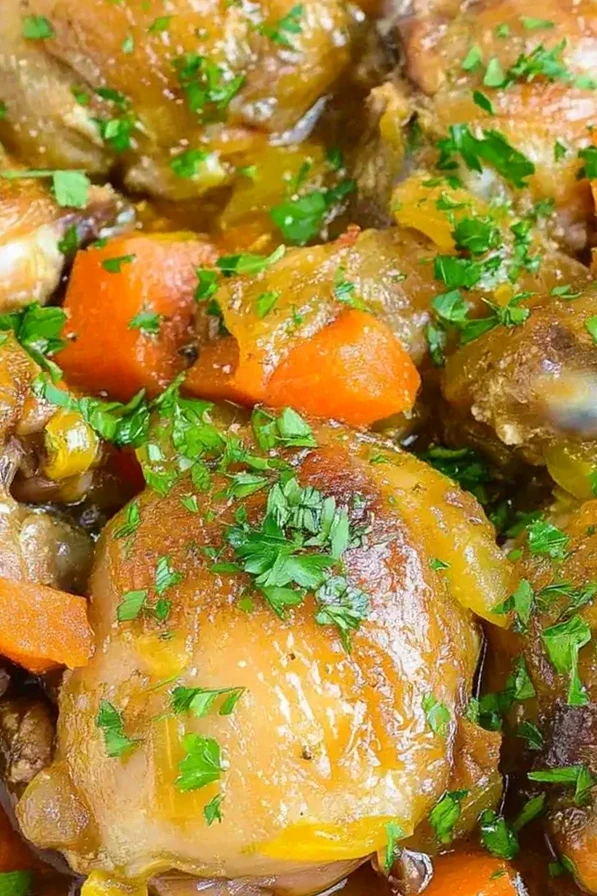
This chicken thigh osso bucco is a hearty, one-pan meal that delivers deep flavor with minimal effort. It is an ideal choice for those seeking a comforting dinner that uses simple pantry staples.
List of ingredients
- 6 chicken thighs, bone-in and skin-on – provides maximum flavor and juiciness.
- Salt and freshly cracked black pepper – used for basic seasoning.
- 2 tbsp avocado oil – a high-smoke point oil for searing.
- 1 onion, chopped – adds a sweet, aromatic base.
- 2 cloves garlic, chopped – provides pungent depth.
- 1 small carrot, peeled and diced – adds sweetness and texture.
- 1 celery stalk, chopped – contributes an earthy, savory note.
- 1 tsp dried rosemary – adds a piney, herbal aroma.
- ½ tsp dried thyme – adds subtle earthy notes.
- ½ cup chicken broth – enhances the sauce richness.
- 1 cup chicken stock – creates the braising liquid.
- 1 tbsp tomato paste – thickens the sauce and adds acidity.
- Chopped fresh parsley – used for a bright finish.
- Rice – the recommended base for serving.
step-by-step instructions
- Season the Meat: Generously apply salt and pepper to all sides of the chicken thighs to ensure a well-seasoned crust.
- Sear the Chicken: Heat avocado oil in a large skillet over medium-high heat. Sear the chicken for about 4 minutes per side until the skin is golden brown and crispy, then remove them and set aside on a plate.
- Sauté Aromatics: In the same skillet, add the chopped onion, garlic, dried rosemary, and dried thyme. Stir for approximately 2 minutes until the onion becomes translucent.
- Cook Vegetables: Incorporate the diced carrots and chopped celery into the pan. Cook for another 3 minutes to soften the vegetables.
- Deglaze and Boil: Stir in the tomato paste, chicken broth, and chicken stock. Stir well to scrape up the browned bits from the bottom of the pan and bring the mixture to a gentle boil.
- Braise the Chicken: Return the seared chicken thighs to the skillet, placing them skin-side up. Cover the pan and simmer over medium heat for 15 minutes or until the chicken is fully cooked through.
- Final Seasoning: Taste the sauce and adjust the salt and pepper levels according to your preference.
- Garnish and Serve: Sprinkle with chopped fresh parsley and serve the chicken and sauce hot over a bed of cooked rice.
Advanced Searing and Braising Techniques
Utilizing the Maillard Reaction for Flavor
Searing the chicken skin-side down first allows the Maillard reaction to occur, which transforms amino acids and sugars into complex flavor compounds. This process creates the characteristic golden-brown crust that adds depth to the overall dish. Ensure the oil is shimmering before adding the meat to prevent sticking and ensure an even sear.
Maintaining an Optimal Simmer
A gentle simmer is crucial during the final 15 minutes of cooking to prevent the chicken from toughening. Keep the heat at a medium level where small bubbles break the surface occasionally rather than a rolling boil. This controlled temperature allows the collagen in the bone-in thighs to soften without drying out the meat.
Preventing Skin Sogginess
To maintain a crispier texture on the chicken skin, you can leave the skillet lid slightly ajar during the last 3 minutes of simmering. This allows some of the steam to escape and prevents the skin from becoming overly soft. Alternatively, a quick flash under a broiler for one minute before serving can restore the crunch.
Essential Ingredient Substitutions
Alternative Cooking Fats
While avocado oil is recommended for its high smoke point, you can use light olive oil or grapeseed oil as a substitute. If you prefer a richer flavor, a small amount of clarified butter or ghee can be used for searing. Avoid using extra virgin olive oil for high-heat searing as it may smoke and develop a bitter taste.
Varying the Aromatics
If you do not have a standard onion, shallots can be used for a more delicate, sweet flavor profile. Leeks are another excellent alternative that adds a buttery depth to the vegetable base. For those who prefer less garlic, garlic powder can be used, though fresh cloves provide a more authentic aromatic quality.
Adjusting the Herbal Profile
Fresh rosemary and thyme can be used in place of dried herbs, but the ratio should be increased to three times the amount. Sage is another great addition that complements chicken and carrots well in a braise. If you lack these herbs, a high-quality Italian seasoning blend is a practical alternative.
Broth and Stock Options
Low-sodium chicken stock is preferred to maintain control over the final salt level of the dish. If chicken stock is unavailable, a concentrated bouillon cube dissolved in water works effectively. For a different flavor profile, a mix of chicken and vegetable broth can add an extra layer of garden-fresh taste.
Serving and Pairing Recommendations
Grain and Starch Alternatives
While rice is the traditional pairing, creamy polenta or mashed potatoes are excellent for soaking up the rich braising liquid. Crusty sourdough bread or a warm baguette can also be served on the side to clean the plate. Quinoa or farro are healthier grain options that provide a nutty contrast to the sauce.
Complementary Vegetable Sides
To balance the richness of the braised chicken, serve the dish with a side of steamed broccoli or roasted asparagus. A crisp green salad with a lemon vinaigrette provides a refreshing acidity that cuts through the savory sauce. Sautéed spinach or kale also pairs well with the Italian-American flavor profile.
Plating and Presentation
For a professional look, place a generous scoop of rice in the center of a wide bowl and nestle the chicken thigh on top. Spoon the reduced sauce and diced vegetables over the meat to ensure every bite is moist. Finish with a handful of fresh parsley and a crack of fresh black pepper for color and contrast.
Storage and Reheating Guide
Refrigeration and Shelf Life
Store leftovers in an airtight glass or plastic container in the refrigerator for up to three to four days. Ensure the chicken is fully cooled before sealing the lid to prevent excess moisture buildup. The flavors of the braise often deepen and improve after a night in the fridge.
Freezing Instructions
This dish freezes well for up to two months if stored in freezer-safe containers. To prevent freezer burn, wrap the containers in foil or use a vacuum sealer. Thaw the chicken in the refrigerator overnight before reheating to ensure an even temperature throughout the meat.
Best Reheating Methods
The best way to reheat this meal is on the stovetop over low to medium heat. Add a splash of chicken broth to the pan to loosen the sauce and prevent it from burning. Cover the pan and heat gently until the chicken reaches an internal temperature of 165 degrees Fahrenheit.
Meal Planning and Preparation Advice
Prepping the Mirepoix in Advance
You can chop the onion, carrot, and celery—collectively known as a mirepoix—up to 24 hours in advance. Store the chopped vegetables in a sealed container or bag in the refrigerator. This significantly reduces the active prep time on the night of cooking.
Cooking for Future Meals
This recipe is ideal for batch cooking because the quality of the braised meat holds up well over several days. Double the recipe to create multiple portions for the work week. Store the sauce and chicken together to keep the meat hydrated during storage.
Troubleshooting Common Issues
Fixing a Thin Sauce
If the sauce is too thin after the simmering process, remove the chicken and turn the heat up to medium-high. Let the liquid reduce uncovered for 5 to 7 minutes until it reaches your desired consistency. Alternatively, a small cornstarch slurry can be stirred in for a quicker thickening effect.
Managing Over-Salted Liquid
If the sauce tastes too salty, you can stir in a small amount of unsalted butter or a squeeze of fresh lemon juice. The fat in butter or the acidity in lemon helps mask the perception of excess salt. Adding a few more diced carrots can also help absorb some of the saltiness during a short simmer.
Dealing with Undercooked Chicken
If the chicken is not fully cooked after 15 minutes, it may be due to the thickness of the thighs or the pan’s heat distribution. Simply cover the pan and continue simmering for an additional 5 minutes. Always use a meat thermometer to verify that the thickest part of the thigh has reached 165 degrees Fahrenheit.
Frequently Asked Questions
Can I use boneless chicken thighs instead of bone-in?
Yes, boneless thighs can be used, but be aware that they cook faster and may not provide as much flavor to the sauce. Reduce the simmering time to 10-12 minutes to avoid overcooking the meat.
Is it possible to make this in a slow cooker?
While this is a stovetop recipe, you can sear the chicken and sauté the vegetables first, then transfer everything to a slow cooker. Cook on low for 6-8 hours or high for 3-4 hours for a similar result.
What can I use if I don’t have tomato paste?
You can substitute tomato paste with two tablespoons of tomato sauce or a tablespoon of concentrated tomato puree. Note that tomato sauce is thinner, so you may need to simmer the liquid longer to achieve a thick consistency.
Can this dish be made with chicken breasts?
Chicken breasts are not recommended for this specific braising method as they tend to dry out quickly. If you must use them, significantly reduce the simmering time to avoid a tough, rubbery texture.
How do I know when the chicken is fully cooked?
The chicken is done when the juices run clear and the internal temperature reaches 165 degrees Fahrenheit. The meat should also easily pull away from the bone with a fork.
Print
Savory Chicken Thigh Osso Bucco
- Total Time: 35 minutes
- Yield: 4 servings 1x
- Diet: General
Description
This cozy Chicken Thigh Osso Bucco is a delicious twist on the Italian classic—tender chicken thighs braised with herbs, carrots, and celery in a rich broth. No wine needed, just pure comfort in a pan!
Ingredients
- 6 chicken thighs, bone-in and skin-on
- Salt and freshly cracked black pepper
- 2 tbsp avocado oil
- 1 onion, chopped
- 2 cloves garlic, chopped
- 1 small carrot, peeled and diced
- 1 celery stalk, chopped
- 1 tsp dried rosemary
- ½ tsp dried thyme
- ½ cup chicken broth
- 1 cup chicken stock
- 1 tbsp tomato paste
- Chopped fresh parsley, for garnish
- Rice, for serving
Instructions
- Season: Season the chicken thighs with salt and pepper.
- Sear: Heat avocado oil in a large skillet over medium-high heat. Sear chicken for 4 minutes per side until golden brown. Remove and set aside.
- Sauté: In the same skillet, sauté onion, garlic, rosemary, and thyme for about 2 minutes.
- Cook Veggies: Add diced carrots and chopped celery. Cook for another 3 minutes.
- Boil: Stir in tomato paste, chicken broth, and chicken stock. Bring to a gentle boil.
- Simmer: Return chicken to the pan. Cover and simmer over medium heat for 15 minutes, until chicken is fully cooked.
- Adjust: Adjust seasoning to taste.
- Serve: Garnish with fresh parsley and serve hot over rice.
Notes
For a crispier skin, uncover the skillet during the last 3 minutes of cooking. This dish pairs wonderfully with mashed potatoes or crusty bread if rice isn’t your thing.
- Prep Time: 10 minutes
- Cook Time: 25 minutes
- Category: Main Dish
- Method: Stovetop Braised
- Cuisine: italian-American
Nutrition
- Serving Size: 1 serving
- Calories: 325 kcal
- Sugar: 3 g
- Sodium: 540 mg
- Fat: 21 g
- Saturated Fat: 6 g
- Unsaturated Fat: 13 g
- Trans Fat: 0 g
- Carbohydrates: 8 g
- Fiber: 2 g
- Protein: 24 g
- Cholesterol: 115 mg
Keywords: Chicken Thigh Osso Bucco, cozy comfort food, one-pan chicken, Italian-American