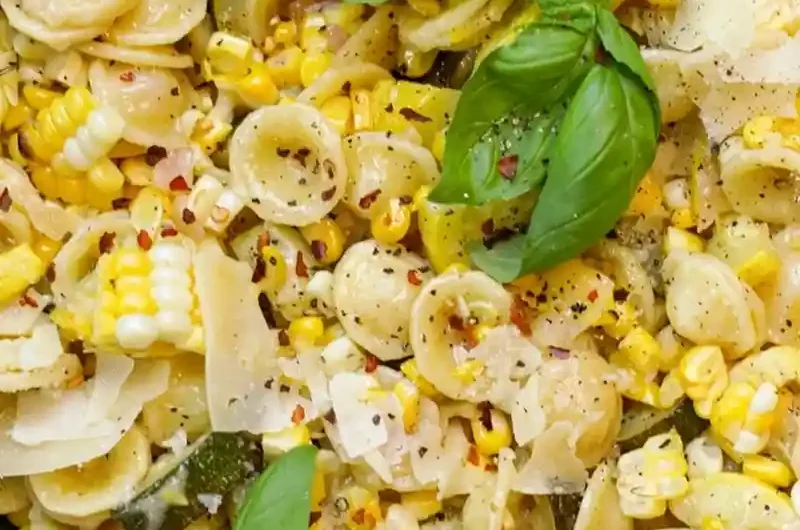
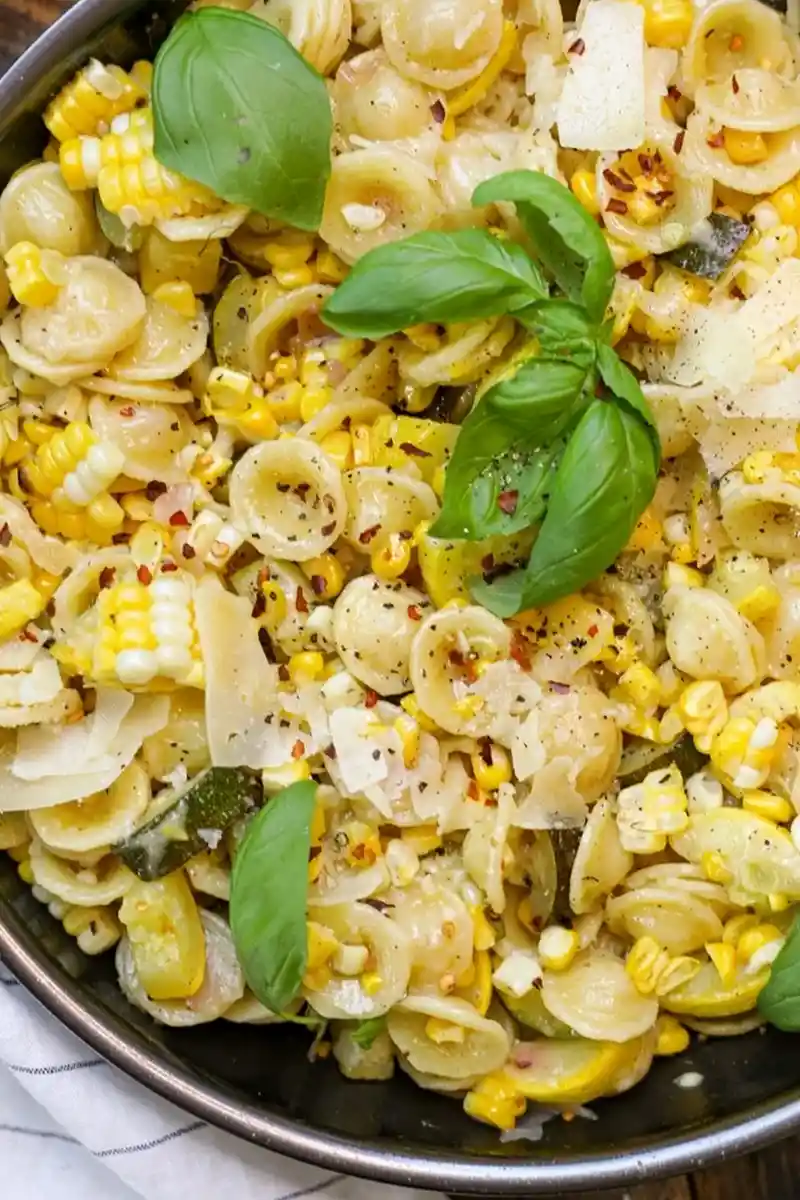
Enjoy the fresh flavors of the season with this vibrant pasta dish. It combines garden-fresh zucchini and corn in a silky lemon butter sauce for a light yet satisfying meal. This recipe is quick to assemble, making it ideal for busy weeknights during the summer.
List of ingredients
- 8 ounces orecchiette pasta – cooked until al dente.
- 1/4 – 1/2 cup pasta water – reserved from the boiling pot.
- 1 tablespoon extra virgin olive oil – used to coat the cooked pasta.
- 1-2 tablespoons avocado oil – for sautéing vegetables.
- 1/2 cup shallots – finely diced.
- 2 cloves garlic – minced.
- 1 heaping cup zucchini – diced into medium pieces.
- 1 heaping cup yellow squash – diced into medium pieces.
- 1 heaping cup corn kernels – grilled for enhanced flavor.
- 1/4 cup vegetable broth – used for deglazing the pan.
- 2 tablespoons lemon juice – freshly squeezed for brightness.
- 2 tablespoons butter – adds richness to the sauce.
- 2-3 tablespoons grated parmesan cheese – use a microbial-rennet variety.
- Pinch kosher salt – to taste.
- Few turns cracked black pepper – to taste.
- Pinch red pepper flakes – optional for a hint of heat.
- 2 tablespoons fresh basil – chiffonade cut.
step-by-step instructions
- Cook the Pasta: Bring a pot of salted water to a boil. Cook the orecchiette according to package directions until al dente. Reserve a portion of the pasta water, then drain the rest and drizzle the pasta with extra virgin olive oil.
- Sauté Aromatics: Heat avocado oil in a large nonstick sauté pan over medium-high heat. Add the diced shallots and sauté for 1-2 minutes. Stir in the minced garlic and cook until the shallots are translucent and the garlic is fragrant.
- Cook the Vegetables: Add the diced zucchini and yellow squash to the pan. Sauté until they are just tender, being careful not to overcook them into a mushy texture.
- Add Corn and Season: Stir in the corn kernels. Season the mixture with kosher salt, cracked black pepper, and red pepper flakes if you prefer a little spice.
- Deglaze the Pan: Pour in the vegetable broth to deglaze the pan, scraping up any browned bits. Allow the liquid to reduce by half.
- Incorporate Lemon: Add the fresh lemon juice to the pan. Let it simmer and reduce slightly before proceeding.
- Combine Pasta and Sauce: Add the cooked orecchiette to the pan. Gently toss the pasta with the vegetables and sauce until the liquid begins to thicken.
- Finish the Sauce: Stir in the butter and melt it into the sauce. Add the reserved pasta water as needed to reach your desired consistency.
- Add Cheese and Final Seasoning: Mix in the grated parmesan cheese. Use additional pasta water if the sauce needs more moisture. Taste and adjust salt and pepper as needed.
- Garnish and Serve: Top the dish with fresh basil chiffonade, extra shaved parmesan, and a few more turns of black pepper or red pepper flakes. Serve immediately.
Expert Cooking Tips for Best Results
Select the Ideal Pasta Shape
Orecchiette is the recommended choice because its small, ear-like cups perfectly capture the kernels of corn and diced squash. This ensures that every forkful contains a balanced mix of pasta and vegetables. If you cannot find orecchiette, short shapes like penne, farfalle, or shells are excellent alternatives.
Maintain Vegetable Texture
To keep the zucchini and squash from becoming watery or mushy, sauté them over medium-high heat. Only cook them until they are tender-crisp. Removing them from the heat just before they are fully soft prevents them from breaking down during the sauce reduction phase.
Properly Salt Your Pasta Water
Adding kosher salt to your boiling water is essential for seasoning the pasta from the inside out. However, do not over-salt the water, as you will be using some of this liquid in the final sauce. A moderate amount of salt ensures the dish is flavorful without becoming overly salty.
Emulsify the Sauce Correctly
The secret to a silky sauce is the reserved pasta water. The starch in the water helps the butter and parmesan bind with the lemon and broth, creating a cohesive emulsion. Always add the water in small increments until the sauce coats the pasta evenly.
Ingredient Substitutions and Alternatives
Swapping the Pasta Type
For those avoiding gluten, a high-quality brown rice or chickpea pasta works well. Whole grain pasta is another great option for added fiber and a nuttier flavor. Just be sure to adjust the cooking time based on the specific brand’s instructions to maintain an al dente texture.
Alternative Cooking Oils
If you do not have avocado oil, any oil with a high smoke point will work, such as grapeseed or canola oil. These allow you to sauté the vegetables at a higher temperature without the oil smoking. Avoid using extra virgin olive oil for the high-heat sautéing phase as it can burn more easily.
Experimenting with Summer Produce
While zucchini and squash are traditional, you can customize this dish with other seasonal vegetables. Diced yellow bell peppers, cherry tomatoes, or frozen peas add wonderful color and flavor. Simply add them during the sauté phase according to their specific cooking times.
Using Different Cheese Options
If you prefer a different flavor profile, Pecorino Romano can replace the parmesan for a saltier, sharper taste. For a dairy-free version, use nutritional yeast or a plant-based parmesan alternative. These options maintain the savory quality of the dish while catering to dietary needs.
Using Canned Corn Instead of Fresh
Canned corn is a convenient substitute when fresh corn is out of season. Ensure you drain the canned kernels thoroughly and rinse them under cold water to remove excess sodium. While you lose the charred flavor of grilled corn, the sweetness remains similar.
Protein Additions for a Heartier Meal
Adding Grilled Chicken
Sliced grilled chicken breast adds lean protein and makes the dish more filling. You can grill the chicken separately and toss it in at the very end with the pasta. This prevents the chicken from overcooking while the sauce reduces.
Incorporating Pan-Seared Salmon
Flaked pan-seared salmon pairs beautifully with the lemon butter sauce. Cook the salmon fillets until the skin is crispy and the center is just cooked through. Gently fold the flakes into the pasta just before serving to keep the fish intact.
Adding Crispy Tofu
For a plant-based protein, use extra-firm tofu that has been pressed and cubed. Pan-fry the tofu in avocado oil until all sides are golden brown and crispy. Toss the tofu in at the end to maintain its crunch against the tender vegetables.
Using Sautéed Shrimp
Shrimp cooks very quickly and complements the corn and lemon flavors. Sauté the shrimp in the pan before adding the shallots and garlic, then remove them and set them aside. Return them to the pan during the final tossing step to ensure they stay plump.
Serving and Presentation Suggestions
Pairing with Fresh Side Salads
A light arugula salad with a simple balsamic vinaigrette cuts through the richness of the butter sauce. Alternatively, a classic Caesar salad with crisp romaine provides a nice textural contrast. Keep the side salad simple to let the summer vegetables in the pasta shine.
Serving with Toasted Garlic Bread
Warm garlic bread is the perfect accompaniment for soaking up any remaining lemon butter sauce. Use a baguette or ciabatta, brush with melted butter and minced garlic, and toast until golden. This adds a satisfying crunch to the meal.
Plating for Elegant Dinners
For a more formal presentation, serve the pasta in wide, shallow bowls. Pile the pasta high in the center and ensure a few bright pieces of corn and zucchini are visible on top. Finish with a fresh sprinkle of basil and a drizzle of high-quality olive oil.
Adding Extra Fresh Herbs
While basil is the primary herb, adding chopped flat-leaf parsley or chives can add more depth. Stir these in at the very end to preserve their bright green color. Fresh herbs provide a professional finish and a burst of aromatic freshness.
Storage and Reheating Guidelines
Refrigeration Basics
Store any leftover pasta in an airtight container and keep it in the refrigerator. This dish will remain fresh for about 4 to 5 days. Ensure the container is sealed tightly to prevent the pasta from drying out or absorbing other fridge odors.
Microwave Reheating Method
When reheating in the microwave, place the pasta in a microwave-safe dish. Add a splash of water or vegetable broth to help loosen the sauce. Heat in short intervals, stirring in between, until the dish is warmed through.
Stovetop Reheating Process
For the best texture, reheat the pasta in a nonstick skillet over low to medium heat. Add a small amount of water or broth to reconstitute the emulsion of the butter and cheese. Gently toss the pasta until it is heated through without overcooking the vegetables.
Freezing Considerations
This specific pasta dish is not recommended for freezing. The zucchini and squash have high water content and will lose their structure, becoming mushy upon thawing. The dairy-based sauce may also separate, affecting the overall quality of the dish.
Troubleshooting Common Issues
Handling a Thin Sauce
If the sauce feels too thin or watery, continue simmering it for a few more minutes before adding the pasta. You can also stir in an extra tablespoon of grated parmesan cheese. The cheese acts as a thickening agent and helps the sauce cling to the noodles.
Preventing Mushy Vegetables
If your vegetables are too soft, you may have sautéed them for too long or used too low a heat. Next time, increase the pan temperature and reduce the cooking time. Always add the vegetables to a hot pan to ensure they sear rather than steam.
Fixing Dry Pasta
If the pasta seems dry after adding the cheese, simply stir in more reserved pasta water one tablespoon at a time. The starchy water creates a creamy consistency without needing more butter. Stir gently to avoid breaking the pasta shapes.
Managing Sauce Separation
If the sauce separates and looks oily, it usually means the heat was too high or the emulsion broke. To fix this, remove the pan from the heat and stir in a small amount of cold butter or a splash of pasta water. Vigorously toss the pasta to bring the sauce back together.
Frequently Asked Questions
Can I use frozen corn?
Yes, frozen corn can be used. Thaw it completely and drain any excess liquid before adding it to the pan to prevent the sauce from becoming too watery. For better flavor, you can quickly sauté the frozen corn in a separate pan to mimic the charred effect of grilled corn.
What is the best way to cut the squash?
Cut the zucchini and yellow squash into uniform cubes, roughly the same size as the orecchiette pasta. This ensures that the vegetables cook evenly and that you get a bit of everything in every single bite. Aim for pieces about half an inch in size.
Can I make this recipe vegan?
Yes, you can make this dish vegan by making a few simple swaps. Replace the butter with a plant-based butter alternative and use nutritional yeast or a vegan parmesan substitute. Use a microbial-rennet free plant-based cheese to maintain the savory flavor.
How long does the pasta stay fresh?
When stored in an airtight container in the refrigerator, the pasta will stay fresh for 4 to 5 days. To maintain the best quality, reheat only the portion you plan to eat rather than reheating the entire batch multiple times.
Print
Summer Vegetable Pasta with Corn and Lemon Butter Sauce
- Total Time: 30 minutes
- Yield: 4 servings 1x
- Diet: Vegetarian
Description
This Summer Pasta with Zucchini, Squash and Corn is the perfect way to celebrate the season. Loaded with fresh vegetables, bright herbs and a delicious lemon butter sauce, you’re going fall in love with this easy pasta recipe.
Ingredients
- 8 ounces orecchiette pasta
- ¼ – ½ cup pasta water
- 1 tablespoon extra virgin olive oil
- 1–2 tablespoons avocado oil
- ½ cup shallots, finely diced
- 2 cloves garlic, minced
- 1 heaping cup zucchini, diced medium
- 1 heaping cup yellow squash, diced medium
- 1 heaping cup corn kernels
- ¼ cup vegetable broth
- 2 tablespoons lemon juice, fresh squeezed
- 2 tablespoons butter
- 2–3 tablespoons grated parmesan cheese
- pinch kosher salt
- few turns cracked black pepper
- pinch red pepper flakes
- 2 tablespoons fresh basil, chiffonade
Instructions
- Boil the Pasta: Boil a pot of water and lightly season it with salt. Cook the pasta according to the package, al dente is best. Reserve some pasta water for the sauce. Drain the remaining water using a colander. Drizzle the pasta with extra virgin olive oil and set it aside.
- Prepare the Sauce and Vegetables: Heat avocado oil in a large nonstick saute pan over medium high heat. Add the shallots and saute for 1-2 minutes, then add the minced garlic and saute. Once the shallots are translucent and the garlic is fragrant, add the zucchini and squash. Saute until just tender. Do not over cook it. Next, add the grilled corn kernels and season everything with kosher salt and cracked black pepper. Option to add a pinch of red pepper flakes. Deglaze the pan with vegetable broth. Let the broth reduce by half then add the lemon juice. Let the lemon juice reduce slightly, then add the cooked pasta. Gently toss until the sauce begins to reduce, then add the butter. Add pasta water as needed. As a final step, add the grated parmesan cheese and pasta water if needed. Taste and season accordingly. Garnish with fresh basil chiffonade, extra shaved parmesan cheese, a few turns of cracked black pepper and extra red pepper flakes. Serve hot and enjoy.
Notes
Store any leftover pasta in an airtight container in the refrigerator for 4-5 days. To reheat, add the pasta to a microwave safe dish or nonstick skillet with a splash of water or broth and heat until warmed through.
- Prep Time: 15 minutes
- Cook Time: 15 minutes
- Category: Main Course
- Method: Sautéing
- Cuisine: American
Nutrition
- Serving Size: 1 serving
- Calories: 408 kcal
- Sugar: 7 g
- Sodium: 185 mg
- Fat: 15 g
- Saturated Fat: 5 g
- Unsaturated Fat: 9 g
- Trans Fat: 0.2 g
- Carbohydrates: 57 g
- Fiber: 4 g
- Protein: 11 g
- Cholesterol: 17 mg
Keywords: summer pasta, zucchini, squash, corn, orecchiette, lemon butter sauce, vegetarian pasta