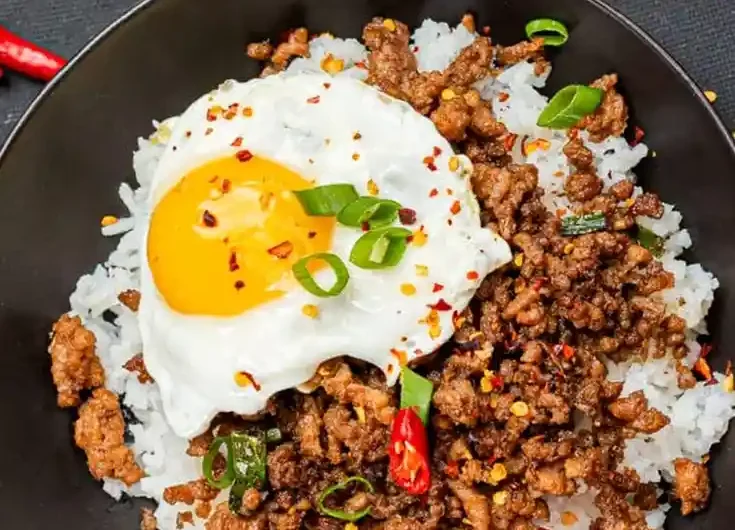
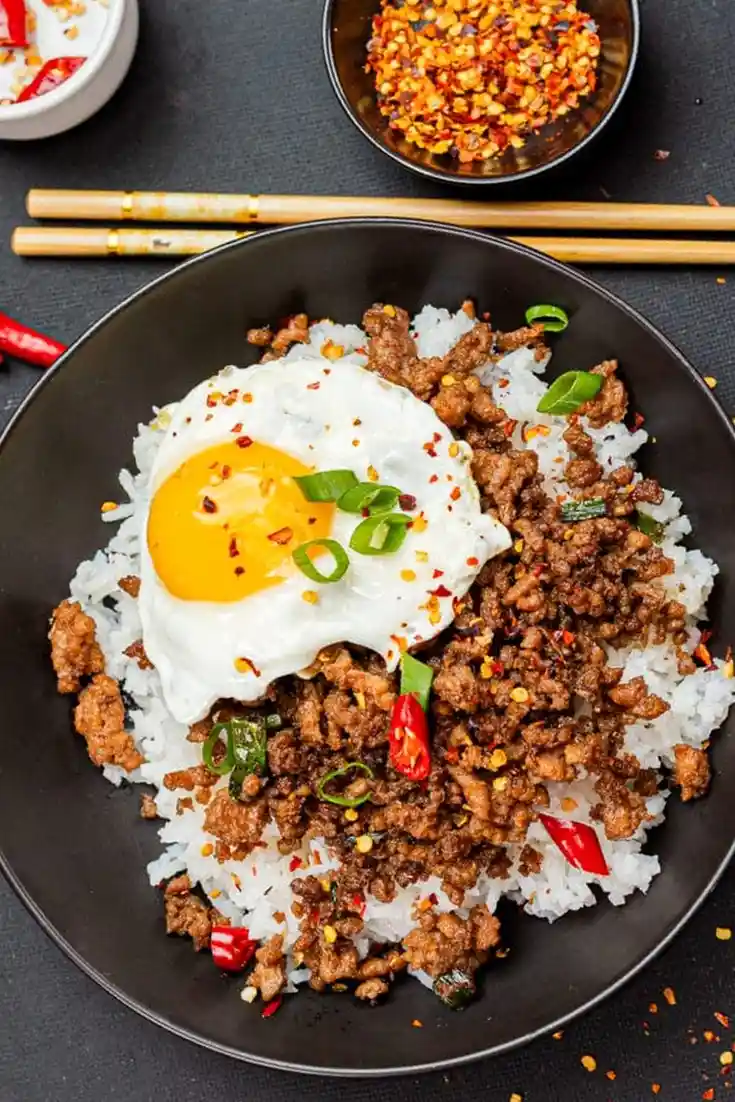
This high-protein beef bowl is a fast and nutritious meal perfect for busy weeknights. It combines savory ground beef with a sweet soy glaze and a fried egg for a satisfying, protein-rich dinner.
List of ingredients
- 1 pound ground beef – lean ground beef is recommended to keep the fat content lower.
- 3 tbsp soy sauce – provides the essential salty umami base for the glaze.
- 2 tbsp honey – adds natural sweetness to balance the acidity and salt.
- 2 tbsp rice vinegar – brings a sharp tang that cuts through the richness of the beef.
- ½ small onion, finely diced – adds a subtle sweetness and textural variety.
- 1 tsp garlic, minced – provides a pungent, savory aromatic layer.
- 1 tsp ginger, minced – adds the signature warm, spicy depth of Korean cuisine.
- ½ cup scallions, sliced – used as a fresh, crisp garnish.
- 4 eggs – used to top each bowl for added protein and a creamy texture.
- Fresh chilies, sliced – optional addition for those who prefer a spicy kick.
- 2 cups cooked rice – serves as the filling base for the beef and toppings.
step-by-step instructions
- Brown the Beef: In a skillet over medium heat, cook the ground beef until it is completely browned. Drain any excess fat from the pan to ensure the sauce adheres better to the meat.
- Sauté Aromatics: Stir in the finely diced onion and minced garlic. Continue cooking for approximately 2 minutes until the vegetables are soft and fragrant.
- Simmer the Sauce: Pour in the soy sauce, honey, and rice vinegar. Stir the mixture thoroughly and let it simmer for 2 to 3 minutes until the sauce thickens slightly and coats the beef.
- Assemble the Bowls: Scoop steamed rice into four bowls and top with the glazed beef. Garnish each serving with sliced scallions, fresh chilies, and a fried egg.
Optimal Cooking Techniques
Choosing the Correct Beef Lean-to-Fat Ratio
Using 90% lean ground beef is ideal for this recipe because it minimizes the amount of grease that needs to be drained. If you use a higher fat ratio, such as 80/20, ensure you drain the skillet thoroughly before adding the aromatics. Excess fat can prevent the soy-honey glaze from clinging to the meat, resulting in a watery sauce.
Achieving the Perfect Jammy Egg
To get a runny yolk that creates a natural sauce for the rice, fry your eggs on medium-low heat. Crack the egg into a lightly oiled pan and cook for about 2 to 3 minutes without flipping. This ensures the whites are fully set while the center remains liquid and rich.
Preventing Garlic from Burning
Garlic has a low burn point and can become bitter if exposed to high heat for too long. Always add the minced garlic after the beef has already browned and the pan temperature has stabilized. Sautéing for only 2 minutes is sufficient to release the oils without scorching the garlic.
Preparing Fluffy Rice for Better Texture
Rinse your rice under cold water until the water runs clear to remove excess surface starch. This prevents the grains from clumping together and ensures a fluffy texture that absorbs the beef glaze efficiently. Using a rice cooker or the absorption method on a stovetop works best for this dish.
Strategic Ingredient Substitutions
Alternative Natural Sweeteners
If you do not have honey, maple syrup is an excellent substitute that provides a similar viscosity and sweetness. Brown sugar also works well and adds a slight molasses depth to the sauce. Use an equal 1:1 ratio for these replacements.
Lean Protein Alternatives
Ground turkey or ground chicken can be used as a leaner substitute for beef. Because poultry is milder in flavor, you may want to add an extra pinch of black pepper or a small amount of toasted sesame oil. Increase the cooking oil slightly if using very lean turkey to prevent sticking.
Low-Carb Base Options
For a low-carb or keto-friendly version, replace the white rice with cauliflower rice. Sauté the cauliflower rice in a separate pan with a touch of oil for 5 minutes before assembly. Alternatively, serve the beef mixture inside large romaine lettuce leaves for a fresh wrap style.
Soy-Free Umami Options
To make this recipe soy-free, replace the soy sauce with coconut aminos. Coconut aminos are naturally sweeter and lower in sodium, so you may need to reduce the honey by one tablespoon to maintain the flavor balance. The result is a slightly lighter but still savory glaze.
Flavor Enhancements and Variations
Integrating Fresh Vegetables
You can increase the nutritional value by adding shredded carrots, snap peas, or diced bell peppers to the beef. Sauté these vegetables along with the onions and garlic. This adds color, crunch, and essential vitamins to the meal without altering the core flavor profile.
Adjusting the Heat Level
While fresh chilies provide a clean heat, adding a tablespoon of Gochujang (Korean chili paste) creates a thicker, more complex spicy glaze. If you prefer a vinegar-based heat, a drizzle of Sriracha over the finished bowl is a practical addition.
Adding Nutty Aromatics
Toasting sesame seeds and stirring them into the beef at the very end adds a nutty flavor and professional visual appeal. A teaspoon of toasted sesame oil added after the heat is turned off preserves the oil’s delicate aromatic compounds and enhances the overall scent.
Detailed Meal Prep and Storage
Safe Refrigeration Procedures
Allow the cooked beef mixture to cool to room temperature before sealing it in an airtight container. Sealing hot food creates condensation, which can make the beef soggy and reduce the shelf life. Once cooled, the beef can be stored in the refrigerator for up to 4 days.
Maintaining Topping Freshness
Store the scallions, sliced chilies, and eggs in separate containers. Fresh greens will wilt if stored with the cooked meat, and fried eggs do not reheat well. Adding these fresh toppings immediately before serving ensures the best texture and flavor.
Freezing the Beef Base
The beef and sauce mixture freezes exceptionally well for up to 2 months. Use freezer-safe glass or plastic containers and leave a small amount of headspace for expansion. Do not freeze the rice or the eggs, as their textures degrade significantly during the freezing and thawing process.
Professional Reheating Methods
To reheat the beef, use a skillet over medium heat with a splash of water or beef broth. This restores the glossy consistency of the soy-honey glaze and prevents the meat from drying out. If using a microwave, cover the dish to trap steam and heat in short bursts, stirring in between.
Essential Kitchen Equipment
Choosing the Right Skillet
A large stainless steel or cast-iron skillet is preferred for this recipe because these materials distribute heat evenly. This allows the ground beef to sear and brown properly, which is essential for developing a deep flavor through the Maillard reaction. Non-stick pans work but may not brown the meat as effectively.
Utilizing a Rice Cooker
A rice cooker ensures consistent results and frees up stovetop space while you prepare the beef. If you do not have one, a heavy-bottomed pot with a tight-fitting lid is necessary to prevent steam from escaping during the simmering process.
Using a Sharp Chef’s Knife
Finely dicing the onion and mincing the ginger requires a sharp knife to avoid bruising the aromatics. Clean cuts ensure that the vegetables cook evenly and integrate seamlessly into the sauce rather than remaining in large, chunky pieces.
Common Cooking Pitfalls to Avoid
Overcrowding the Pan
Adding too much meat or vegetables to a small pan lowers the surface temperature, causing the beef to steam in its own juices rather than brown. If you are doubling the recipe, cook the beef in batches to ensure a proper sear and better flavor development.
Skipping the Fat Drainage
Failing to drain the excess fat after browning the beef can lead to a greasy sauce. The oil separates from the soy-honey mixture, creating a layer of fat on top of the bowl. Draining the pan ensures the glaze coats the beef uniformly.
Overcooking the Beef
Cooking the beef for too long after adding the sauce can lead to a dry, tough texture. Once the sauce has thickened and the meat is glazed, remove the pan from the heat immediately. The residual heat will continue to cook the meat slightly as you plate the bowls.
Nutritional Component Analysis
High-Quality Protein Sources
The combination of lean ground beef and eggs provides a complete amino acid profile. This makes the dish excellent for muscle recovery and satiety. By using lean beef, you maximize the protein-to-calorie ratio, fitting the goals of a high-protein diet.
Role of Complex Carbohydrates
Rice provides the necessary glucose for energy, especially after a workout. For slower-digesting carbohydrates, you can substitute white rice with brown rice or quinoa. These options increase the fiber content, which helps regulate blood sugar levels.
Balanced Healthy Fats
The fats found in the egg yolk provide essential fat-soluble vitamins and omega-3 fatty acids. By draining the excess beef fat, you control the saturated fat intake while maintaining the creamy mouthfeel provided by the egg.
Frequently Asked Questions
Can I make this recipe without fresh ginger?
Yes, you can use ground ginger as a substitute. Use 1/4 teaspoon of ground ginger for every 1 teaspoon of fresh ginger. Note that the flavor will be more concentrated and slightly less bright than the fresh version.
How long does the cooked beef stay fresh in the fridge?
The cooked beef mixture stays fresh for up to 4 days when stored in an airtight container. Ensure it is completely cooled before refrigerating to maintain quality.
What is the best rice to use for this bowl?
Short-grain white rice or Jasmine rice are the best choices due to their slightly sticky texture and fragrance. These varieties hold up well under the weight of the beef and soak up the sauce effectively.
Can I use ground turkey instead of beef?
Yes, ground turkey is a great alternative for those seeking a leaner protein. Since turkey is less flavorful than beef, you may want to add a pinch of extra salt or a teaspoon of Worcestershire sauce to enhance the savory notes.
Is it possible to make this dish vegan?
You can replace the beef with crumbled extra-firm tofu or tempeh, use coconut aminos instead of soy sauce, and replace the honey with maple syrup. Instead of a fried egg, top the bowl with sliced avocado or a marinated tofu slice.
Print
Quick High-Protein Korean Ground Beef Bowls
- Total Time: 25 minutes
- Yield: 4 servings 1x
- Diet: High Protein
Description
A quick, high-protein Korean beef bowl made with a sweet and savory soy-ginger glaze, served over rice and topped with scallions, chilies, and a jammy egg.
Ingredients
- 1 pound ground beef
- 3 tbsp soy sauce
- 2 tbsp honey
- 2 tbsp rice vinegar
- ½ small onion, finely diced
- 1 tsp garlic, minced
- 1 tsp ginger, minced
- ½ cup scallions, sliced
- 4 eggs
- Fresh chilies, sliced
- 2 cups cooked rice
Instructions
- Brown the Beef: In a skillet over medium heat, cook the ground beef until it’s nicely browned. Drain excess fat if needed.
- Build the Flavor: Stir in the onion and garlic, cooking for about 2 minutes until fragrant.
- Sauce it Up: Add soy sauce, honey, and rice vinegar. Stir well and let simmer for 2-3 minutes until slightly thickened.
- Assemble the Bowl: Serve the beef over steamed rice, then top with scallions, fresh chilies, and a fried egg.
Notes
Meal prep tip: Let the beef cool before sealing it in containers to avoid condensation and sogginess.
- Prep Time: 10 minutes
- Cook Time: 15 minutes
- Category: High Protein Lunch & Dinner Recipes
- Method: Stir-fry
- Cuisine: Asian
Nutrition
- Serving Size: 1 serving
- Calories: 536 kcal
- Sugar: 10 g
- Sodium: 838 mg
- Fat: 25 g
- Saturated Fat: 9 g
- Unsaturated Fat: 12 g
- Trans Fat: 1 g
- Carbohydrates: 35 g
- Fiber: 1 g
- Protein: 41 g
- Cholesterol: 287 mg
Keywords: Korean beef bowl, high protein, meal prep, Asian dinner, ground beef