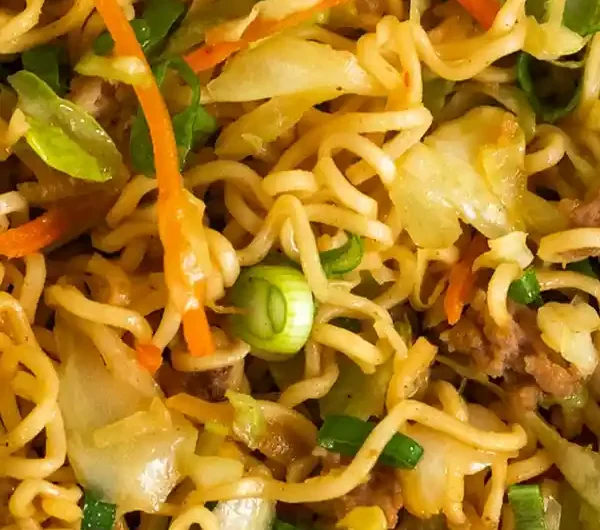
This quick skillet meal blends the savory flavors of an egg roll with the convenience of ramen noodles. It is an efficient one-pan dinner that combines protein and plenty of vegetables in a single dish.
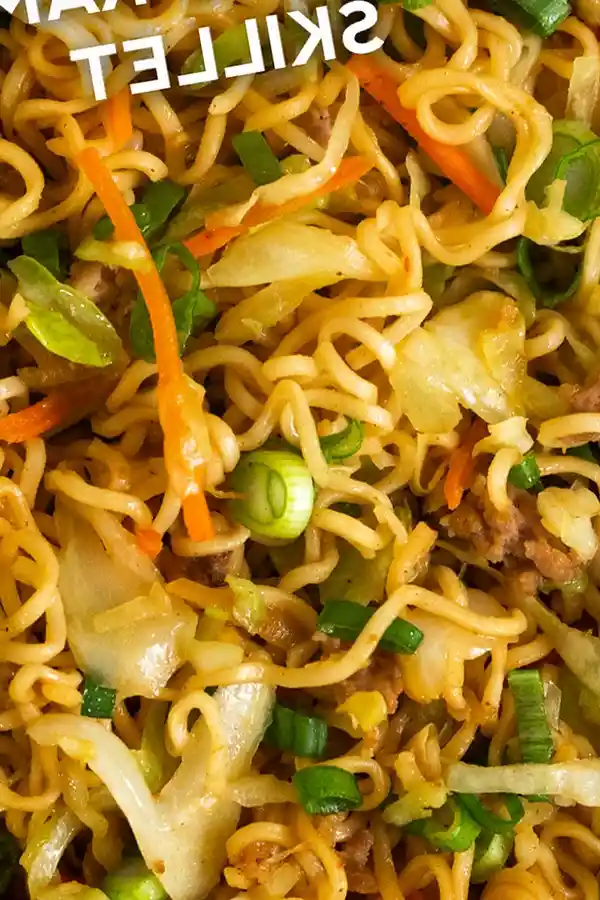
List of ingredients
- 1/4 cup low-sodium soy sauce – used for the base of the savory sauce.
- 1/2 tablespoon cornstarch – serves as the thickening agent for the glaze.
- 1 teaspoon ground ginger – adds a warm, aromatic spice.
- 2 tablespoons hoisin sauce – provides a sweet and salty depth.
- 1 tablespoon rice vinegar – adds a touch of acidity to balance the richness.
- 1/4 teaspoon red pepper flakes – provides a mild heat level.
- 3 (3 oz) packages ramen noodles – the primary carbohydrate base.
- 2 tablespoons sesame oil, divided – used for both coating noodles and sautéing vegetables.
- 1 small yellow onion, thinly sliced – provides a foundational savory flavor.
- 4 cloves garlic, minced – adds pungent aroma and taste.
- 1 lb ground turkey – a lean protein substitute for the filling.
- 1 large red bell pepper, thinly sliced – adds color and a mild sweetness.
- 1 (16 oz) bag coleslaw mix with carrots – a convenient blend of shredded cabbage and carrots.
- 2 green onions, finely chopped – used for a fresh finish and garnish.
step-by-step instructions
- Prepare the sauce: In a small bowl, whisk the cornstarch into one tablespoon of the soy sauce until completely dissolved. Whisk in the remaining soy sauce, ginger, hoisin sauce, rice vinegar, and red pepper flakes, then set the mixture aside.
- Cook the noodles: Discard the seasoning packages from the ramen. Boil the noodles for one minute less than the package directions suggest. Drain the noodles and toss them with one tablespoon of sesame oil to prevent sticking.
- Sauté the onion: Heat the remaining tablespoon of sesame oil in a large skillet or wok over high heat. Add the thinly sliced yellow onion and cook for approximately 3 minutes until softened.
- Brown the protein: Reduce the heat to medium-high and add the minced garlic, cooking for 30 seconds. Push the onions and garlic to the sides of the pan and add the ground turkey to the center. Let the meat sear for 30 seconds before stirring, then break it apart with a wooden spoon and mix in the onions and garlic. Cook until the meat is no longer pink.
- Add vegetables: Stir in the sliced red bell pepper and the coleslaw mix. Cook for 2 to 3 minutes until the cabbage has reduced in volume and is tender-crisp.
- Combine and finish: Add the cooked ramen noodles and the prepared sauce to the skillet. Toss all ingredients thoroughly over medium-high heat for 2 to 4 minutes until the sauce thickens and coats everything evenly.
- Garnish and serve: Adjust the seasoning to your preference. Top the dish with finely chopped green onions before serving immediately.
Protein Alternatives
Using Ground Chicken
Ground chicken is an excellent substitute that remains neutral in flavor, allowing the ginger and hoisin sauce to stand out. Ensure you brown the chicken thoroughly to develop a golden color, as it can be paler than turkey.
Substituting with Firm Tofu
For a plant-based version, use extra-firm tofu that has been pressed to remove excess water. Crumble the tofu with your hands or a fork to mimic the texture of ground meat and sauté until the edges are crispy before adding the vegetables.
Adding Sautéed Shrimp
Shrimp adds a different texture and a seafood profile to the dish. Sauté the shrimp separately first to avoid overcooking them, then stir them back into the skillet during the final step when adding the noodles and sauce.
Vegetable Variations
Fresh Cabbage and Carrots
If you do not have a pre-packaged coleslaw mix, shred a head of green cabbage and two large carrots by hand. This provides a crunchier texture and allows you to control the ratio of cabbage to carrots.
Incorporating Bok Choy
Baby bok choy adds a distinct Asian-style flavor and a nice contrast in texture. Slice the stems thinly and chop the leaves, adding them to the pan at the same time as the bell peppers.
Adding Snap Peas or Water Chestnuts
For extra crunch, stir in a handful of sugar snap peas or canned sliced water chestnuts. These ingredients should be added during the last two minutes of vegetable sautéing to maintain their crispness.
Sauce Customizations
Reducing the Sodium Content
To lower the salt, replace the low-sodium soy sauce with coconut aminos. This alternative provides a similar savory flavor with significantly less sodium and a slightly sweeter profile.
Increasing the Spice Level
If you prefer a spicier meal, increase the red pepper flakes to a half teaspoon or add a tablespoon of Sriracha to the sauce mixture. You can also add sliced fresh jalapeños during the onion sautéing phase.
Enhancing the Sweetness
For those who prefer a sweeter glaze, stir in a teaspoon of honey or brown sugar. This complements the hoisin sauce and creates a thicker, stickier coating on the noodles.
Noodle Selection
Whole Grain Ramen Options
Whole grain or brown rice ramen noodles increase the fiber content of the meal. These noodles often have a heartier chew, so ensure you follow the timing carefully to avoid undercooking.
Substituting with Udon Noodles
Thick udon noodles provide a more substantial bite than standard ramen. Because they are thicker, they may require a slightly longer toss in the pan to ensure they are heated through and fully coated in sauce.
Cooking and Preparation Tips
Managing Noodle Texture
Undercooking the ramen by one minute is crucial because the noodles continue to cook once they are added to the hot skillet with the sauce. This prevents them from becoming mushy or breaking apart during the final toss.
Preventing Cornstarch Clumping
Always mix the cornstarch with a small amount of cold liquid first to create a smooth slurry. This ensures the sauce thickens uniformly without leaving any white, floury lumps in the final dish.
Searing the Meat Correctly
Allowing the ground meat to sit undisturbed for 30 seconds before stirring creates a better sear. This browning process, known as the Maillard reaction, adds deep savory notes that enhance the overall flavor.
Storage and Reheating
Refrigeration Guidelines
Store leftovers in an airtight container in the refrigerator for up to three to four days. Keep the green onion garnish separate and add it fresh after reheating for the best taste.
The Best Reheating Method
Reheat the dish in a skillet over medium heat with a splash of water or vegetable broth. This restores the moisture to the noodles and prevents the sauce from becoming too dry, which often happens in the microwave.
Freezer Suitability
This dish is not ideal for freezing because the noodles and cabbage can lose their texture and become watery upon thawing. It is best enjoyed fresh or from the refrigerator.
Troubleshooting Common Issues
Sauce is Too Thick
If the sauce becomes too thick or sticky during the final toss, add a tablespoon of water or vegetable broth. Stir gently until the desired consistency is reached and the noodles are evenly coated.
Noodles are Too Mushy
Mushy noodles usually result from overboiling. To avoid this, use a timer and drain the noodles immediately. Tossing them in sesame oil right after draining also creates a barrier that helps maintain structure.
Vegetables are Too Watery
Wateriness occurs if the skillet is overcrowded or the heat is too low. Ensure the pan is hot before adding the coleslaw mix and cook them quickly over medium-high heat to evaporate excess moisture.
Frequently Asked Questions
Is this dish spicy?
The recipe contains a small amount of red pepper flakes, providing a very mild heat. You can easily remove them for a kid-friendly version or increase them if you prefer a spicier meal.
Can I use a different oil instead of sesame oil?
While sesame oil provides a distinct nutty flavor, you can use a neutral oil like canola or vegetable oil. However, you may want to add a drop of toasted sesame oil at the end to retain the traditional aroma.
What can I use if I don’t have hoisin sauce?
A mixture of equal parts soy sauce, honey, and a pinch of five-spice powder can mimic the flavor of hoisin sauce. This substitute provides the same balance of sweet and savory notes.
Print
Egg Roll Ramen Skillet
- Total Time: 30 minutes
- Yield: 4 servings 1x
- Diet: General
Description
The best of both worlds: a one-dish dinner that combines the savory flavor of egg roll filling with the comforting carby texture of ramen noodles.
Ingredients
- 1/4 cup low-sodium soy sauce
- 1/2 tablespoon cornstarch
- 1 teaspoon ground ginger
- 2 tablespoons hoisin sauce
- 1 tablespoon rice wine vinegar
- 1/4 teaspoon red pepper flakes
- 3 (3 oz) packages ramen noodles
- 2 tablespoons sesame oil, divided
- 1 small yellow onion, thinly sliced
- 4 cloves garlic, minced
- 1 lb ground turkey
- 1 large red bell pepper, thinly sliced
- 1 (16 oz) bag coleslaw mix with carrots
- 2 green onions, finely chopped
Instructions
- Step 1: In a small bowl, whisk the cornstarch into one tablespoon of the soy sauce until dissolved. Whisk in the remaining soy sauce, ginger, hoisin sauce, vinegar, and red pepper flakes. Set aside.
- Step 2: Discard the seasoning packages from the ramen and cook noodles 1 minute less than package directions call for. Drain and toss with 1 tablespoon sesame oil.
- Step 3: In a large skillet or wok, heat the remaining oil over high heat. Add the onion and cook about 3 minutes.
- Step 4: Reduce heat to medium-high, add garlic, and cook 30 seconds. Push onions and garlic to the side of the pan and add ground turkey to center. Let cook 30 seconds before stirring, then break apart meat with a wooden spoon and stir in onions and garlic. Cook until no longer pink.
- Step 5: Add bell pepper and coleslaw mix and cook until cabbage has reduced, 2-3 minutes.
- Step 6: Add noodles and sauce and toss thoroughly, cook 2-4 minutes.
- Step 7: Adjust seasoning as needed, top with green onions, and enjoy!
Notes
Ground turkey is used as a substitute for ground pork to maintain a clean and practical dish.
- Prep Time: 10 minutes
- Cook Time: 20 minutes
- Category: Main Course
- Method: Stir-fry
- Cuisine: Asian-inspired
Nutrition
- Serving Size: 1 serving
- Calories: 610 kcal
- Sugar: 12 g
- Sodium: 1350 mg
- Fat: 18 g
- Saturated Fat: 4 g
- Unsaturated Fat: 13 g
- Trans Fat: 0 g
- Carbohydrates: 64 g
- Fiber: 6 g
- Protein: 31 g
- Cholesterol: 70 mg
Keywords: ramen skillet, egg roll bowl, ground turkey, one-pot meal, Asian-inspired dinner