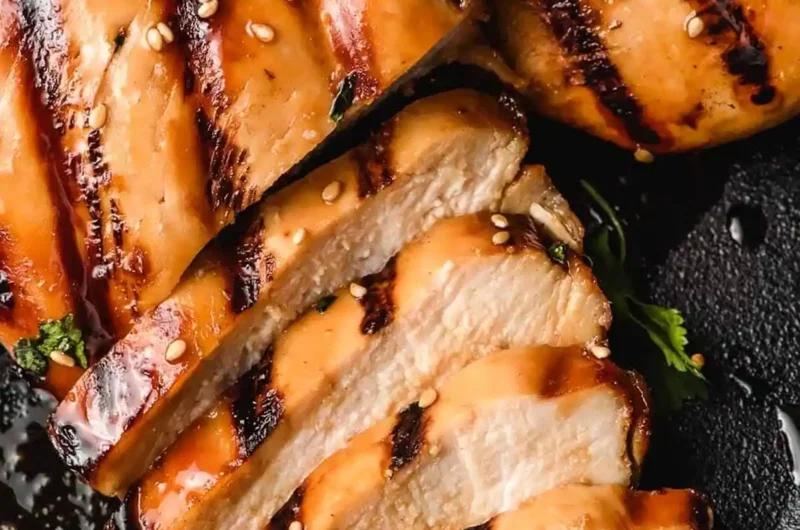
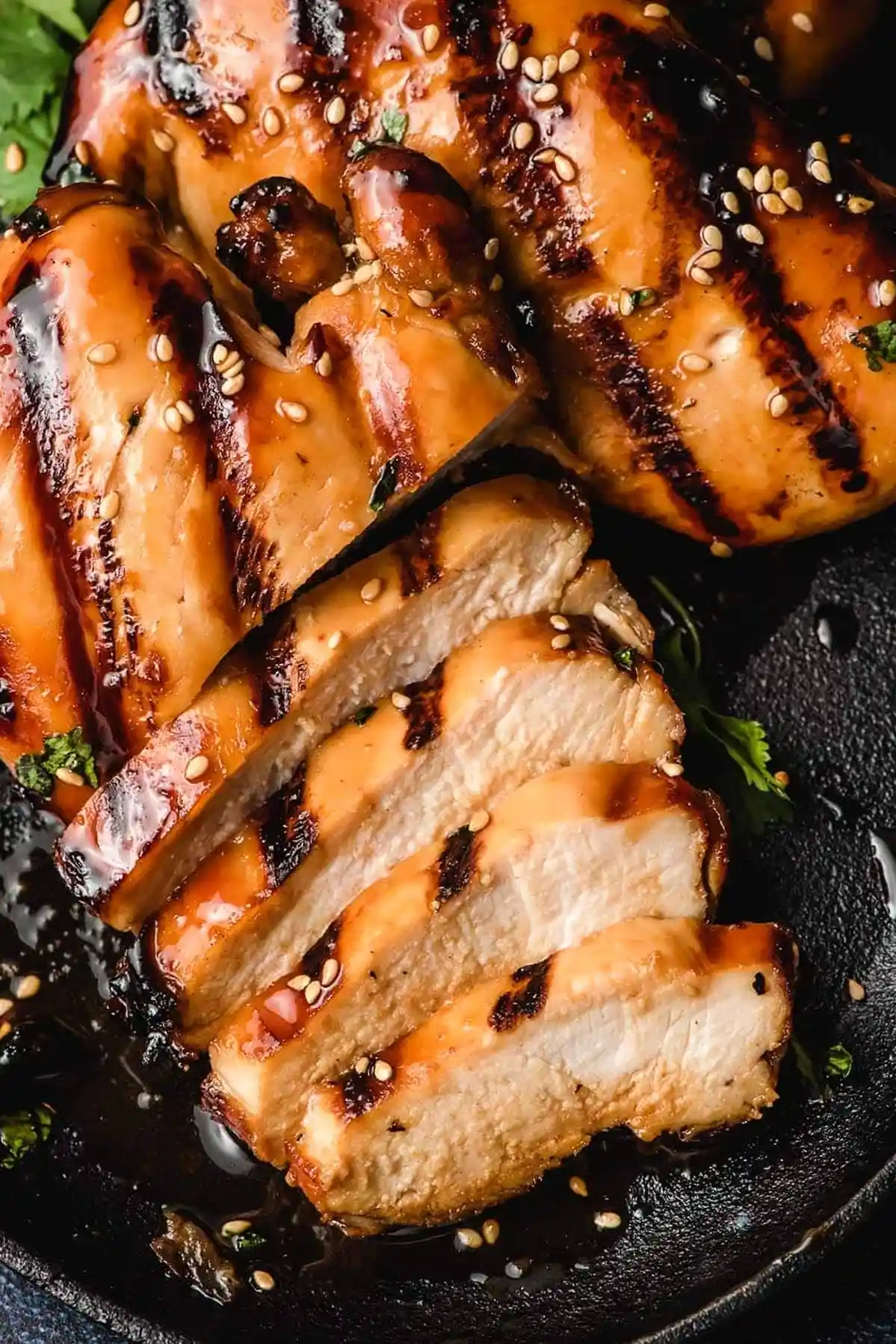
This versatile marinade combines sweet and savory elements to produce juicy grilled chicken with a professional finish. It functions as both a flavorful soak and a thick, sticky glaze to enhance the meat’s appearance and taste.
List of ingredients
- 1 ½ lbs. boneless skinless chicken breasts or thighs – use thighs for extra juiciness.
- ½ cup soy sauce – provides the salty, savory base.
- ½ cup honey – creates the signature sticky sweetness.
- ¼ cup rice vinegar – adds a tangy balance to the sugar.
- 1 tablespoon brown sugar – adds depth and aids in caramelization.
- 1 tablespoon sesame oil – toasted sesame oil is recommended for a nutty aroma.
- 1 tablespoon minced garlic – use fresh or pre-minced for convenience.
- 1 teaspoon minced ginger – adds a sharp, aromatic kick.
- 1 teaspoon Kosher salt – enhances all other flavors.
- Sriracha hot sauce (optional) – add according to your preferred heat level.
- Toasted sesame seeds (optional) – used for a decorative and nutty garnish.
- Chopped green onions – provides a fresh, crisp finish.
step-by-step instructions
- Prepare the marinade: Whisk the soy sauce, honey, vinegar, brown sugar, sesame oil, garlic, and ginger in a mixing bowl until well combined.
- Marinate the poultry: Place the chicken in a resealable plastic bag or a shallow dish, pour the mixture over the meat, and refrigerate for at least 2 hours or overnight.
- Prep the grill: Remove chicken from the refrigerator to reach room temperature. Clean the grill grates and oil them with a neutral oil, then preheat to high heat (450-500°F).
- Grill the meat: Place chicken directly on the grates and cook for 5 minutes. Flip the pieces and cook for another 5-6 minutes, or until the internal temperature reaches 165°F.
- Rest the chicken: Transfer the grilled meat to a plate and tent loosely with foil. Let it rest for 5-10 minutes to allow juices to redistribute.
- Reduce the sauce: Pour the reserved marinade into a non-stick pan and bring to a boil. Reduce heat to a simmer and stir constantly for 7-10 minutes until the sauce is thick enough to coat the back of a spoon.
- Final touch: Add Sriracha to the glaze if desired. Drizzle or brush the glaze over the rested chicken and garnish with sesame seeds and green onions.
Professional Grilling Techniques
Pounding Chicken for Consistent Cooking
Large chicken breasts often have uneven thickness, leading to overcooked edges and raw centers. Place the meat between two sheets of parchment paper and use a meat mallet or rolling pin to flatten it to an even thickness. This ensures the entire piece cooks at the same rate.
Maintaining Clean and Oiled Grates
To prevent sticking and ensure clear sear marks, scrub your grill grates thoroughly before use. Dip a folded paper towel in vegetable or canola oil and rub it across the hot grates using tongs. This creates a non-stick barrier for the marinated meat.
Managing Meat Adhesion
Avoid moving the chicken too frequently once it is placed on the grill. The meat will naturally release from the grates once a proper sear has formed. Lifting it too early can cause the chicken to tear or stick.
The Importance of Resting Period
Cutting into chicken immediately after grilling causes the internal juices to leak out. Tenting the meat with foil for 10 minutes allows the muscle fibers to relax and reabsorb the moisture. This results in a significantly juicier end product.
Ingredient Customizations and Substitutions
Switching to Tamari for Gluten-Free Needs
Standard soy sauce contains wheat, which is not suitable for gluten-free diets. Substitute an equal amount of tamari or coconut aminos to achieve a similar salty profile. Tamari is generally the closest match in terms of flavor depth.
Adjusting the Acid Component
If rice vinegar is unavailable, white wine vinegar serves as a practical alternative. While it has a slightly different profile, it provides the necessary acidity to cut through the sweetness of the honey and brown sugar.
Modifying the Sweetener
Honey is the primary agent for the sticky glaze, but maple syrup can be used for a different flavor profile. If using a thinner syrup, you may need to simmer the glaze for a few extra minutes to reach the desired thickness.
Choosing Between Thighs and Breasts
Chicken thighs are more forgiving on the grill because their higher fat content prevents drying out. Breasts are leaner and require closer monitoring with a meat thermometer to avoid overcooking. Both work well, but thighs generally yield a more succulent result.
Advanced Storage and Make-Ahead Advice
Optimal Marination Timelines
For the best flavor penetration, marinate the chicken for at least 2 hours. An overnight soak (up to 24 hours) allows the sugars and salts to deeply season the meat. Note that longer marination will result in a darker exterior color due to the soy sauce.
Freezing Marinated Poultry
You can freeze chicken directly in the marinade to save time during the week. Place the meat and liquid in a heavy-duty freezer bag and freeze it flat on a tray. Thaw the bag completely in the refrigerator overnight before grilling.
Storing Cooked Leftovers
Once cooked, store the chicken in an airtight container in the refrigerator. It will remain fresh and safe to eat for up to 5 days. Keep the leftover glaze in a separate small container to avoid making the chicken soggy.
Reheating for Quality
To prevent the chicken from drying out during reheating, use a skillet over medium heat with a splash of water or broth. Cover the pan for a few minutes to steam the meat. Avoid over-microwaving, as this can make the glaze rubbery.
Serving and Pairing Suggestions
Ideal Grain Accompaniments
Serve the glazed chicken over steamed jasmine or basmati rice to soak up the extra sauce. Brown rice or quinoa are healthier alternatives that provide a nuttier contrast to the sweet glaze. A side of coconut rice also complements the Asian flavor profile.
Complementary Vegetable Sides
Sautéed hibachi-style vegetables, such as zucchini, carrots, and onions, pair perfectly with this dish. Steamed bok choy or garlic-sauteed green beans provide a fresh, bitter contrast to the richness of the honey glaze. Roasted broccoli with a hint of ginger is another excellent choice.
Fresh Salad Combinations
Slice the grilled chicken and place it atop a crunchy Asian-style salad with shredded cabbage and carrots. A cucumber and tomato salad with a light vinaigrette helps cleanse the palate between bites of the savory chicken. Adding sliced almonds or wonton strips adds a necessary crunch.
Troubleshooting and Frequently Asked Questions
How long should I marinate the chicken?
A minimum of 2 hours is required to develop flavor, but 8 to 24 hours is ideal. Beyond 24 hours, the acid in the vinegar may begin to break down the meat texture too much, making it mushy.
Is it safe to use the marinade as a sauce?
Yes, provided the marinade is brought to a full, rolling boil. Boiling the leftover liquid kills any bacteria introduced by the raw meat. Simmering it further reduces the water content to create the thick glaze.
Can this be cooked on a stovetop?
Yes, you can use a cast-iron grill pan over medium-high heat to achieve similar sear marks. Alternatively, you can cook the chicken in a large saute pan with the marinade for a more stir-fry style consistency.
What should I do if the glaze burns?
Sugars in honey and brown sugar can burn quickly if the heat is too high. If the glaze burns, discard it and make a quick replacement using half the original amounts of soy sauce, vinegar, and oil, but keeping the full amount of honey. Heat this mixture gently without reducing it too far.
Why is my chicken sticking to the grill?
Sticking usually happens if the grates are not hot enough or were not properly oiled. Ensure the grill has reached at least 450°F and that you have applied a thin layer of neutral oil to the surface before adding the meat.
How do I know when the chicken is fully cooked?
The only reliable method is using an instant-read meat thermometer. The thickest part of the chicken should reach an internal temperature of 165°F. Remove the meat from the heat immediately once it hits this mark to avoid drying.
Print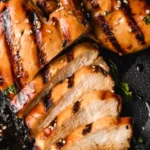
Savory Asian Chicken Marinade and Glaze
- Total Time: 2 hours 31 minutes
- Yield: 4 servings 1x
- Diet: General
Description
This Asian Chicken Marinade combines the best Asian flavors to bring you juicy grilled chicken, coated in a sweet and savory glaze.
Ingredients
- 1 ½ lbs. boneless skinless chicken breasts or thighs
- ½ cup soy sauce
- ⅓ cup honey
- ¼ cup rice vinegar
- 1 tablespoon brown sugar
- 1 tablespoon sesame oil
- 1 tablespoon minced garlic
- 1 teaspoon minced ginger
- 1 teaspoon Kosher salt
- Sriracha hot sauce (optional)
- Toasted sesame seeds (optional)
- Chopped green onions
Instructions
- Step: Combine the soy sauce, honey, vinegar, brown sugar, sesame oil, garlic, and ginger in a mixing bowl and whisk together.
- Step: Place chicken in a resealable plastic bag or a shallow dish and pour marinade mixture over top.
- Step: Let the chicken marinate in the refrigerator for at least 2 hours or overnight.
- Step: Place marinated chicken on a plate and leave at room temperature while the grill preheats.
- Step: Set aside leftover marinade in the plastic bag–do not throw it away!
- Step: Clean and oil the grill grates then preheat to high heat (about 450-500° F).
- Step: Place chicken directly on the grill grates and cook for 5 minutes.
- Step: Flip, and cook for an additional 5-6 minutes (or until meat thermometer reads an internal temp of 165° F).
- Step: Remove chicken from the grill and tent with foil for 5-10 minutes before serving.
- Step: Pour the remaining marinade into a large shallow non-stick pan and bring to a full boil.
- Step: Immediately reduce heat to a simmer, and stir constantly with a wooden spoon until mixture has reduced and coats the back of a spoon.
- Step: Add drips of Sriracha hot sauce, to taste.
- Step: Drizzle (or brush) the finished sauce over the grilled chicken.
- Step: Garnish with toasted sesame seeds and/or chopped green onions and serve.
Notes
For a gluten free version, substitute tamari for the soy sauce. If using thick chicken breasts, pound them to an even thickness for even cooking. Chicken can be frozen in the marinade then thawed overnight. You can also cook the chicken on the stove top using a grill pan.
- Prep Time: 10 minutes
- Cook Time: 11 minutes
- Category: Main Dish
- Method: Grilling
- Cuisine: Asian
Nutrition
- Serving Size: 1 serving
- Calories: 347 kcal
- Sugar: 26 g
- Sodium: 1929 mg
- Fat: 8 g
- Saturated Fat: 1 g
- Unsaturated Fat: 5 g
- Trans Fat: 0.02 g
- Carbohydrates: 29 g
- Fiber: 0.3 g
- Protein: 39 g
- Cholesterol: 109 mg
Keywords: asian chicken marinade, asian chicken marinade recipe, grilled asian chicken