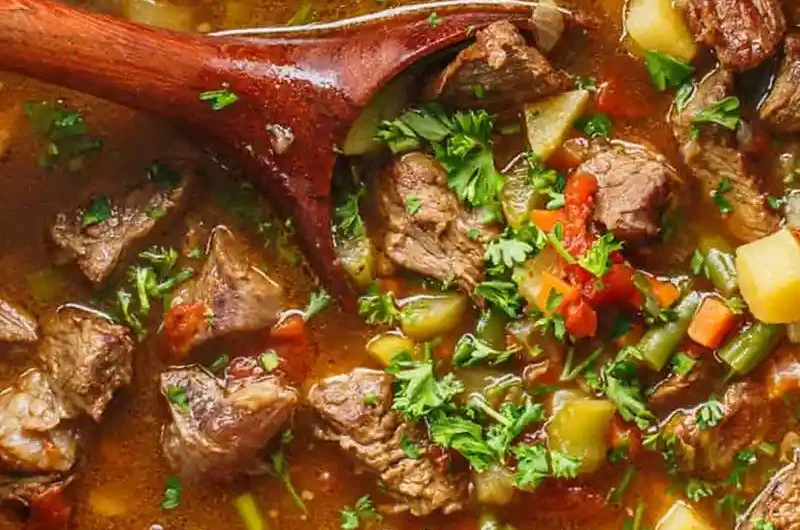
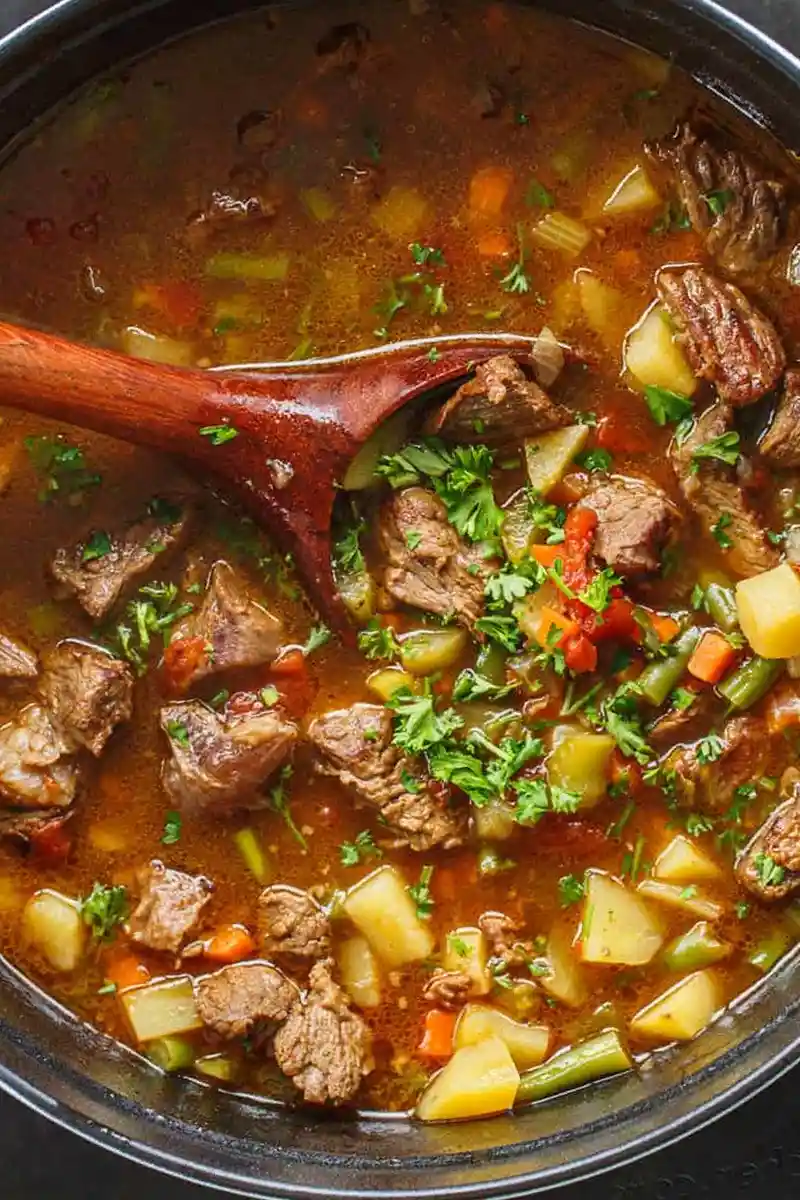
This one-pot vegetable beef soup is a filling meal featuring tender beef and fresh garden vegetables in a savory tomato broth. It is designed for easy preparation and provides a satisfying dinner for the whole family.
List of ingredients
- 1 tbsp olive oil – used for searing the beef and sautéing aromatics.
- 2 lb beef stew meat – cut into bite-sized pieces for even cooking.
- 1 medium onion (1 1/2 cups finely diced) – provides a flavorful aromatic base.
- 8 cups beef broth (low sodium) – forms the savory liquid foundation of the soup.
- 14 oz can diced tomatoes – adds acidity and thickness to the broth.
- 3 bay leaves – imparts a subtle herbal depth during the simmer.
- 1 Tbsp fine sea salt – enhances the natural flavors of the meat and vegetables.
- 1 tsp freshly ground black pepper – adds a mild heat and spice.
- 1 lb potatoes (peeled and diced) – adds heartiness and natural thickness.
- 2 large carrots (peeled, and chopped) – provides sweetness and color.
- 1 cup celery (chopped) – adds a classic savory soup profile.
- 1 cup green beans (cut into bite size pieces) – adds texture and vibrant color.
- 1/2 cup green onions (chopped) – used for a fresh finish.
- 1/4 cup parsley (chopped) – adds a bright, herbal note.
step-by-step instructions
- Brown the beef: Preheat a heavy soup pot or dutch oven with oil over medium-high heat. Add beef in a single layer and cook until browned on all sides; brown in batches if needed to ensure a good sear.
- Sauté the onions: Add the diced onions to the beef and continue cooking for about 3 minutes or until the onions are softened and lightly golden.
- Simmer the base: Add beef broth, canned tomatoes, bay leaves, salt, and pepper. Bring the mixture to a boil and then reduce heat to a simmer. Partially cover the pot and cook until the beef is tender, typically for 55-75 minutes.
- Add root vegetables: Stir in the potatoes, carrots, and celery. Cook for approximately 20 minutes until these vegetables are tender.
- Add soft vegetables: Stir in the green beans and green onions. Simmer for an additional 10 minutes to cook the beans without oversoftening them.
- Final touch: Stir in the chopped parsley, season to taste with additional salt and pepper, and remove the pot from the heat.
Pro Techniques for Enhanced Flavor
Brown Meat in Small Batches
Avoid crowding the pot when browning the beef stew meat. If too much meat is added at once, the temperature of the pan drops, causing the meat to release moisture and steam rather than sear. Browning in batches ensures a deep brown crust, which creates more complex flavor compounds in the final broth.
Deglaze the Pot Thoroughly
Once the meat and onions are sautéed, use the beef broth to scrape the bottom of the pot. Those browned bits, known as fond, contain concentrated flavor from the searing process. Stirring them back into the liquid ensures that no flavor is wasted and the broth becomes richer.
Maintain Uniform Vegetable Cuts
Cut your potatoes, carrots, and celery into pieces of similar size, roughly one inch. This ensures that they cook at the same rate and reach the desired tenderness simultaneously. Uneven pieces can result in some vegetables becoming mushy while others remain hard.
Manage Salt Levels Carefully
Since canned tomatoes and beef broth often contain varying levels of sodium, add the initial salt cautiously. Taste the soup after the final simmer before adding more seasoning. This prevents the dish from becoming overly salty as the liquid reduces during cooking.
Remove Bay Leaves Before Serving
Bay leaves are essential for the aromatic profile of the soup but are not meant to be eaten. Carefully fish them out using a slotted spoon before serving the soup to guests. This prevents any accidental consumption of the tough leaves.
Ingredient Substitutions and Modifications
Using Different Beef Cuts
While pre-cut stew meat is convenient, you can use a boneless beef chuck roast. Cut the roast into 1-inch cubes for a more consistent texture and better marbling. The fat in the chuck roast breaks down during the long simmer, resulting in exceptionally tender pieces of meat.
Potato Variety Selection
Russet potatoes are excellent for those who prefer a slightly thicker soup, as they break down more easily and release starch. For potatoes that hold their shape better, use red or Yukon Gold varieties. These waxy potatoes maintain their structure even after long cooking times.
Alternative Vegetable Additions
You can customize the nutrient profile by adding frozen peas, canned corn, or diced parsnips. If using frozen peas, add them at the same time as the green beans to keep them bright green. Asparagus can also be a great addition if added during the final 10 minutes of cooking.
Herb Swaps for Different Profiles
If you prefer a different herbal note, replace the parsley with fresh dill or chopped cilantro. For a more earthy flavor, add a teaspoon of dried thyme or oregano during the initial simmering stage with the bay leaves. These herbs complement the richness of the beef broth.
Broth Alternatives
Low-sodium beef broth is the standard, but you can use chicken stock for a lighter flavor profile. If you have homemade bone broth, it will add additional body and nutrients to the soup. Always ensure the broth is low-sodium to maintain control over the final seasoning.
Serving and Pairing Ideas
Crusty Bread Pairings
Serve this soup with a slice of warm, crusty French bread or a toasted baguette. The porous texture of the bread is perfect for soaking up the tomato-beef broth. Garlic bread or soft dinner rolls also provide a satisfying contrast to the liquid nature of the soup.
Balanced Side Salads
Pair the rich soup with a crisp, acidic side salad to cleanse the palate. A classic Caesar salad or a chickpea salad with a lemon-vinegar dressing works well. The acidity of the dressing cuts through the heaviness of the beef and potatoes.
Garnishing for Presentation
Freshly chopped parsley is the primary garnish, but a sprinkle of cracked black pepper on top adds a professional touch. For a bit of creaminess, a dollop of sour cream or a sprinkle of microbial-rennet parmesan cheese can be added to individual bowls.
Storage and Reheating Instructions
Refrigeration Guidelines
Allow the soup to cool to room temperature before transferring it to airtight containers. This prevents condensation from forming on the lid, which can dilute the flavor. Store the soup in the refrigerator for up to four days.
Freezing and Thawing
This soup can be frozen in airtight containers or freezer bags for up to three months. Be aware that the potatoes may change texture and become slightly mealy upon thawing. To mitigate this, you can strain out the potatoes before freezing and add fresh ones when reheating.
Stovetop Reheating Method
Reheat larger portions of soup in a pot over medium heat on the stove. Stir occasionally to ensure the heat is distributed evenly and the potatoes do not stick to the bottom. If the soup has thickened too much in the fridge, add a splash of beef broth or water to reach the desired consistency.
Microwave Reheating Tips
For individual portions, use a microwave-safe bowl and cover it with a lid or damp paper towel. Heat in one-minute intervals, stirring in between, until the soup is steaming. This prevents the beef from overcooking and ensures there are no cold spots in the center.
Troubleshooting and FAQ
Why is my beef still tough after simmering?
Beef toughness is usually caused by either using a lean cut of meat or not simmering it long enough. Ensure you are using a marbled cut like chuck and simmer until the meat is fork-tender. If it is still tough, continue simmering for another 15-20 minutes.
How can I fix a bland tasting broth?
If the soup lacks depth, it is often due to insufficient browning of the meat at the start. You can correct this by adding a small amount of tomato paste or a splash of soy sauce for added umami. Simmering for an extra 15 minutes can also help the flavors meld together.
Can I make this soup in a slow cooker?
Yes, you can adapt this for a slow cooker by browning the beef and onions in a pan first. Add all ingredients except the green beans and parsley to the slow cooker and cook on low for 7-8 hours. Stir in the green beans during the last 30 minutes of cooking.
Why did my potatoes fall apart?
Potatoes may disintegrate if they are overcooked or if the soup is stirred too vigorously. To prevent this, add the potatoes later in the process and stir gently using a wooden spoon. Using a waxy potato variety also helps them retain their shape.
How do I stop the soup from being too oily?
If excess oil rises to the top, you can skim it off using a wide spoon or a piece of paper towel. To prevent this, pat the beef dry with paper towels before browning to reduce the amount of fat released. Using a leaner cut of beef can also reduce the oil content.
What is the best way to store the soup to keep it fresh?
Store the soup in glass containers, as they do not retain odors and provide a better seal than some plastics. Keep the containers in the coldest part of the refrigerator, away from the door. Divide the soup into individual serving sizes for easier and faster reheating.
Print
Hearty Vegetable Beef Soup
- Total Time: 1 hour 55 minutes
- Yield: 8 servings 1x
- Diet: Gluten Free
Description
This Vegetable Beef Soup is packed with veggies, tender beef, and potatoes in a tomato beef broth. This easy Vegetable and Beef Soup comes together in one pot.
Ingredients
- 1 tbsp olive oil
- 2 lb beef stew meat
- 1 medium onion (1 1/2 cups finely diced)
- 8 cups beef broth (low sodium)
- 14 oz can diced tomatoes
- 3 bay leaves
- 1 Tbsp fine sea salt
- 1 tsp freshly ground black pepper
- 1 lb potatoes (peeled and diced)
- 2 large carrots (peeled and chopped)
- 1 cup celery (chopped)
- 1 cup green beans (cut into bite size pieces)
- 1/2 cup green onions (chopped)
- 1/4 cup parsley (chopped)
Instructions
- Step: Preheat a heavy soup pot or dutch oven with oil over medium-high heat. Add beef in a single layer and cook until browned on all sides. Brown in batches if needed to get a good sear.
- Step: To the beef add onions and continue cooking for about 3 minutes or until the onions are softened and lightly golden.
- Step: Add beef broth, canned tomatoes, bay leaves, salt, and pepper. Bring to a boil and reduce heat to simmer. Partially cover and cook until beef is tender, for about 55-75 minutes.
- Step: Add in potatoes, carrots, and celery. Cook for about 20 minutes.
- Step: Add in green beans and green onion and simmer for 10 more minutes.
- Step: Add the parsley, season to taste with salt and pepper, and take it off the heat.
Notes
Beef cook time can vary depending on the size of the beef pieces and type of beef used. Cook until the beef is fork-tender.
- Prep Time: 20 minutes
- Cook Time: 1 hour 35 minutes
- Category: Soup
- Method: Stovetop
- Cuisine: American
Nutrition
- Serving Size: 1 serving
- Calories: 263 kcal
- Sugar: 4 g
- Sodium: 1474 mg
- Fat: 8 g
- Saturated Fat: 2 g
- Unsaturated Fat: 6 g
- Trans Fat: 0 g
- Carbohydrates: 17 g
- Fiber: 3 g
- Protein: 32 g
- Cholesterol: 70 mg
Keywords: Vegetable Beef Soup, Soup, Gluten Free, beef, potato