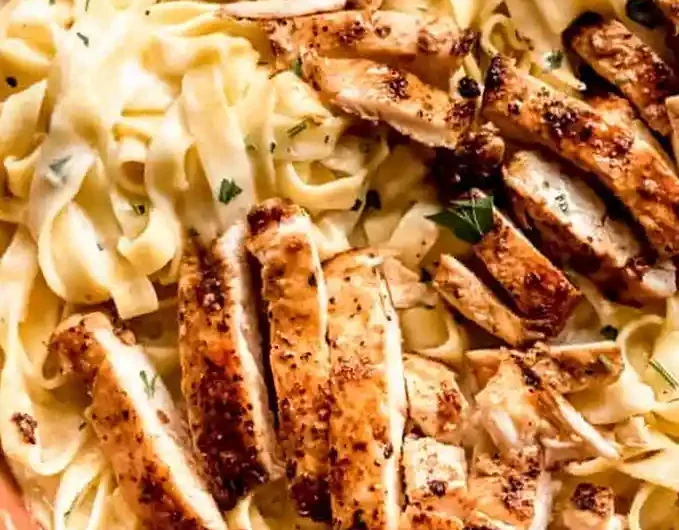
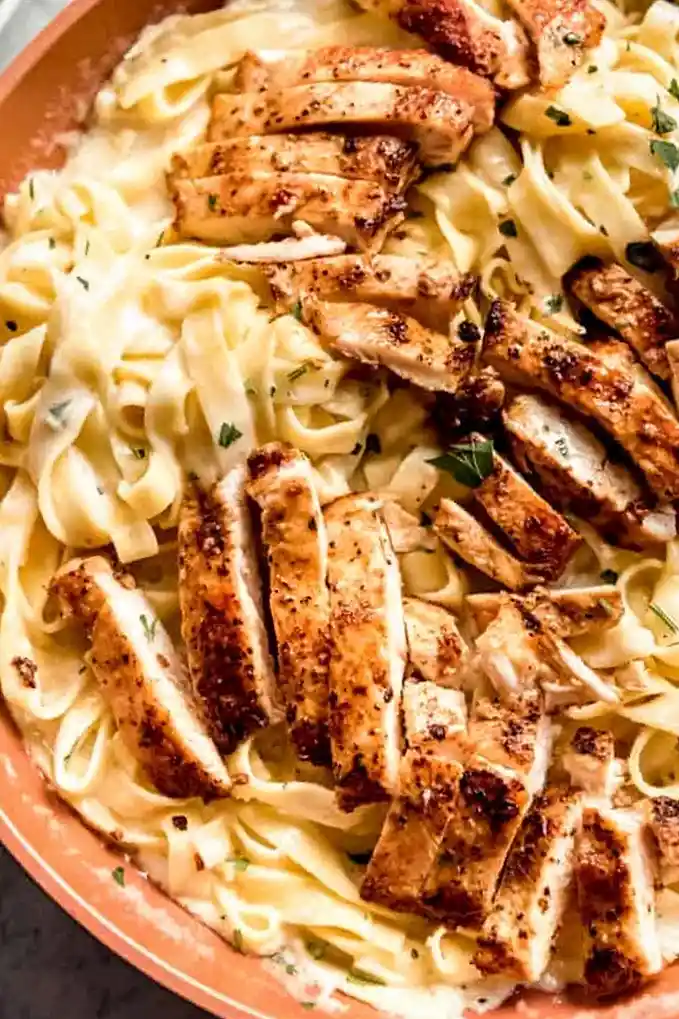
Enjoy a restaurant-quality meal at home with this rich and creamy chicken pasta dish. This recipe combines pan-seared chicken breasts with a buttery, homemade alfredo sauce for a satisfying dinner ready in 30 minutes.
List of ingredients
- 2 large chicken breasts (about 1 and 1/2 pounds) – sliced horizontally into cutlets.
- 1 1/2 teaspoons kosher salt – used for seasoning the chicken.
- 1/2 teaspoon garlic powder – adds a savory depth to the meat.
- 1/2 teaspoon black pepper – provides a basic pepper heat.
- 1/4 teaspoon smoked paprika – adds a subtle smoky flavor and color.
- 2 Tablespoons olive oil – used for searing the chicken at high heat.
- 1 Tablespoon salted butter – used to baste the chicken at the end.
- Large pot of water – for boiling the pasta.
- 1 Tablespoon kosher salt – for seasoning the pasta water.
- 12 to 16 ounces fettuccine – use 12 ounces if you prefer a saucier dish.
- 6 Tablespoons salted butter – the rich base for the alfredo sauce.
- 4 cloves garlic, minced – adds aromatic punch to the sauce.
- 2 cups heavy cream – ensures a thick and velvety consistency.
- 1 teaspoon kosher salt – to balance the sauce flavors.
- 1 1/2 cups freshly grated Parmesan cheese (divided), plus extra for garnish – use microbial-rennet cheese for suitability.
- 1/4 teaspoon black pepper – for sauce seasoning.
- 1/8 teaspoon cayenne pepper – provides a very mild, addictive kick.
- 2 Tablespoons chopped fresh Italian parsley – used as a fresh garnish.
step-by-step instructions
- Prepare the chicken: Slice each chicken breast in half horizontally to create thinner cutlets. This ensures the meat cooks through evenly without drying out.
- Season the meat: Mix salt, garlic powder, black pepper, and smoked paprika in a small bowl. Pat the chicken cutlets dry with paper towels, then sprinkle the seasoning evenly on both sides.
- Sear the chicken: Heat olive oil in a large skillet over medium-high heat for 2-3 minutes until it shimmers. Arrange the chicken in the pan and leave it undisturbed to develop a golden-brown crust.
- Cook and baste: Lower the heat to medium and cook for 3-4 minutes per side. Flip the chicken and immediately add the butter to the pan, cooking until the internal temperature reaches 160°F.
- Rest the meat: Remove chicken from the skillet and let it rest for 5 minutes. This allows the temperature to rise to 165°F and locks in the juices. Slice into strips before serving.
- Boil the pasta: Bring a large pot of salted water to a boil. Cook the fettuccine according to the package directions until al dente.
- Drain and prep: Reserve 1 cup of the starchy pasta water before draining. Toss the noodles with a small amount of olive oil to prevent them from clumping together.
- Sauté the aromatics: In a clean skillet or the same pan used for chicken, melt 6 tablespoons of butter. Add minced garlic and sauté for 30-60 seconds until fragrant.
- Simmer the cream: Slowly stir in the heavy cream, salt, black pepper, and cayenne pepper. Cook over medium heat for 2-3 minutes until bubbling at the edges, but do not let it reach a full boil.
- Incorporate the cheese: Reduce the heat to medium-low. Gradually sprinkle in 1 cup of grated Parmesan cheese, stirring constantly until the sauce is smooth and melted.
- Combine pasta and sauce: Add the cooked fettuccine to the skillet and toss to coat. Stir in reserved pasta water one tablespoon at a time if you need to loosen the sauce.
- Plating: Divide the pasta among plates and top with sliced chicken strips. Garnish with fresh Italian parsley and the remaining Parmesan cheese.
Pro Cooking Tips for Better Results
Slice Chicken Horizontally for Even Cooking
Cutting the chicken breasts into thinner cutlets is essential for a quick sear. This method prevents the outside from overcooking while the center remains raw. It also allows the seasonings to cover more surface area for better flavor.
Achieve a Deep Pan Sear
Wait until the olive oil is shimmering before adding the chicken to the skillet. Avoid moving the meat for the first few minutes of cooking. This allows a proper crust to form, which adds significant flavor through the Maillard reaction.
Control the Sauce Temperature
Never let the alfredo sauce reach a rolling boil after the cream has been added. Excessive heat can cause the sauce to break or the cheese to become grainy. Keep the heat at a gentle simmer to maintain a smooth, velvety texture.
Use Freshly Grated Cheese
Avoid using pre-shredded Parmesan cheese from a bag. Pre-shredded cheeses are coated in potato starch or cellulose to prevent clumping, which can make your sauce gritty. Grating your own cheese ensures a perfectly smooth melt.
Manage Pasta Texture
Cook the pasta for one minute less than the package instructions for al dente. The noodles will continue to cook slightly when tossed in the hot sauce. This prevents the pasta from becoming mushy during the final mixing stage.
Ingredient Substitutions and Alternatives
Swap the Pasta Shape
While fettuccine is traditional, you can use linguine or tagliatelle for a similar experience. For a heartier bite, try using penne or rigatoni. These shapes hold the thick sauce well in their ridges and centers.
Lighter Cream Options
You can substitute heavy cream with half-and-half or whole milk for a lower-calorie version. Be aware that the sauce will be thinner and less rich. You may need to add an extra handful of Parmesan to help thicken the consistency.
Alternative Protein Choices
If you prefer seafood, pan-seared salmon or sautéed shrimp work excellently with this sauce. For a vegetarian option, replace the chicken with roasted cauliflower or sliced mushrooms. Sauté them in the same butter and garlic base for consistency.
Replacing Smoked Paprika
If you do not have smoked paprika, regular paprika can be used for color. A pinch of cumin or a drop of liquid smoke can recreate the smoky profile. Alternatively, omit it entirely for a more traditional Italian flavor profile.
Creative Recipe Variations
Integrate Fresh Vegetables
Stir in steamed broccoli florets or sautéed spinach during the final tossing stage. Sliced mushrooms sautéed in the butter before adding the cream also add a great earthy flavor. Peas are another classic addition that adds a pop of color.
Adjust the Heat Level
To increase the spice, double the amount of cayenne pepper or add a pinch of red pepper flakes. For a more complex heat, add a teaspoon of Dijon mustard into the cream. This provides a sharp tang that cuts through the richness of the butter.
Enhance with Fresh Herbs
While parsley is the standard garnish, fresh basil or chives add wonderful layers of flavor. Stir finely chopped basil into the sauce just before serving to keep the herb flavor bright. Fresh thyme pairs exceptionally well with the pan-seared chicken.
Garlic-Forward Version
For those who love garlic, increase the amount to six or eight cloves. Roast the garlic first to create a milder, sweeter flavor profile. Stir the roasted garlic paste into the cream for a deeper, more nuanced aromatic base.
Serving and Presentation Ideas
Complementary Side Dishes
Serve this heavy pasta with a light, acidic side like a garden salad with lemon vinaigrette. Roasted asparagus or sautéed green beans provide a healthy contrast to the creamy sauce. Garlic bread or toasted ciabatta is perfect for soaking up extra sauce.
Plating for Visual Appeal
Use tongs to twirl the pasta into a tall nest in the center of the plate. Layer the chicken strips neatly on top of the pasta mound. Finish with a generous dusting of Parmesan and a sprinkle of bright green parsley for a professional look.
Non-Alcoholic Beverage Pairings
Pair this rich dish with a crisp sparkling water infused with lemon or lime. A cold iced tea with a hint of mint also works well to cleanse the palate. For a more indulgent pairing, a chilled sparkling apple cider complements the butteriness.
Storage and Reheating Guide
Refrigeration Basics
Store leftover pasta and chicken in an airtight container in the refrigerator. The dish will stay fresh for up to 4 days. Keep the chicken and pasta together, as the sauce will continue to soak into the noodles over time.
Effective Reheating Methods
The best way to reheat is in a skillet over low heat on the stove. Add a splash of milk or cream to loosen the sauce as it warms. Avoid the microwave if possible, as it can overcook the chicken and make the sauce oily.
Fixing a Broken Sauce
If the sauce separates and looks oily during reheating, it is usually due to the cheese fats breaking. Stir in a tablespoon of milk or heavy cream while whisking over low heat. This emulsifies the sauce back into a smooth consistency.
Make-Ahead Strategies
Prepping the Chicken
You can season and slice the chicken breasts a day in advance. Store them in a sealed container or zip-top bag in the refrigerator. This allows the salt and spices to penetrate the meat, enhancing the flavor before searing.
Pre-making the Sauce
The alfredo sauce can be prepared a few hours ahead and kept warm on the lowest setting. Alternatively, store it in the fridge and reheat it slowly with a bit of extra cream. Avoid boiling the sauce during the reheating process.
Cooking Pasta in Advance
Boil the pasta to slightly under al dente and drain it. Toss it with olive oil and store it in the fridge. When ready to serve, drop the cold noodles directly into the simmering sauce to finish cooking.
Troubleshooting Common Issues
Dealing with Thin Sauce
If the sauce is too runny, simmer it for an additional 2-3 minutes to reduce the liquid. You can also stir in more freshly grated Parmesan cheese to thicken it. Ensure the heat is low to avoid clumping the cheese.
Correcting Overly Thick Sauce
When the sauce becomes too thick or pasty, use the reserved starchy pasta water. Add it one tablespoon at a time while stirring over low heat. The starch in the water helps the sauce emulsify and glide over the noodles.
Preventing Dry Chicken
Avoid overcooking the chicken by using a digital meat thermometer. Remove the meat from the pan exactly at 160°F. The carry-over cooking during the resting phase will bring it to the safe temperature of 165°F without drying it out.
Stopping Pasta Clumping
Always toss your drained pasta with a small amount of olive oil or butter immediately. This creates a barrier that prevents the starches from sticking the noodles together. Ensure you use a large enough pot with plenty of water for the pasta to move freely.
Frequently Asked Questions
What is the difference between white sauce and alfredo sauce?
A traditional white sauce, or bechamel, is made from a roux of butter and flour thickened with milk. Alfredo sauce is a simpler, richer emulsion of butter, heavy cream, and Parmesan cheese, skipping the flour entirely.
Can I use milk instead of heavy cream in Alfredo Sauce?
Yes, you can use whole milk, half-and-half, or light cream. However, the sauce will be significantly thinner and less decadent. You may need to increase the amount of cheese or simmer it longer to achieve a thicker consistency.
How do I thicken Chicken Fettuccine Alfredo Sauce?
The most effective way to thicken the sauce is by adding more grated Parmesan cheese. Alternatively, you can let the sauce simmer on low heat for a few extra minutes to reduce the moisture. Avoid adding flour as it changes the texture of a true alfredo.
How long should I cook fettuccine noodles?
Dried fettuccine usually takes 8-12 minutes to reach al dente, depending on the brand. Fresh fettuccine cooks much faster, typically in only 60-90 seconds. Always test a noodle a minute before the timer ends to ensure the perfect texture.
Print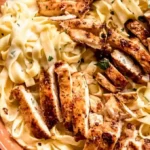
Creamy Chicken Fettuccine Alfredo
- Total Time: 30 minutes
- Yield: 4 servings 1x
- Diet: General
Description
A rich, creamy Chicken Fettuccine Alfredo featuring pan-seared, seasoned chicken breasts and a homemade garlic-parmesan sauce, ready in just 30 minutes.
Ingredients
- 2 large chicken breasts (about 1 1/2 pounds)
- 1 1/2 teaspoons kosher salt
- 1/2 teaspoon garlic powder
- 1/2 teaspoon black pepper
- 1/4 teaspoon smoked paprika
- 2 Tablespoons olive oil
- 1 Tablespoon salted butter
- 1 Tablespoon kosher salt (for pasta water)
- 12 to 16 ounces fettuccine
- 6 Tablespoons salted butter
- 4 cloves garlic, minced
- 2 cups heavy cream
- 1 teaspoon kosher salt
- 1 1/2 cups freshly grated Parmesan cheese, divided
- 1/4 teaspoon black pepper
- 1/8 teaspoon cayenne pepper
- 2 Tablespoons chopped fresh Italian parsley
Instructions
- Slice: Slice each chicken breast in half horizontally.
- Season: Mix salt, garlic powder, black pepper, and smoked paprika, then sprinkle evenly over both sides of the chicken.
- Sear: Heat olive oil in a large skillet over medium-high heat until shimmering, then sear chicken for 3-4 minutes without moving.
- Finish Chicken: Flip the chicken, add 1 Tablespoon butter to the pan, and cook for another 2-3 minutes until internal temperature reaches 160°F.
- Rest: Remove chicken from the pan and let rest for 5 minutes before slicing into strips.
- Boil Pasta: Cook fettuccine in boiling salted water until al dente; drain, reserving 1 cup of pasta water.
- Sauté Garlic: Melt 6 Tablespoons butter in a skillet and sauté minced garlic for 30-60 seconds until fragrant.
- Simmer Sauce: Stir in heavy cream, salt, black pepper, and cayenne; cook over medium heat for 2-3 minutes until bubbling at the edges.
- Add Cheese: Reduce heat to medium-low and stir in 1 cup of Parmesan cheese until melted.
- Combine: Add cooked pasta to the sauce, tossing to coat (add reserved pasta water if needed to loosen).
- Serve: Top the pasta with sliced chicken, chopped parsley, and the remaining Parmesan cheese.
Notes
Store leftovers in an airtight container in the refrigerator for up to 4 days. When reheating, add a splash of milk or cream if the sauce has thickened too much.
- Prep Time: 15 minutes
- Cook Time: 15 minutes
- Category: Main Course
- Method: Pan-Searing
- Cuisine: Italian
Nutrition
- Serving Size: 1 serving
- Calories: 1274 kcal
- Sugar: 2 g
- Sodium: 4143 mg
- Fat: 88 g
- Saturated Fat: 49 g
- Unsaturated Fat: 33 g
- Trans Fat: 1 g
- Carbohydrates: 67 g
- Fiber: 3 g
- Protein: 54 g
- Cholesterol: 393 mg
Keywords: Chicken Fettuccine Alfredo, Creamy Pasta, Italian dinner, 30-minute meal