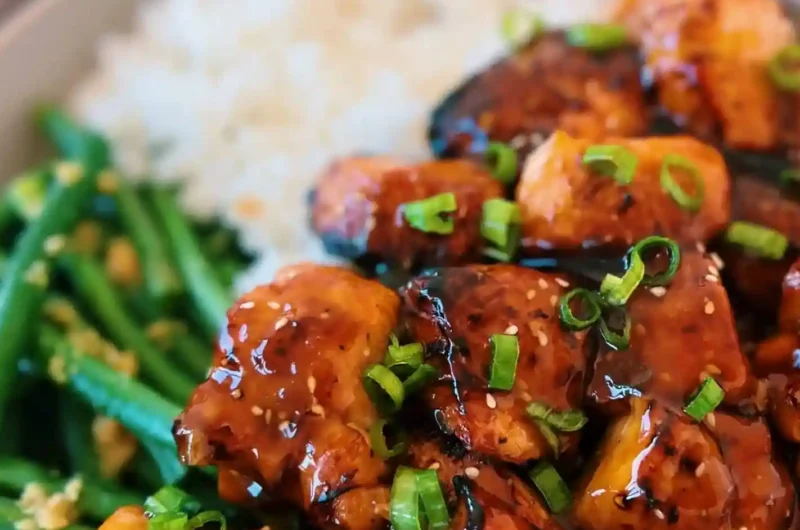
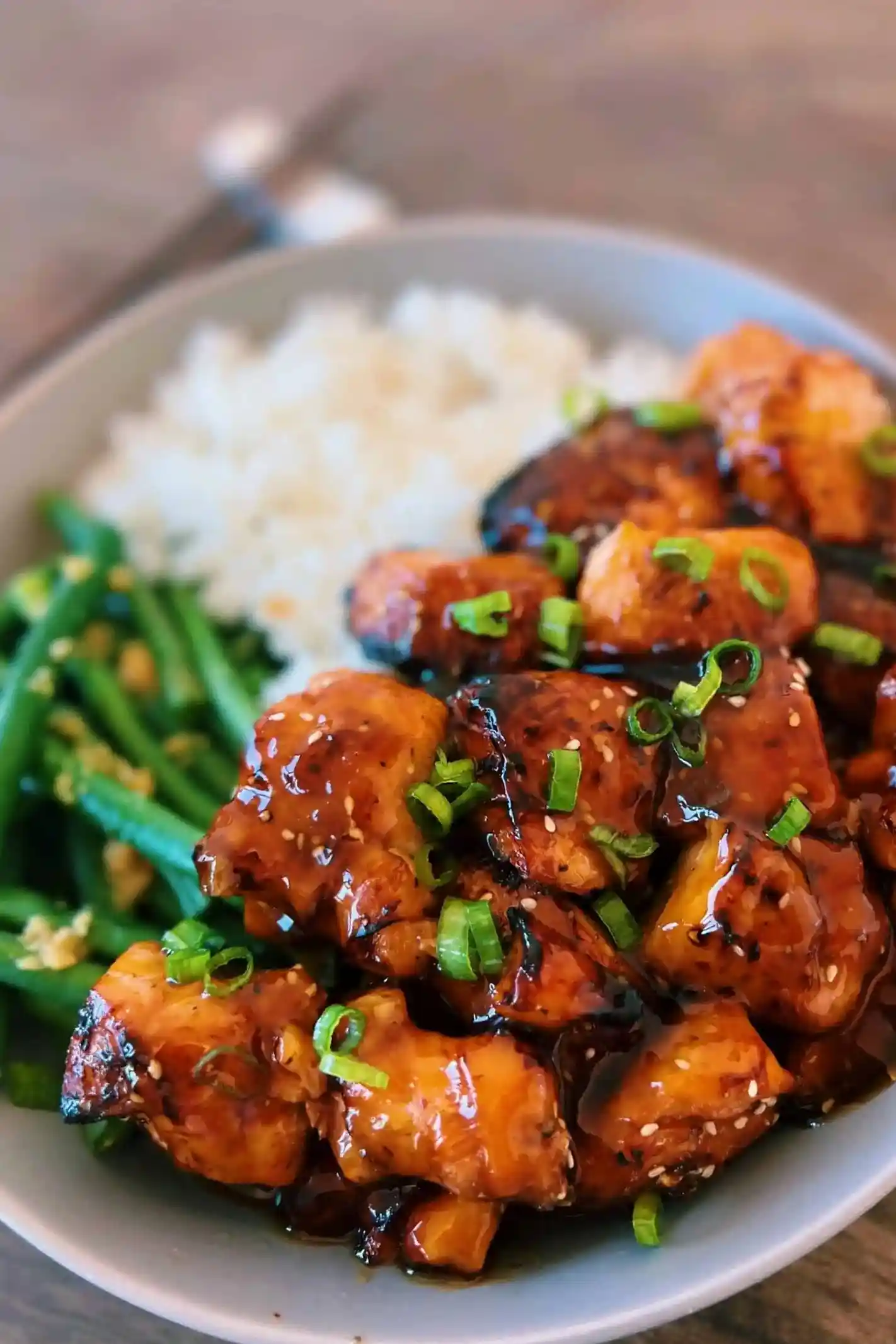
This recipe utilizes an air fryer to produce tender, glazed salmon pieces in under 40 minutes. It is an efficient method for preparing a protein-rich meal that is easy to serve and highly appealing to children.
List of ingredients
- 1 pound salmon, cut into bite-size pieces – use a skinless fillet for best results.
- 2 tablespoons honey – provides sweetness and helps with caramelization.
- 1 tablespoon freshly grated ginger – adds a sharp, aromatic heat.
- 2 tablespoons soy sauce – adds salty depth and color.
- 1.5 tablespoons vegetarian oyster sauce – provides a rich, savory umami flavor.
- 3 tablespoons Japanese mayo – acts as a moisture barrier for the fish.
- Salt and pepper – used for basic seasoning.
- 1.5 tablespoons honey – for the optional glaze.
- 2.5 tablespoons soy sauce – for the optional glaze.
- 0.5 tablespoon freshly grated ginger – for the optional glaze.
- 1/4 cup water – to balance the glaze consistency.
- 1 tablespoon corn starch – used to thicken the sauce.
- 2 tablespoons cold water – mixed with corn starch to create a slurry.
step-by-step instructions
- Marinate: Combine the salmon pieces with honey, freshly grated ginger, soy sauce, vegetarian oyster sauce, Japanese mayo, salt, and pepper. Let the mixture sit for 20 minutes to allow the flavors to penetrate the fish.
- Air Fry: Place the marinated salmon in the air fryer basket. Cook at 380F for 12 minutes, ensuring you flip the pieces halfway through the cooking time for even browning.
- Prepare Glaze (Optional): Combine soy sauce, honey, ginger, and water in a small pot. Bring the mixture to a simmer over medium-high heat for 2-3 minutes until it begins to bubble.
- Thicken Sauce: Stir in the corn starch and cold water slurry. Simmer for an additional minute until the sauce reaches a thick, syrupy consistency.
- Finish: Drizzle the prepared glaze over the cooked salmon bites and garnish with sesame seeds before serving.
Essential Cooking Techniques for Perfect Salmon
Using Japanese Mayo as a Moisture Barrier
The addition of Japanese mayo to the marinade is a technical choice to prevent the salmon from drying out. Mayo is an emulsion of oil and egg, which creates a protective fat layer around each salmon cube.
This layer shields the delicate proteins from the intense, circulating hot air of the fryer. As a result, the exterior achieves a slight crispness while the interior remains moist and flakey.
Achieving Consistent Bite Sizes
Cutting the salmon into uniform cubes, approximately one inch in size, is critical for even cooking. If the pieces vary in size, smaller cubes will overcook and become tough before the larger pieces are cooked through.
Use a sharp chef’s knife to make clean cuts without crushing the fish. This ensures that each piece has a similar surface-area-to-volume ratio, leading to consistent caramelization on all sides.
Preventing Basket Adhesion
To avoid salmon sticking to the air fryer basket, ensure the basket is lightly greased or use a perforated parchment liner. The sugars in the honey can cause the fish to cling to the metal surface as they caramelize.
Flipping the salmon halfway through the cooking process is necessary not only for color but to release any pieces that may have started to stick. Use silicone-tipped tongs to handle the fish gently to avoid breaking the cubes.
Ingredient Substitutions and Modifications
Replacing Honey with Maple Syrup
If honey is unavailable, pure maple syrup is an effective substitute. It provides a similar viscosity and sweetness level, though it introduces a slightly different woody flavor profile.
The sugar content in maple syrup will still allow for the same level of browning and glaze adherence. Use a 1:1 ratio when replacing honey in both the marinade and the glaze.
Using Tamari for Gluten-Free Requirements
For those avoiding gluten, replace the soy sauce with tamari. Tamari is a Japanese soy sauce produced without wheat, offering a similar saltiness and deep color.
Because tamari can sometimes be slightly saltier than standard soy sauce, you may want to reduce the added salt in the marinade. This substitution does not change the cooking time or the final texture of the salmon.
Fresh Ginger vs. Ginger Powder
Freshly grated ginger is highly recommended for its pungent, zingy flavor. If only ground ginger is available, use one-quarter teaspoon of powder for every tablespoon of fresh ginger required.
Note that powder lacks the moisture and bright aromatic notes of fresh ginger. The flavor will be more muted and earthy, which may slightly alter the brightness of the glaze.
Serving and Pairing Suggestions
Pairing with Steamed Jasmine Rice
Steamed jasmine rice is an ideal accompaniment as its neutral flavor and fluffy texture balance the salty-sweet glaze. The rice also absorbs any excess sauce drizzled over the salmon.
To enhance the dish, you can cook the rice with a small piece of bruised ginger or a lemongrass stalk. This creates a cohesive flavor bridge between the side dish and the main protein.
Adding Sautéed Bok Choy or Broccoli
Pairing these salmon bites with a green vegetable adds necessary contrast and nutrition. Sautéed bok choy or steamed broccoli florets provide a crisp texture that complements the tender fish.
Toss the vegetables in a small amount of sesame oil and garlic before cooking. This mirrors the Asian-inspired flavor profile of the ginger glaze without overpowering the salmon.
Presenting as a Party Appetizer
These salmon bites work well as a finger food for gatherings. Serve them on a large platter with toothpicks inserted into each cube for easy grabbing.
Garnish the platter with sliced green onions and toasted sesame seeds for a professional look. Providing a side of extra glaze in a small dipping bowl allows guests to add more flavor as desired.
Storage and Reheating Guidelines
Storing Leftovers in Airtight Containers
Store any remaining salmon bites in a shallow, airtight glass container. Glass is preferred over plastic to prevent the odors of the fish and ginger from permeating the container.
The salmon should be cooled completely before sealing to avoid condensation, which can make the exterior soggy. Keep the salmon refrigerated and consume it within three to four days.
Reheating Salmon in the Air Fryer
To maintain the best texture, reheat the salmon in the air fryer rather than the microwave. Set the temperature to 350F and heat the bites for 2-3 minutes.
This short burst of hot air restores the exterior crispness without overcooking the center. Avoid heating for too long, as salmon can quickly become rubbery when reheated.
Managing Sauce during Reheating
If the salmon was already glazed, the sauce may thicken or dry out during reheating. To fix this, brush a small amount of fresh glaze or a teaspoon of water over the bites before heating.
If the sauce was stored separately, reheat it in a small saucepan over low heat. Stir constantly and add a splash of water if the cornstarch has made the sauce too thick during refrigeration.
Make-Ahead Planning
Marinating the Salmon Overnight
For a deeper flavor profile, you can marinate the salmon for up to 24 hours in the refrigerator. The soy sauce and ginger will penetrate deeper into the fish fibers over time.
However, avoid marinating for longer than 24 hours, as the salt in the soy sauce can begin to break down the fish structure too much. This can result in a mushy texture once cooked.
Preparing the Glaze in Advance
The honey glaze can be prepared several days ahead of time and stored in a jar in the fridge. Because of the sugar and salt content, it remains stable for a week.
When you are ready to use the pre-made glaze, simply shake the jar to reintegrate any separated ingredients. Gently warm it in a pan or microwave before drizzling it over the hot salmon.
Troubleshooting Common Issues
Solving Dry Salmon Bites
If the salmon comes out dry, it is likely due to overcooking or using a lean cut of fish. Ensure you are using a timer and checking the internal temperature of the fish.
Salmon is perfectly cooked when it reaches an internal temperature of 145F, but many prefer it at 135-140F for a more moist center. Using a small-scale thermometer can prevent overshooting the target temperature.
Fixing a Thin Glaze
A glaze that is too thin will run off the salmon rather than clinging to it. This usually happens if the cornstarch slurry was not simmered long enough to activate the thickening agents.
To fix a thin sauce, mix an additional teaspoon of cornstarch with a teaspoon of cold water. Stir this new slurry into the simmering sauce and cook for another 60 seconds until the desired thickness is reached.
Managing Burnt Glaze
Because of the high honey content, the glaze can burn if the heat is too high or if it is applied too early. Always apply the glaze after the salmon is finished air frying.
If you prefer to bake the glaze onto the fish, reduce the air fryer temperature to 350F for the last two minutes of cooking. This prevents the sugars from scorching while still allowing the sauce to tack up.
Frequently Asked Questions
Can I use frozen salmon for this recipe?
Yes, but the salmon must be fully thawed before cutting and marinating. Cooking frozen salmon bites directly will lead to uneven cooking and a watery texture as the ice crystals melt.
What is the best cut of salmon for bites?
Center-cut fillets are best because they provide a uniform thickness. This ensures that every cube is approximately the same size, which is essential for consistent air frying results.
Can I bake these in a regular oven?
Yes, you can bake them at 400F on a parchment-lined baking sheet. They will typically take 10-15 minutes, but you will need to monitor them closely as oven heat is less concentrated than air fryer heat.
Is Japanese mayo necessary?
While regular mayonnaise works, Japanese mayo (like Kewpie) has a higher egg yolk content and a slightly sweeter taste. This results in a creamier coating and a better moisture barrier.
How do I know when the salmon is done?
The salmon is done when the flesh changes from translucent to opaque and flakes easily with a fork. For precision, use a meat thermometer to reach an internal temperature of 140F to 145F.
Print
Air Fryer Ginger Glazed Salmon Bites
- Total Time: 40 minutes
- Yield: 4 servings 1x
- Diet: General
Description
Tender salmon coated with a savory ginger glaze sauce, these Air Fryer Ginger Glazed Salmon Bites are perfect for kids and adults alike, featuring a crispy exterior and a tender, flakey interior.
Ingredients
- 1 pound salmon, cut into bite-size pieces
- 2 tablespoons honey
- 1 tablespoon freshly grated ginger
- 2 tablespoon soy sauce
- 1.5 tablespoon vegetarian oyster sauce
- 3 tablespoon Japanese mayo
- Salt and pepper
- 1.5 tablespoon honey (for glaze)
- 2.5 tablespoon soy sauce (for glaze)
- 0.5 tablespoon freshly grated ginger (for glaze)
- ¼ cup water (for glaze)
- 1 tablespoon corn starch
- 2 tablespoons cold water
Instructions
- Marinate: Marinate the salmon with honey, freshly grated ginger, soy sauce, vegetarian oyster sauce, Japanese mayo, salt, and pepper for 20 minutes.
- Air Fry: Air fry at 380F for 12 minutes, flipping halfway through.
- Simmer Glaze: Add soy sauce, honey, ginger, and water to a pot and bring to a simmer on medium-high heat for 2-3 minutes.
- Thicken: Add corn starch and water slurry to thicken, and simmer for another 1 minute.
- Finish: Drizzle the sauce over the salmon and garnish with sesame seeds.
Notes
If you are allergic to shellfish, substitute oyster sauce with vegetarian oyster sauce.
- Prep Time: 20 minutes
- Cook Time: 20 minutes
- Category: Main Course
- Method: Air Frying
- Cuisine: Asian
Nutrition
- Serving Size: 1 serving
- Calories: 321 kcal
- Sugar: 15 g
- Sodium: 1446 mg
- Fat: 16 g
- Saturated Fat: 3 g
- Unsaturated Fat: 5 g
- Trans Fat: 0 g
- Carbohydrates: 19 g
- Fiber: 0.3 g
- Protein: 25 g
- Cholesterol: 62 mg
Keywords: 20 Minute Recipes, Air Fryer, Asian Food, Asian Recipe Easy, Asian Recipes, Asian Recipes for Dinner, dinner Ideas, Easy Recipes, Fusion Recipe, Healthy, seafood