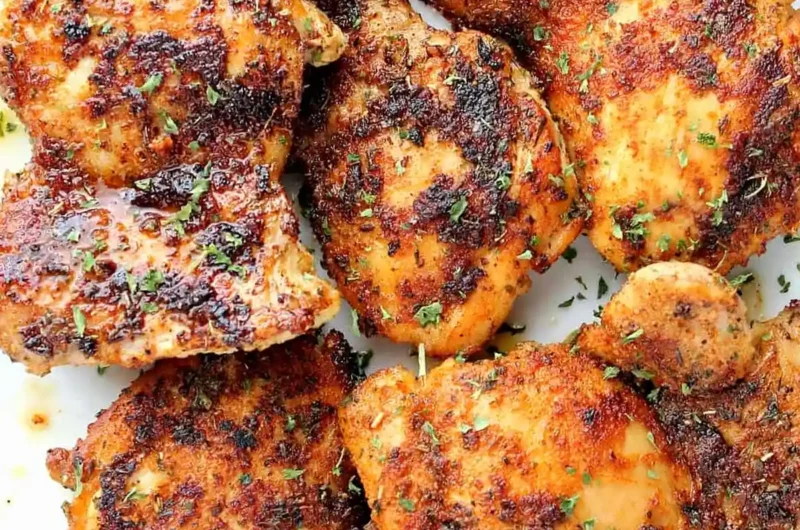
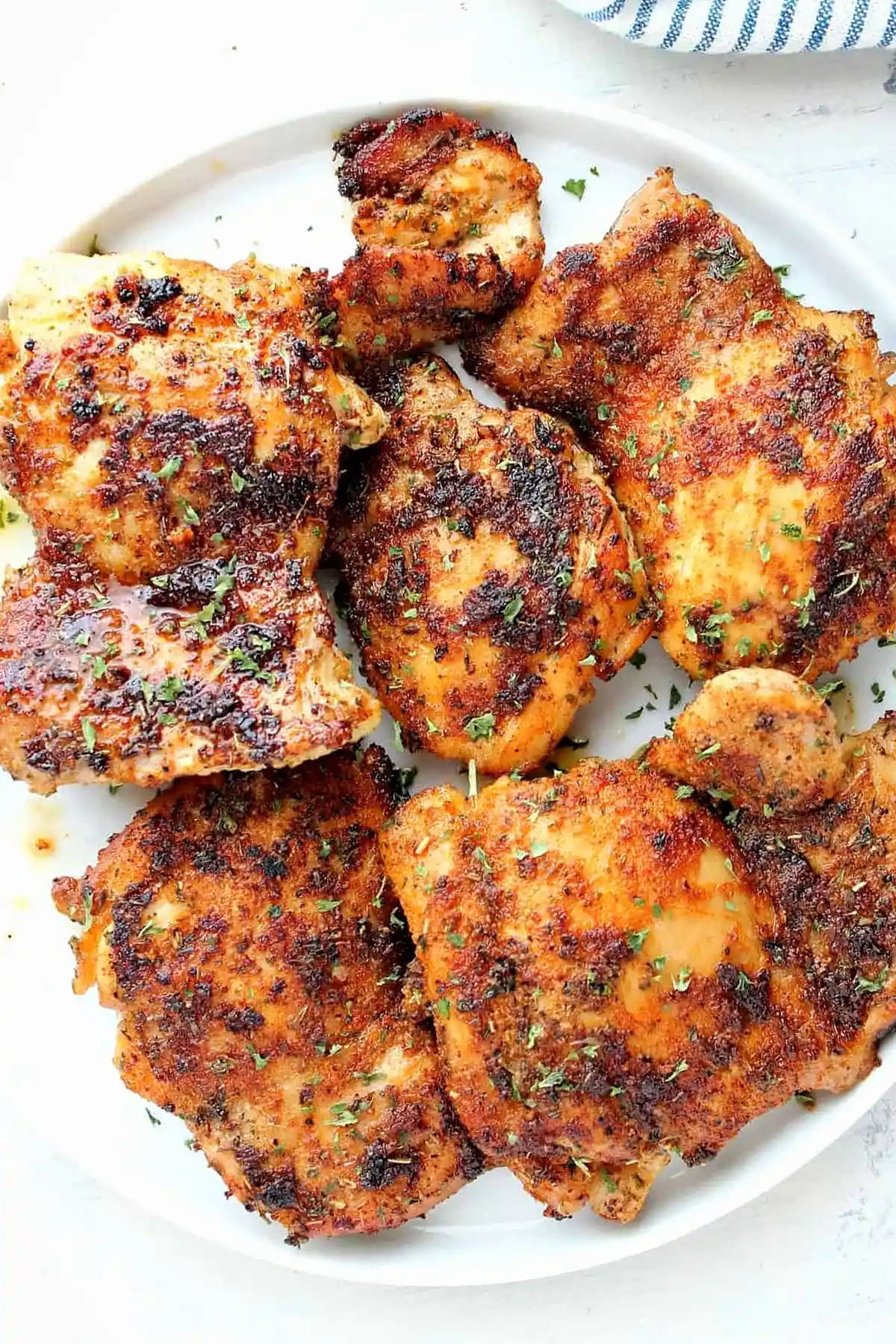
These boneless skinless chicken thighs are pan-seared to achieve a golden-brown finish and a juicy interior. This quick stove-top method is ideal for a healthy weeknight dinner that requires minimal cleanup.
List of ingredients
- 5 boneless skinless chicken thighs – trimmed of excess fat.
- 1 tablespoon olive oil – for high-heat searing.
- 1 tablespoon unsalted butter – adds richness and browning.
- ½ teaspoon Italian seasoning – a blend of Mediterranean herbs.
- ½ teaspoon dried parsley – for a mild herbal note.
- ½ teaspoon sweet paprika – provides color and a subtle sweetness.
- ½ teaspoon garlic powder – for deep savory flavor.
- ½ teaspoon onion powder – complements the garlic and paprika.
- ¼ teaspoon black pepper – for a touch of spice.
- ½ teaspoon salt – to enhance all other flavors.
step-by-step instructions
- Prep the meat: Trim off any excess fat from the chicken thighs to ensure even cooking.
- Season: In a small bowl, mix the spices and sprinkle them over the chicken. Rub the seasoning firmly into the meat, then flip and repeat on the other side.
- Heat the pan: Add olive oil to the skillet and heat it over medium heat. Add the butter and let it melt completely.
- Sear: Cook chicken thighs in batches of 3 to 4 to avoid crowding the pan. Cook for 5 minutes on one side, then flip and cook for 5 to 7 minutes on the other side until golden brown.
- Verify doneness: Use a meat thermometer to ensure the thickest part of each thigh reaches at least 165 degrees F.
- Rest: Remove the thighs from the pan and let them sit on a plate for a few minutes to allow juices to redistribute.
Pro Cooking Techniques for Better Searing
Rubbing Seasoning into the Meat
Instead of just sprinkling the spices on top, use your hands to press the seasoning into the surface of the chicken. This ensures the spices adhere to the meat during the searing process and prevents them from falling off into the oil. A good rub creates a more consistent crust and deeper flavor profile.
Achieving the Right Pan Temperature
Ensure your skillet is hot before adding the meat to prevent the chicken from sticking. If the pan is too cold, the meat will release its juices and boil rather than sear, resulting in a grey exterior. You can test the heat by dropping a small piece of butter in; it should sizzle immediately upon contact.
Preventing Pan Crowding
Cooking the chicken in batches of 3 to 4 prevents the pan temperature from dropping too sharply. When too many pieces are added at once, the moisture released from the meat creates steam, which inhibits browning. Leaving space between the thighs allows the heat to circulate and create a proper golden crust.
Identifying the Natural Release Point
Do not force the chicken to flip if it feels stuck to the pan surface. The meat will naturally release from the skillet once a proper sear has formed on the bottom. If you tug and it resists, wait another minute or two before attempting to flip it again.
Temperature and Safety Guidelines
Using a Digital Meat Thermometer
A digital thermometer is the most reliable way to ensure chicken is cooked safely without overdoing it. Insert the probe into the thickest part of the thigh, avoiding the pan surface. This removes the guesswork and prevents the common mistake of cutting into the meat to check the color.
Ensuring a Safe Internal Temperature
The USDA recommends an internal temperature of 165 degrees F for poultry to eliminate harmful bacteria. However, chicken thighs are more forgiving than breasts and can often handle slightly higher temperatures without becoming dry. Aim for exactly 165 degrees F for the best balance of safety and moisture.
The Importance of Resting the Meat
Letting the chicken rest for 5 minutes allows the muscle fibers to relax and the juices to redistribute throughout the meat. Slicing into the chicken immediately after cooking causes the juices to run out onto the plate. Proper resting ensures every bite remains moist and succulent.
Recommended Side Dish Pairings
Pairing with Root Vegetables
Roasted carrots and potatoes complement the savory spices of the chicken. Toss sliced carrots and cubed potatoes in olive oil, salt, and pepper, then roast at 400 degrees F until tender. The sweetness of the roasted carrots balances the garlic and onion notes of the seasoning.
Adding Green Vegetables
Sauteed spinach or mushrooms provide a fresh, earthy contrast to the rich pan-seared meat. Cook them in the same skillet used for the chicken to pick up the remaining browned bits and butter. Steamed broccoli is another excellent option for a lighter, nutrient-dense side.
Serving with Grains or Pasta
Serve these thighs over a bed of fluffy white rice or quinoa to soak up any remaining pan juices. Alternatively, a simple buttered pasta with a sprinkle of parmesan cheese works well. These grains provide the necessary carbohydrates to make the meal more filling.
Low-Carb Side Options
For a low-carb or ketogenic meal, replace potatoes with mashed cauliflower. Steam cauliflower florets until soft, then blend with a small amount of butter and salt. A fresh garden salad with a lemon vinaigrette also adds a crisp element to the plate.
Ingredient Substitutions and Modifications
Replacing Butter with Oil
If you prefer a dairy-free version, replace the tablespoon of butter with an additional tablespoon of olive oil or avocado oil. While butter adds a specific nutty flavor and aids in browning, a high-smoke point oil is safer for very high temperatures. Avocado oil is particularly effective for those seeking a neutral flavor.
Adjusting the Spice Mix
If you lack Italian seasoning, you can create a substitute using dried oregano, basil, and thyme. For a spicier version, add a pinch of cayenne pepper or replace the sweet paprika with smoked paprika for a wood-fired taste. Adjust the salt levels based on your dietary preferences.
Using Different Chicken Cuts
While this recipe is designed for thighs, you can use boneless skinless chicken breasts by adjusting the cook time. Breasts cook faster and dry out more easily, so reduce the searing time to 4-6 minutes per side. Always use a thermometer to prevent overcooking the leaner meat.
Storage and Meal Prep Advice
Refrigerating Cooked Chicken
Store leftover chicken thighs in an airtight glass or plastic container in the refrigerator. They will remain fresh and safe to eat for up to 3 to 4 days. Ensure the chicken has cooled slightly before sealing the lid to prevent excess condensation from making the crust soggy.
Freezing for Long-Term Use
Cooked chicken thighs can be frozen for up to 3 months for long-term meal prep. Wrap each piece individually in parchment paper before placing them in a heavy-duty freezer bag. This prevents the pieces from sticking together and reduces the risk of freezer burn.
Using Leftovers for Salads
Cold sliced chicken thighs make an excellent protein addition to a Caesar or Greek salad. Slice the rested meat into thin strips and place them over fresh greens. The seasoning on the chicken adds enough flavor that you can use a lighter dressing on the salad.
Effective Reheating Methods
Oven Reheating for Texture
To maintain the golden-brown crust, reheat the chicken in the oven at 325 degrees F. Place the thighs on a baking sheet and heat for 10 to 15 minutes until warmed through. This method prevents the meat from becoming rubbery, which can happen with other heating methods.
Microwave Reheating for Speed
For a quick reheat, place the chicken on a microwave-safe plate and cover it with a damp paper towel. Heat on medium power in 30-second intervals to avoid overcooking the meat. Be aware that the microwave will soften the exterior sear and may make the meat slightly tougher.
Stovetop Reheating
Add a teaspoon of water or a small knob of butter to a skillet over medium-low heat. Place the chicken in the pan and cover it with a lid for 3 to 5 minutes. This creates a small amount of steam to moisten the meat while reheating the bottom surface.
Common Troubleshooting
Chicken Sticking to the Pan
If the chicken sticks, it is usually a sign that the pan was not hot enough or the meat was added too early. Wait for the butter to stop foaming and the oil to shimmer before adding the chicken. If it sticks during the process, leave it alone for another minute to allow the sear to complete.
Meat Turning Out Dry
Dry chicken is typically the result of overcooking or skipping the resting phase. Ensure you remove the meat from the heat exactly when it hits 165 degrees F. If the chicken is consistently dry, check that you are using boneless thighs rather than breasts, as thighs have more intramuscular fat.
Spices Burning in the Pan
If the seasonings turn black and bitter, the heat is too high. Lower the temperature to medium and ensure you are using a combination of oil and butter. The butter helps distribute heat, while the oil prevents the butter from burning at high temperatures.
Frequently Asked Questions
How do I know the chicken is done without a thermometer?
You can check for doneness by piercing the thickest part of the thigh with a knife; the juices should run clear rather than pink. Additionally, the meat should feel firm to the touch and bounce back when pressed. However, a thermometer is the only way to be certain of the temperature.
Can I use skin-on chicken thighs?
Yes, you can use skin-on thighs, but you should start them skin-side down in a cold pan or over medium heat to render the fat. Cook the skin side for longer, about 8 to 10 minutes, until the skin is crispy. Follow the same seasoning and internal temperature rules as the skinless version.
Should I salt the chicken before adding other spices?
In this recipe, the salt is mixed with the other spices to ensure an even distribution across the meat. Rubbing the combined mixture into the chicken allows the salt to penetrate the meat alongside the herbs. There is no need to salt the meat separately before applying the spice rub.
What is the best pan for this recipe?
A cast-iron skillet is the best choice because it retains heat exceptionally well and creates a superior sear. A stainless steel skillet is also a great option for browning. Avoid non-stick pans if possible, as they cannot handle the high heat required for a professional-style crust.
Print
Pan-Seared Seasoned Chicken Thighs
- Total Time: 25 minutes
- Yield: 5 servings 1x
- Diet: General
Description
These Skillet Chicken Thighs are the best, pan-seared boneless skinless chicken thighs ever! This stove-top cooking method is simple to follow, even for beginners. Serve them with roasted potatoes and carrots, sauteed spinach or mushrooms and a simple salad, for a wholesome meal your whole family will love.
Ingredients
- 5 boneless skinless chicken thighs
- 1 tablespoon olive oil
- 1 tablespoon unsalted butter
- ½ teaspoon Italian seasoning
- ½ teaspoon dried parsley
- ½ teaspoon sweet paprika
- ½ teaspoon garlic powder
- ½ teaspoon onion powder
- ¼ teaspoon black pepper
- ½ teaspoon salt
Instructions
- Step: Trim off any excess fat from the thighs.
- Step: In a small bowl, mix spices and sprinkle over chicken. Rub into the meat. Flip and repeat on the other side.
- Step: Add oil to pan and heat up on medium heat. Add butter and let it melt.
- Step: Cook chicken thighs, 3 to 4 at a time, not to crowd the pan. Cook 5 minutes on one side, then flip and cook 5 to 7 minutes on the other side, until golden brown.
- Step: Always check with the meat thermometer. It should show at least 165 degrees F in the thickest part of each thigh.
- Step: Remove thighs from pan and let them sit on a plate for a few minutes, so the juices can redistribute inside.
Notes
Make sure your pan is hot before adding the chicken to ensure browning. Do not over-crowd the pan; cook in batches if necessary. If the chicken sticks to the pan, it is not ready to be flipped.
- Prep Time: 10 minutes
- Cook Time: 15 minutes
- Category: Main Dish
- Method: Pan-searing
- Cuisine: American
Nutrition
- Serving Size: 1 serving
- Calories: 182 kcal
- Sugar: 1 g
- Sodium: 334 mg
- Fat: 10 g
- Saturated Fat: 3 g
- Unsaturated Fat: 7 g
- Trans Fat: 0 g
- Carbohydrates: 1 g
- Fiber: 1 g
- Protein: 22 g
- Cholesterol: 113 mg
Keywords: skillet chicken thighs, pan-seared chicken, boneless skinless chicken thighs, easy dinner