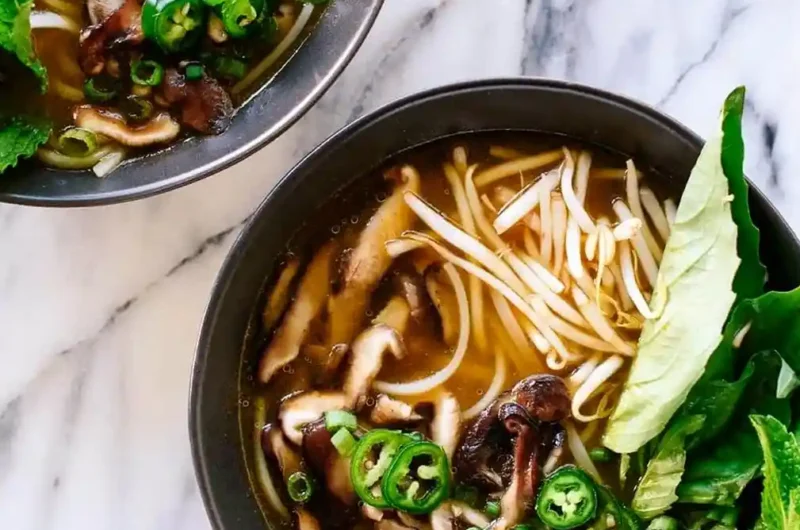
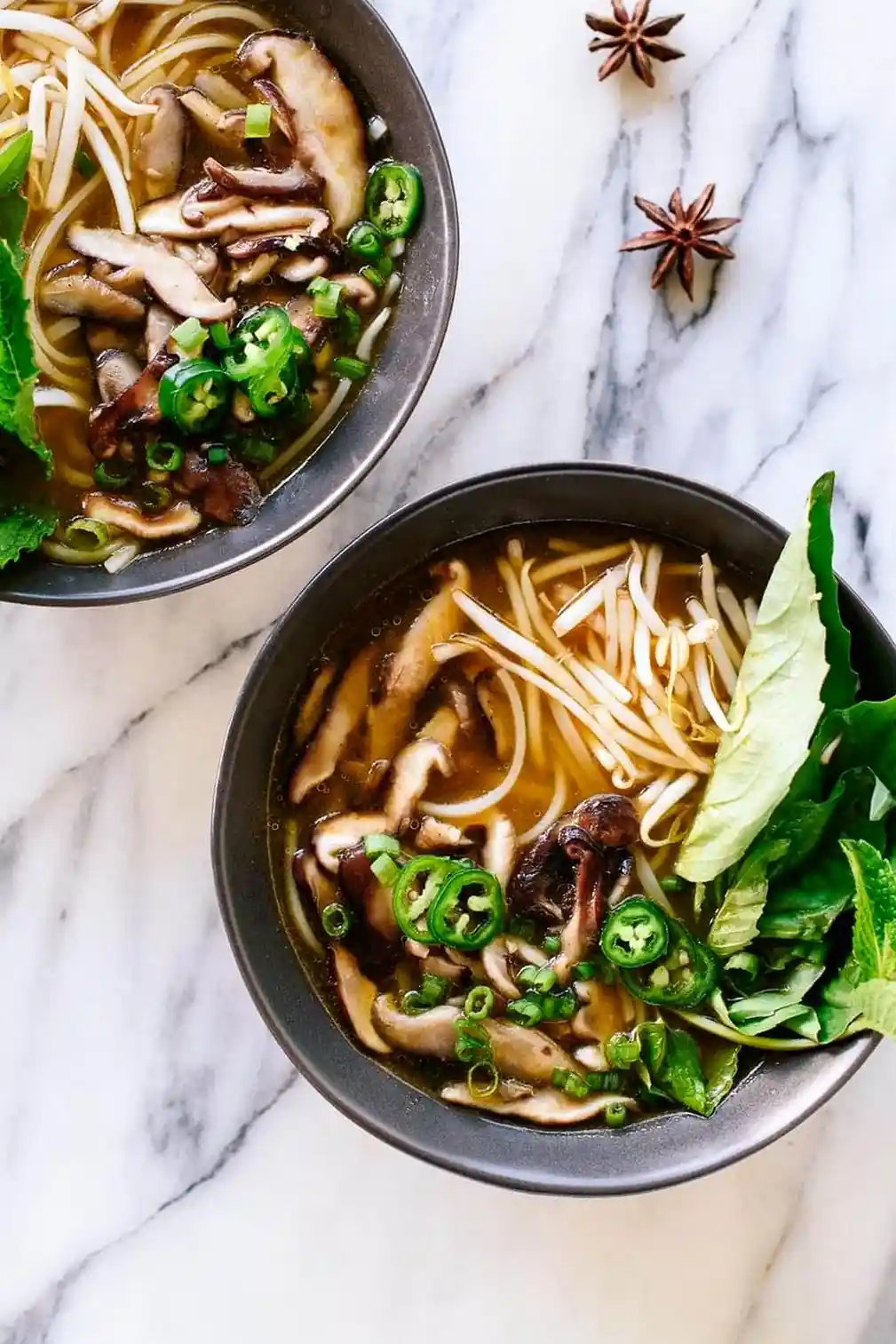
This aromatic Vietnamese-style noodle soup delivers deep, savory flavors using a blend of toasted spices and earthy mushrooms. It is a nourishing meal that combines a light broth with fresh, crisp garnishes for a balanced dining experience.
List of ingredients
- Two 3-inch cinnamon sticks – provide warmth and aroma.
- 3 whole cloves – add a pungent, spicy depth.
- 2 star anise – essential for the traditional pho scent.
- 1 large white onion, peeled and quartered – creates a savory base.
- 4-inch piece of fresh ginger, peeled and halved lengthwise – adds zesty heat.
- 4 cups (32 ounces) vegetable stock or broth – the main savory liquid.
- 4 cups water – balances the intensity of the stock.
- 2 tablespoons reduced-sodium tamari or soy sauce – adds salt and rich color.
- 6 ounces rice noodles – the traditional starch base.
- 1 tablespoon avocado oil, mild extra-virgin olive oil, or neutral oil – for searing mushrooms.
- 5 ounces thinly sliced shiitake mushrooms – provide a meaty texture.
- Salt – for seasoning to taste.
- Mung bean sprouts – for a fresh, crunchy texture.
- Fresh basil (preferably Thai basil) or cilantro – for herbal brightness.
- Fresh mint sprigs – adds a cool, refreshing note.
- Thinly sliced green onions, mostly green parts – for a mild onion finish.
- Very thinly sliced fresh jalapeño – adds heat (optional).
- Small lime wedges – provides essential acidity to balance the broth.
step-by-step instructions
- Toast the Spices: Place a medium soup pot or Dutch oven over medium heat. Add the cinnamon sticks, cloves, and star anise, stirring occasionally for 3 to 4 minutes until they become fragrant.
- Simmer the Broth: Stir in the quartered onion, halved ginger, vegetable stock, water, and tamari. Bring the liquid to a boil over high heat, then immediately lower the heat to maintain a gentle simmer for 30 minutes.
- Prepare the Noodles: While the broth simmers, cook the rice noodles according to the package instructions. Drain them and set them aside.
- Sauté the Mushrooms: Heat oil in a medium skillet over medium heat until shimmering. Add the sliced shiitake mushrooms and a few dashes of salt, cooking for 4 to 6 minutes until tender and lightly browned.
- Strain and Season: Use a small metal sieve or colander to strain out the onion, ginger, and whole spices from the broth. Taste the liquid and add extra tamari or salt until the spice flavors are prominent.
- Assemble the Bowls: Ladle the hot broth into bowls. Add a portion of cooked noodles and sautéed mushrooms, then top with sprouts, basil, mint, green onions, jalapeño, and a squeeze of lime.
Broth Flavor Optimization
Charring Aromatics for Depth
For a more traditional and intense flavor, roast the onion and ginger before adding them to the pot. Slice the onion in half and leave the skin on the ginger for protection. Roast them cut-side down on a baking sheet at 500 degrees Fahrenheit for 15 to 20 minutes until charred.
Managing the Simmer Temperature
Keep the broth at a gentle simmer rather than a rolling boil. High heat can make the broth cloudy and may cause the delicate spices to become overly bitter. A slow simmer ensures the flavors meld without compromising the clarity of the soup.
Adjusting Salt and Umami
Because vegetable stocks vary in sodium content, always taste the broth after straining. If the flavor feels flat, add small increments of tamari or salt. These ingredients act as flavor enhancers that make the cinnamon and anise more perceptible.
Ingredient Substitutions and Variations
Alternative Mushroom Options
While shiitake mushrooms offer the best meaty texture, you can use king oyster mushrooms or cremini mushrooms as alternatives. Slice them thinly to ensure they cook evenly in the skillet. If omitting mushrooms, stir two teaspoons of oil directly into the broth for added body.
Adding Plant-Based Proteins
To make the meal more filling, add crispy fried tofu cubes or steamed edamame to each bowl. These proteins pair well with the aromatic broth and provide additional satiety. Avoid adding proteins directly into the simmering broth to prevent them from becoming too soft.
Gluten-Free Adjustments
Ensure you use a certified gluten-free tamari instead of standard soy sauce. Tamari is naturally gluten-free and provides a richer, slightly sweeter profile than most soy sauces. Check the label of your vegetable stock to ensure it is also gluten-free.
Noodle Preparation and Handling
Preventing Noodle Clumping
After cooking the rice noodles, rinse them briefly with cold water to remove excess starch. This prevents the noodles from sticking together while they wait to be served. If they clump, a quick dip in hot water will loosen them.
Selecting the Right Noodle Type
Use flat rice noodles for a traditional pho experience. The wider surface area of flat noodles allows the broth to cling to the pasta more effectively. Avoid using thin vermicelli unless you prefer a much lighter texture.
Cooking Noodles Separately
Always cook the noodles in a separate pot rather than directly in the broth. Cooking starch in the soup thickens the liquid and makes it cloudy. This separation ensures the broth remains light and clear.
Serving and Presentation Tips
Customizing the Garnish Platter
Serve the mung bean sprouts, fresh herbs, jalapeños, and lime wedges on a side platter. This allows each person to customize the freshness and spice level of their bowl. It also prevents the herbs from wilting too quickly in the hot soup.
Balancing the Acidity
The lime wedge is a critical component of the dish. The acidity cuts through the richness of the sautéed mushrooms and the warmth of the spices. Squeeze the lime over the bowl immediately before eating for the best results.
Using Traditional Utensils
Serve the pho with a combination of chopsticks and a deep soup spoon. The chopsticks are used to lift the noodles and mushrooms, while the spoon captures the broth and garnishes. This method is the most efficient way to enjoy the various textures.
Storage and Reheating Advice
Storing Components Separately
If you have leftovers, store the broth, cooked noodles, and sautéed mushrooms in separate airtight containers. Storing noodles in the broth causes them to absorb all the liquid and become mushy. This method preserves the integrity of each component.
Reheating the Broth
Reheat the broth on the stovetop over medium heat until it reaches a simmer. Avoid microwaving the broth for long periods, as this can concentrate the saltiness too much. Once the broth is hot, pour it over the pre-warmed noodles.
Fresh Garnish Management
Do not store the fresh garnishes mixed into the soup. Keep sprouts, basil, and mint in a separate container with a damp paper towel to maintain crispness. Add these fresh elements only when the bowl is ready to be served.
Troubleshooting Common Issues
Correcting a Bland Broth
If the broth lacks depth, check the balance of salt and acidity. Often, a small addition of soy sauce or a squeeze of lime can wake up the dormant spice flavors. Ensure you simmered the spices for the full recommended time.
Managing Overcooked Noodles
If the noodles are too soft, reduce the boiling time by one minute in the future. Rice noodles continue to cook slightly once they are hit with the boiling broth. Aim for an ‘al dente’ texture during the initial boil.
Reducing Excessive Spice
If the star anise or cloves feel too overpowering, dilute the broth with a small amount of water or additional unsalted vegetable stock. Adding more rice noodles or sprouts can also help balance the intensity of the spices.
Frequently Asked Questions
Can I use a slow cooker for the broth?
Yes, you can place the onion, ginger, spices, stock, and tamari in a slow cooker. Cook on low for 6 to 8 hours or on high for 3 to 4 hours. Remember to strain the solids before serving.
What is the best oil for the mushrooms?
Avocado oil is ideal because of its high smoke point and neutral flavor. Extra-virgin olive oil works well if you prefer a slight fruitiness, but ensure the heat is not too high to avoid burning the oil.
How long does the broth stay fresh in the fridge?
The strained broth can be stored in the refrigerator for up to 4 to 5 days. For longer storage, it can be frozen for up to 3 months in a freezer-safe container.
Can I use dried mushrooms instead of fresh?
Dried shiitakes can be used, but they must be rehydrated in warm water for at least 20 minutes first. Squeeze out the excess water before sautéing them in oil as directed in the recipe.
Is there a substitute for Thai basil?
If Thai basil is unavailable, standard sweet basil or fresh cilantro are excellent alternatives. Mint is also highly recommended to provide the necessary aromatic contrast to the cinnamon.
Print
Savory Vegetarian Pho
- Total Time: 50 minutes
- Yield: 4 servings 1x
- Diet: Vegetarian
Description
This vegetarian pho (Vietnamese noodle soup) is full of flavor, thanks to spices, herbs and sautéed shiitake mushrooms! It’s easy and fun to make, too.
Ingredients
- Two 3-inch cinnamon sticks
- 3 whole cloves
- 2 star anise
- 1 large white onion, peeled and quartered
- 4-inch piece of fresh ginger, peeled and halved lengthwise
- 4 cups vegetable stock or broth
- 4 cups water
- 2 tablespoons reduced-sodium tamari or soy sauce
- 6 ounces rice noodles
- 1 tablespoon avocado oil, mild extra-virgin olive oil or neutral-flavored oil
- 5 ounces thinly sliced shiitake mushrooms
- Salt
- Mung bean sprouts
- Sprigs of fresh basil or cilantro
- Sprigs of fresh mint
- Thinly sliced green onions
- Thinly sliced fresh jalapeño
- Small wedges of lime
Instructions
- Step: Warm a medium soup pot or Dutch oven over medium heat. Add the cinnamon sticks, cloves, and star anise and toast until fragrant, stirring occasionally, about 3 to 4 minutes.
- Step: Add the onion, ginger, vegetable stock, water and tamari. Raise the heat to high and bring the mixture to a boil, then reduce the heat as necessary to maintain a gentle simmer. Simmer for 30 minutes.
- Step: Prepare the rice noodles by cooking them according to package directions and set them aside.
- Step: Warm the oil in a medium skillet over medium heat. Add the mushrooms and a few dashes of salt. Cook until the mushrooms are tender and lightly browned, about 4 to 6 minutes, then set them aside.
- Step: Strain out the onions, ginger and spices from the broth. Season to taste with extra tamari and/or salt.
- Step: Ladle the broth into bowls, add cooked noodles and mushrooms, and add fresh garnishes and lime. Serve immediately.
Notes
For more flavor, char onions and ginger before adding them to the pot. For a gluten-free version, ensure the tamari or soy sauce is certified gluten-free. Mushrooms can be replaced with crispy tofu or steamed edamame.
- Prep Time: 20 minutes
- Cook Time: 30 minutes
- Category: Soup
- Method: Stovetop
- Cuisine: Vietnamese
Nutrition
- Serving Size: 1 bowl
- Calories: 280 kcal
- Sugar: 7 g
- Sodium: 920 mg
- Fat: 5 g
- Saturated Fat: 1 g
- Unsaturated Fat: 4 g
- Trans Fat: 0 g
- Carbohydrates: 46 g
- Fiber: 5 g
- Protein: 9 g
- Cholesterol: 0 mg
Keywords: vegetarian pho, Vietnamese noodle soup, vegan pho, shiitake mushroom soup, healthy Vietnamese recipes