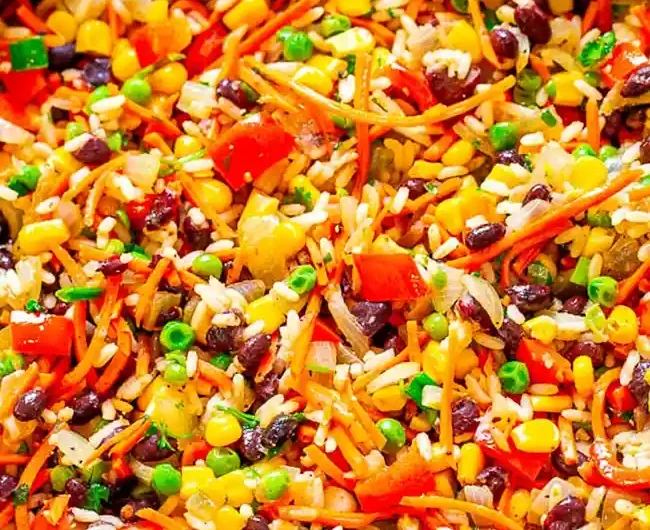
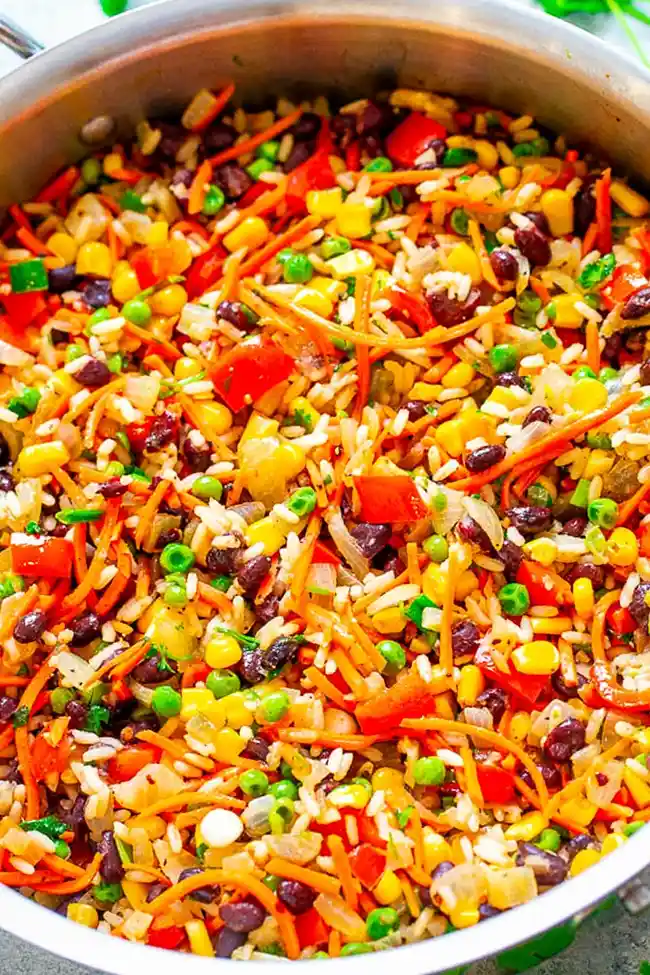
This nutrient-dense meal combines black beans and a variety of colorful vegetables for a satisfying dish. It is ready in just 15 minutes and works perfectly as a main course or a hearty side.
List of ingredients
- 2 to 3 tablespoons olive oil – used for sautéing the vegetables.
- 1 large sweet Vidalia onion – diced small for consistent cooking.
- 1 large red bell pepper – diced small for sweetness and color.
- 1 to 1 1/2 cups shredded carrots – adds texture and nutrients.
- 1 to 1/2 cups corn – frozen kernels added directly to the pan.
- 1 cup peas – frozen peas added directly to the pan.
- one 15-ounce can black beans – drained and rinsed, preferably no-salt added.
- one 8-ounce package precooked white rice – or any other previously cooked rice.
- 1 to 2 teaspoons cumin – provides an earthy, aromatic base.
- 1 teaspoon kosher salt – or adjusted to your personal preference.
- 1 teaspoon freshly ground black pepper – or adjusted to taste.
- pinch cayenne pepper – optional, for a mild heat.
- 2 to 3 green onions – sliced into thin rounds for garnish.
- 2 to 4 tablespoons fresh cilantro – finely minced for brightness.
- 1 tablespoon lime juice – adds acidity to balance the savory flavors.
step-by-step instructions
- Sauté the onion: Heat olive oil in a large skillet over medium-high heat. Add the diced onion and cook for about 4 minutes, stirring occasionally, until the onion begins to soften.
- Cook the base vegetables: Stir in the diced red bell pepper and shredded carrots. Continue cooking for 3 to 4 minutes, stirring occasionally, until the vegetables are crisp-tender.
- Combine and warm: Add the corn, peas, black beans, precooked rice, cumin, salt, black pepper, and optional cayenne. Stir everything to combine and cook for about 2 minutes or until the mixture is warmed through.
- Add finishing touches: Stir in the sliced green onions, minced cilantro, and lime juice. Taste the dish and add more salt, pepper, or cumin if needed to balance the seasoning.
- Serve: Remove from heat and serve immediately while hot.
Pro Techniques for Better Texture
Use a Wide Heavy-Bottomed Skillet
A wide skillet provides more surface area, which allows the vegetables to sauté rather than steam. This ensures the onions and peppers brown slightly instead of becoming mushy. A heavy bottom prevents hot spots and ensures the rice heats evenly without burning.
Implement Proper Mise en Place
Since this recipe cooks very quickly, have all vegetables diced and spices measured before turning on the heat. The rapid succession of adding ingredients means there is little time for chopping during the process. This prevents the onions from overcooking while you prepare the carrots.
Manage the Sauté Temperature
Keep the heat at a steady medium-high to maintain a sear on the vegetables. If the pan becomes too hot, the garlic or onions may burn and turn bitter. If it is too low, the vegetables will release too much water and lose their crisp-tender texture.
Avoid Overcrowding the Pan
If you are doubling the recipe, use two skillets or cook the vegetables in batches. Overcrowding the pan drops the temperature and traps steam, which ruins the texture of the peppers and carrots. Sautéing in batches preserves the individual integrity of the vegetable pieces.
Flexible Ingredient Alternatives
Replacing White Rice with Brown Rice
Brown rice adds a nuttier flavor and more fiber to the dish. Ensure the brown rice is fully cooked and cooled before adding it to the skillet. If the brown rice feels too dry, add a tablespoon of water or vegetable broth during the final warming step.
Using Different Bean Varieties
While black beans are traditional, pinto beans or kidney beans work equally well in this recipe. Pinto beans offer a creamier texture, while kidney beans provide a firmer bite. Ensure they are rinsed thoroughly to remove excess canning sodium.
Substituting the Bell Pepper
Yellow or orange bell peppers can be used instead of red peppers for a different color profile. These alternatives are slightly milder in flavor but provide the same structural benefit. You can also use a mix of different colored peppers for a more vibrant look.
Alternative Frozen Vegetable Options
If peas or corn are unavailable, diced zucchini or frozen edamame are excellent substitutes. Zucchini should be added at the same time as the bell peppers to ensure it softens. Edamame adds an extra boost of plant-based protein to the meal.
Replacing Fresh Cilantro
Fresh flat-leaf parsley is a good alternative if you do not enjoy the taste of cilantro. While the flavor profile changes slightly, parsley still provides a necessary fresh, herbaceous note. If you prefer no herbs, simply omit them and increase the lime juice slightly.
Customizing the Taste Profile
Adding Sautéed Garlic
For a deeper savory flavor, add two cloves of minced garlic during the last minute of sautéing the onions. Garlic burns quickly, so it must be added late in the initial frying stage. This adds a pungent aroma that complements the cumin.
Increasing the Heat Level
If you prefer a spicier dish, replace the pinch of cayenne with diced fresh jalapeños. Add the jalapeños along with the red bell peppers so they can soften slightly. You can also stir in a teaspoon of sriracha or hot sauce at the very end.
Incorporating Smoked Paprika
Adding a half-teaspoon of smoked paprika provides a woody, smoky depth similar to grilled meats. This works particularly well if you are using pinto beans instead of black beans. Combine the paprika with the cumin for a more complex spice blend.
Adding Plant-Based Proteins
Cubed firm tofu or tempeh can be added to increase the protein content. Sauté the protein in olive oil first until golden brown, then remove it from the pan and set it aside. Stir the cooked protein back into the skillet during the final warming step.
Using a Different Citrus Acid
While lime is standard, lemon juice can be used for a sharper, cleaner acidity. For a more complex flavor, use a small amount of apple cider vinegar. Always add the acid at the end to keep the flavors bright and fresh.
Ways to Serve and Garnish
Adding Fresh Avocado Slices
Top the finished dish with sliced avocado or a dollop of guacamole for added creaminess. The healthy fats in the avocado contrast well with the acidity of the lime juice. This also makes the meal more filling and satisfying.
Serving with Corn Tortillas
Use this mixture as a filling for warm corn tortillas to create veggie tacos. Lightly char the tortillas over an open flame for added flavor. This transforms the dish from a skillet meal into a hand-held feast.
Incorporating Greek Yogurt or Sour Cream
A dollop of plain Greek yogurt or sour cream on top helps cool down the heat from the cayenne. Greek yogurt provides an extra protein boost while maintaining a creamy texture. Stir it in or place it on top of each serving.
Pairing with Fresh Pico de Gallo
Spoon fresh pico de gallo over the rice and beans to add raw crunch and acidity. The mixture of raw onion, tomato, and cilantro complements the cooked vegetables. This adds a layer of freshness to the warm, savory base.
Preservation and Warming Tips
Refrigerator Storage Guidelines
Store leftovers in an airtight glass or plastic container in the refrigerator. This dish stays fresh and safe to eat for up to one week. Keep the container tightly sealed to prevent the rice from absorbing odors from other foods.
Freezing for Long-Term Use
This recipe is excellent for freezer meals; simply portion it into individual containers. It can be stored in the freezer for up to three months without losing quality. Allow a small amount of space at the top of the container for expansion during freezing.
Reheating on the Stovetop
For the best texture, reheat the mixture in a skillet over medium heat. Add a splash of water or vegetable broth to loosen the rice and prevent it from sticking. Stir occasionally until the dish is heated through evenly.
Microwave Reheating Methods
Place a portion in a microwave-safe bowl and cover it with a damp paper towel. Heat in 1-minute intervals, stirring in between to distribute the heat. The damp towel creates steam, which prevents the rice from becoming hard or dry.
Solving Common Cooking Problems
Fixing Overcooked Vegetables
If the vegetables become too mushy, reduce the cooking time for the peppers and carrots in future batches. To fix a current batch, add a handful of fresh raw spinach or frozen peas at the very end. This restores some of the missing texture and color.
Adjusting Excessive Saltiness
If the dish tastes too salty, stir in an extra half-cup of cooked unsalted rice. Adding more unseasoned vegetables, like diced zucchini, also helps dilute the salt concentration. A squeeze of extra lime juice can also mask excess salt.
Correcting a Lack of Flavor
If the dish tastes bland, check the balance of salt and acid. Adding another pinch of cumin or an extra teaspoon of lime juice usually resolves the issue. If it still feels flat, a small amount of soy sauce or tamari can add needed umami.
Handling Clumped Rice
If the precooked rice is clumping, break it apart with a fork before adding it to the skillet. You can also toss the rice with a teaspoon of oil to separate the grains. This ensures that every grain of rice is coated in the seasonings.
Commonly Asked Questions
Can I use canned corn instead of frozen?
Yes, canned corn is a perfectly acceptable substitute. Ensure you drain and rinse the corn thoroughly to remove excess sodium and canning liquid. Add it at the same step as the frozen corn.
Is this recipe suitable for meal prep?
This is an ideal meal prep recipe because it holds its texture well over several days. The abundance of vegetables prevents the rice from becoming boring. It can be eaten cold as a salad or warmed up for a quick lunch.
How do I store leftovers safely?
Cool the food quickly and place it in shallow airtight containers. Do not leave the mixture at room temperature for more than two hours. Ensure the refrigerator is set to 40 degrees Fahrenheit or below.
Can I use a different type of oil?
Any neutral oil with a high smoke point will work, such as avocado oil or grapeseed oil. Avoid using extra virgin olive oil if you are cooking at very high temperatures to prevent smoking. Unsalted butter can also be used for a richer flavor.
Can I make this in a slow cooker?
This recipe is designed for a fast skillet method, but you can adapt it for a slow cooker. Sauté the onions and peppers first for flavor, then add all other ingredients and cook on low for 3-4 hours. Be careful not to overcook the rice, as it may become mushy.
Print
Very Veggie Rice and Beans
- Total Time: 15 minutes
- Yield: 5 servings 1x
- Diet: Vegan
Description
EASY, ready in 15 minutes, and amps up rice and beans with an abundance of vegetables!! Healthy, Mexican-inspired food that tastes like comfort food and keeps you satisfied for hours!!
Ingredients
- 2 to 3 tablespoons olive oil
- 1 large sweet Vidalia onion, diced small
- 1 large red bell pepper, diced small
- 1 to 1 1/2 cups shredded carrots
- 1 to 1 1/2 cups corn
- 1 cup peas
- one 15-ounce can black beans, drained and rinsed
- one 8-ounce package precooked white rice
- 1 to 2 teaspoons cumin
- 1 teaspoon kosher salt
- 1 teaspoon freshly ground black pepper
- pinch cayenne pepper
- 2 to 3 green onions, sliced into thin rounds
- 2 to 4 tablespoons fresh cilantro, finely minced
- 1 tablespoon lime juice
Instructions
- Step 1: To a large skillet, add the olive oil, onion, and cook over medium-high heat for about 4 minutes, or until it begins to soften; stir occasionally.
- Step 2: Add the bell pepper, carrots, and cook for about 3 to 4 minutes, or until vegetables are crisp-tender; stir occasionally.
- Step 3: Add the corn, peas, beans, rice, cumin, salt, pepper, optional cayenne, stir to combine, and cook for about 2 minutes or until warmed through; stir occasionally.
- Step 4: Add the green onions, cilantro, lime juice, stir to combine, taste and check for seasoning balance and add additional salt, pepper, cumin, etc. if desired.
- Step 5: Serve immediately.
Notes
Dish will keep airtight in the fridge for up to 1 week or in the freezer for up to 3 months.
- Prep Time: 5 minutes
- Cook Time: 10 minutes
- Category: 30-Minute Meals
- Method: Sautéing
- Cuisine: Mexican
Nutrition
- Serving Size: 1 serving
- Calories: 332 kcal
- Sugar: 9 g
- Sodium: 742 mg
- Fat: 9 g
- Saturated Fat: 1 g
- Unsaturated Fat: 8 g
- Trans Fat: 0 g
- Carbohydrates: 52 g
- Fiber: 12 g
- Protein: 12 g
- Cholesterol: 0 mg
Keywords: rice and beans, Mexican-inspired, vegan, gluten-free, healthy, 30-minute meals