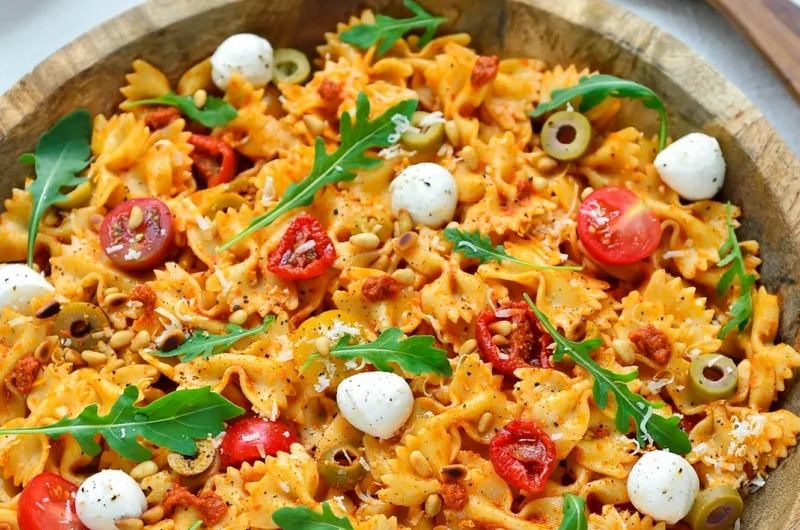
This refreshing pasta salad combines Mediterranean flavors with creamy mozzarella and bold red pesto. It is a quick, nutrient-dense meal perfect for summer lunches or outdoor gatherings.
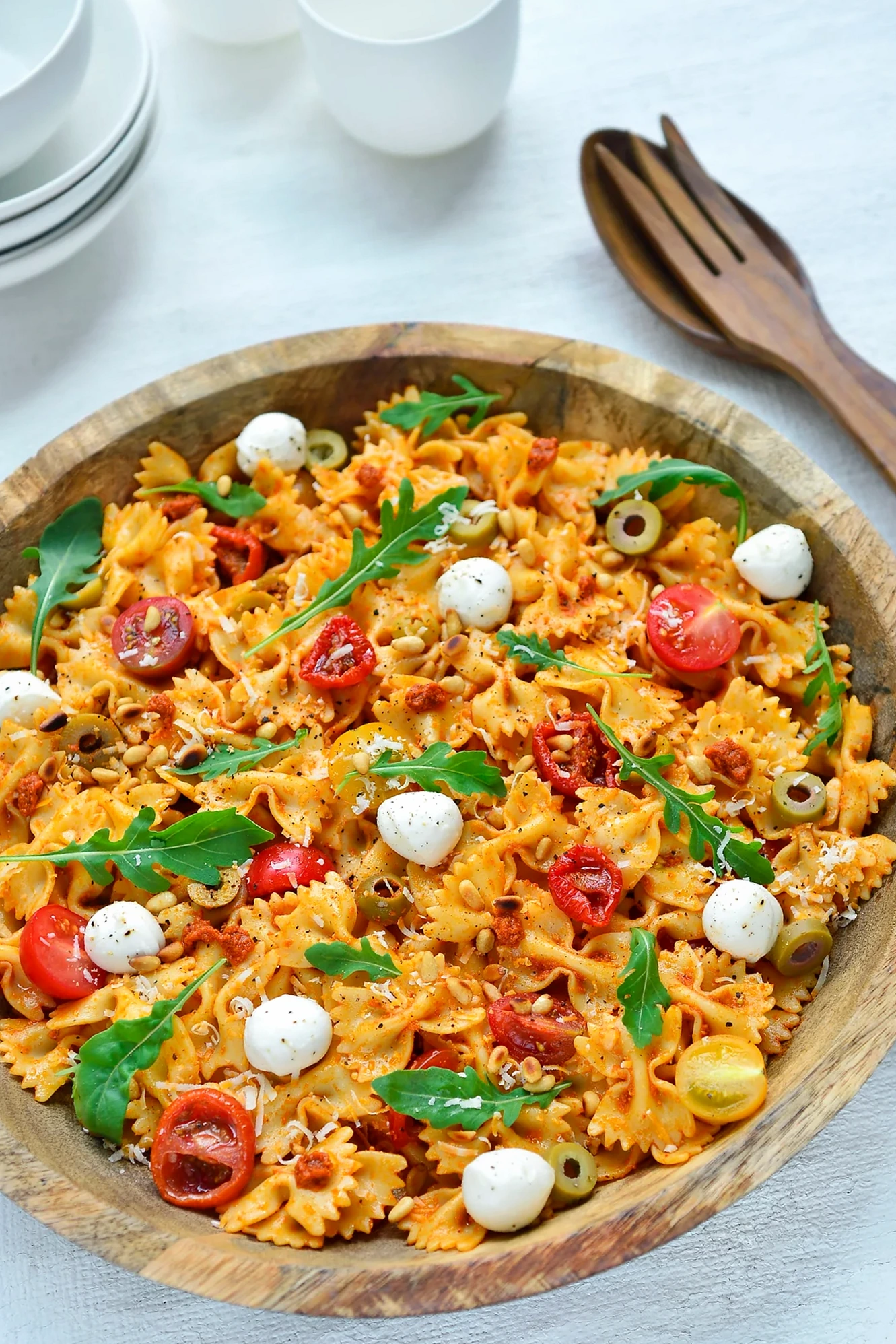
List of ingredients
- 300 gr farfalle pasta – bow-tie shapes are ideal for capturing the pesto sauce.
- 4 tbsp red pesto – provides a rich, savory base of sun-dried tomatoes and oil.
- 1 handful of cherry tomatoes, halved – adds freshness and a burst of acidity.
- 1 handful of sun-dried tomatoes – enhances the concentrated savory flavor.
- 10 mozzarella balls – small bocconcini add creamy texture and mildness.
- 1 handful of green olives, chopped – contributes a salty, briny contrast.
- 1 handful of arugula – adds a peppery, fresh leaf element.
- Parmesan cheese – shaved or grated for a nutty, salty finish.
- Roasted pine nuts – provides a toasted crunch to every bite.
step-by-step instructions
- Cook the pasta: Boil the farfalle in a large pot of salted water until tender. Drain the pasta and immediately rinse it under cold running water to stop the cooking process and prevent the noodles from sticking together, then let it drain completely.
- Mix the base: Place the cooled pasta in a large mixing bowl. Stir in the red pesto, halved cherry tomatoes, sun-dried tomatoes, mozzarella balls, and chopped green olives until all ingredients are evenly distributed and the pasta is well coated.
- Final touches: Gently fold in the fresh arugula leaves to avoid bruising them. Garnish the salad with a generous sprinkle of Parmesan cheese and the roasted pine nuts just before serving.
Optimal Preparation Tips
Preventing Pasta from Clumping
Rinsing the pasta under cold water is essential for cold salads. This process removes excess surface starch that would otherwise cause the farfalle to stick together in a large mass. Ensure the pasta is well-drained before adding the pesto to prevent the sauce from becoming watery.
Toasting Pine Nuts Perfectly
Dry-toast your pine nuts in a skillet over medium heat for 3 to 5 minutes. Stir them constantly as they can burn very quickly due to their high oil content. Once they are golden brown and fragrant, remove them from the heat immediately to stop the cooking process.
Selecting High Quality Red Pesto
Look for a red pesto made with olive oil and real sun-dried tomatoes rather than seed oils. The quality of the pesto dictates the overall flavor profile of the salad. If the store-bought pesto is too thick, you can thin it with a teaspoon of olive oil for easier mixing.
Handling Delicate Arugula
Add the arugula at the very last moment. Because the leaves are tender, they can wilt quickly if they sit in the acidic pesto for too long. Folding them in gently ensures they maintain their volume and peppery snap.
Achieving the Right Pasta Texture
Cook the pasta slightly al dente. Since the pasta will be chilled, it tends to firm up slightly. Cooking it just until the center is barely firm prevents the salad from becoming mushy after it has marinated in the dressing.
Balancing Salt Levels
Be mindful of the salt when boiling the pasta water. Between the salted water, the briny olives, the salty Parmesan, and the pesto, the dish can easily become over-salted. Taste the components before adding any additional salt to the final mix.
Ingredient Substitutions
Alternative Pasta Shapes
If farfalle is unavailable, fusilli or rotini are excellent substitutes. These spiral shapes have ridges and grooves that grip the red pesto and small ingredients like chopped olives very effectively. Avoid long pastas like spaghetti which are difficult to eat in a salad format.
Different Cheese Options
Substitute mozzarella balls with cubed feta or goat cheese for a tangier flavor. Feta provides a saltier punch that complements the sun-dried tomatoes. If you prefer a firmer texture, use small cubes of provolone or mild cheddar.
Nut-Free Crunch Alternatives
Replace roasted pine nuts with toasted sunflower seeds or pumpkin seeds for a nut-free version. These seeds provide a similar toasted flavor and crunch without the risk of nut allergies. Toasted sesame seeds can also add a unique, subtle nuttiness.
Swapping Arugula for Other Greens
Fresh baby spinach or chopped romaine lettuce can replace arugula if you prefer a milder taste. Spinach adds more nutrients and a softer texture, while romaine provides a more traditional crunch. Avoid using iceberg lettuce as it lacks the flavor needed to stand up to the pesto.
Pesto Variations
Use a classic green basil pesto instead of red pesto for a different flavor profile. While the red pesto is more intense and savory, green pesto offers a brighter, more herbal taste. You can even mix both for a complex, multi-layered sauce.
Olive Alternatives
If you dislike green olives, try chopped Kalamata olives for a deeper, saltier flavor. Alternatively, capers can provide the same briny pop without the olive taste. Simply drain them well before adding them to the pasta bowl.
Flavor Variations
Adding Plant-Based Protein
Include a can of rinsed chickpeas or cannellini beans to make the salad more filling. These legumes add protein and a creamy texture that pairs well with the mozzarella. They are especially useful if you are serving this as a main meal rather than a side.
Integrating Grilled Meats
Sliced grilled chicken breast or sautéed shrimp can be folded into the salad. Ensure the meat is fully cooled before adding it to avoid wilting the arugula. This transforms the light salad into a hearty, protein-packed dinner.
Introducing Extra Vegetables
Dice red bell peppers or yellow zucchini into the mix for extra color and sweetness. Roasted red peppers are another great addition that echo the flavor of the red pesto. Add these during the second step of the instructions.
Adding a Zesty Citrus Lift
Stir in a tablespoon of fresh lemon juice or a pinch of lemon zest. The acidity cuts through the richness of the pesto and the creaminess of the cheese. This makes the dish feel lighter and more vibrant, especially during hot weather.
Spicing it Up with Heat
Add a pinch of red chili flakes or a teaspoon of chopped jalapeños for a spicy kick. The heat contrasts beautifully with the mild mozzarella and sweet cherry tomatoes. Adjust the amount based on your heat tolerance.
Fresh Herb Enhancements
Fold in chopped fresh basil or flat-leaf parsley along with the arugula. Fresh basil reinforces the traditional Italian flavor profile, while parsley adds a clean, grassy note that freshens the palate.
Serving and Presentation
Platter Style Presentation
Spread the pasta salad on a large, shallow platter rather than serving it from a deep bowl. This prevents the heavier ingredients like mozzarella and olives from sinking to the bottom. It also showcases the vibrant colors of the tomatoes and arugula.
Mason Jar Individual Portions
For picnics, layer the ingredients in glass jars. Put the pesto and olives at the bottom, followed by the pasta, then the tomatoes and mozzarella, and top with arugula and nuts. Shake the jar before eating to distribute the dressing.
Complementary Side Dishes
Serve this salad alongside toasted garlic bread or a fresh focaccia. The bread helps soak up any extra pesto dressing left on the plate. A simple side of sliced cucumbers or a fruit platter also complements the Mediterranean theme.
Garnish for Visual Appeal
Use a vegetable peeler to create wide ribbons of Parmesan cheese instead of grating it. Place a few whole cherry tomatoes and a sprig of fresh basil on top of the dish. This gives the salad a professional, restaurant-style appearance.
Temperature Recommendations
While this is a cold salad, it tastes best when served slightly chilled rather than ice-cold. Allowing it to sit at room temperature for 10 minutes before serving allows the flavors of the pesto to open up and the cheese to soften.
Plating for a Buffet
If serving at a party, keep the roasted pine nuts and Parmesan in separate small bowls. This allows guests to customize their toppings and ensures the nuts stay crunchy throughout the duration of the event.
Storage and Freshness
Airtight Container Storage
Store the salad in a glass airtight container to keep it fresh. Glass is preferable to plastic as it does not absorb the smells of the pesto or garlic. Ensure the lid is sealed tightly to prevent the salad from picking up other fridge odors.
Refrigerator Shelf Life
This pasta salad can be kept in the refrigerator for up to 3 to 4 days. Note that the pasta may absorb some of the pesto over time, making the salad appear drier. The arugula will also lose its crispness after the first 24 hours.
Managing Moisture Levels
If the salad seems too dry after a day in the fridge, stir in a teaspoon of extra virgin olive oil. This restores the gloss and lubricates the pasta. Avoid adding water, as it will dilute the flavor of the pesto.
Keeping the Crunch
Do not store the roasted pine nuts inside the salad if you plan to keep it for several days. Store them in a separate small container and add them fresh to each portion. This prevents them from becoming soft and soggy.
Separating the Greens
For maximum freshness, store the arugula and Parmesan separately from the pasta mix. Combine them just before serving. This ensures the leaves remain vibrant green and the cheese doesn’t clump together.
Food Safety Guidelines
Keep the salad refrigerated at all times when not being served. Because it contains dairy (mozzarella and Parmesan), it should not sit at room temperature for more than two hours. This is especially important during summer outdoor events.
Make-Ahead Advice
Pre-Cooking the Pasta
You can cook and cool the pasta a day in advance. Toss it with a tiny bit of oil before storing it in the fridge to ensure the pieces stay separate. This reduces the actual assembly time to just a few minutes.
Preparing the Vegetable Mix
Halve the cherry tomatoes and chop the olives and sun-dried tomatoes ahead of time. Store these chopped ingredients in a single container. When you are ready to assemble, simply dump them into the bowl with the pasta and pesto.
Batch Preparing Pesto
If making your own red pesto, prepare a large batch and freeze it in ice cube trays. You can pop out exactly what you need for a salad and let it thaw in the fridge overnight. This saves time and reduces waste.
Layering Strategy
If preparing for a party, mix the pasta with pesto and the hard vegetables (olives, sun-dried tomatoes) first. Add the mozzarella, fresh tomatoes, and greens only an hour before the guests arrive to maintain the best texture.
Cooling the Bowl
If you are assembling the salad on a very hot day, chill your mixing bowl in the freezer for 10 minutes. This helps keep the ingredients cold during the mixing process and prevents the mozzarella from becoming too soft.
Pre-Toasting Nuts in Bulk
Toast a large quantity of pine nuts and store them in an airtight jar in a cool, dark pantry. They will stay crunchy for up to two weeks. This removes the need to heat up a pan every time you make the recipe.
Common Troubleshooting
Dealing with Dry Pasta
If the pasta has absorbed all the dressing and looks dry, do not add more salt. Instead, stir in a small amount of olive oil or a tablespoon of the oil from the sun-dried tomato jar. This adds flavor and restores the creamy consistency.
Overpowering Pesto Flavor
If the red pesto is too strong or salty, add more fresh ingredients like cherry tomatoes or a handful of baby spinach. The water content in the fresh vegetables helps dilute the intensity of the pesto without ruining the texture.
Soggy Arugula Leaves
Soggy greens happen when the salad is mixed too early or stored with the dressing. To fix this, remove the wilted greens and stir in a fresh handful of arugula right before serving. Always add greens last.
Uneven Sauce Distribution
If the pesto is clumping and not coating the pasta, ensure the pasta is completely cooled before mixing. Warm pasta can cause the oil in the pesto to separate. Use a large rubber spatula to fold the ingredients rather than stirring vigorously.
Mozzarella Releasing Water
Some mozzarella balls release water when mixed, making the salad watery. To prevent this, pat the mozzarella balls dry with a paper towel before adding them to the bowl. This keeps the dressing thick and clinging to the pasta.
Bland Taste Profile
If the salad tastes flat, add a squeeze of fresh lemon juice or a pinch of black pepper. The acid from the lemon wakes up the other flavors and cuts through the oiliness of the pesto. A tiny bit of extra Parmesan can also boost the savoriness.
Frequently Asked Questions
Can I make this salad gluten-free?
Yes, simply replace the farfalle with your favorite gluten-free pasta alternative. Corn or brown rice pasta works well. Be sure to follow the package instructions carefully as gluten-free pasta can overcook more quickly.
Is there a vegan alternative for the cheese?
You can use vegan mozzarella pearls and a nutritional yeast-based Parmesan substitute. Ensure your red pesto is also dairy-free by checking the label for cheese ingredients. The rest of the recipe is naturally vegan-friendly.
What is the best oil for roasting pine nuts?
You do not need oil to roast pine nuts because they contain plenty of natural oils. Dry-roasting in a pan is the most effective method. However, if they stick, a tiny drop of neutral oil like sunflower oil will suffice.
Can I use frozen peas in this salad?
Yes, frozen peas add a lovely pop of color and sweetness. Thaw them under warm water and pat them dry before adding them to the mix. They pair exceptionally well with the red pesto and mozzarella.
How do I stop the olives from dominating the taste?
Rinse the chopped olives under cold water before adding them to the salad. This removes excess brine and reduces the saltiness. You can also chop them into smaller pieces to distribute the flavor more evenly.
Can I use a different type of pesto?
Absolutely. While red pesto is the star here, a traditional green basil pesto or a walnut-based pesto also works. Just adjust the other ingredients; for example, green pesto pairs very well with extra fresh basil and pine nuts.
Print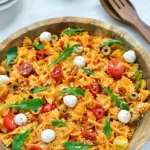
Red Pesto and Mozzarella Pasta Salad
- Total Time: 20 minutes
- Yield: 4 servings 1x
- Diet: Vegetarian
Description
A fresh pasta salad with red pesto and mozzarella combining Mediterranean flavors of sun-dried tomatoes, cherry tomatoes, and green olives with creamy mozzarella balls. Farfalle pasta is mixed with pesto, arugula, Parmesan cheese, and toasted pine nuts for a quick and flavorful meal salad, perfect for a summer lunch, picnic, or informal dinner.
Ingredients
- 300 g farfalle pasta
- 4 tbsp red pesto
- 1 handful cherry tomatoes, halved
- 1 handful sun-dried tomatoes
- 10 mozzarella balls
- 1 handful green olives, chopped
- 1 handful arugula
- Parmesan cheese
- toasted pine nuts
Instructions
- Cook: Cook the pasta in salted water. Drain and rinse under cold, running water. Let it drain.
- Mix: Put the pasta in a large bowl and mix in the red pesto, the cherry tomatoes, the sun-dried tomatoes, the mozzarella balls, and the green olives.
- Finish: Finish with arugula leaves, Parmesan cheese, and toasted pine nuts.
Notes
This dish is ideal to prepare in advance for picnics or summer gatherings.
- Prep Time: 10 minutes
- Cook Time: 10 minutes
- Category: Main Course
- Method: Boiling
- Cuisine: Italian
Nutrition
- Serving Size: 1 serving
- Calories: 450 kcal
- Sugar: 6 g
- Sodium: 720 mg
- Fat: 22 g
- Saturated Fat: 8 g
- Unsaturated Fat: 14 g
- Trans Fat: 0 g
- Carbohydrates: 41 g
- Fiber: 4 g
- Protein: 18 g
- Cholesterol: 45 mg
Keywords: pasta salad, red pesto, mozzarella, Italian, summer lunch, Mediterranean