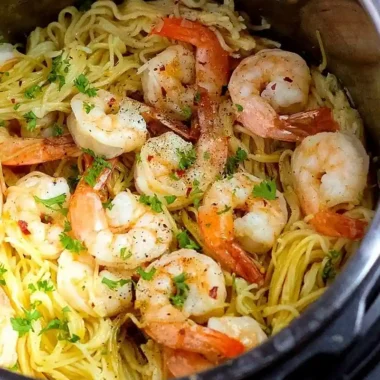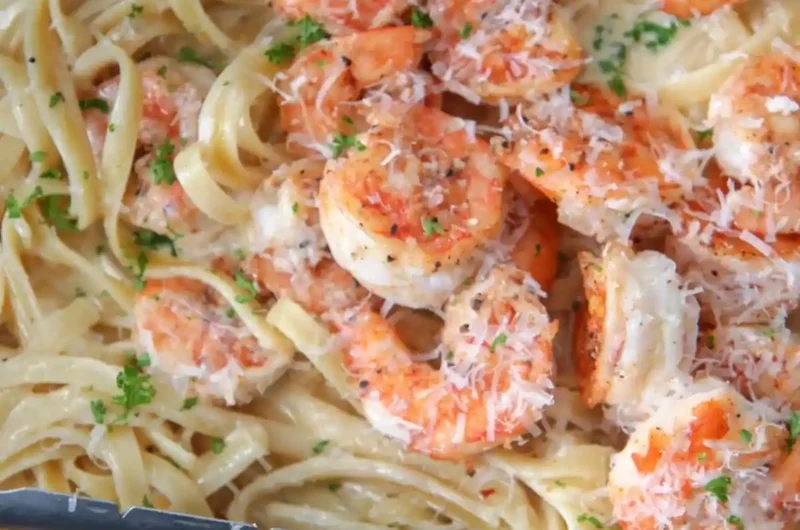
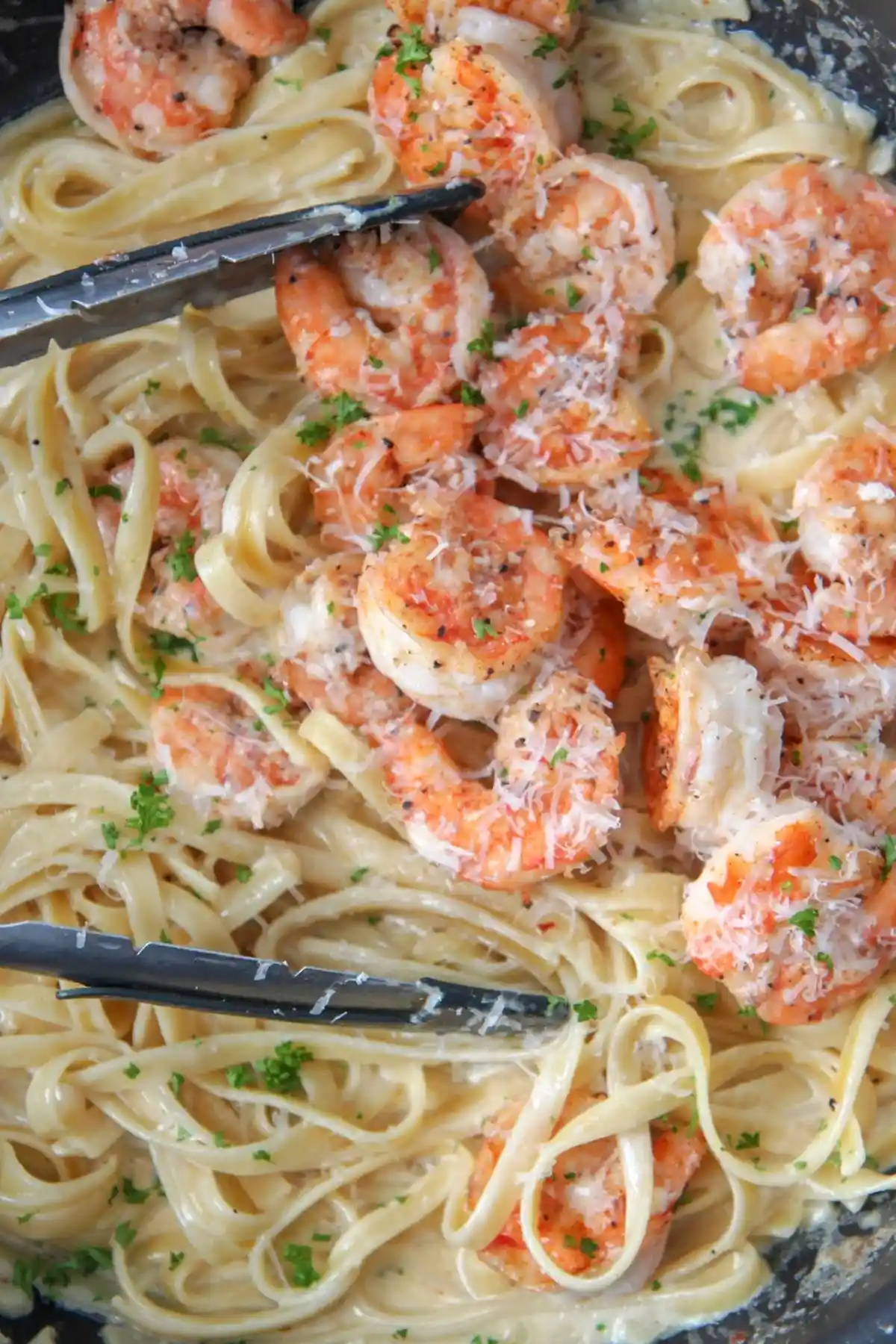
This rich pasta dish combines succulent shrimp with a velvety parmesan sauce for a restaurant-quality meal. It is an efficient recipe that delivers a decadent result in under 30 minutes.
List of ingredients
- 1 lb peeled and deveined shrimp – ensures easy eating and clean flavor.
- salt and pepper to taste – basic seasoning for the shrimp and sauce.
- 1/4 tsp paprika – adds a mild earthiness and a golden color.
- 2 tbsp oil – used for searing the shrimp at high heat.
- 3 tbsp butter – provides a rich, creamy base for the garlic.
- 2 garlic cloves – minced fresh for the best aromatic punch.
- 1/4 tsp red crushed pepper (optional) – adds a subtle heat to balance the cream.
- 1 cup heavy cream – the primary thickener for the Alfredo sauce.
- 1/4 cup parmesan cheese – freshly grated for optimal melting.
- 1/2 lb fettuccine pasta – the classic choice for thick cream sauces.
- fresh parsley for garnish (optional) – provides a fresh color and taste contrast.
step-by-step instructions
- Boil Water: Bring a large pot of salted water to a rolling boil. Salting the water ensures the pasta is seasoned from the inside out.
- Season Shrimp: Toss the peeled and deveined shrimp with salt, pepper, and paprika. Ensure the seasoning is evenly distributed on all sides.
- Sear Shrimp: Heat a large skillet with high sides over medium-high heat and add the oil. Place shrimp in the pan and cook for 1-2 minutes per side until pink and opaque.
- Remove Protein: Transfer the cooked shrimp from the skillet to a plate and set them aside. This prevents the shrimp from becoming rubbery while the sauce simmers.
- Sauté Aromatics: In the same skillet, add the butter, minced garlic, and red crushed pepper. Cook for a few seconds until the garlic is fragrant but not browned.
- Simmer Sauce: Stir in the heavy cream and parmesan cheese. Reduce the heat to low and let the mixture simmer for 10 minutes or until it naturally thickens.
- Cook Pasta: While the sauce is thickening, drop the fettuccine noodles into the boiling water. Cook them according to the package directions until they reach an al dente texture.
- Drain Pasta: Once the pasta is firm to the bite, strain it well. Do not rinse the pasta, as the remaining starch helps the sauce cling.
- Final Seasoning: Taste the thickened Alfredo sauce and add salt and pepper as needed. Adjust according to your preference for saltiness.
- Combine: Stir the cooked fettuccine and seared shrimp back into the sauce. Add extra parmesan cheese if desired and garnish with fresh parsley before serving.
Selecting the Best Pasta
Fettuccine for Maximum Sauce Adhesion
Fettuccine is the traditional choice for Alfredo because its wide, flat surface area allows the heavy cream sauce to cling to the noodle. This ensures that every bite is balanced between pasta and sauce. If you cannot find fettuccine, linguine is a suitable alternative.
Using Penne for a Different Texture
Penne pasta is an excellent substitute if you prefer a chewier texture. The hollow center of the penne tubes captures the sauce inside the pasta, providing a burst of creaminess. This makes it a great option for meal prep as it holds up better over time.
Spaghetti as a Pantry Staple
Spaghetti is a versatile option that works well with any creamy sauce. While it does not hold as much sauce as fettuccine, it is often more accessible in most kitchens. Be careful not to overcook spaghetti, as it can become mushy when tossed in a heavy sauce.
Bucatini for a Unique Experience
Bucatini looks like thick spaghetti but has a hole running through the center. This hole allows the Alfredo sauce to enter the pasta, creating a rich flavor profile. It provides a firmer bite than standard spaghetti or fettuccine.
Mastering Shrimp Preparation
Choosing High-Quality Shrimp
Always look for shrimp that have a mild, salty scent like the ocean and a translucent appearance. Avoid shrimp with a strong ammonia smell or black spots on the shell. Fresh shrimp provide a firmer texture and sweeter taste to the final dish.
Effective Deveining Techniques
Removing the intestinal tract, or deveining, is essential for a clean taste and texture. Use a small paring knife to make a shallow slit along the back of the shrimp. Gently press the vein out with your finger or a toothpick.
Avoiding Rubberiness
Shrimp cook very quickly and can become tough if overexposed to heat. Cook them only until they turn pink and form a slight ‘C’ shape. If they curl into a tight ‘O’ shape, they are likely overcooked and will be rubbery.
Developing a Golden Sear
To get a restaurant-style sear, ensure the skillet is hot before adding the oil and shrimp. Do not crowd the pan, as this releases moisture and causes the shrimp to steam rather than brown. Sear them in batches if necessary to maintain a high temperature.
Perfecting the Alfredo Sauce
The Importance of Freshly Grated Cheese
Use a block of parmesan cheese and grate it yourself rather than using pre-shredded versions. Pre-shredded cheeses are coated in cornstarch or cellulose to prevent clumping, which can make the sauce grainy. Fresh cheese melts smoothly into the cream.
Controlling the Heat
Keep the sauce on low heat once the cream and cheese are added. High heat can cause the dairy to separate or break, resulting in an oily sauce. A gentle simmer allows the sauce to thicken slowly and maintain a velvety consistency.
Substituting Heavy Cream
Heavy cream provides the necessary fat to emulsify the cheese into a smooth sauce. If you need a lighter version, you can use half-and-half, though the sauce will be thinner. You may need to simmer it longer or add a small amount of cornstarch slurry to achieve the desired thickness.
Emulsifying for Smoothness
Constant stirring during the thickening process helps incorporate the cheese completely. If the sauce appears to be splitting, whisk in a tablespoon of the hot pasta water. The starch in the water acts as a stabilizer to bring the emulsion back together.
Customizing Your Shrimp Alfredo
Adding Fresh Vegetables
Adding steamed broccoli or sautéed spinach provides a healthy balance to the rich sauce. Blanch the vegetables separately and stir them in at the very end. Peas and sliced mushrooms are also excellent additions that complement the garlic and cream.
Swapping Protein Options
While shrimp is a classic, chicken breast is a popular alternative. Cut the chicken into bite-sized pieces and sear them using the same method as the shrimp. Grilled salmon flakes also pair beautifully with the parmesan cream sauce.
Adding Acidity with Lemon
A squeeze of fresh lemon juice added at the end cuts through the heaviness of the cream. The acidity brightens the overall flavor profile and enhances the taste of the shrimp. Zest the lemon for an even more intense citrus aroma.
Scaling the Recipe for Larger Crowds
To double the recipe for a full pound of pasta, increase the heavy cream to 2 cups and the parmesan to 1/2 cup. Ensure you use a much larger skillet or a pot to prevent the sauce from overflowing. Cook the shrimp in multiple batches to ensure a proper sear.
Serving and Pairing Ideas
Fresh Green Side Salads
A simple garden salad with a vinaigrette is the best pairing for this meal. The acidity of a lemon or balsamic dressing cleanses the palate between bites of rich pasta. Use mixed greens, cucumbers, and cherry tomatoes for a crisp contrast.
Steamed Vegetable Accompaniments
Steamed asparagus or roasted carrots add color and nutrition to the plate. Toss the vegetables in a light coating of olive oil and salt to keep them simple. This prevents the side dish from competing with the bold flavors of the Alfredo.
Garlic Bread Options
Warm garlic bread or toasted focaccia is perfect for scooping up any remaining sauce on the plate. Use a mixture of melted butter, garlic powder, and parsley for a quick version. Bake at 375 degrees Fahrenheit until the edges are golden brown.
Professional Plating Tips
Use tongs to twirl the pasta into a tall nest in the center of the plate. Arrange the seared shrimp carefully on top of the pasta mound. Finish with a sprinkle of fresh parsley and a dusting of extra parmesan for a polished look.
Storage and Reheating Guidelines
Proper Refrigerator Storage
Store leftovers in an airtight container in the refrigerator for 3 to 4 days. Keep the pasta and sauce combined to prevent the noodles from drying out. Ensure the food is cooled slightly before sealing the container to avoid excess condensation.
Freezing Considerations
Cream-based sauces do not freeze and thaw well, as the emulsion often breaks. If you must freeze the dish, expect a change in texture upon reheating. It is better to freeze the seared shrimp separately and make a fresh sauce.
Best Reheating Methods
Avoid the microwave if possible, as it can overcook the shrimp and separate the sauce. Instead, reheat the pasta in a skillet over low heat. Add a splash of milk or water to loosen the sauce and return it to its original creaminess.
Fixing Separated Sauce
If the sauce looks oily after reheating, whisk in a small amount of warm milk. Stir gently over low heat until the sauce becomes smooth again. This re-emulsifies the fats and the liquid for a consistent texture.
Troubleshooting Common Issues
What to do if the Sauce is Too Thick?
If the sauce becomes too thick during simmering, stir in a tablespoon of pasta water. The starchy water thins the sauce without diluting the flavor. Add the liquid one tablespoon at a time until the desired consistency is reached.
How to Fix a Thin Sauce?
If the sauce is too runny, simmer it for an additional 3 to 5 minutes on low heat. Alternatively, stir in a small amount of extra grated parmesan cheese. The cheese will melt and naturally thicken the mixture as it reduces.
Why are my Shrimp Rubbery?
Rubbery shrimp are almost always a result of overcooking. Ensure you remove them from the pan the moment they turn opaque and curve. Using a high-heat sear for a short time is the key to maintaining a tender interior.
Dealing with a Grainy Sauce Texture
Graininess usually happens when the cheese is added to boiling liquid or when using pre-shredded cheese. To fix it, lower the heat significantly and whisk vigorously. In the future, use freshly grated cheese and keep the sauce at a gentle simmer.
Frequently Asked Questions
Can I use a different cheese than Parmesan?
Pecorino Romano is a great alternative, though it is saltier than Parmesan. You can also use a mix of both for a more complex flavor. Avoid using soft cheeses like mozzarella, as they will not emulsify into a smooth sauce.
How can I make this recipe lighter?
You can replace half of the heavy cream with evaporated milk or a mixture of milk and a teaspoon of cornstarch. While this reduces the fat content, it may slightly alter the richness. Using whole grain pasta also increases the fiber content.
Can I use frozen shrimp?
Yes, frozen shrimp work well as long as they are completely thawed and patted dry. If the shrimp are wet, they will steam in the pan rather than sear. Thaw them in the refrigerator overnight for the best results.
What does al dente mean for pasta?
Al dente is an Italian term meaning ‘to the tooth,’ referring to pasta that is cooked to be firm when bitten. This prevents the pasta from becoming mushy when it is later tossed in the hot sauce. Always test the pasta a minute before the package instructions suggest.
Print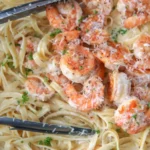
Homemade Creamy Shrimp Alfredo
- Total Time: 25 minutes
- Yield: 4 servings 1x
- Diet: General
Description
Nothing beats a bowl of creamy fettuccine alfredo with delicious juicy shrimp. This takes less than 30 minutes to make and will please an entire crowd.
Ingredients
- 1 lb peeled and deveined shrimp
- salt and pepper to taste
- 1/4 tsp paprika
- 2 tbsp oil
- 3 tbsp butter
- 2 garlic cloves
- 1/4 tsp red crushed pepper (optional)
- 1 cup heavy cream
- 1/4 cup parmesan cheese
- 1/2 lb fettuccine pasta
- fresh parsley for garnish (optional)
Instructions
- Step: Bring a pot of salted water to a boil.
- Step: Season the shrimp with salt, pepper, and paprika.
- Step: Heat a large skillet with high sides over medium-high heat and add some oil.
- Step: Add the shrimp to the skillet and cook for 1-2 minutes on each side.
- Step: Remove the shrimp from the skillet and set aside.
- Step: Add butter, garlic, and red crushed pepper to the skillet and cook until fragrant.
- Step: Add the heavy cream and parmesan cheese. Reduce the heat to low and cook for 10 minutes or until the sauce thickens.
- Step: While the sauce is thickening, add the fettuccine noodles to the pot of boiling water and cook according to the instructions on the package.
- Step: When the pasta is cooked al dente, strain it from the water.
- Step: Season the thickened alfredo sauce with salt & pepper.
- Step: Stir in the cooked fettuccine and shrimp, add more parmesan cheese, garnish with fresh parsley if desired and enjoy!
Notes
If you want to use the entire box of fettuccine (1 lb) use 2 cups of heavy cream and 1/2 cup of parmesan cheese.
- Prep Time: 5 minutes
- Cook Time: 20 minutes
- Category: Entree
- Method: Stovetop
- Cuisine: Italian American
Nutrition
- Serving Size: 1 serving
- Calories: 641 kcal
- Sugar: 1 g
- Sodium: 1097 mg
- Fat: 36 g
- Saturated Fat: 21 g
- Unsaturated Fat: 15 g
- Trans Fat: 0 g
- Carbohydrates: 43 g
- Fiber: 2 g
- Protein: 34 g
- Cholesterol: 442 mg
Keywords: Alfredo, Fettuccine, Pasta Recipes, Shrimp, Shrimp Alfredo, Shrimp Fettuccine, Shrimp Pasta