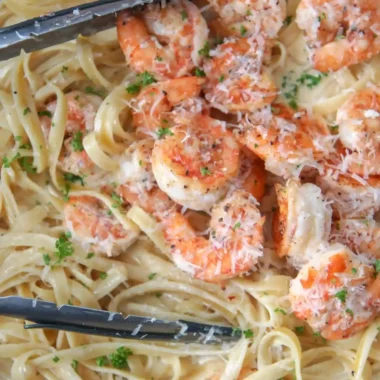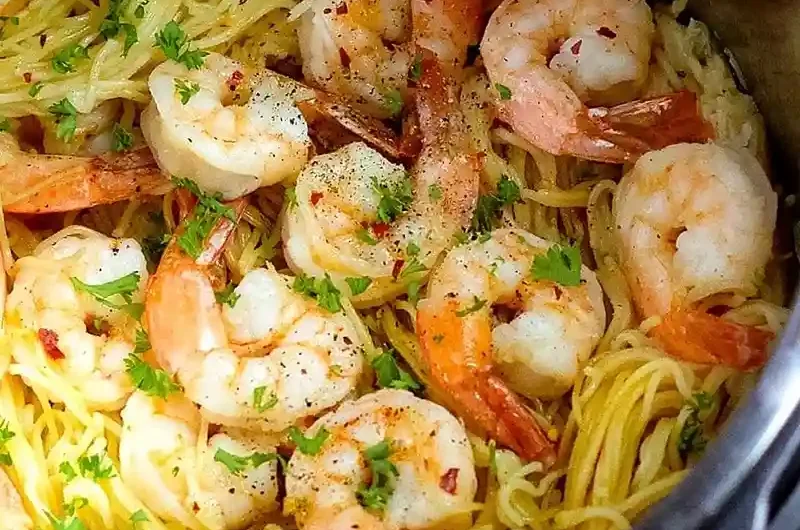
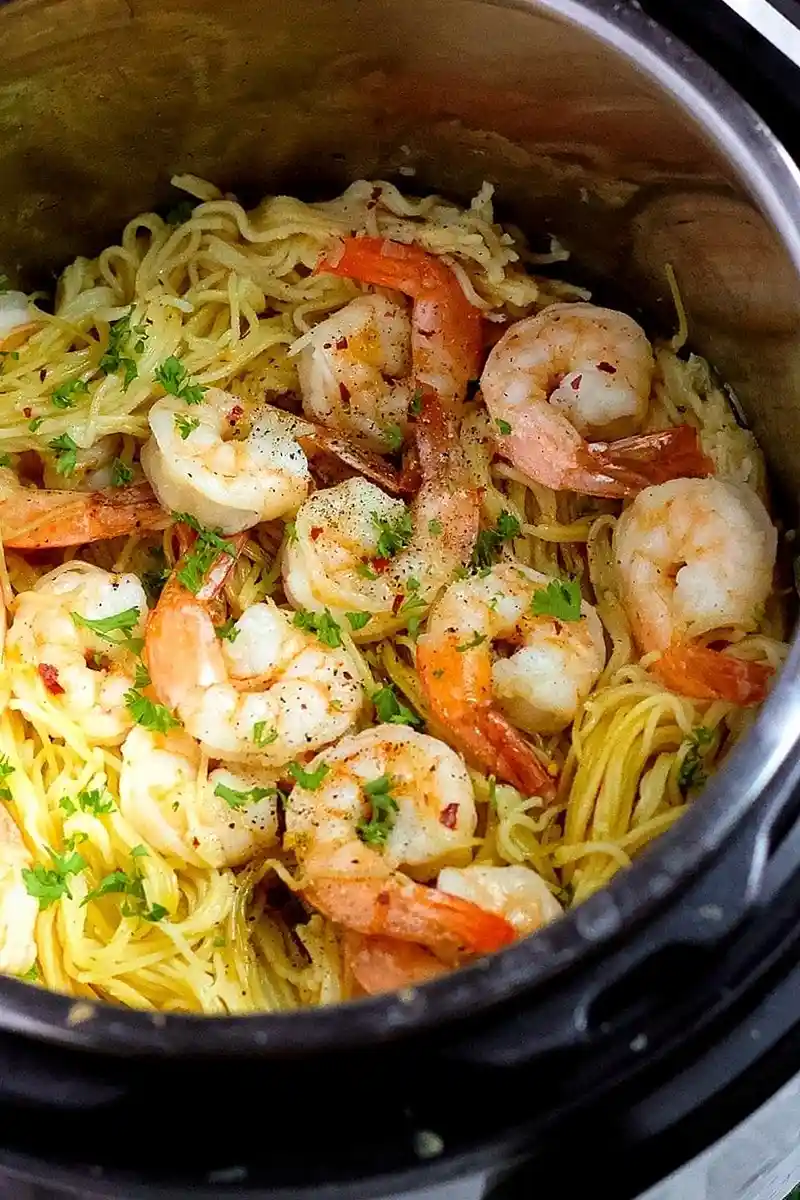
This efficient pressure cooker meal combines tender garlic butter shrimp with delicate angel hair pasta in a savory broth. It is a streamlined version of the classic seafood dish that delivers rich flavor without the traditional stovetop time.
List of ingredients
- 2 tbsp butter – provides a rich, creamy base for the sauce.
- 1 tbsp olive oil – prevents butter from burning during the initial sauté.
- 3 cloves garlic, minced – essential for the signature aromatic scampi flavor.
- 2 whole shallots, minced – adds a subtle, sweet onion depth to the broth.
- 1/4 cup white grape juice – a non-alcoholic substitute that provides necessary acidity and sweetness.
- 2 lb peeled shrimp – use large or jumbo shrimp for the best texture.
- 12 oz angel hair pasta, broken in half – thin noodles that cook rapidly under pressure.
- 3 cups chicken stock – the primary cooking liquid to ensure the pasta is fully hydrated.
- 1/2 whole fresh lemon – provides a bright, citrusy finish to cut through the butter.
- 1 pinch sea salt and pepper – adjusted to taste for basic seasoning.
- 1/4 tsp red pepper flakes – adds a mild heat and complexity.
- 1 tbsp fresh parsley – used as a fresh herb garnish.
- 2 tbsp capers (optional) – adds a salty, briny pop to the final dish.
- parmesan cheese – used for garnishing to add a salty, nutty finish.
step-by-step instructions
- Sauté Aromatics: Turn the Instant Pot to sauté mode. Melt the butter, then add the olive oil, minced garlic, and minced shallots. Cook for 2-3 minutes until the vegetables are fragrant and softened.
- Reduce Liquid: Pour in the white grape juice and continue to cook for about 3 minutes until the liquid has slightly reduced.
- Sear Shrimp: Add the peeled shrimp to the pot. Season with sea salt, pepper, and red pepper flakes. Squeeze in the fresh lemon juice and continue to sauté just until the shrimp are well coated in the sauce.
- Prepare Pasta Base: Remove the shrimp from the pot to prevent overcooking. Pour in the chicken stock and add the broken angel hair pasta. Stir or separate the noodles as much as possible to prevent them from clumping together.
- Pressure Cook: Place the sautéed shrimp on top of the pasta layer. Secure the lid and cancel the sauté mode. Set the Instant Pot to high pressure for 3 minutes.
- Final Touch: Once the timer expires, perform a quick pressure release. Open the lid and stir in the optional capers. Garnish with fresh parsley and grated parmesan cheese before serving.
Preventing the Burn Notice
Full Liquid Submersion
Ensure that the pasta is mostly submerged in the chicken stock before you start the pressure cooking cycle. If the noodles are exposed to air or stick together in a thick clump, the pot may not distribute heat evenly. This can trigger the burn sensor because the bottom of the pot becomes too hot without enough liquid to absorb the energy.
Thorough Deglazing
After sautéing the garlic, shallots, and shrimp, small brown bits often stick to the bottom of the stainless steel inner pot. Use a wooden spoon or silicone spatula to scrape these bits up while adding the chicken stock. This process, known as deglazing, prevents those concentrated particles from scorching during the high-pressure phase.
Correct Pasta Layering
Avoid stirring the pasta too vigorously into the liquid; instead, focus on separating the strands. Layering the shrimp on top of the pasta helps create a buffer that allows the steam to circulate properly. This prevents the pasta from settling into a dense mass at the bottom, which is a common cause of the burn error.
Alternative Ingredient Choices
Swapping the Pasta Type
If you prefer a thicker noodle, you can substitute angel hair with spaghetti or linguine. However, keep in mind that thicker pastas may require an additional minute of pressure cooking. Always check the noodle texture after the quick release to ensure they have reached the desired al dente consistency.
Low-Carb Vegetable Substitutes
For a low-carb or ketogenic version, replace the grain-based pasta with zucchini noodles. Do not pressure cook the zucchini noodles, as they will become mushy and watery. Instead, sauté the zoodles in the pot after the sauce is finished and the shrimp are cooked, tossing them for 1-2 minutes just until tender.
Adjusting the Heat Level
The red pepper flakes provide a mild warmth, but you can increase this by adding a pinch of cayenne pepper or more crushed red pepper. If you prefer a version with no heat at all, simply omit the pepper flakes entirely. The lemon and garlic will still provide a robust flavor profile without the spice.
Using Different Broths
While chicken stock is standard, vegetable broth is an excellent alternative for those avoiding animal-based stocks. Ensure the vegetable broth is low-sodium to maintain control over the salt levels, as the parmesan and capers already contribute significant salinity to the dish.
Tips for Handling Shrimp
Managing Frozen Shrimp
If using frozen shrimp, ensure they are completely thawed before adding them to the sauté mode. Thawing them in a colander under cold running water is the fastest safe method. Adding frozen shrimp directly to the butter and oil will release excess water, which prevents them from searing and dilutes the sauce.
Avoiding Rubberiness
The most common issue with shrimp is overcooking, which results in a rubbery texture. By removing the shrimp after the initial sauté and placing them on top of the pasta, they only spend a short time under pressure. This ensures they remain tender and juicy.
Cleaning and Prepping
Check your peeled shrimp for the digestive tract, also known as the vein. While many pre-peeled shrimp are deveined, doing a quick check ensures a cleaner taste and better presentation. Pat the shrimp dry with paper towels before sautéing to get a better sear.
Serving and Pairing Suggestions
Complementary Bread Options
Serve this dish with warm garlic knots or a toasted baguette. The bread is perfect for soaking up the remaining garlic butter sauce at the bottom of the bowl. Brush the bread with melted butter and a pinch of parsley before toasting for extra flavor.
Fresh Side Salads
A crisp arugula or spinach salad with a light lemon vinaigrette balances the richness of the butter sauce. The peppery notes of arugula complement the garlic and lemon in the scampi. Keep the salad dressing simple to avoid overpowering the seafood.
Roasted Vegetable Pairings
Roasted asparagus or broccolini provides a healthy, earthy contrast to the pasta. Toss the vegetables in olive oil, salt, and pepper, and roast them at 400 degrees Fahrenheit until the edges are slightly charred. This adds a nice visual and textural contrast to the plated meal.
Storage and Reheating Guidance
Refrigeration Process
Store leftover shrimp scampi in an airtight container in the refrigerator for up to three days. Because pasta continues to absorb liquid as it sits, you may find that the dish becomes thicker and drier over time. Do not store the pasta for longer than three days to ensure the shrimp remain safe to eat.
Freezing Instructions
While not ideal for pasta texture, this dish can be frozen for up to three months. Thaw the container completely in the refrigerator overnight before attempting to reheat it. Avoid reheating directly from frozen, as this often leads to the shrimp becoming tough.
Optimal Reheating Method
Avoid using a microwave, as it can make the shrimp rubbery and the pasta unevenly heated. Instead, heat a small amount of olive oil or butter in a frying pan over medium heat. Add the leftovers and stir frequently, adding a tablespoon of water or chicken stock to loosen the sauce back to its original consistency.
Common Troubleshooting
Pasta Texture Issues
If the pasta comes out too mushy, it is likely due to an extended natural release time. Always use the quick release method for angel hair pasta to stop the cooking process immediately. If you find the pasta is consistently too soft, reduce the pressure cook time by 30 seconds.
Sauce Consistency
If the final sauce is too thin or watery, you can simmer it for a few minutes on sauté mode after the pressure has been released. Alternatively, stirring in an extra tablespoon of parmesan cheese or a small knob of cold butter will help thicken and emulsify the sauce.
Lacking Flavor Depth
If the dish tastes bland, it usually needs more acidity. Add a fresh squeeze of lemon juice or a small teaspoon of capers right before serving. This brightens the heavy butter and stock flavors and enhances the natural sweetness of the shrimp.
Frequently Asked Questions
Can I use a different stock?
Yes, you can use vegetable stock or a seafood-based stock. Just ensure the stock is not overly salted, as the parmesan and capers can make the dish too salty if the base liquid is also high in sodium.
Do I have to break the pasta?
Breaking the angel hair pasta in half helps it fit more easily into the Instant Pot and allows for better separation. This reduces the chance of the noodles clumping together and prevents the burn notice from triggering.
Can I use butter substitutes?
You can use a plant-based butter alternative or increase the amount of olive oil. However, butter provides the characteristic richness and emulsification that defines a traditional scampi sauce.
Print
Quick Instant Pot Shrimp Scampi Pasta
- Total Time: 15 minutes
- Yield: 4 servings 1x
- Diet: General
Description
3-minute Instant Pot Shrimp Scampi with angel hair pasta, cooked in a fragrant shallot-broth, topped with capers and fresh parsley!
Ingredients
- 2 tbsp butter
- 1 tbsp olive oil
- 3 cloves garlic, minced
- 2 whole shallots, minced
- 1/4 cup white grape juice
- 2 lb peeled shrimp
- 12 oz angel hair pasta, broken in half
- 3 cups chicken stock
- 1/2 whole fresh lemon
- 1 pinch sea salt and pepper, to taste
- 1/4 tsp red pepper flakes
- 1 tbsp fresh parsley
- 2 tbsp capers (optional)
- parmesan cheese, for garnishing
Instructions
- Sauté: Turn the instant pot on sauté mode. Melt butter, add oil, garlic and shallots. Sauté for 2-3 minutes until fragrant.
- Reduce: Add white grape juice and cook until reduced (3 mins).
- Coat: Add shrimp, season with salt, pepper and pepper flakes. Sprinkle with fresh lemon and continue to sauté until shrimp is well coated.
- Prepare Pasta: Remove shrimp from pot and add in chicken stock and pasta. Separate the pasta the best you can.
- Pressure Cook: Top with shrimp and cover the pot. Cancel sauté mode and turn the instant pot on high for 3-minutes.
- Finish: When time is up quickly release all pressure. Open the instant pot, add capers (optional) and stir. Season with fresh parsley and serve with fresh parmigiana cheese.
Notes
Separate the uncooked pasta carefully to avoid sticking. For a different approach, you can leave the shrimp on the bottom of the pot to reduce the chance of pasta sticking.
- Prep Time: 5 minutes
- Cook Time: 15 minutes
- Category: Dinner
- Method: Pressure Cooking
- Cuisine: American
Nutrition
- Serving Size: 1 serving
- Calories: 626 kcal
- Sugar: 6 g
- Sodium: 665 mg
- Fat: 8 g
- Saturated Fat: 2 g
- Unsaturated Fat: 6 g
- Trans Fat: 0.01 g
- Carbohydrates: 72 g
- Fiber: 3 g
- Protein: 62 g
- Cholesterol: 371 mg
Keywords: Instant Pot, Pasta, Seafood, Shrimp Scampi