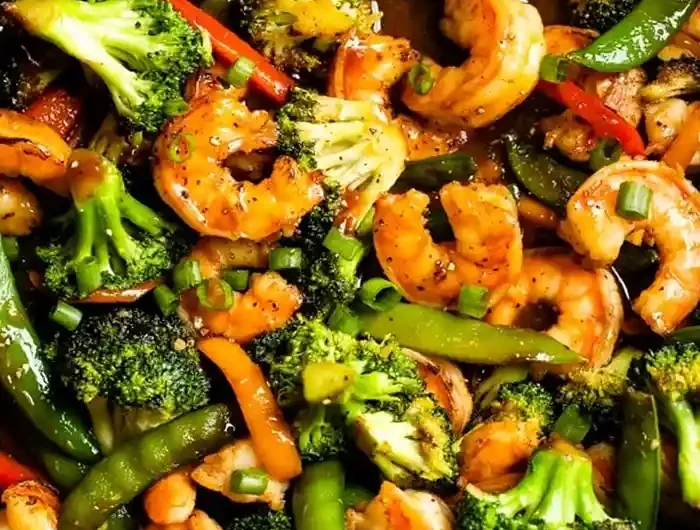
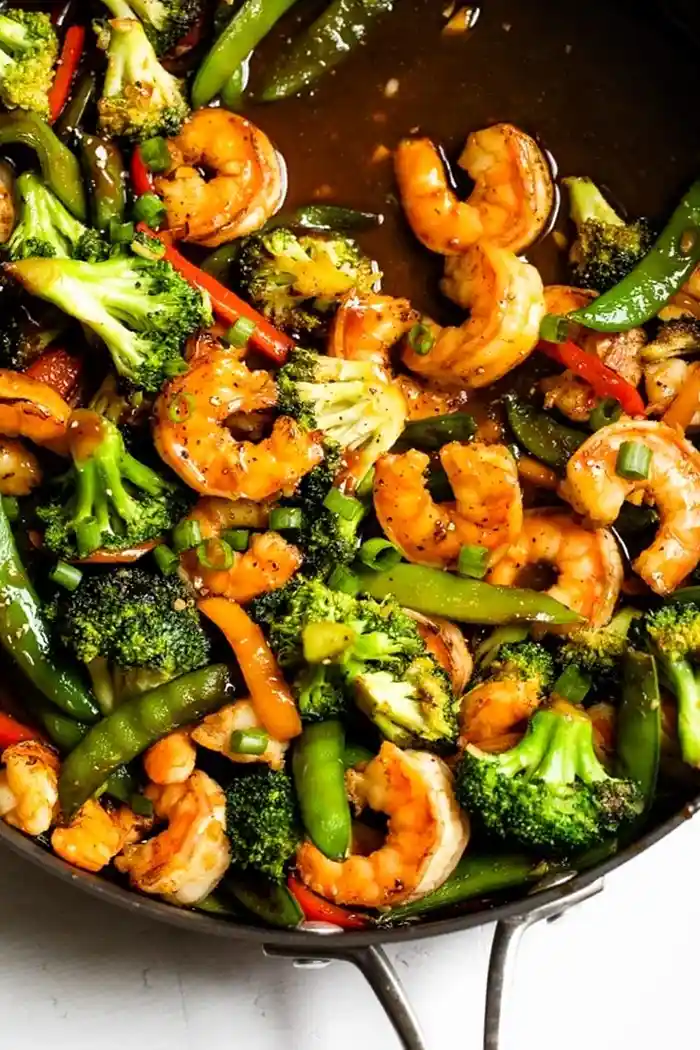
This fast and flavorful stir fry combines tender shrimp with a colorful medley of crisp vegetables. A sweet and savory honey soy glaze binds everything together for a restaurant-quality meal in minutes.
List of ingredients
- 1 lb. raw shrimp (peeled and deveined) – the primary protein.
- 1 tbsp olive oil – used for searing and sautéing.
- 1 head broccoli (chopped) – provides texture and nutrients.
- 2 bell peppers (sliced) – adds sweetness and vibrant color.
- 2 cups snow peas – adds a fresh, crisp snap.
- 4 garlic cloves (minced) – essential for aromatic flavor.
- green onion (for garnish) – used for a fresh finish.
- 1/4 cup soy sauce – the salty foundation of the sauce.
- 1/4 cup honey – provides the sweetness and glossy glaze.
- 2 tbsp cornstarch – the thickening agent for the sauce.
step-by-step instructions
- Prepare the Sauce: Whisk the soy sauce, honey, and cornstarch together in a small bowl and set aside. This allows the cornstarch to fully integrate before hitting the pan.
- Sear the Shrimp: Heat 1 teaspoon of olive oil in a large, deep skillet over medium heat. Add the shrimp and cook until they turn pink, approximately 2 minutes per side. Use a slotted spoon to remove the shrimp from the pan and set them aside on a plate.
- Sauté the Vegetables: In the same skillet, add the remaining olive oil along with the chopped broccoli, sliced bell peppers, and snow peas. Sauté for 5-6 minutes until the peppers are blistered and vegetables are tender-crisp.
- Combine Aromatics and Protein: Add the minced garlic and the seared shrimp back into the skillet. Sauté everything together for 1 additional minute to infuse the garlic flavor.
- Thicken the Glaze: Reduce the heat to low. Pour in the whisked honey soy sauce and stir continuously for about 10 seconds, or until the sauce thickens and coats all ingredients evenly.
- Final Touch: Garnish the stir fry with chopped green onions. Serve immediately over a bed of steamed rice.
Optimizing Vegetable Selection
Using Fresh Carrots
Carrots add a natural sweetness and a firm texture to the stir fry. Slice them into thin coins or matchsticks to ensure they cook at a similar rate to the broccoli.
Incorporating Baby Corn
Baby corn provides a unique crunch and a mild flavor that complements the honey glaze. Add them during the vegetable sauté phase for about 4-5 minutes.
Adding Sliced Mushrooms
Mushrooms contribute an earthy umami flavor to the dish. Sauté them early in the vegetable process to allow their moisture to evaporate and their edges to brown.
Using Cauliflower Florets
Cauliflower is an excellent alternative to broccoli if you prefer a milder taste. Keep the florets small so they soften quickly in the skillet.
Adding Sliced Water Chestnuts
Water chestnuts offer a distinct, watery crunch that remains even after cooking. Stir them in during the last two minutes of the vegetable sauté.
Shrimp Preparation Techniques
Thawing Frozen Shrimp Properly
Place frozen shrimp in a colander and run cold water over them for several minutes. Avoid using warm water to prevent the shrimp from partially cooking or developing a mushy texture.
Removing the Vein Thoroughly
Use a small paring knife to make a shallow slit along the back of the shrimp. Press the vein out with your thumb to ensure the cleanest possible flavor and presentation.
Drying Shrimp Before Searing
Pat the shrimp dry with paper towels before adding them to the oil. Removing surface moisture ensures the shrimp sear and brown rather than steaming in the pan.
Choosing the Right Shrimp Size
Large or jumbo shrimp are ideal for stir fry as they hold their shape and texture. Smaller shrimp may overcook and shrink too quickly during the searing process.
Customizing the Honey Garlic Sauce
Adjusting the Sweetness Level
If the sauce is too sweet, add a teaspoon of rice vinegar or a squeeze of fresh lime juice. The acidity balances the honey and brightens the overall flavor profile.
Reducing the Sodium Content
Substitute regular soy sauce with a low-sodium version or coconut aminos. This reduces the salt intake without sacrificing the deep, savory flavor of the glaze.
Managing Sauce Thickness
If the sauce becomes too thick, stir in one tablespoon of water or vegetable broth to thin it out. Conversely, whisk in a tiny bit more cornstarch slurry if it remains too runny.
Adding Spicy Elements
Incorporate a teaspoon of sriracha or red pepper flakes into the sauce whisking stage. This adds a subtle heat that contrasts well with the sweetness of the honey.
Serving and Pairing Ideas
Traditional Jasmine Rice
Steamed jasmine rice is the classic pairing due to its fragrant aroma and ability to absorb the honey garlic sauce. Serve the stir fry directly on top of a fluffy mound of rice.
Nutritious Brown Rice
For added fiber and a nuttier taste, use short-grain brown rice. This option makes the meal more filling and provides a slower release of energy.
Low Carb Cauliflower Rice
Sauté riced cauliflower in a separate pan with a touch of oil before serving. This is a great alternative for those avoiding grains while maintaining the stir fry experience.
Serving with Rice Noodles
Toss the finished stir fry with cooked thin rice noodles. The noodles will coat in the remaining sauce, creating a more cohesive noodle-based meal.
Storage and Reheating Guidelines
Refrigeration Methods
Store leftovers in an airtight glass or plastic container in the refrigerator. The dish will stay fresh for up to three days, though vegetables may lose some crunch.
Best Reheating Practices
Reheat the stir fry in a skillet over medium heat with a splash of water. This prevents the shrimp from becoming rubbery and helps the sauce loosen up.
Avoiding the Microwave
If using a microwave, heat in 30-second intervals and stir in between. This prevents hotspots that can overcook the shrimp and make them tough.
Freezing Considerations
It is not recommended to freeze this dish because the vegetables will become mushy upon thawing. The shrimp may also lose their texture and become watery.
Equipment Recommendations
The Cast Iron Skillet
A cast iron skillet retains heat exceptionally well, which is perfect for getting a deep sear on the shrimp. It also helps in blistering the peppers and broccoli efficiently.
Using a Traditional Wok
A wok is ideal for stir frying because its shape allows for constant movement and high heat. This ensures vegetables cook quickly while remaining crisp.
Stainless Steel Pan Tips
When using stainless steel, ensure the pan is properly preheated before adding oil to prevent the shrimp from sticking. Use a medium-high heat for the initial sear.
Professional Cooking Tips
Maintaining High Heat
Keep the heat consistent during the vegetable phase to avoid steaming. If the pan cools down too much, the vegetables will release water and become soft instead of charred.
Avoiding Pan Crowding
Cook the shrimp in batches if your skillet is small. Overcrowding the pan drops the temperature, which leads to gray, steamed shrimp instead of pink, seared shrimp.
Timing the Garlic Addition
Always add the minced garlic toward the end of the vegetable sauté. Garlic burns quickly at high temperatures, which can introduce a bitter taste to the dish.
The Importance of Mise en Place
Have all vegetables chopped and the sauce whisked before turning on the stove. Stir frying happens very quickly, leaving no time for preparation once the cooking begins.
Common Troubleshooting
Preventing Rubberized Shrimp
Remove shrimp from the pan the moment they turn opaque and pink. Overcooking shrimp by even a minute can make them tough and rubbery.
Fixing Clumped Cornstarch
If you see lumps of cornstarch in your sauce, whisk it more vigorously before adding it to the pan. You can also strain the sauce through a fine mesh sieve.
Dealing with Watery Vegetables
If vegetables release too much liquid, drain the excess moisture before adding the garlic and shrimp. This ensures the sauce thickens properly rather than becoming a soup.
Correcting Burnt Garlic
If the garlic burns, it is best to wipe the pan clean and start the vegetable sauté over. Burnt garlic flavor is pungent and cannot be masked by the sauce.
Frequently Asked Questions
Can I use frozen vegetables?
Yes, frozen mixed vegetables can be used. Thaw them slightly and sauté them on higher heat to evaporate excess moisture before adding the sauce.
What if I don’t have honey?
Maple syrup or brown sugar are excellent substitutes for honey. They provide a similar sweetness and help create the desired glossy glaze.
How do I make it vegan?
Replace the shrimp with extra-firm tofu cubes and use a vegan-certified soy sauce. Ensure the honey is replaced with maple syrup or agave nectar.
Can I use a different oil?
Any high-smoke point oil works well, such as canola or avocado oil. Avoid using extra virgin olive oil on very high heat as it can smoke and change flavor.
How long does the sauce last?
If you make extra sauce, store it in a sealed jar in the fridge for up to one week. Shake well before using as the cornstarch will settle at the bottom.
Print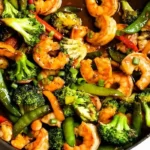
Honey Garlic Shrimp Stir Fry
- Total Time: 15 minutes
- Yield: 3 servings 1x
- Diet: General
Description
This Honey Garlic Shrimp Stir Fry featured charred shrimp, broccoli, pepper and peas and is covered in the easiest and most delicious honey soy sauce.
Ingredients
- 1 lb raw shrimp, peeled and deveined
- 1 tbsp olive oil
- 1 head broccoli, chopped
- 2 bell peppers, sliced
- 2 cups snow peas
- 4 garlic cloves, minced
- green onion for garnish
- 1/4 cup soy sauce
- 1/4 cup honey
- 2 tbsp cornstarch
Instructions
- Step 1: Whisk sauce ingredients together and set aside.
- Step 2: Heat 1 teaspoon of the oil in a large, deep skillet over medium heat, then add the shrimp until pink, about 2 minutes per side; use a slotted spoon to remove the shrimp; set aside.
- Step 3: In that same skillet, add the remaining oil, along with the broccoli, peppers and peas and sauté until peppers are blistered, 5-6 minutes. Then, add the garlic and shrimp and sauté for 1 additional minute.
- Step 4: Reduce heat to low, then pour in the sauce and stir for 10 seconds or until sauce thickens and everything is coated in the sauce.
- Step 5: Top stir fry with green onion, serve over rice and enjoy!
Notes
You can use cooked shrimp instead of raw; simply thaw and warm in a skillet. Other vegetable alternatives include carrots, edamame, mushrooms, and cauliflower.
- Prep Time: 5 minutes
- Cook Time: 10 minutes
- Category: Dinner
- Method: Stir-frying
- Cuisine: Asian
Nutrition
- Serving Size: 1 serving
- Calories: 409 kcal
- Sugar: 33 g
- Sodium: 2330 mg
- Fat: 5 g
- Saturated Fat: 1 g
- Unsaturated Fat: 4 g
- Trans Fat: 0 g
- Carbohydrates: 54 g
- Fiber: 9 g
- Protein: 42 g
- Cholesterol: 381 mg
Keywords: honey garlic shrimp, stir fry, Asian dinner, shrimp and broccoli