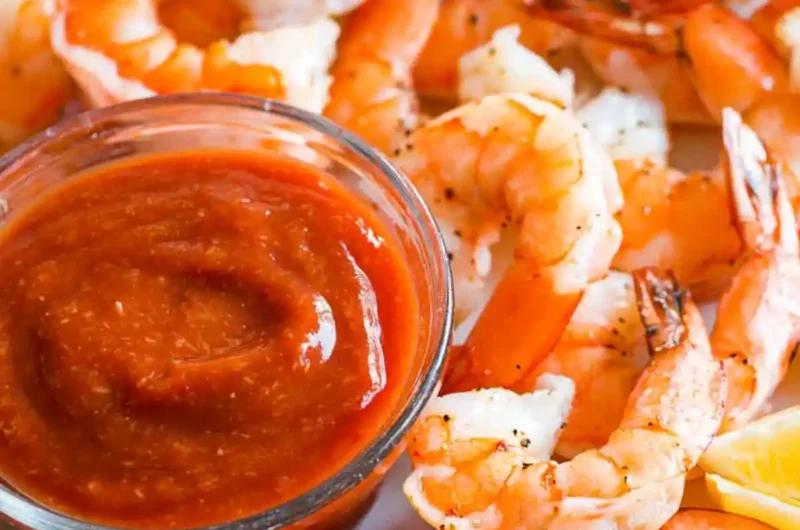
This homemade shrimp cocktail features oven-roasted shrimp paired with a tangy, zesty dipping sauce. It is a quick preparation that results in a more flavorful appetizer than standard store-bought options.
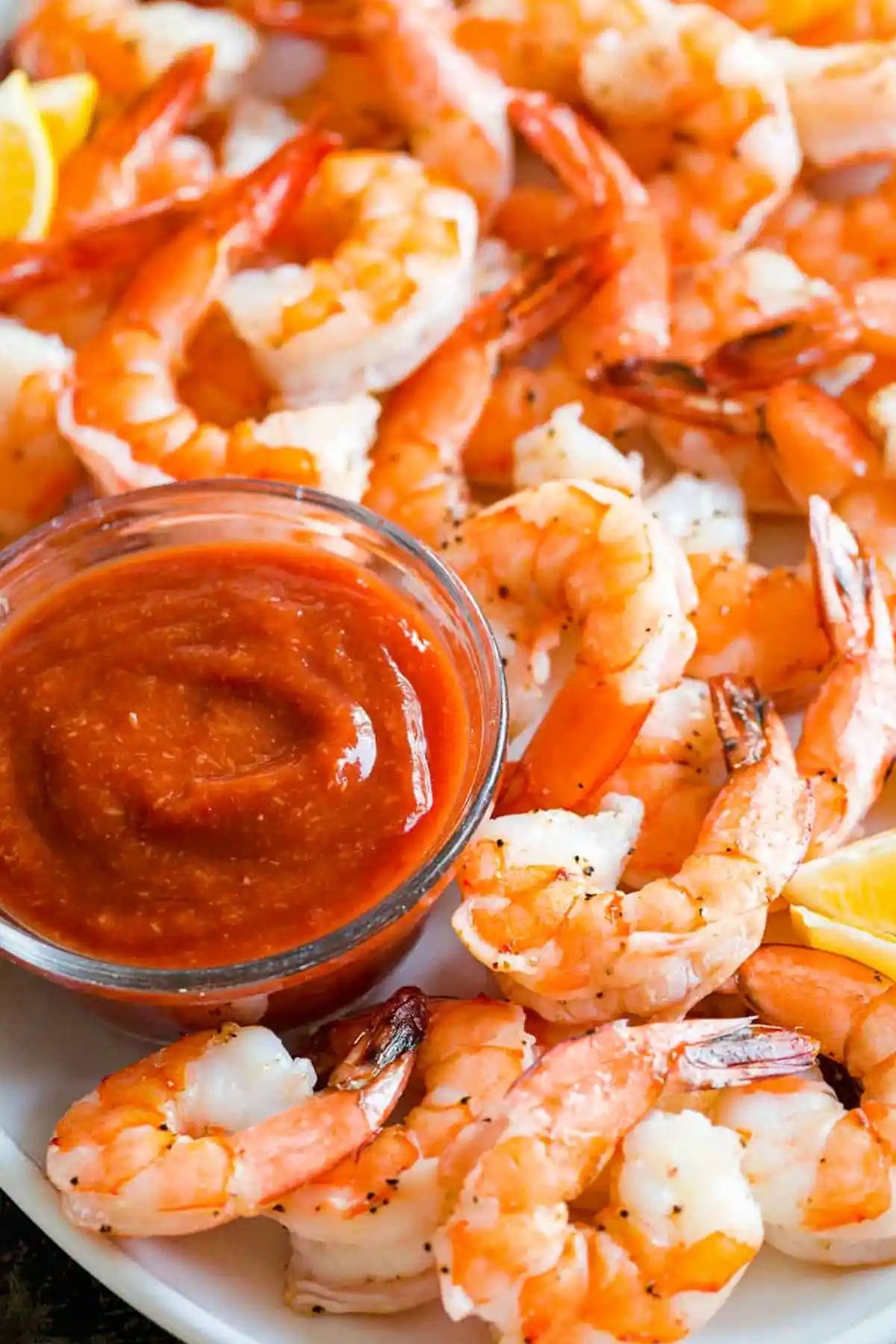
List of ingredients
- 2 lbs raw shrimp (16-20 count, peeled and deveined, tail-on) – provides a substantial amount for a crowd.
- 1 1/2 Tbsp olive oil – prevents sticking and aids the roasting process.
- 1/2 tsp sea salt – enhances the natural sweetness of the seafood.
- 1/2 tsp black pepper – adds a subtle, warming spice.
- 1 lemon (cut into 4 wedges) – used for fresh garnish and acidity.
- 1/2 cup ketchup – creates the primary tomato base for the sauce.
- 1/2 cup mild chili sauce – adds depth and a slightly sweet, tangy flavor.
- 3-4 Tbsp prepared horseradish – provides the signature pungent heat.
- 1 1/2 Tbsp lemon juice (freshly squeezed) – brightens the overall sauce profile.
- 1 tsp Worcestershire sauce – adds essential savory umami notes.
- 1/2 tsp hot sauce (such as Tabasco) – provides a sharp, vinegary heat.
step-by-step instructions
- Prepare the Shrimp: Thaw shrimp according to package directions, rinse under cold water, and pat dry thoroughly with paper towels to ensure they roast rather than steam.
- Season and Arrange: Place shrimp on a large rimmed baking sheet, drizzle with olive oil, and sprinkle with sea salt and black pepper. Stir to combine and arrange them in a single layer.
- Roast: Bake at 450°F for 8-10 minutes or until the shrimp turn pink and are just cooked through.
- Cool Immediately: Transfer the shrimp to a serving platter as soon as they exit the oven to prevent them from overcooking on the hot baking sheet.
- Prepare the Sauce: Combine ketchup, mild chili sauce, horseradish, lemon juice, Worcestershire sauce, and hot sauce. Adjust the horseradish and hot sauce levels based on your preference for spice.
- Chill: Cover the sauce and the shrimp and refrigerate for at least one hour or overnight to allow the flavors to meld. Serve chilled.
Selecting the Ideal Shrimp
Prioritize Extra-Large Shrimp Sizes
For a classic cocktail presentation, 16-20 count per pound shrimp are ideal. These are large enough to look impressive on a platter but small enough to be eaten in one or two bites. Large 21-25 count shrimp also work well for a more budget-friendly option.
Use Raw Shrimp for Better Flavor
Always start with raw, uncooked shrimp rather than pre-cooked ones. Raw shrimp absorb the seasonings better and are less likely to become rubbery during the roasting process. Pre-cooked shrimp often lose their moisture and become tough when reheated.
Choose Tail-On Shrimp for Handling
Keeping the tails on the shrimp serves a practical purpose as a natural handle. This allows guests to pick up the shrimp easily without needing a fork or getting their fingers messy. Ensure they are peeled and deveined to save preparation time.
Opt for Wild-Caught Varieties
Wild-caught shrimp generally offer a cleaner, more briny taste compared to farmed shrimp. If available, look for wild-caught options to enhance the natural seafood flavor of the dish. Check labels for quality certifications to ensure sustainability.
The Benefits of Oven-Roasting
Concentrating Natural Sweetness
Roasting shrimp at a high temperature evaporates surface moisture quickly, which concentrates the natural sugars in the meat. This results in a sweeter and more intense shrimp flavor compared to boiling. The high heat creates a slight caramelization that enhances the taste.
Maintaining a Tender Texture
Oven-roasting is a more hands-off approach that prevents the shrimp from being agitated in boiling water. This method helps maintain a firm yet tender snap. By controlling the oven time precisely, you avoid the common pitfall of overcooking.
Reducing Preparation Effort
Using a baking sheet eliminates the need to monitor a pot of simmering water. You can cook a large volume of shrimp simultaneously without worrying about overcrowding a pot. This makes it an efficient choice for entertaining large groups.
Avoiding Watery Results
Boiling can sometimes dilute the flavor of the shrimp if the brine is not perfectly balanced. Roasting keeps the juices inside the shrimp. Patting the shrimp dry before roasting ensures that they sear rather than steam in their own juices.
Customizing the Cocktail Sauce
Balancing the Horseradish Heat
Horseradish provides a pungent heat that hits the sinuses rather than the tongue. Start with 3 tablespoons and taste frequently, adding more if you prefer a sharper kick. Remember that the heat mellows slightly after the sauce has been chilled.
Adjusting Acidity with Lemon Juice
Freshly squeezed lemon juice cuts through the sweetness of the ketchup and chili sauce. If the sauce tastes too sugary, add an extra teaspoon of lemon juice to balance the flavor. Avoid bottled lemon juice as it lacks the bright, fresh notes.
Adding Depth with Worcestershire Sauce
Worcestershire sauce provides a complex layer of savory flavor and umami. It bridges the gap between the sweet tomato base and the spicy horseradish. Do not omit this ingredient, as it provides the professional taste found in high-end restaurants.
Controlling the Spice Level with Hot Sauce
While horseradish provides a sharp heat, hot sauce provides a vinegary, lingering spice. Use a dash of Tabasco or a similar vinegar-based hot sauce to add complexity. For those who prefer a mild sauce, this can be reduced to a tiny pinch.
Storage and Food Safety
Proper Refrigeration Techniques
Store the cooked shrimp and the sauce in separate airtight containers to prevent the shrimp from absorbing too much sauce. Keep them in the coldest part of the refrigerator, away from the door. This ensures the seafood stays fresh and safe for consumption.
Recommended Shelf Life
Cooked shrimp are best consumed within two to three days of preparation. The cocktail sauce can last up to one week in the refrigerator due to the acidity of the vinegar and lemon juice. Always smell and inspect the shrimp before serving if they have been stored for several days.
Avoiding Freezer Burn
It is not recommended to freeze the shrimp after they have been roasted, as this destroys the texture. However, you can freeze the raw shrimp in airtight bags before cooking. Thaw them slowly in the refrigerator overnight for the best results.
Safe Thawing Procedures
Never thaw shrimp on the kitchen counter at room temperature, as this promotes bacterial growth. Instead, thaw them in the refrigerator or under a stream of cold running water. This maintains the integrity of the protein and ensures food safety.
Professional Presentation Ideas
Creating a Classic Shrimp Ring
Arrange the chilled shrimp in a circular pattern around the rim of a large platter. Place a bowl of the zesty cocktail sauce in the center of the ring. This layout is visually appealing and provides easy access for all guests.
Individual Glass Servings
For a more formal appetizer, place a small amount of sauce at the bottom of a martini glass or a small clear tumbler. Perch two or three shrimp around the edge of the glass. This presentation is hygienic and looks elegant for parties.
Using Fresh Garnishes
Place fresh lemon wedges around the platter to allow guests to add extra acidity. A sprinkle of chopped fresh parsley or a few sprigs of dill can add a pop of color. These garnishes enhance the visual appeal and provide a fresh aroma.
Temperature Management During Service
To keep the shrimp cold during a party, place the serving platter on top of a larger tray filled with crushed ice. This prevents the seafood from reaching room temperature. Maintaining a chilled state is crucial for both taste and safety.
Troubleshooting Common Problems
Preventing Rubbery Shrimp
Shrimp become rubbery when they are overcooked. Watch for the shape; a perfect shrimp forms a loose ‘C’ shape, while an overcooked shrimp curls into a tight ‘O’ shape. Remove them from the oven the moment they turn opaque and pink.
Fixing a Bland Sauce
If the sauce tastes flat, it usually lacks acidity or salt. Add a small squeeze of fresh lemon juice or a pinch of salt to wake up the flavors. A tiny bit more Worcestershire sauce can also add necessary depth.
Handling Watery Shrimp
If the shrimp release too much liquid on the pan, they were likely not patted dry enough. Ensure every shrimp is thoroughly dried with paper towels before adding oil. If they are too wet, they will steam instead of roast, leading to a mushy texture.
Dealing with Excessive Heat
If the sauce is too spicy due to too much horseradish, stir in an additional tablespoon of ketchup or mild chili sauce. The sugar in the tomato products helps neutralize the intensity of the spice. Stir well and let it sit for ten minutes to settle.
Frequently Asked Questions
Can I use frozen shrimp for this recipe?
Yes, frozen shrimp are perfectly suitable and often more convenient. Just ensure they are fully thawed and patted dry before roasting to achieve the correct texture.
What is the best substitute for horseradish?
If you cannot find prepared horseradish, you can use a small amount of wasabi paste, though the flavor profile will change. Alternatively, increase the amount of hot sauce and add a pinch of mustard powder for a similar pungent effect.
Do I have to peel and devein the shrimp?
Peeling and deveining is highly recommended for a cocktail appetizer. It makes the shrimp much easier to eat and removes the digestive tract, ensuring a better taste and texture.
Can I roast the shrimp at a lower temperature?
Using a lower temperature will result in a slower cook and a different texture. High heat is necessary to seal in the juices and prevent the shrimp from drying out during the process.
Print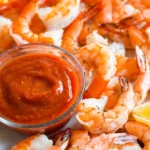
Homemade Oven-Roasted Shrimp Cocktail with Zesty Sauce
- Total Time: 30 minutes
- Yield: 10 servings 1x
- Diet: Seafood
Description
Impress your guests with this homemade Shrimp Cocktail Recipe featuring oven-baked shrimp and a zesty, homemade cocktail sauce.
Ingredients
- 2 lbs raw shrimp
- 1 1/2 Tbsp olive oil
- 1/2 tsp sea salt
- 1/2 tsp black pepper
- 1 lemon, cut into 4 wedges
- 1/2 cup ketchup
- 1/2 cup mild chili sauce
- 3–4 Tbsp prepared horseradish
- 1 1/2 Tbsp lemon juice
- 1 tsp Worcestershire sauce
- 1/2 tsp hot sauce
Instructions
- Step 1: Thaw shrimp according to package instructions, then rinse under cold water and thoroughly pat dry with paper towels.
- Step 2: Place shrimp on a large rimmed baking sheet, drizzle with 1 1/2 Tbsp olive oil and sprinkle on 1/2 tsp salt and 1/2 tsp black pepper, stir to combine, then arrange shrimp in a single layer.
- Step 3: Bake at 450˚F for 8-10 min or until shrimp turn pink and are just cooked through.
- Step 4: Test a shrimp for doneness then transfer all shrimp to a serving platter immediately to prevent overcooking.
- Step 5: Combine all of the Cocktail Sauce ingredients, adding horseradish and hot sauce to taste.
- Step 6: Cover and refrigerate sauce and shrimp for at least an hour or overnight, and serve chilled.
Notes
If using smaller 18-25 count shrimp, roast for 6–7 minutes.
- Prep Time: 22 minutes
- Cook Time: 8 minutes
- Category: Appetizer
- Method: Baking
- Cuisine: American
Nutrition
- Serving Size: 1 serving
- Calories: 143 kcal
- Sugar: 5 g
- Sodium: 1143 mg
- Fat: 3 g
- Saturated Fat: 1 g
- Unsaturated Fat: 2 g
- Trans Fat: 0 g
- Carbohydrates: 8 g
- Fiber: 1 g
- Protein: 19 g
- Cholesterol: 229 mg
Keywords: shrimp cocktail, appetizer, roasted shrimp, cocktail sauce