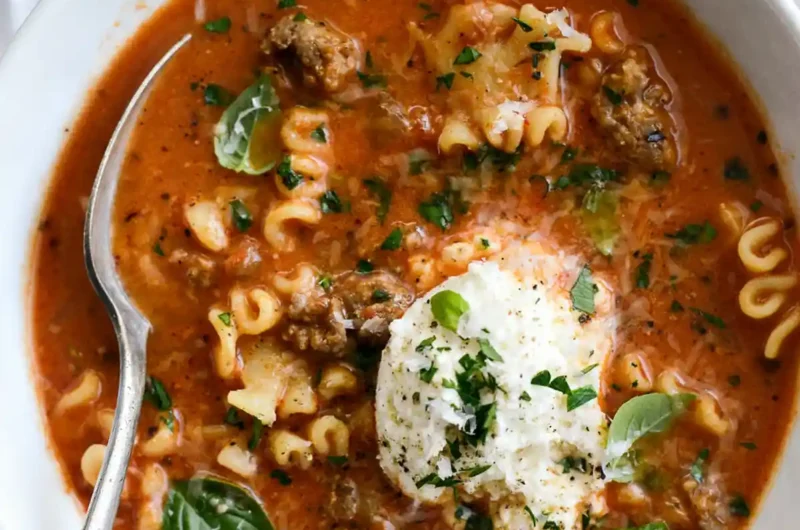
This rich lasagna soup combines the classic flavors of a baked pasta dish into a comforting, one-pot meal. It features a savory meat base and a velvety finish that simplifies the layering process of traditional lasagna.
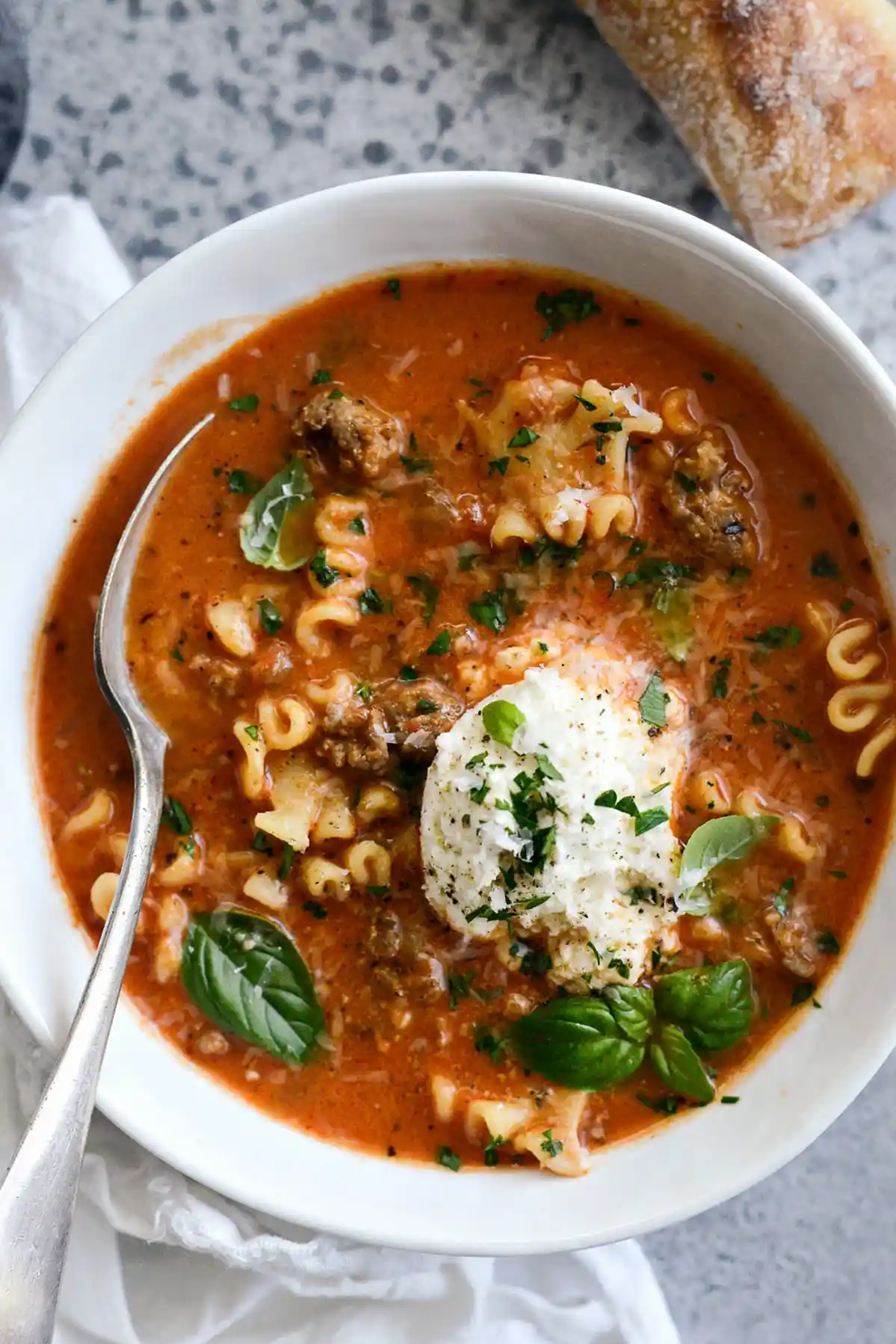
List of ingredients
- 2 teaspoons extra light olive oil – used for sautéing the aromatics.
- 1 medium yellow onion, diced – provides a sweet, savory foundation.
- 2 cloves garlic, minced – adds a sharp, pungent depth.
- 8 ounces hot Italian beef sausage – provides the primary protein and spice.
- 2 tablespoons tomato paste – thickens the soup and intensifies the tomato color.
- 1½ teaspoons Italian seasoning – a blend of dried herbs for traditional flavor.
- 1/4 cup low-sodium chicken broth – used for deglazing the pan.
- 3 cups marinara – forms the base of the tomato broth.
- 4 cups low-sodium chicken broth – provides the liquid volume for the soup.
- 2 cups water – used to adjust the consistency of the broth.
- 8 ounces reginetti or broken lasagna noodles – provides the essential pasta texture.
- 1/3 cup parmesan cheese, grated fresh – adds a salty, nutty finish.
- 1/4 cup heavy cream – creates a smooth, creamy mouthfeel.
- 1½ teaspoons kosher salt – used for seasoning to taste.
- 6 tablespoons ricotta cheese – added as a creamy topping for each bowl.
- minced parsley – used as a fresh, green garnish.
- torn basil leaves – adds an aromatic, peppery finish.
step-by-step instructions
- Boil Water: Bring a large pot of salted water to a boil to prepare for cooking the pasta separately.
- Sauté Aromatics: Add olive oil, diced onion, and minced garlic with a pinch of salt to a dutch oven. Sauté over medium to medium-low heat until the onion is tender and translucent, which takes about 5 to 8 minutes.
- Brown the Meat: Add the hot Italian beef sausage to the pot. Use a wooden spoon to crumble the meat and cook until it is browned and fully cooked through, approximately 10 minutes.
- Toast Spices: Stir in the tomato paste and Italian seasoning. Cook for 1 minute to allow the flavors to meld and the paste to caramelize.
- Deglaze and Simmer: Pour in the chicken broth for deglazing and stir to scrape up any browned bits from the pot. Add the marinara, the remaining chicken broth, and 2 cups of water. Cover the pot and bring the liquid to a simmer.
- Prepare Pasta: While the soup is simmering, cook the reginetti or broken lasagna noodles in the boiling water according to the package directions.
- Final Simmer: Once the soup reaches a low boil, uncover the pot and simmer for 10 minutes to concentrate the flavors.
- Combine Ingredients: Drain the cooked pasta and stir it into the soup. Mix in the grated parmesan cheese and heavy cream.
- Season: Add kosher salt and freshly ground black pepper to taste. Keep the soup warm over low heat.
- Garnish and Serve: Divide the soup into bowls. Top each serving with a dollop of ricotta cheese, fresh parmesan, minced parsley, and torn basil leaves.
Technical Cooking Methods for Superior Flavor
Sautéing Aromatics Without Burning
Keep the heat at medium-low when cooking the onion and garlic. If the temperature is too high, the garlic will brown too quickly and become bitter, ruining the base flavor. Ensure the onions are translucent before adding the meat.
Achieving Maximum Browning on Meat
Allow the beef sausage to sit undisturbed for a few minutes before stirring to develop a brown crust. This Maillard reaction creates a deeper, more complex flavor profile in the final broth. Use a wooden spatula to break the meat into small, consistent crumbles.
Proper Deglazing for Flavor Extraction
When adding the chicken broth after browning the meat, use a spoon to scrape the bottom of the dutch oven. These browned bits, known as fond, contain concentrated flavor that integrates into the soup. Stir constantly until the bottom of the pot is clean.
Maintaining a Consistent Simmer
A simmer is characterized by small, slow-breaking bubbles rather than a rolling boil. Simmering the broth for 10 minutes after uncovering allows the water to reduce slightly, which thickens the soup and intensifies the tomato taste.
Ingredient Modifications and Substitutions
Substituting Beef or Turkey for Other Proteins
Using hot Italian beef sausage provides a robust flavor, but ground turkey seasoned with Italian herbs is a leaner alternative. If using turkey, add an extra teaspoon of olive oil as turkey has less natural fat for sautéing.
Choosing Different Pasta Shapes
Reginetti is ideal for its shape, but broken lasagna noodles maintain the traditional theme. Small shells or rotini also work well as they capture the broth and small bits of meat within their folds.
Substituting Heavy Cream
If you prefer a lighter version, replace heavy cream with half-and-half or whole milk. For a dairy-free option, full-fat coconut milk or cashew cream can provide the necessary richness without the lactose.
Using Vegetable Broth for Variation
Replace chicken broth with a high-quality vegetable broth to change the flavor profile. This is an easy way to make the soup more plant-forward while keeping the savory depth of the marinara.
Enhancing the Flavor Profile
Increasing the Spicy Heat
To add more kick, incorporate red pepper flakes during the tomato paste sautéing step. You can also increase the amount of hot sausage or add a pinch of cayenne pepper to the broth.
Balancing Acidity with Natural Sweetness
If the marinara or tomato paste makes the soup too acidic, stir in a half-teaspoon of granulated sugar. This neutralizes the sharpness of the tomatoes without making the soup taste sweet.
Adding Fresh Seasonal Vegetables
Sauté diced carrots and celery along with the onions to add nutritional value and texture. Spinach or kale can be stirred in during the final heating stage until just wilted.
Using Fresh Instead of Dried Herbs
While Italian seasoning is convenient, adding fresh thyme or oregano during the simmer adds a brighter note. Always add fresh soft herbs like parsley and basil at the very end to preserve their color and aroma.
Professional Serving and Pairing Guide
Selecting the Best Dipping Bread
Serve this soup with toasted ciabatta or a crusty Italian baguette. The porous nature of these breads makes them perfect for soaking up the creamy tomato broth and ricotta.
Proper Application of Ricotta Topping
Do not stir the ricotta into the pot, as it will melt and disappear into the broth. Instead, place a cold dollop on top of the hot soup just before serving to create a temperature and texture contrast.
Pairing with Fresh Side Salads
A crisp arugula salad with a lemon vinaigrette cuts through the richness of the cream and cheese. The acidity of the lemon cleanses the palate between bites of the heavy soup.
Storage and Longevity
Cooling Procedures for Food Safety
Cool the soup quickly by dividing it into smaller, shallow containers. This prevents the center of a large pot from staying warm too long, which reduces the risk of bacterial growth.
Optimal Storage Containers
Use airtight glass containers to prevent the soup from absorbing odors from the refrigerator. Glass is preferable to plastic as it does not stain from the tomato base.
Freezing the Soup Base
Freeze the soup base without the pasta, cream, or ricotta. Pasta tends to become mushy when frozen and thawed; therefore, it is best to add fresh pasta when reheating the base.
Reheating and Texture Restoration
Stovetop Reheating Method
Warm the soup in a pot over medium-low heat, adding a splash of water or chicken broth if the liquid has thickened too much. Stir gently to avoid breaking the pasta pieces.
Microwave Reheating Tips
Heat the soup in short 2-minute intervals, stirring in between. This ensures the heat is distributed evenly and prevents the cream from separating or curdling.
Preventing Pasta Over-absorption
Pasta continues to absorb liquid as it sits in the refrigerator. When reheating, you will likely need to add a small amount of broth to restore the original soup-to-pasta ratio.
Advanced Make-Ahead Strategies
Preparing the Soup Base in Advance
You can cook the entire soup base up until the step where the pasta is added. Store the broth in the fridge for up to three days, then simply heat and add cooked pasta when ready to serve.
Cooking Pasta Separately for Storage
Cook the pasta to slightly under al dente and toss it with a teaspoon of olive oil. Store the pasta in a separate container to prevent it from absorbing all the broth during storage.
Timing the Final Assembly
Combine the pasta, cream, and cheese only when you are ready to serve. This keeps the pasta firm and the cream fresh and velvety.
Troubleshooting Common Issues
Fixing a Too-Thin Soup Base
If the soup is too watery, simmer it uncovered for an additional 10 to 15 minutes. Alternatively, stir in a tablespoon of cornstarch mixed with water to thicken the consistency quickly.
Correcting Over-salted Broth
If the soup tastes too salty, add a peeled, halved potato and simmer it for 10 minutes to absorb excess salt. You can also add a splash of heavy cream or a squeeze of lemon to balance the flavor.
Preventing Curdling of Heavy Cream
To prevent the cream from curdling, ensure the soup is not at a rolling boil when you stir it in. Temper the cream by mixing a small amount of hot broth into the cold cream before adding it to the pot.
Frequently Asked Questions
Can I make this soup in a slow cooker?
Yes, you can sauté the meat and aromatics first, then combine everything except the pasta and cream in a slow cooker on low for 6-8 hours. Add the cooked pasta and cream during the last 15 minutes.
What is the best substitute for reginetti pasta?
Broken lasagna noodles are the closest substitute. If those are unavailable, use mafaldine or campanelle, as they provide a similar chew and surface area.
How long does the soup last in the fridge?
The soup can be stored in the refrigerator for 3 to 4 days. Ensure it is kept in an airtight container to maintain freshness.
Why should I cook the pasta separately?
Cooking pasta in the soup can release too much starch, making the broth cloudy and thick. Separate cooking ensures the pasta maintains its structure and does not overcook.
Print
Hearty Lasagna Soup with Creamy Ricotta
- Total Time: 50 minutes
- Yield: 6 servings 1x
- Diet: General
Description
Cozy up with a bowl of Lasagna Soup! Everything you love about lasagna, like Italian beef sausage, ricotta and marinara in one comforting bowl of soup!
Ingredients
- 2 teaspoons extra light olive oil
- 1 medium yellow onion, diced
- 2 cloves garlic, minced
- 8 ounces hot Italian beef sausage
- 2 tablespoons tomato paste
- 1½ teaspoons Italian seasoning
- 1/4 cup beef broth
- 3 cups marinara
- 4 cups low-sodium chicken broth
- 2 cups water
- 8 ounces reginetti or broken lasagna noodles
- 1/3 cup parmesan cheese, grated fresh
- 1/4 cup heavy cream
- 1½ teaspoons kosher salt
- 6 tablespoons ricotta cheese
- Fresh parsley, minced
- Fresh basil leaves, torn
Instructions
- Step: Bring a large pot of salted water to boil.
- Step: Saute olive oil, onion and garlic with a pinch of salt in a dutch oven over medium to medium-low heat until tender.
- Step: Add in the Italian beef sausage, crumble and cook until browned.
- Step: Stir in tomato paste and Italian seasoning and cook for 1 minute.
- Step: Pour in beef broth, stir and cook until reduced, then add marinara, chicken broth and water. Cover and bring to a simmer.
- Step: Cook pasta according to package directions.
- Step: Once soup is at a low boil, uncover and simmer for 10 minutes.
- Step: Drain the pasta and add to the soup with parmesan cheese and heavy cream. Season with salt and black pepper.
- Step: Stir and keep warm over low heat.
- Step: Divide into bowls and top with ricotta cheese, parmesan, parsley and basil leaves.
Notes
The chianti wine has been replaced with beef broth for a clean alternative.
- Prep Time: 15 minutes
- Cook Time: 35 minutes
- Category: Soups, Stews & Chilis
- Method: Stovetop
- Cuisine: Italian
Nutrition
- Serving Size: 1 serving
- Calories: 420 kcal
- Sugar: 8 g
- Sodium: 1265 mg
- Fat: 22 g
- Saturated Fat: 11 g
- Unsaturated Fat: 11 g
- Trans Fat: 0 g
- Carbohydrates: 32 g
- Fiber: 4 g
- Protein: 24 g
- Cholesterol: 65 mg
Keywords: lasagna soup, Italian beef sausage, comforting soup, easy Italian dinner