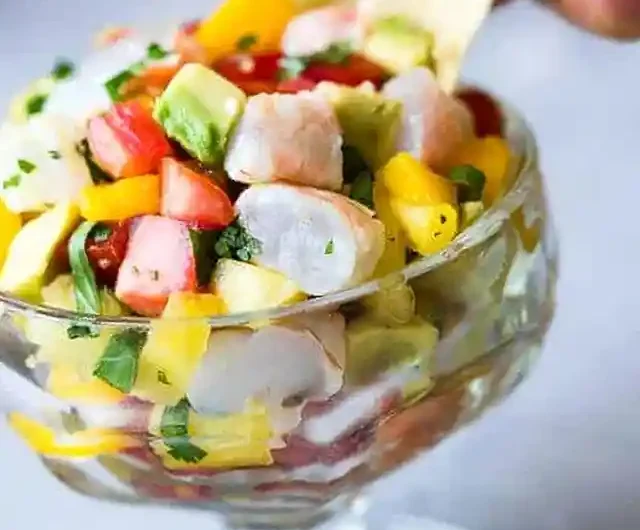
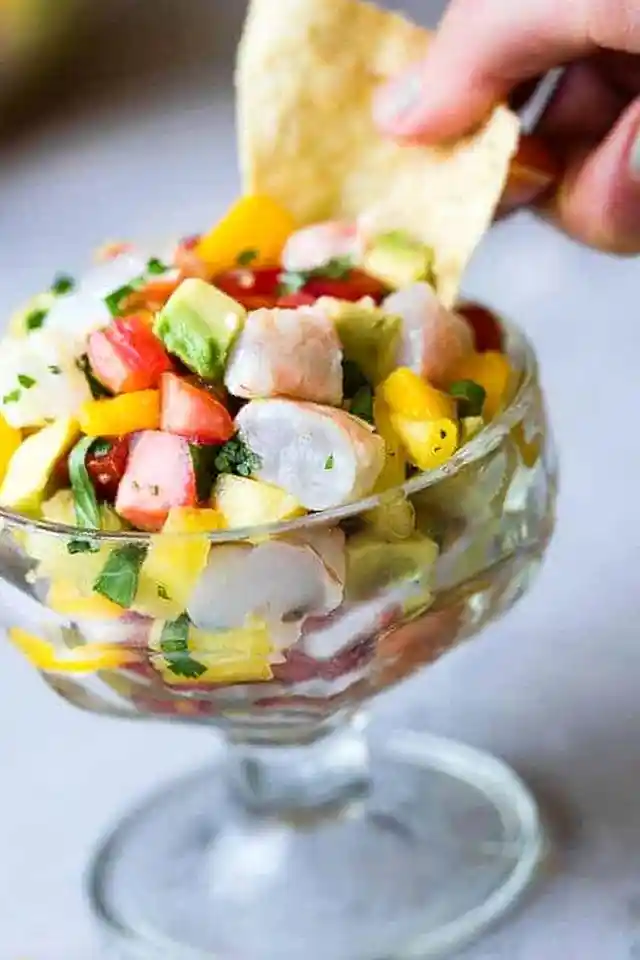
This tropical shrimp ceviche combines zesty lime with sweet mango and pineapple for a refreshing appetizer. It is a no-cook dish that uses citrus acid to cure the seafood, making it an ideal choice for warm weather.
List of ingredients
- 1 pound medium deveined shrimp – high quality, cut into small pieces.
- Juice of 3 limes – freshly squeezed for optimal acidity.
- 1 cup tomatoes – finely diced.
- 3/4 cup cilantro – freshly chopped.
- 2/3 cup pineapple pieces (4 ounces) – well drained.
- 2/3 cup fresh mango – roughly 1 small mango, diced.
- 1/2 cup white or green onion – finely diced.
- 1 1/2 tablespoons fresh garlic – minced.
- 1 avocado – diced.
- 3/4 teaspoon salt – adjust to taste.
- Freshly ground black pepper – to taste.
step-by-step instructions
- Marinate the Shrimp: In a large bowl, mix the diced shrimp and lime juice. Place the bowl in the refrigerator for 30 to 45 minutes, or until the shrimp turns opaque and white.
- Prepare the Base: While the shrimp is curing, stir together the tomatoes, cilantro, pineapple, mango, onion, and minced garlic in a separate bowl. Cover this mixture and keep it refrigerated.
- Combine and Season: Once the shrimp has reached the desired color, drain the excess lime juice from the bowl. Add the cured shrimp and the diced avocado to the vegetable mixture, stir gently, and season with salt and pepper.
Shrimp Selection and Preparation
Choosing High-Quality Shrimp
Select shrimp that are translucent and have a mild, briny scent. Avoid any seafood that smells strongly of ammonia or has a yellowish discoloration, as these are signs of spoilage.
Ensuring Proper Cleaning
Always use shrimp that have been deveined to remove the intestinal tract. If you purchase whole shrimp, peel them carefully to avoid tearing the flesh before dicing.
Uniform Dicing for Consistent Curing
Cut the shrimp into small, uniform pieces roughly 1/2 inch in size. This ensures that the lime juice penetrates the protein evenly, resulting in a consistent texture throughout the dish.
Mastering the Citrus Curing Process
Understanding Protein Denaturation
The citric acid in lime juice works by denaturing the proteins in the shrimp. This process changes the structure of the meat, making it firm and opaque, which mimics the effects of heat cooking.
Managing Marination Time
Monitor the shrimp closely between 30 and 45 minutes. If left too long, the acid can over-process the protein, leading to a rubbery or mushy texture rather than a firm bite.
Controlling Temperature
Keep the shrimp refrigerated throughout the entire marinating process. Maintaining a cold temperature is critical for food safety when working with raw seafood and prevents the proteins from breaking down too quickly.
Tropical Fruit Selection and Prep
Selecting the Right Mango
Choose mangoes that yield slightly to gentle pressure and have a fragrant aroma at the stem. Ataulfo or Kent varieties are recommended for their buttery texture and low fiber content.
Preparing Fresh Pineapple
Remove the tough core of the pineapple before dicing into small chunks. If using canned pineapple, ensure it is drained thoroughly to prevent excess liquid from diluting the ceviche flavors.
Managing Fruit Moisture
Dice the fruit just before adding it to the mixture. This prevents the fruit from releasing too much juice, which keeps the overall consistency of the ceviche thick and chunky.
Vegetable Prep and Flavor Balance
Handling Onions for Mildness
If the raw white or green onion is too pungent, soak the diced pieces in cold water for 10 minutes. Drain and pat dry before adding to the bowl to maintain a crisp texture without overpowering the fruit.
Fresh Garlic Integration
Mince the garlic as finely as possible to distribute the flavor evenly. Using a garlic press can help incorporate the oils into the vegetable base more effectively.
Adding Cilantro at the End
Chop the cilantro leaves and stems finely for maximum flavor. Stir them in during the base preparation to ensure every bite contains the fresh, herbaceous note.
Serving and Presentation Ideas
Corn Tortilla Chip Pairing
Serve the ceviche with thick-cut corn tortilla chips for a traditional crunch. The saltiness of the chips balances the sweetness of the mango and pineapple.
Low-Carb Lettuce Wraps
Use sturdy Romaine lettuce leaves or butter lettuce cups as a vessel. This provides a fresh, crisp alternative to chips and keeps the dish low-carb.
Plating for Large Groups
For parties, serve the ceviche in a chilled glass bowl or individual martini glasses. Garnish with a thin slice of lime or a sprig of fresh cilantro for a professional look.
Storage and Food Safety
Optimal Storage Duration
Ceviche is best consumed within two hours of preparation. Due to the raw seafood and high acid content, the texture degrades quickly after 24 hours.
Air-Tight Refrigeration
Store any leftovers in a glass airtight container to prevent the seafood from absorbing other fridge odors. Keep the container at the back of the fridge where the temperature is most stable.
Avoid Reheating
Never heat ceviche once it has been cured. Heating the acid-cured shrimp will change the texture unfavorably and may compromise the fresh flavor of the tropical fruits.
Troubleshooting Common Issues
Fixing Watery Ceviche
If the mixture becomes too liquid, drain the vegetable base through a fine-mesh sieve before adding the shrimp. This removes excess juice released by the tomatoes and pineapple.
Adjusting Excess Acidity
If the dish tastes too sour, add a small amount of diced avocado or a pinch of sugar. The creamy fats in avocado help neutralize the sharp edge of the lime juice.
Preventing Avocado Oxidation
Add the diced avocado at the very last moment before serving. Tossing the avocado with a small amount of the lime juice can also help prevent it from turning brown.
Frequently Asked Questions
Is the shrimp actually cooked?
The shrimp is chemically cured by the acid in the lime juice, which changes its texture and color. However, this process does not kill bacteria in the same way heat does, so high-quality, fresh shrimp are essential.
Can I use frozen shrimp?
Yes, you can use frozen shrimp provided they are fully thawed and patted dry. Ensure they are high-quality and have been stored at the correct frozen temperature.
How do I know when the shrimp is ready?
The shrimp are ready when they change from translucent to an opaque white color and feel firm to the touch. This typically happens within 30 to 45 minutes of marinating.
Can I substitute the lime juice?
Lemon juice can be used as a substitute, although it provides a different flavor profile. For the best traditional taste, stick with fresh lime juice.
Can I use other fruits instead of mango?
Papaya or peaches can be used as alternatives to mango. Ensure the fruit is ripe and diced to the same size as the other ingredients for a balanced bite.
Print
Mango Shrimp Ceviche Recipe with Pineapple
- Total Time: 50 minutes
- Yield: 6 servings 1x
- Diet: Gluten-Free, Dairy-Free
Description
A refreshing no-cook Mango-Shrimp Ceviche with Pineapple, where fresh lime juice cures the shrimp for a vibrant, gluten-free tropical treat.
Ingredients
- 1 pound medium deveined shrimp, cut into small pieces
- Juice of 3 limes
- 1 cup tomatoes, diced
- 3/4 cup cilantro, chopped
- 2/3 cup pineapple pieces, drained
- 2/3 cup fresh mango, diced
- 1/2 cup white or green onion, diced
- 1 1/2 tablespoons fresh garlic, minced
- 1 avocado, diced
- 3/4 teaspoon salt
- Freshly ground black pepper, to taste
Instructions
- Step 1: In a large bowl, mix shrimp and lime juice. Let sit in the refrigerator for 30 to 45 minutes, or until the shrimp appears white.
- Step 2: While the shrimp “cooks,” stir together all of the ingredients up to and not including the avocado. Cover and refrigerate until ready to use.
- Step 3: Once the shrimp is done, drain the lime juice from the bowl. Add the shrimp, along with the avocado, into the bowl of veggies and stir well. Season to taste with salt and pepper.
Notes
Ceviche is best enjoyed within 2 hours of preparation as it may become mushy over time. Use fresh, high-quality shrimp. Store leftovers in an airtight container in the refrigerator and consume within 24 hours.
- Prep Time: 10 minutes
- Cook Time: 0 minutes
- Category: Appetizer
- Method: Marinating
- Cuisine: Mexican
Nutrition
- Serving Size: 1 serving
- Calories: 145 kcal
- Sugar: 5.2 g
- Sodium: 407 mg
- Fat: 4.5 g
- Saturated Fat: 0.7 g
- Unsaturated Fat: 3.8 g
- Trans Fat: 0 g
- Carbohydrates: 10.4 g
- Fiber: 2.5 g
- Protein: 16.1 g
- Cholesterol: 150 mg
Keywords: mango shrimp ceviche, pineapple ceviche, no-cook appetizer, tropical seafood, gluten-free