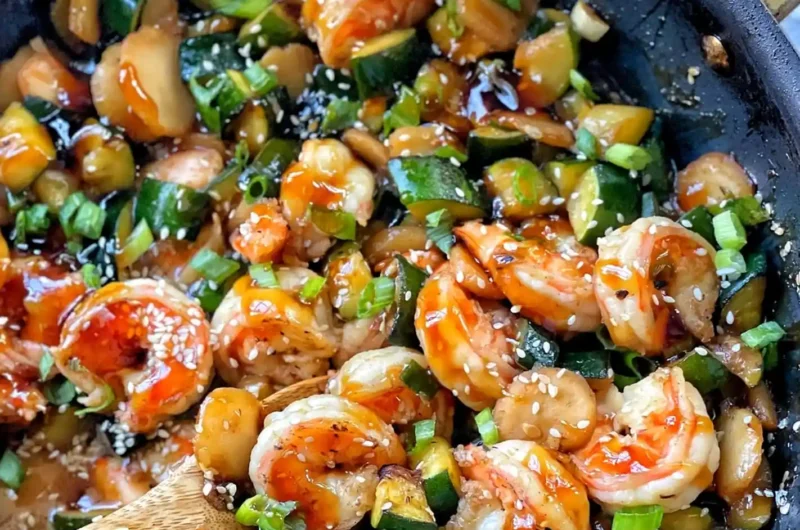
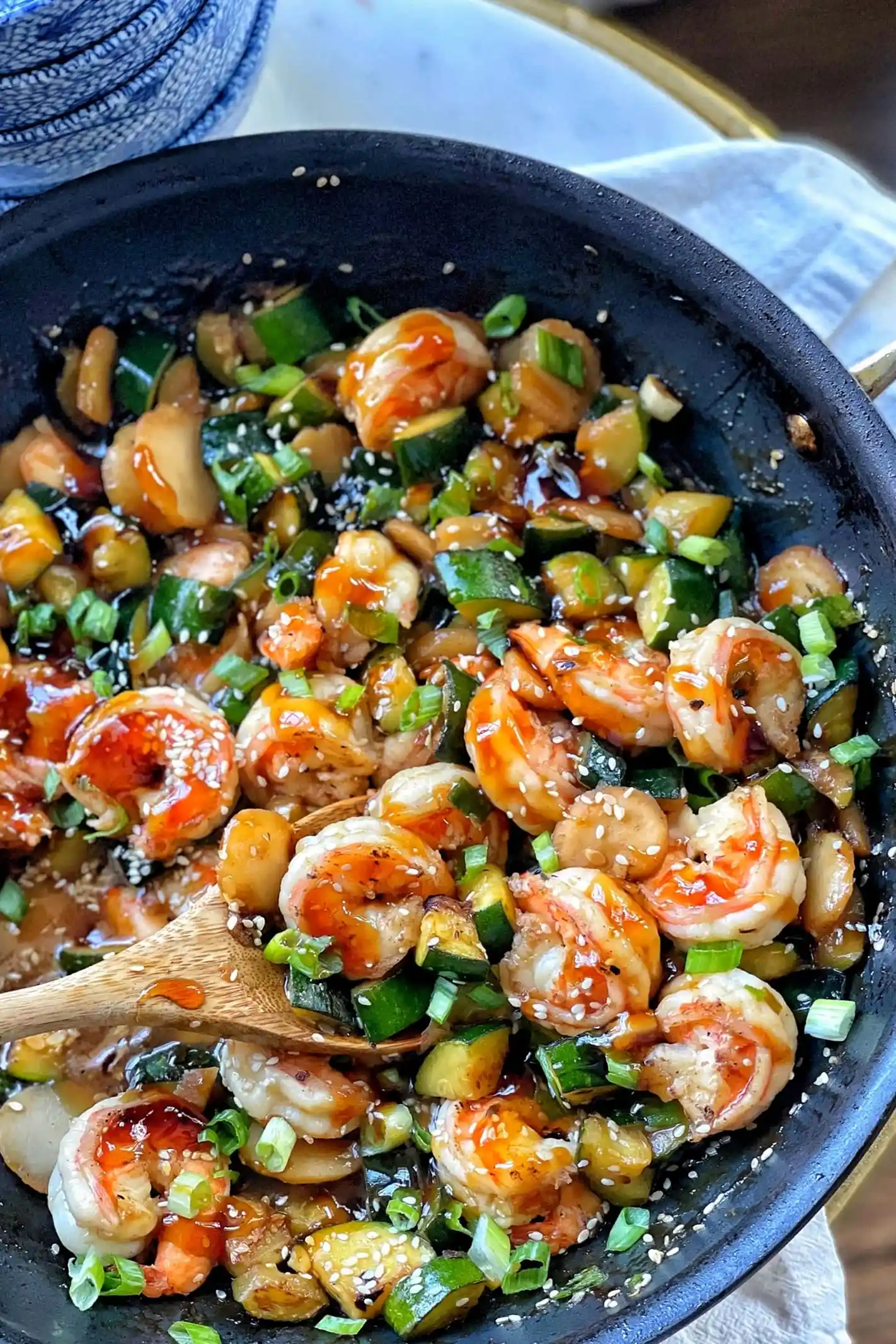
This quick stir fry combines succulent shrimp and crisp zucchini in a homemade maple teriyaki glaze. It is an efficient weeknight meal that provides a healthy alternative to traditional takeout.
List of ingredients
- 2 scallions – chopped, with white and green parts separated for different cooking stages.
- 2 cloves garlic – minced for the initial sauté.
- 1 tbsp fresh ginger – minced to add aromatic heat.
- 6 cups zucchini – chopped into bite-sized pieces.
- 8 oz canned water chestnuts – sliced and drained for a crunchy texture.
- 1.25 lb raw shrimp – peeled and deveined.
- Sesame seeds – used for garnish and added nuttiness.
- 1/2 tsp kosher salt – for seasoning the vegetables.
- Fresh cracked pepper – to taste.
- 2 cloves garlic – minced for the teriyaki sauce.
- 1 tbsp ginger – minced for the teriyaki sauce.
- 1/4 cup low sodium soy sauce – provides the salty base for the glaze.
- 2 tbsp rice vinegar – adds a necessary acidic balance.
- 1 tbsp corn starch – used as a thickening agent for the sauce.
- 1/2 cup maple syrup – provides natural sweetness and a rich glaze.
step-by-step instructions
- Prepare Aromatics: Chop the scallions, separating the white parts from the green parts. Mince the garlic and ginger, and chop the zucchini into uniform pieces.
- Sauté Base: Heat cooking spray in a large frying pan or wok over medium-high heat. Add the white parts of the scallions, minced garlic, and ginger, sautéing for about 1 minute until they become fragrant.
- Cook Zucchini: Add the chopped zucchini to the pan along with 1/2 tsp kosher salt and fresh cracked pepper. Sauté for 10 minutes, stirring frequently, until the zucchini is golden brown and tender.
- Add Water Chestnuts: Stir in the drained water chestnuts and cook for an additional minute to heat them through.
- Sear Shrimp: Remove the cooked vegetables from the pan and set them aside. Spray the pan again with non-stick spray and add the raw shrimp, cooking for a few minutes per side until pink and opaque.
- Combine and Simmer: Return the vegetables to the pan with the shrimp. Whisk together the teriyaki sauce ingredients, then pour 1/2 cup of the mixture over the stir fry. Simmer for about 5 minutes until the sauce coats everything evenly.
- Garnish: Sprinkle the dish with the reserved green scallion tops and sesame seeds.
- Finish with Glaze: Pour the remaining teriyaki sauce into a small saucepan. Simmer for about 5 minutes until it thickens into a syrupy glaze, then drizzle it over the finished stir fry.
Pro Stir Fry Techniques
Using a High-Heat Wok
A carbon steel wok is ideal because it distributes heat unevenly, allowing you to sear ingredients at the bottom while keeping others warmer on the sides. If using a flat pan, ensure it is preheated thoroughly before adding oil to prevent sticking.
Managing Pan Temperature
Keep the heat medium-high to ensure the zucchini browns rather than steams. If the pan cools down too much, the vegetables will release water and become mushy instead of developing a golden crust.
Preventing Ingredient Overcrowding
Cook the shrimp separately from the vegetables to ensure each piece gets direct contact with the pan. Overcrowding the pan lowers the temperature and prevents the proper searing process, leading to rubbery shrimp.
Ingredient Selection and Preparation
Choosing the Best Shrimp
Use raw, peeled, and deveined shrimp for the best texture and ease of preparation. Large or extra-large shrimp are recommended as they hold up better during the stir fry process and do not overcook as quickly as small shrimp.
Preparing Zucchini for Texture
Cut the zucchini into thick, uniform half-moons or cubes. This ensures that they cook evenly and maintain a slight crunch, preventing them from disintegrating into the sauce.
Handling Fresh Ginger Root
Use a spoon to scrape the skin off fresh ginger for a cleaner cut. Mincing it finely allows the flavor to integrate seamlessly into both the sauté and the teriyaki glaze.
Working with Water Chestnuts
Always drain and rinse canned water chestnuts thoroughly before adding them to the pan. This removes the metallic taste of the canning liquid and ensures they stay crisp.
Teriyaki Sauce Customizations
Adjusting the Sweetness Level
Maple syrup provides a distinct flavor, but you can swap it for honey or brown sugar if desired. Honey will result in a thicker glaze, while brown sugar adds a deeper, molasses-like taste.
Reducing Sodium Content
Use coconut aminos as a direct replacement for low-sodium soy sauce to further reduce salt. This alternative is naturally sweeter and lower in sodium while maintaining the savory umami profile.
Controlling Sauce Thickness
If the sauce is too thin, simmer it longer in the saucepan to reduce the liquid. For a thicker consistency, you can slightly increase the cornstarch measurement by a teaspoon.
Protein Alternatives
Substituting with Firm Tofu
Press extra-firm tofu to remove excess water, cube it, and sear it similarly to the shrimp. Tofu absorbs the teriyaki sauce well, making it a great plant-based alternative.
Using Chicken Breast
Cut chicken breast into small, equal-sized cubes and sauté until fully cooked before adding the vegetables back in. Chicken takes longer to cook than shrimp, so ensure it reaches an internal temperature of 165°F.
Incorporating Salmon Cubes
Use skinless salmon fillets cut into 1-inch cubes for a richer flavor. Sear the salmon quickly on high heat to avoid overcooking the delicate fish.
Serving and Pairing Ideas
Grain Base Options
Serve the stir fry over steamed jasmine or basmati rice to absorb the extra teriyaki sauce. Brown rice provides more fiber and a nuttier taste that complements the maple glaze.
Low-Carb Base Alternatives
Cauliflower rice is an excellent low-calorie alternative that keeps the meal light. You can also serve the stir fry as a standalone dish or over a bed of fresh baby spinach.
Complementary Side Dishes
Pair this meal with steamed edamame or a crisp cucumber salad with rice vinegar. These sides add freshness and contrasting textures to the savory stir fry.
Storage and Meal Prep
Refrigerator Storage Guidelines
Store leftovers in an airtight container in the refrigerator for up to three days. Keep the extra thickened glaze in a separate container to prevent the zucchini from becoming too soft.
Freezing Considerations
Stir fries containing zucchini do not freeze well because the water content in the squash causes it to become mushy upon thawing. It is best to enjoy this dish fresh or refrigerated.
Batch Cooking for the Week
Prepare the teriyaki sauce in a large batch and store it in a jar. This allows you to quickly whip up different stir fries throughout the week using various proteins and vegetables.
Reheating Instructions
Microwave Reheating Method
Place the stir fry in a microwave-safe dish and heat in 1-minute intervals. Stir gently between heating cycles to ensure the sauce is evenly distributed and the shrimp does not overcook.
Stovetop Reheating Technique
Heat a skillet over medium heat with a splash of water or broth. Add the stir fry and toss for 2-3 minutes until heated through, which helps maintain the texture of the vegetables.
Avoiding Rubberized Shrimp
When reheating, stop as soon as the food is warm. Overheating shrimp causes them to shrink and become rubbery, so avoid high-power microwave settings for long durations.
Troubleshooting Common Issues
Preventing Soggy Zucchini
Do not salt the zucchini too early, as salt draws out moisture. Add the salt during the sautéing process and cook on high heat to evaporate moisture quickly.
Fixing a Sauce That Won’t Thicken
If the sauce remains watery, mix a small amount of cornstarch with cold water to create a slurry. Stir this into the simmering sauce and cook for another minute until it reaches the desired thickness.
Correcting Overcooked Shrimp
If the shrimp are already slightly overdone, reduce the simmering time when you combine them with the vegetables and sauce. This prevents further cooking and preserves the texture.
Frequently Asked Questions
Can I use frozen shrimp for this recipe?
Yes, you can use frozen shrimp, but ensure they are completely thawed and patted dry with paper towels. Excess moisture from frozen shrimp will steam the protein instead of searing it.
What can replace maple syrup in the sauce?
Honey or agave nectar are the best substitutes for maple syrup. If you prefer a more traditional taste, brown sugar works well, though it lacks the distinct maple aroma.
How do I peel ginger easily?
Use the edge of a metal spoon to scrape the skin off the ginger root. This method removes the skin without wasting any of the usable ginger flesh.
Can I add more vegetables to the stir fry?
Yes, bell peppers, snap peas, and carrots work well in this dish. Sauté harder vegetables like carrots first before adding the zucchini to ensure everything is cooked through.
Print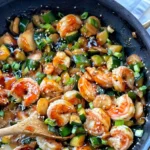
Shrimp and Zucchini Stir Fry with Maple Teriyaki
- Total Time: 40 minutes
- Yield: 4 servings 1x
- Diet: Dairy-Free, Egg-Free
Description
Packed with protein and flavor, my Shrimp and Zucchini Stir Fry with Homemade Teriyaki the perfect fakeout takeout weeknight meal. My lightened up teriyaki sauce is the star of this dish. Zucchini, shrimp, water chestnuts, garlic, and ginger are perfectly coated in the sauce and come together in no time. Serve over rice or cauliflower rice to create a well-rounded meal that’s just like your favorite takeout, but healthier!
Ingredients
- 2 scallions, chopped; white and green parts separated
- 2 cloves garlic, minced
- 1 tbsp fresh ginger, minced
- 6 cups zucchini, chopped
- 8 oz sliced canned water chestnuts
- 1.25 lb raw shrimp
- sesame seeds
- 1/2 tsp kosher salt
- fresh cracked pepper
- 2 cloves garlic, minced (for sauce)
- 1 tbsp ginger, minced (for sauce)
- 1/4 cup low sodium soy sauce
- 2 tbsp rice wine vinegar
- 1 tbsp corn starch
- 1/2 cup maple syrup
Instructions
- Step: Chop the scallions and separate the white parts from the green parts.
- Step: Mince the garlic and the ginger. Chop the zucchini.
- Step: In a large frying pan or wok, add cooking spray. Add the white parts of the scallions, the garlic and ginger, and saute for 1 minute or until fragrant.
- Step: Add the zucchini and 1/2 tsp kosher salt and fresh cracked pepper. Saute the zucchini for 10 minutes, stirring frequently, until golden brown and tender.
- Step: Drain the water chestnuts and add them in to the pot and cook for another minute.
- Step: Remove the vegetables from the pan, and spray the pan with non-stick spray again.
- Step: Add the raw shrimp, and cook for a couple of minutes per side.
- Step: Add the vegetables back in. Combine the teriyaki sauce ingredients, and add 1/2 cup of the mixture to the frying pan. Allow the ingredients to simmer in the sauce for about 5 minutes.
- Step: Garnish the dish with the green parts of the scallions and sesame seeds.
- Step: Finally, add the remaining teriyaki to a small saucepan and simmer for about 5 minutes or until it thickens. Drizzle this teriyaki over the finished stir fry.
Notes
Serve over rice or cauliflower rice to soak up the juices. For reheating, use a microwave or a skillet over medium heat.
- Prep Time: 10 minutes
- Cook Time: 30 minutes
- Category: Main Course
- Method: Stir Fry
- Cuisine: Asian
Nutrition
- Serving Size: 1 cup
- Calories: 308 kcal
- Sugar: 31 g
- Sodium: 892 mg
- Fat: 2 g
- Saturated Fat: 1 g
- Unsaturated Fat: 1 g
- Trans Fat: 0 g
- Carbohydrates: 49 g
- Fiber: 4 g
- Protein: 24 g
- Cholesterol: 130 mg
Keywords: shrimp, teriyaki, vegetables, zucchini