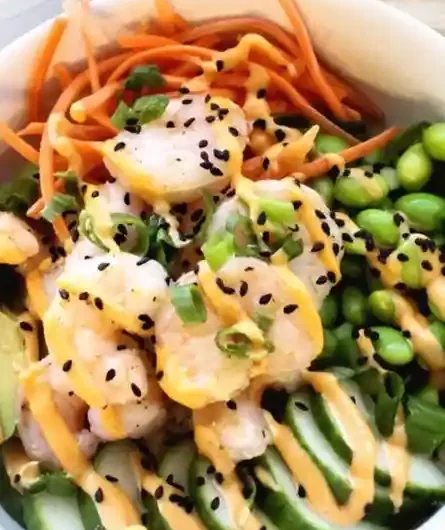
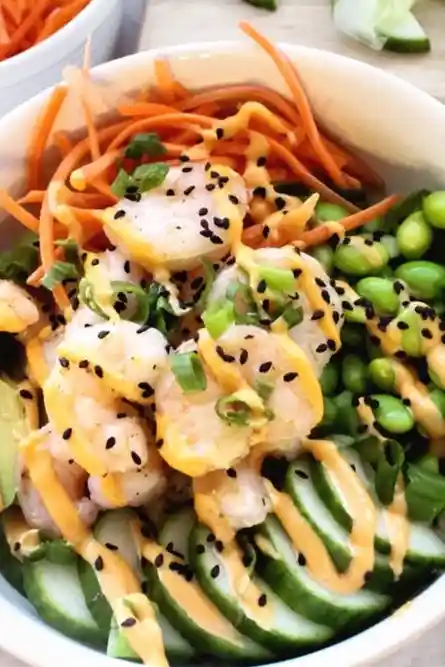
These shrimp sushi bowls provide a fresh, nutrient-dense alternative to traditional sushi rolls. They combine seasoned cauliflower rice with seared shrimp and crisp vegetables for a fast and healthy meal.
List of ingredients
- 3 tbsp seasoned rice vinegar – adds the characteristic sushi tang to the base.
- 2 tbsp olive or avocado oil, divided – used for sautéing the rice and shrimp.
- 1 bag of cauliflower rice, or substitute 1 cup cooked rice – the low-carb foundation of the bowl.
- 8 oz. shrimp, deveined and tails removed – the primary protein source.
- 1 small avocado, thinly sliced or chopped into cubes – provides creaminess and healthy fats.
- 1/2 cup cucumber, sliced and halved – adds a refreshing crunch.
- 1/2 cup shredded carrots – contributes color and sweetness.
- 1/2 cup edamame, shelled – adds plant-based protein and texture.
- salt and pepper, to taste – basic seasoning for the shrimp.
- 2 green onions, sliced for topping – adds a mild onion flavor.
- sesame seeds, for garnish – provides a nutty finish.
- 4 tbsp mayo – the base for the creamy sauce.
- 2 tbsp sriracha – gives the sauce its signature heat.
- 1 tbsp lemon juice – cuts through the richness of the mayo.
- salt to taste – final seasoning for the sauce.
step-by-step instructions
- Prepare the shrimp: Pat dry the shrimp and season with salt and pepper. Set aside to ensure they sear properly in the pan.
- Cook the cauliflower rice: Heat a skillet over medium-high heat and add 1 tbsp olive or avocado oil, then add the cauliflower rice. Allow to cook for 5-7 minutes (or until cauliflower is tender), stirring occasionally.
- Season the base: Add the cooked cauliflower rice to two bowls and toss with riced vinegar. This infuses the base with a sushi-like flavor.
- Sear the shrimp: Add the other tbsp of oil to the pan at medium heat. Add shrimp in a single layer and cook for 1-2 minutes per side, or until they are cooked through.
- Assemble the bowls: Arrange your bowls, top the cauliflower rice with the shrimp then arrange your avocado slices, cucumber, carrots, and edamame.
- Make the sauce: Combine your mayo and sriracha, and whisk together with lemon juice and salt. Drizzle your spicy mayo over your sushi bowls.
- Final touch: Top with sesame seeds and sliced green onion. Serve immediately and enjoy!
Pro Tips for Shrimp Preparation
Patting Shrimp Dry for Better Searing
Moisture on the surface of shrimp creates steam, which prevents them from browning. Use a paper towel to firmly pat each piece dry before seasoning. This allows the shrimp to develop a golden-brown crust through the Maillard reaction.
Avoiding Rubbery Shrimp
Shrimp cook very quickly and become tough if left on the heat too long. Remove them from the pan as soon as they turn opaque and form a ‘C’ shape. Avoid cooking them into a tight ‘O’ shape, as this is a sign of overcooking.
Choosing the Right Shrimp Size
Medium or large shrimp are ideal for bowls because they hold their shape and provide a satisfying bite. Small shrimp may overcook too rapidly, while jumbo shrimp may require slicing in half to ensure they blend well with the other ingredients.
Perfecting the Cauliflower Rice Base
Managing Moisture in Frozen Cauliflower Rice
Frozen cauliflower rice often releases excess water during cooking, which can make the bowls soggy. To prevent this, sauté the rice over medium-high heat without crowding the pan. If too much liquid accumulates, drain the pan briefly or increase the heat to evaporate the moisture.
Sautéing for Optimal Texture
Avoid overcooking the cauliflower rice into a mushy consistency. Sauté just until the edges are slightly tender and lightly browned. This maintains a ‘grain-like’ texture that mimics traditional sushi rice more closely.
Using Seasoned vs. Unseasoned Vinegar
Seasoned rice vinegar already contains sugar and salt, providing the perfect balance for sushi. If using unseasoned rice vinegar, whisk in a pinch of salt and a teaspoon of sugar before tossing it with the rice. This ensures the base is not overly acidic.
Customizing the Spicy Mayo Sauce
Adjusting the Heat Level
The amount of sriracha can be adjusted based on your spice tolerance. For a milder sauce, reduce the sriracha to 1 tablespoon or replace half of it with a mild chili paste. For extra heat, add a pinch of cayenne pepper or a drop of hot sauce.
Low-Fat Mayo Alternatives
You can replace full-fat mayonnaise with Greek yogurt or a vegan mayo alternative. Greek yogurt adds a tangy flavor and increases the protein content of the sauce. Vegan mayos based on aquafaba or soy usually provide a similar creamy consistency.
Adding Depth with Garlic or Ginger
To make the sauce more complex, whisk in a half-teaspoon of grated fresh ginger or garlic powder. These ingredients complement the shrimp and cauliflower rice. This adds a pungent, aromatic quality common in high-end sushi restaurants.
Vegetable Preparation and Selection
Selecting the Best Cucumbers
English or Persian cucumbers are recommended because they have thinner skins and smaller seeds. This results in a crunchier texture and a cleaner taste. If using a standard garden cucumber, peel the skin and scoop out the seeds before slicing.
Preparing Shredded Carrots
Use a julienne peeler or a grater to create thin, uniform strips of carrots. Thinly sliced carrots blend better with the rice and other toppings. This ensures you get a bit of every ingredient in every bite.
Working with Shelled Edamame
Frozen shelled edamame should be thawed and patted dry before adding to the bowl. If they are too wet, they can dilute the flavor of the rice vinegar. Lightly steaming them for two minutes ensures they are tender yet firm.
Preventing Avocado Browning
Avocados oxidize quickly once sliced, turning brown and losing their appeal. Toss your avocado slices in a small amount of the lemon juice used for the mayo. The citric acid prevents oxidation and keeps the slices vibrant green.
Protein and Base Substitutions
Using Salmon or Tuna
Fresh salmon cubes or seared tuna steaks work excellently as replacements for shrimp. Ensure the fish is seasoned simply with salt and pepper to let the spicy mayo stand out. Salmon can be pan-seared using the same method as the shrimp.
Plant-Based Protein Options
Firm tofu is a great vegetarian substitute; press it to remove moisture, cube it, and sauté until golden. Tempeh is another option that provides a nuttier flavor and denser texture. Ensure the tofu is seasoned with a splash of soy sauce for extra umami.
Switching to Traditional Sushi Rice
If you prefer traditional rice, use short-grain sushi rice cooked and cooled slightly. Fold in the seasoned rice vinegar while the rice is still warm to allow for better absorption. This creates the authentic sticky texture of sushi.
Using Quinoa or Brown Rice
For a gluten-free and high-fiber option, cooked quinoa or brown rice can be used. These grains have a nuttier taste than white rice. Season them with the rice vinegar and a touch of sesame oil for added aroma.
Storage and Freshness Guide
Storing Prepped Vegetables
You can chop the cucumbers and carrots up to two days in advance. Store them in airtight containers with a damp paper towel to maintain crispness. Keep the avocado whole and slice it only right before serving to maintain freshness.
Refrigerating Cooked Shrimp
Cooked shrimp can be stored in the refrigerator for up to three days in a sealed container. To maintain the best texture, store them separately from the vegetables. This prevents the shrimp from absorbing smells from the raw produce.
Keeping Spicy Mayo Fresh
The spicy mayo can be made in advance and stored in a glass jar for up to one week. Shake the jar well before using, as the sriracha and mayo may separate slightly over time. Keep it refrigerated at all times.
Assembling Bowls for Meal Prep
For meal prep, place the cauliflower rice at the bottom and the shrimp on top. Pack the vegetables in separate compartments or small containers. Add the spicy mayo in a separate dressing cup and drizzle it over the bowl just before eating.
Reheating and Serving Advice
Warming Cauliflower Rice and Shrimp
If eating leftovers, reheat the shrimp and cauliflower rice together in a microwave for 45-60 seconds. Avoid reheating the avocado, cucumber, or edamame, as they are meant to be served cold. This contrast in temperature creates a dynamic eating experience.
Serving Temperature Suggestions
The base and protein should be warm, while the toppings remain chilled. This balance prevents the avocado from becoming too soft and the cucumbers from losing their snap. Serve in wide, shallow bowls to allow for an attractive arrangement.
Plating for Visual Appeal
Place the cauliflower rice in the center and arrange the toppings in separate clusters around the edge. This ‘deconstructed’ look makes the bowl more appealing. Finish with a zig-zag drizzle of mayo and a concentrated sprinkle of sesame seeds in the center.
Troubleshooting Common Issues
Fixing Watery Cauliflower Rice
If your cauliflower rice becomes watery, it is likely due to low heat or overcrowding the pan. To fix this, turn the heat up to high and sauté for another 2-3 minutes without stirring too often. This allows the excess moisture to evaporate and the rice to brown.
Correcting a Sauce That Is Too Spicy
If the spicy mayo is too intense, whisk in an additional tablespoon of mayonnaise. A small amount of honey or maple syrup can also balance the heat. The sugar neutralizes the capsaicin in the sriracha, making the sauce smoother.
Dealing with Over-Seasoned Shrimp
If the shrimp taste too salty, rinse them quickly under cold water before searing. Alternatively, add a squeeze of fresh lime juice over the shrimp after cooking. The acidity helps mask excess salt and brightens the overall flavor profile.
Frequently Asked Questions
Can I use frozen shrimp?
Yes, you can use frozen shrimp. Ensure they are fully thawed and patted very dry before seasoning to ensure they sear properly in the pan.
Is there a substitute for rice vinegar?
Apple cider vinegar mixed with a pinch of sugar and salt is a good substitute. Alternatively, you can use a combination of white vinegar and a small amount of honey.
How long do these bowls last in the fridge?
Assembled bowls last about 24 hours, but if you store components separately, the shrimp and rice last 3 days and the veggies last 2-4 days.
Can I make the spicy mayo in advance?
Yes, the spicy mayo can be made up to a week in advance. Store it in an airtight container in the refrigerator and shake well before serving.
Print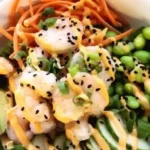
Shrimp Sushi Bowls With Cauliflower Rice
- Total Time: 25 minutes
- Yield: 2 bowls 1x
- Diet: Gluten Free
Description
Budget-friendly, easy, and delicious deconstructed shrimp sushi bowls with cauliflower rice that provide all the flavors of sushi in a quick dinner format.
Ingredients
- 3 tbsp seasoned rice vinegar
- 2 tbsp olive or avocado oil, divided
- 1 bag of cauliflower rice, or substitute 1 cup cooked rice
- 8 oz. shrimp, deveined and tails removed
- 1 small avocado, thinly sliced or chopped into cubes
- 1/2 cup cucumber, sliced and halved
- 1/2 cup shredded carrots
- 1/2 cup edamame, shelled
- salt and pepper, to taste
- 2 green onions, sliced for topping
- sesame seeds, for garnish
- 4 tbsp mayo
- 2 tbsp sriracha
- 1 tbsp lemon juice
- salt to taste
Instructions
- Step 1: Pat dry the shrimp and season with salt and pepper. Set aside.
- Step 2: Heat a skillet over medium-high heat and add 1 tbsp olive or avocado oil, then add the cauliflower rice. Allow to cook for 5-7 minutes (or until cauliflower is tender), stirring occasionally. Add cauliflower rice to two bowls and toss with riced vinegar.
- Step 3: Add the other tbsp of oil to the pan at medium heat. Add shrimp in a single layer and cook for 1-2 minutes per side, or until they’re cooked through.
- Step 4: Arrange your bowls, top the cauliflower rice with the shrimp then arrange your avocado slices, cucumber, carrots, and edamame.
- Step 5: Combine your mayo and sriracha, and whisk together. Drizzle your spicy mayo over your sushi bowls.
- Step 6: Top with sesame seeds and sliced green onion. Serve immediately and enjoy!
Notes
For a vegetarian version, try tofu instead of shrimp. You can also use salmon or crab meat. For a store-bought sauce alternative, ‘dynamite’ sauce is a great option.
- Prep Time: 15 minutes
- Cook Time: 10 minutes
- Category: Entrees
- Method: Sautéing
- Cuisine: Japanese-inspired
Nutrition
- Serving Size: 1 bowl
- Calories: 620 kcal
- Sugar: 6 g
- Sodium: 850 mg
- Fat: 42 g
- Saturated Fat: 7 g
- Unsaturated Fat: 35 g
- Trans Fat: 0 g
- Carbohydrates: 22 g
- Fiber: 9 g
- Protein: 32 g
- Cholesterol: 180 mg
Keywords: shrimp sushi bowls, cauliflower rice, low carb sushi, healthy dinner, deconstructed sushi