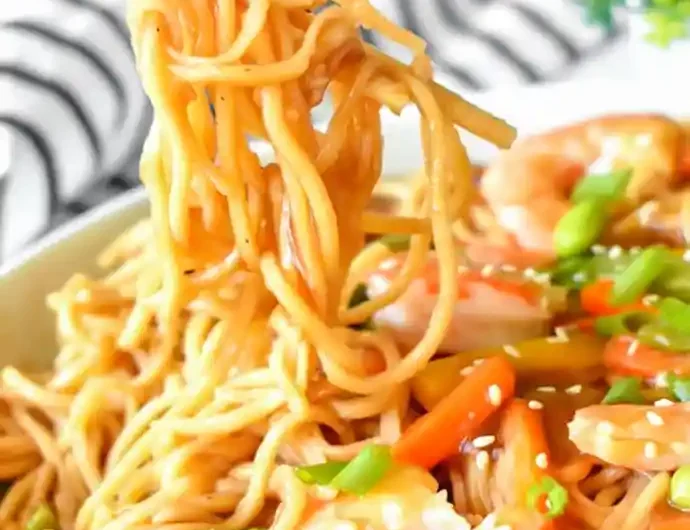
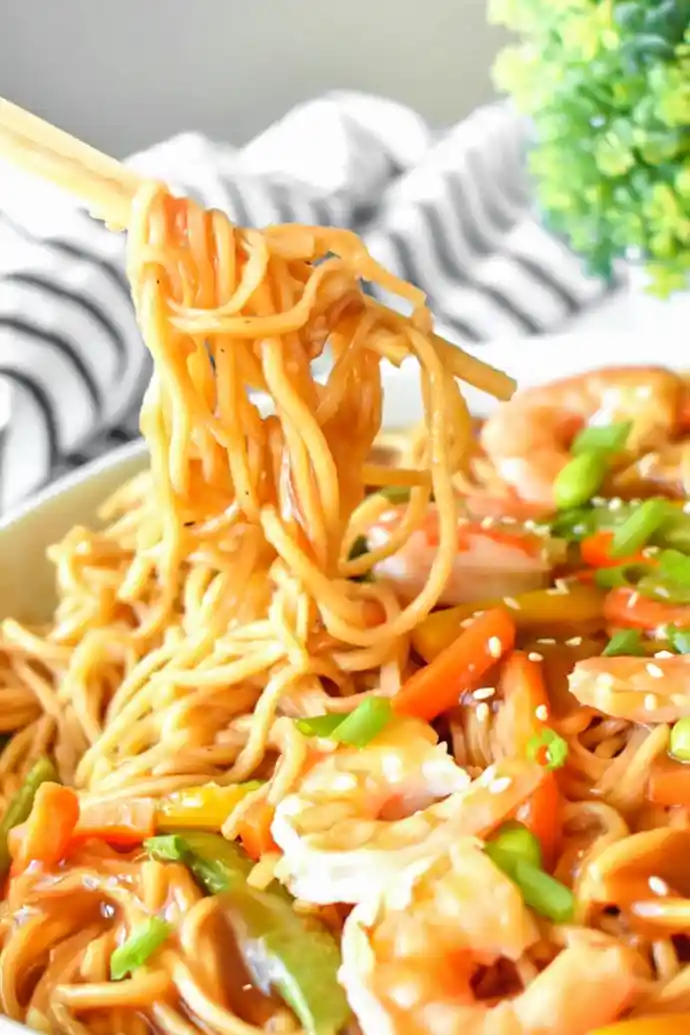
This quick stir fry combines succulent shrimp and fresh vegetables in a savory sauce. It is designed for efficiency, using a single skillet to minimize cleanup while delivering a complete meal in under 30 minutes.
List of ingredients
- 1 teaspoon vegetable oil – used for sautéing.
- 3/4 lbs shrimp (large size, peeled and deveined) – the primary protein.
- 1/2 onion (chopped) – adds a savory base flavor.
- 3 cups vegetables (sliced) – use a variety of colorful, crisp options.
- 2 packages ramen noodles – discarded seasoning packets are not needed.
- 2 green onions (sliced) – for fresh garnish.
- 1 tablespoon sesame seeds – adds nuttiness and texture.
- 3 cups water – for the sauce and noodle base.
- 1/4 cup soy sauce – provides salt and umami.
- 3 tablespoons oyster sauce – adds depth and thickness.
- 1 tablespoon brown sugar – balances the salty flavors.
- 1 tablespoon rice vinegar – adds a touch of acidity.
- 1 tablespoon sesame oil – for a distinct toasted aroma.
- 1/4 teaspoon ginger (grated) – adds a warm, zesty note.
- 1 tablespoon cornstarch – used to thicken the sauce.
step-by-step instructions
- Sear the shrimp: Heat vegetable oil in a skillet over medium-high heat and add the shrimp. Saute, flipping to cook on both sides until the shrimp is pink and cooked through, then remove from the skillet and set aside.
- Sauté the vegetables: Add the chopped onion and sliced vegetables to the same skillet. Saute until the vegetables are tender and the onions turn translucent, then remove them from the skillet and set aside.
- Cook the noodles: Add all sauce ingredients except the cornstarch to the skillet and bring to a boil. Add the ramen noodles and cook for a few minutes until they are cooked through.
- Combine ingredients: Return the cooked shrimp and sautéed vegetables back into the skillet with the noodles.
- Thicken the sauce: Mix 1/4 cup water with the cornstarch in a small bowl to create a slurry. Pour the slurry into the skillet and toss everything together for 2 minutes until the sauce thickens. Add more water if the pan seems too dry.
- Garnish and serve: Sprinkle the finished dish with sesame seeds and sliced green onions before serving.
Optimal Vegetable Selection
Using Crunchy Root Vegetables
Carrots and daikon radish provide an excellent crunch to this stir fry. Slice them into thin matchsticks to ensure they cook at the same rate as the other vegetables.
Incorporating Leafy Greens
Bok choy, spinach, or kale add nutritional value and a pop of green. Add these during the last minute of sautéing to prevent them from wilting too much.
Adding Pods and Peas
Snap peas, snow peas, and edamame fit perfectly with the ramen flavor profile. These vegetables maintain their shape and provide a satisfying snap in every bite.
Utilizing Frozen Mixed Vegetables
If fresh produce is unavailable, a frozen stir-fry blend is a practical alternative. Thaw them slightly before adding to the pan to avoid releasing too much water into the sauce.
Protein Customization Options
Substituting with Chicken Breast
Boneless, skinless chicken breast is a great alternative to shrimp. Dice the chicken into small, uniform cubes and sauté them longer than the shrimp to ensure they are fully cooked.
Using Firm Tofu for Vegetarian Needs
Extra-firm tofu, pressed to remove excess moisture, works well in this recipe. Brown the tofu cubes in oil until golden on all sides before setting them aside.
Cooking with Scallops or Squid
Other seafood options like bay scallops or sliced squid can replace the shrimp. Be careful not to overcook these, as they can become rubbery very quickly.
Working with Pre-cooked Frozen Shrimp
If using pre-cooked shrimp, do not sauté them at the start. Add them at the very end with the cornstarch slurry just to heat them through.
Sauce Enhancements and Adjustments
Increasing the Acidity
If the sauce feels too heavy, add an extra teaspoon of rice vinegar. The acidity helps cut through the richness of the sesame oil and oyster sauce.
Boosting the Sweetness
For those who prefer a sweeter glaze, increase the brown sugar by half a tablespoon. This creates a more syrupy consistency that clings better to the noodles.
Adding Spicy Heat
Incorporate sriracha, chili garlic sauce, or red pepper flakes during the boiling phase. Adjust the amount based on your preference for heat levels.
Reducing Sodium Content
Swap the regular soy sauce for a low-sodium version to reduce salt. You can also dilute the oyster sauce with a small amount of water if the flavor is too intense.
Selecting the Right Noodles
Using Soba Noodles
Buckwheat soba noodles offer a nuttier flavor and a denser texture. Note that soba may require a different boiling time than standard ramen noodles.
Substituting with Rice Noodles
Rice noodles are an excellent gluten-free alternative. Soak them in warm water first, then add them to the sauce for a shorter duration to avoid overcooking.
Choosing Whole Wheat Ramen
Whole wheat ramen provides more fiber and a heartier taste. These noodles often absorb more liquid, so you may need to add an extra half cup of water.
Achieving Al Dente Texture
To prevent mushy noodles, cook them for one minute less than the package directions. They will finish cooking when you toss them in the thickening sauce.
Professional Stir Fry Techniques
Managing Pan Temperature
Keep the skillet on medium-high heat to ensure a proper sear on the protein. If the pan cools down too much, the shrimp will steam rather than brown.
Preventing Protein Overcooking
Always remove the shrimp from the pan the moment they turn pink. Leaving them in while the vegetables cook will make them tough and rubbery.
Preparing the Perfect Cornstarch Slurry
Always mix cornstarch with cold water before adding it to the hot pan. Adding dry cornstarch directly to the sauce will cause clumps that are difficult to remove.
Avoiding Noodle Clumping
Stir the ramen noodles frequently as they boil in the sauce. This prevents them from sticking together and ensures an even coating of the sauce.
Serving and Presentation
Adding Fresh Garnishes
Beyond green onions and sesame seeds, consider adding fresh cilantro or thinly sliced red chilies. These add vibrant colors and contrasting flavors to the dish.
Pairing with Side Dishes
Serve this stir fry with a side of steamed edamame or a crisp cucumber salad. A light vinegar-based salad balances the savory weight of the ramen.
Plating for Heat Retention
Warm your bowls or plates in the oven on low heat before serving. This keeps the noodles and sauce hot for a longer period during the meal.
Storage and Reheating Advice
Proper Refrigeration Methods
Store leftovers in an airtight container in the refrigerator for up to three days. Keep the noodles and sauce well-mixed to prevent the noodles from drying out.
Freezer-Friendly Tips
While ramen noodles can become soft when frozen, you can freeze the cooked shrimp and vegetables. Reheat them and add fresh noodles for the best quality.
Best Ways to Reheat
Reheat in a skillet over medium heat with a splash of water or broth. This loosens the sauce and restores the original texture of the noodles.
Common Cooking Troubleshooting
What to do if the sauce is too thin?
If the sauce has not thickened after two minutes, mix a small amount of additional cornstarch and water. Stir it in and simmer for another minute.
How to fix sauce that is too thick?
Add water or vegetable broth one tablespoon at a time. Stir gently until the sauce reaches your desired consistency.
Why are my noodles mushy?
Mushy noodles usually result from overcooking in the boiling sauce. Reduce the boiling time by 60 seconds in your next attempt.
Why is the shrimp rubbery?
Rubbery shrimp are overcooked. Ensure you remove them from the heat immediately after they change color and avoid adding them back too early.
Frequently Asked Questions
Can I make this dish without oyster sauce?
Yes, you can substitute oyster sauce with a mixture of soy sauce and a pinch of sugar, or use a mushroom-based vegetarian stir-fry sauce.
How long does the stir fry stay fresh in the fridge?
The dish typically stays fresh for 2 to 3 days when stored in an airtight container.
Should I soak the ramen noodles first?
No, this recipe is designed to cook the noodles directly in the sauce for maximum flavor absorption.
What is the best oil for high-heat stir frying?
Vegetable oil, canola oil, or peanut oil are best because they have high smoke points, preventing the oil from burning.
Print
One-Skillet Shrimp Ramen Stir Fry
- Total Time: 25 minutes
- Yield: 2 servings 1x
- Diet: General
Description
This easy Shrimp Ramen Stir Fry comes together in one skillet for a quick and easy meal! Simple, healthy and on the table in under 30 minutes!
Ingredients
- 1 teaspoon vegetable oil
- 3/4 lbs shrimp (large size, peeled and deveined)
- 1/2 onion (chopped)
- 3 cups vegetables (sliced)
- 2 packages ramen noodles
- 2 green onions (sliced)
- 1 tablespoon sesame seeds
- 3 cups water
- 1/4 cup soy sauce
- 3 tablespoons oyster sauce
- 1 tablespoon brown sugar
- 1 tablespoon rice vinegar
- 1 tablespoon sesame oil
- 1/4 teaspoon ginger (grated)
- 1 tablespoon cornstarch
Instructions
- Step 1: Heat vegetable oil in a skillet over medium-high heat and add the shrimp. Saute, flipping to cook on both sides until the shrimp is pink and cooked through. Remove from skillet and set aside.
- Step 2: Add the onion and vegetables to the skillet and saute until tender and onions turn translucent. Remove from skillet and set aside.
- Step 3: Add all of the sauce ingredients except the cornstarch to the skillet. Bring to a boil and then add the ramen noodles. Cook the ramen noodles for a few minutes until they are cooked through. Add the shrimp and vegetables back to the skillet.
- Step 4: Mix 1/4 cup water with the cornstarch, stirring to create a slurry. Add this to the ramen noodles and toss everything together for 2 minutes so the sauce will thicken. If there is not enough liquid in the skillet, add more water. Sprinkle with sesame seeds and green onion and serve!
Notes
This recipe is highly customizable; you can swap the shrimp for other proteins or use any assorted vegetables available in your refrigerator.
- Prep Time: 10 minutes
- Cook Time: 15 minutes
- Category: Dinner
- Method: Stir Fry
- Cuisine: Asian
Nutrition
- Serving Size: 1 serving
- Calories: 831 kcal
- Sugar: 9 g
- Sodium: 5186 mg
- Fat: 27 g
- Saturated Fat: 10 g
- Unsaturated Fat: 16 g
- Trans Fat: 1 g
- Carbohydrates: 106 g
- Fiber: 13 g
- Protein: 45 g
- Cholesterol: 214 mg
Keywords: easy dinner, noodles, quick dinner, ramen, shrimp, stir fry