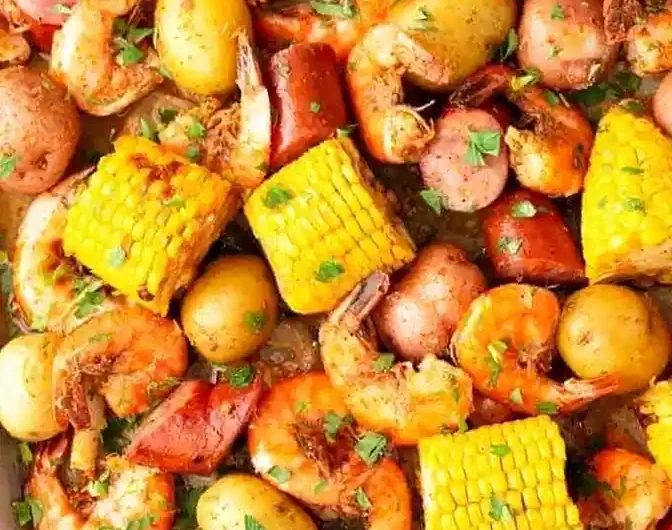
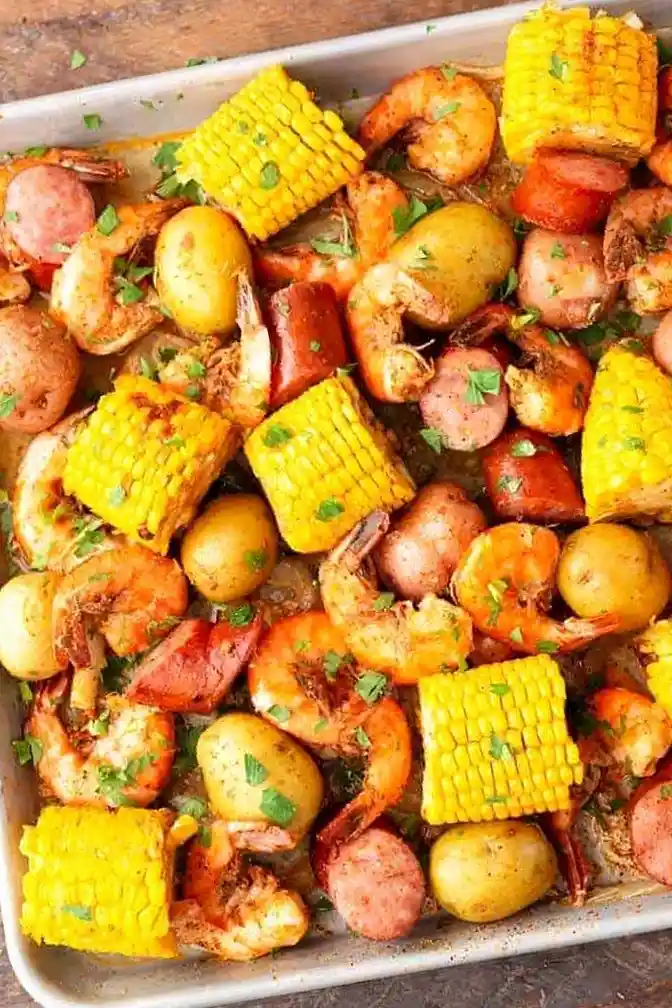
This sheet pan shrimp boil offers all the bold flavors of a traditional Low Country boil without the need for giant pots of boiling water. It is a streamlined, one-pan meal that simplifies cleanup and speeds up preparation for a weeknight dinner. Enjoy the classic blend of Cajun spices, corn, and shrimp roasted together to perfection.
List of ingredients
- 1 lb small potatoes (or 2″-3″ cauliflower pieces) – ensure they are uniform in size for even roasting.
- 1 lb chicken Andouille sausage – sliced into rounds for maximum browning.
- 3 ears corn – cut in half for easier eating and faster cooking.
- 1 lb medium shrimp – peeled and deveined for convenience.
- 1/4 cup unsalted butter or ghee – melted to coat all ingredients.
- 4 cloves garlic – pressed or minced finely.
- 1 tablespoon Old Bay seasoning – provides a salty, celery-based flavor.
- 3 teaspoons Cajun seasoning – such as Tony Chachere’s for a spicy kick.
- 1 lemon – cut into wedges for seasoning and garnish.
- 2 tablespoons chopped fresh parsley leaves – added at the end for freshness.
step-by-step instructions
- Preheat Oven: Heat your oven to 400° F to ensure a hot surface for roasting.
- Arrange Ingredients: Place the potatoes, sliced chicken sausage, corn pieces, and shrimp on a large sheet pan in a single layer. Mix them together slightly so they are evenly distributed.
- Apply Garlic Butter: In a small cup, combine the melted butter and minced garlic. Pour this mixture over the ingredients on the pan and toss everything to coat thoroughly.
- Add Seasonings: Sprinkle the Old Bay seasoning and the Cajun seasoning evenly across the sheet pan. Mix again to ensure every piece is well-seasoned.
- Add Lemon: Squeeze some fresh lemon juice over the ingredients. Arrange the remaining lemon wedges across the pan.
- Bake: Place the pan in the 400° F oven and bake for 13 to 20 minutes. Cook until the shrimp are no longer translucent and the potatoes are tender when pierced with a fork.
- Final Seasoning: Taste the ingredients and add more Old Bay or Cajun seasoning if you prefer a stronger flavor.
- Garnish: Sprinkle the chopped fresh parsley over the top of the meal.
- Serve: Serve the meal directly from the sheet pan for a rustic, family-style experience.
Oven Preparation and Pan Setup
Using a Rimmed Baking Sheet
A rimmed baking sheet is essential to prevent the melted butter and juices from dripping into the bottom of your oven. This prevents smoking and minimizes the need for heavy cleaning after the meal. Ensure the pan is large enough to avoid overcrowding the ingredients.
Lining with Parchment Paper
Lining your sheet pan with parchment paper or aluminum foil makes cleanup significantly faster. It prevents the seasonings and garlic from sticking to the metal surface. This is especially helpful when using high-heat roasting temperatures.
Achieving the Correct Oven Temperature
Maintaining a consistent 400° F is crucial for getting the corn and potatoes to roast properly while the shrimp cook. If the oven is too cool, the vegetables will steam rather than roast. Always allow your oven to fully preheat before sliding the pan inside.
Optimizing Your Ingredients
Selecting the Best Baby Potatoes
Small baby gold or red potatoes are ideal because they have thin skins and a creamy texture. If you only have larger potatoes, cut them into quarters or halves to match the size of the shrimp. This ensures the potatoes are fully cooked by the time the shrimp are done.
Preparing Corn Cobs for Even Cooking
Cutting corn ears into halves or thirds allows the heat to penetrate the kernels more efficiently. Smaller pieces also fit better on the sheet pan, preventing the need to stack them. This results in a better char and more consistent tenderness.
Choosing the Right Shrimp Size
Medium shrimp are the best choice for this recipe as their cooking time aligns well with the other ingredients. If you use jumbo shrimp, they may take slightly longer but are less likely to overcook. Always ensure shrimp are peeled and deveined for the best eating experience.
Flavor Enhancement Strategies
Mastering the Garlic Butter Mixture
Combining the garlic with melted butter ensures the flavor is distributed evenly across every piece of seafood and vegetable. For a deeper flavor, you can slightly brown the butter before adding the garlic. This adds a nutty dimension to the overall dish.
Balancing Old Bay and Cajun Seasonings
Old Bay provides a classic coastal flavor, while Cajun seasoning adds a more intense heat. Be mindful of the salt content in your chosen brands, as both seasonings can be quite salty. Adjust the quantities based on your personal salt tolerance.
Using Fresh Lemon for Acidity
Fresh lemon juice cuts through the richness of the butter and the saltiness of the spices. Squeezing the juice directly over the pan before roasting allows the citrus to penetrate the ingredients. The roasted lemon wedges provide an extra burst of flavor at the table.
Customizing Your Shrimp Boil
Adding Low-Carb Vegetable Alternatives
Cauliflower florets are an excellent substitute for potatoes for those seeking a lower-carb option. Cut the cauliflower into 2-3 inch pieces so they roast at the same rate as the corn. They absorb the garlic butter and spices very effectively.
Incorporating Bell Peppers and Onions
Adding sliced bell peppers and red onions adds sweetness and color to the sheet pan. Slice them into thick strips so they do not burn during the 20-minute bake time. These vegetables complement the savory notes of the chicken sausage.
Increasing the Spice Level
For those who enjoy more heat, add a pinch of cayenne pepper or crushed red pepper flakes to the butter mixture. You can also drizzle a small amount of hot sauce over the pan after baking. This adds a vinegary tang and extra spice.
Professional Cooking Tips
Avoiding Overcrowding the Pan
If the ingredients are piled too high, they will steam instead of roast, leading to soggy potatoes and soft shrimp. Use two sheet pans if you are doubling the recipe or using larger vegetables. Ensure there is a small amount of space between the pieces.
Monitoring Shrimp Doneness
Shrimp cook very quickly and can become rubbery if overdone. They are finished when they curl into a “C” shape and change from translucent to an opaque pinkish-white. Start checking them at the 13-minute mark.
Ensuring Potatoes are Tender
The best way to verify potatoes are done is by piercing the largest piece with a fork. The fork should slide in and out with minimal resistance. If the shrimp are done but potatoes are still firm, remove the shrimp and return the pan to the oven for a few more minutes.
Serving and Pairing Advice
Serving Family Style
Serving the meal directly from the sheet pan creates a relaxed, communal atmosphere. Place the pan in the center of the table on a heat-resistant mat. Provide plenty of napkins, as this meal is best enjoyed with your hands.
Pairing with Fresh Greens
A crisp green salad with a light vinaigrette balances the richness of the buttery shrimp boil. The acidity of the salad cleanses the palate between bites of savory sausage and corn. A simple slaw with cabbage and lime is also a great pairing.
Creating a Garlic Butter Dipping Sauce
While the pan has plenty of butter, an extra side of garlic butter is always a hit. Melt additional butter with minced garlic and a pinch of paprika. Serve it in a small bowl for dipping the shrimp and corn.
Storage and Food Safety
Proper Cooling Techniques
Allow the shrimp boil to cool slightly before transferring it to storage containers. Do not leave the pan at room temperature for more than two hours to prevent bacterial growth. Spreading the leftovers on a tray can speed up the cooling process.
Airtight Container Selection
Store the leftovers in an airtight glass or plastic container to keep the ingredients moist. This prevents the shrimp from drying out and stops the strong garlic and spice aromas from affecting other foods in the fridge. Separate the lemon wedges into a small bag.
Maximum Storage Duration
The roasted shrimp boil is best consumed within three to four days when stored in the refrigerator. After this period, the texture of the shrimp may degrade, and the corn may become overly soft. Always reheat only the portion you plan to eat.
Reheating Without Losing Quality
Using the Oven for Reheating
To maintain the texture, reheat the meal in the oven at 300° F for about 10 minutes. This gently warms the ingredients without overcooking the shrimp. Cover the pan loosely with foil to retain moisture.
Microwave Reheating Methods
If using a microwave, heat the food in short 30-second intervals on medium power. Stir gently between bursts to ensure even heating. Be careful not to overheat the shrimp, as they can become tough and rubbery very quickly.
Adding Fresh Butter during Reheat
Adding a small pat of fresh butter to the pan before reheating restores the moisture lost during storage. This brings back the rich, silky mouthfeel of the original dish. A fresh squeeze of lemon juice also awakens the flavors.
Make-Ahead Preparation
Pre-chopping the Vegetables
You can chop the potatoes, slice the sausage, and cut the corn up to 24 hours in advance. Store each ingredient in separate airtight bags or containers in the refrigerator. This reduces the active prep time to just a few minutes on the day of cooking.
Pre-portioning the Seasonings
Mix the Old Bay and Cajun seasonings in a small jar or bag before you start cooking. Having the dry spice blend ready prevents you from having to measure multiple times during the assembly process. Store the mix in a cool, dry place.
Preparing the Garlic Butter in Advance
The garlic butter mixture can be made a day early and kept in a sealed jar in the fridge. Simply melt it in the microwave or on the stove just before pouring it over the sheet pan. Ensure the garlic is well-incorporated before heating.
Troubleshooting Common Issues
Fixing Rubbery Shrimp
Rubbery shrimp are usually the result of overcooking. To prevent this, ensure your oven is accurately calibrated and remove the pan the moment the shrimp turn opaque. If this happens, try reducing the bake time by 2-3 minutes next time.
Handling Hard Potatoes
If your potatoes are consistently undercooked, try parboiling them for 5 minutes before adding them to the sheet pan. This ensures the interior is soft while the oven handles the browning of the exterior. This is especially helpful for larger potato varieties.
Dealing with Burnt Seasoning
If the spices are burning before the potatoes are done, your oven rack may be too high. Move the rack to the center or lower-middle position to ensure more indirect heat. You can also add a tablespoon of oil to the butter to raise the smoke point.
Frequently Asked Questions
Can I use frozen shrimp?
Yes, you can use frozen shrimp, but they must be completely thawed and patted dry before adding them to the pan. Excess water from frozen shrimp will steam the vegetables and prevent the roasting effect.
Which potatoes work best?
Small baby gold potatoes are recommended because they hold their shape well and have a naturally buttery flavor. Red potatoes are also a great alternative due to their thin skins and quick cooking time.
How do I prevent the pan from smoking?
To prevent smoking, ensure you are using a pan with a rim to catch the butter and avoid using too much oil. If smoking occurs, lower the oven temperature by 25 degrees and increase the cooking time slightly.
Print
Easy Sheet Pan Shrimp Boil
- Total Time: 28 minutes
- Yield: 5 servings 1x
- Diet: General
Description
Sheet Pan Shrimp Boil is a take on a classic shrimp boil recipe. All of the delicious Cajun flavor, in a simpler method of making this delicious meal!
Ingredients
- 1 lb Small Potatoes (or 2″-3″ Cauliflower pieces)
- 1 lb Chicken Andouille Sausage (sliced into rounds)
- 3 ears Corn (cut in half)
- 1 lb Medium Shrimp
- ¼ cup Unsalted Butter (or Ghee, melted)
- 4 cloves Garlic (pressed or minced)
- 1 Tablespoon Old Bay Seasoning
- 3 teaspoons Cajun Seasoning
- 1 Lemon (cut into wedges)
- 2 Tablespoons Chopped Fresh Parsley Leaves
Instructions
- Step 1: Heat oven to 400° F.
- Step 2: Arrange the potatoes, sausage, corn, and shrimp on the sheet pan in a layer. Mix them up.
- Step 3: In a cup, mix together the melted butter and garlic. Pour it over the sheet pan ingredients and mix together.
- Step 4: Sprinkle the Old Bay and the Cajun/Creole seasoning over the sheet pan ingredients and mix together.
- Step 5: Squirt some of the lemons over the sheet pan ingredients. Then arrange the lemon wedges on the sheet pan.
- Step 6: Bake in a 400° oven for 13 to 20 minutes, or until the shrimp is no longer translucent, and the potatoes are tender when pierced with a fork.
- Step 7: You can season with more of the seasonings as desired.
- Step 8: Garnish with fresh parsley.
- Step 9: Serve directly from the sheet pan.
Notes
This sheet pan shrimp boil is meant to be eaten with your hands, so have lots of napkins available!
- Prep Time: 15 minutes
- Cook Time: 13 minutes
- Category: Dinner
- Method: Baking
- Cuisine: Cajun American
Nutrition
- Serving Size: 1 serving
- Calories: 380 kcal
- Sugar: 6 g
- Sodium: 1250 mg
- Fat: 18 g
- Saturated Fat: 8 g
- Unsaturated Fat: 10 g
- Trans Fat: 0 g
- Carbohydrates: 25 g
- Fiber: 4 g
- Protein: 28 g
- Cholesterol: 120 mg
Keywords: baked shrimp boil, low country shrimp boil