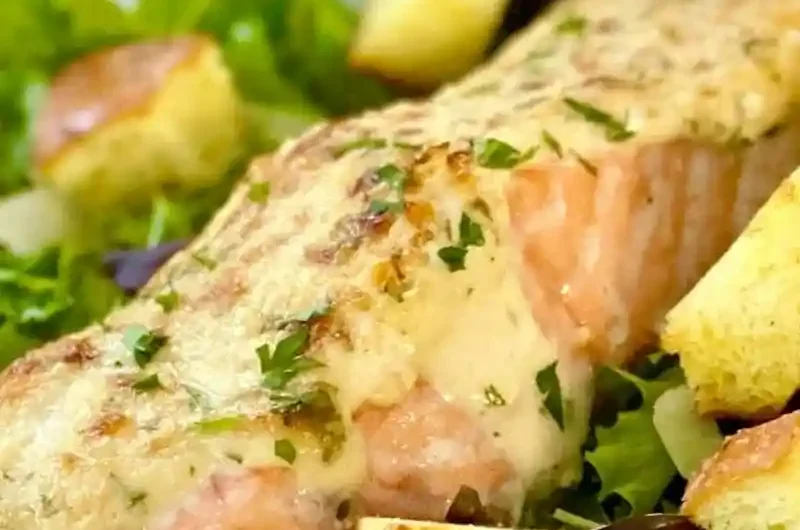
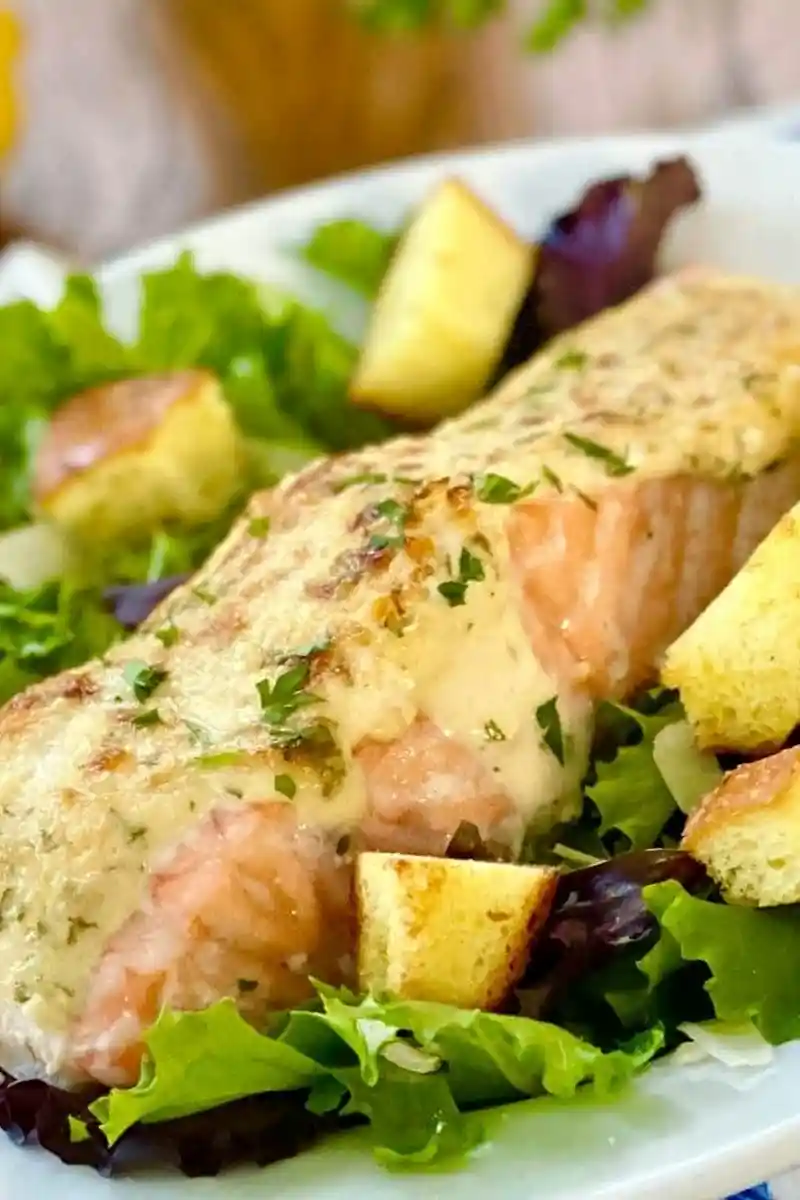
This roasted salmon recipe uses a creamy, savory topping to keep the fish moist during the high-heat roasting process. It is an efficient dinner option that takes less than 30 minutes from start to finish, making it ideal for weeknight meals.
List of ingredients
- 4 salmon filets, 6 ounces each – use center-cut fillets for consistent cooking.
- 1/3 cup mayonnaise – provides a creamy base that prevents the fish from drying out.
- 1/3 cup grated Parmesan cheese – adds a salty, nutty crust to the topping.
- 2 tablespoons chopped fresh parsley – brings a bright, herbaceous finish to the dish.
- 1 teaspoon Worcestershire sauce – contributes a deep umami flavor profile.
- 1 tablespoon lemon juice – adds necessary acidity to balance the richness of the mayo and cheese.
step-by-step instructions
- Prepare Oven and Pan: Preheat your oven to 425 degrees F and line a large baking sheet with aluminum foil to ensure a quick cleanup.
- Position Fish: Place the four salmon fillets on the prepared baking sheet, leaving a small amount of space between each piece.
- Mix the Topping: In a small mixing bowl, combine the mayonnaise, grated Parmesan cheese, chopped parsley, Worcestershire sauce, and lemon juice. Stir until the mixture is smooth and well combined.
- Apply Sauce: Spread the Caesar sauce evenly over the top of each salmon fillet, allowing some sauce to drizzle down the sides. Sprinkle an additional small amount of Parmesan cheese over the top for extra texture.
- Roast the Salmon: For medium-rare to medium doneness, roast for 10 to 12 minutes or until the internal temperature reaches 125 to 135 degrees F. For well-done salmon, roast for 14 to 16 minutes until the internal temperature reaches 145 degrees F.
- Broil for Crust: For a lightly browned and golden crust, place the baking sheet under the broiler for the final 60 seconds of cooking time.
- Finish and Serve: Remove the salmon from the oven immediately and serve while hot.
Expert Tips for Salmon Success
Choosing the Freshest Salmon Fillets
Look for fillets with a vibrant, consistent color and firm flesh that springs back when touched. Avoid fish with a strong fishy odor, as fresh salmon should have a neutral or mild oceanic scent. If buying frozen, ensure the fillets are vacuum-sealed and free of ice crystals, which can indicate thawing and refreezing.
Using a Digital Meat Thermometer
A digital thermometer is the most reliable way to prevent overcooking the fish. Insert the probe into the thickest part of the fillet at a slight angle to get the most accurate reading. Pull the salmon out of the oven when it is 5 degrees below your target temperature, as carry-over cooking will continue to raise the internal heat while the fish rests.
Preparing Frozen Salmon for Roasting
Thaw frozen fillets completely in the refrigerator for 12 to 24 hours before cooking to ensure the heat penetrates evenly. Never thaw salmon in warm water, as this can compromise the texture and safety of the meat. Once thawed, pat the fillets completely dry with paper towels so the Caesar topping adheres properly without sliding off.
Achieving Even Cooking Across All Fillets
Try to select salmon fillets that are similar in thickness and weight to ensure they all finish cooking at the same time. If you have one fillet that is significantly thicker than the others, you can slightly press it down or place it in the hottest part of the oven. This prevents the thinner pieces from overcooking while the thickest piece remains raw in the center.
Alternative Ingredient Options
Substituting Other Sturdy Fish
If you prefer a different seafood, halibut, swordfish, or mahi-mahi are excellent sturdy alternatives that withstand high roasting temperatures. These white fish have a milder flavor and a firmer texture than salmon, but they pair perfectly with the creamy Caesar topping. Adjust roasting times slightly based on the thickness of the alternative fish fillets.
Low-Fat Mayo Alternatives
Greek yogurt can replace mayonnaise for a tangier flavor and a lower-calorie profile. Sour cream is another viable substitute that provides a similar creamy consistency and rich mouthfeel. When using yogurt, you may need to add a pinch more salt to compensate for the difference in seasoning compared to store-bought mayonnaise.
Different Hard Cheese Options
Pecorino Romano is a great substitute for Parmesan, offering a saltier and sharper taste. Grana Padano is a slightly milder option that melts smoothly under the broiler. If using a very salty cheese like Pecorino, reduce the amount of Worcestershire sauce to maintain a balanced flavor profile.
Worcestershire Sauce Replacements
A combination of soy sauce and a small drop of lemon juice can mimic the umami depth of Worcestershire sauce. Coconut aminos are a suitable alternative for those seeking a soy-free or lower-sodium option. These substitutes maintain the savory base of the Caesar topping without altering the overall cooking method.
Creative Flavor Variations
Incorporating Minced Garlic for Depth
Stir in one clove of finely minced garlic or a half-teaspoon of garlic powder into the sauce mixture. This enhances the traditional Caesar flavor and adds a pungent aroma that complements the richness of the salmon. Ensure the garlic is minced very finely to avoid large chunks burning under the broiler.
Switching Up the Fresh Herbs
Replace the parsley with fresh dill or chives to create a different flavor profile. Dill is a classic pairing for salmon, providing a bright and lemony scent that lightens the dish. Chives offer a mild onion-like flavor that works well with the Parmesan cheese in the topping.
Adding a Spicy Element
Incorporate a pinch of cayenne pepper or a dash of sriracha into the mayonnaise mixture for a subtle heat. This spicy kick helps cut through the richness of the butter-like salmon and the creamy topping. For a more intense flavor, you can garnish the finished dish with sliced fresh jalapeños.
Using Different Citrus Juices
Lime juice can be used instead of lemon juice for a slightly more floral and tropical acidity. A small amount of orange zest stirred into the sauce adds a subtle sweetness that balances the saltiness of the Parmesan. Experiment with different citrus combinations to adjust the brightness of the topping.
Suggested Side Dish Pairings
Creating a Full Caesar Salad
Serve the roasted salmon fillets atop a bed of chopped romaine lettuce to turn the meal into a comprehensive Caesar salad. Add garlic-butter croutons and additional shards of Parmesan cheese to the greens. This allows the flavors of the fish topping to complement the salad dressing on the plate.
Simple Steamed Green Vegetables
Steamed broccoli, asparagus, or green beans provide a crisp, fresh contrast to the rich salmon. Steam these vegetables quickly to maintain their vibrant color and a bit of snap in the texture. A drizzle of olive oil and a sprinkle of sea salt are all that is needed to keep the focus on the salmon.
Hearty Grain and Starch Options
Jasmine rice or quinoa provide a neutral base that absorbs any extra sauce from the fish. Herb-roasted potatoes or buttered noodles are more filling options that pair well with the savory nature of the Caesar topping. For a lighter option, try cauliflower rice sautéed with garlic.
Light Appetizer Accompaniments
Serve the salmon with a side of sliced cucumbers and cherry tomatoes tossed in a light vinaigrette. This refreshing side dish cleanses the palate between bites of the creamy fish. A simple caprese salad with fresh mozzarella and basil is another elegant pairing for this entree.
Storage and Reheating Instructions
Proper Refrigeration Guidelines
Store leftover salmon in an airtight glass container in the refrigerator for up to two days. Ensure the fish has cooled completely before sealing the lid to prevent excess moisture from building up. Keep the salmon in the coldest part of the fridge, away from the door, to maintain quality.
Freezing Roasted Salmon
While it is possible to freeze roasted salmon, the texture of the mayonnaise topping may change during the thawing process. To freeze, wrap each fillet tightly in foil and then place them in a freezer-safe bag to prevent freezer burn. Thaw the fillets slowly in the refrigerator before reheating.
Best Methods for Reheating
The best way to reheat the salmon is in a toaster oven or conventional oven at 275 degrees F. Place the fillets on a baking sheet and warm them gently until just heated through. Avoid using a microwave, as the high intensity can make the salmon rubbery and cause the creamy sauce to separate into oil.
Preventing Overcooking During Reheat
When reheating, avoid bringing the salmon back to its original internal cooking temperature. Simply warm the fish until it is palatable to prevent it from becoming dry and tough. Covering the fish loosely with foil during the reheating process helps retain moisture.
Preparation and Timing Advice
Making the Caesar Sauce in Advance
The sauce can be mixed up to 24 hours before you plan to cook the salmon. Store the mixture in a small airtight container or a piping bag in the refrigerator. This allows the flavors of the garlic, lemon, and Parmesan to meld together, resulting in a more cohesive taste.
Prepping the Salmon Early
You can apply the sauce to the salmon fillets a few hours before roasting and keep the tray covered in the fridge. This allows the acidity of the lemon juice to slightly tenderize the fish. However, do not leave the sauce on for more than 6 hours, as the lemon juice may begin to change the texture of the raw fish.
Optimizing Oven Timing
Wait to preheat the oven until you have all your ingredients prepped and the sauce mixed. Because the cooking time is so short, you don’t want the oven to be running unnecessarily long. This ensures the salmon goes in at the exact temperature required for the best sear and interior moisture.
Common Cooking Troubleshooting
Preventing Salmon from Sticking to the Foil
If your salmon frequently sticks to the pan, ensure you are using a heavy-duty aluminum foil or a high-quality non-stick baking sheet. Lightly brushing the foil with a small amount of olive oil before adding the fish can provide an extra layer of protection. Use a thin metal spatula to gently slide under the fillet for a clean release.
Managing Topping Browning Speed
If the Parmesan crust browns too quickly before the fish is cooked through, move the baking sheet to a lower rack in the oven. You can also cover the fish loosely with a piece of foil during the first 8 minutes of roasting. This protects the topping while allowing the center of the fish to reach the target temperature.
Fixing Dry or Overcooked Salmon
Dry salmon is typically the result of cooking past the internal temperature targets. To avoid this, always use a thermometer and remove the fish slightly early. If the fish does come out dry, serve it with an extra dollop of the Caesar sauce or a squeeze of fresh lemon to add moisture back into the bite.
Addressing Unevenly Cooked Filets
Uneven cooking usually occurs when the fillets are of different thicknesses. To fix this, you can slightly overlap the thinner ends of the fillets or adjust their position on the tray. If one piece is much larger, you may need to leave it in the oven for 2 to 3 minutes longer than the others.
Frequently Asked Questions
Can I use skinless salmon for this recipe?
Yes, skinless fillets work perfectly. The creamy sauce adheres well to both skin-on and skinless fish, and the flavor remains the same.
Is this recipe suitable for a ketogenic diet?
Yes, the ingredients are naturally low in carbohydrates and high in healthy fats, making it an ideal choice for keto or low-carb eating plans.
What if I do not have a broiler?
You can still roast the salmon fully in the oven without the broiling step. While you won’t get the same charred golden crust, the fish will still be moist and flavorful.
Can I use a different type of hard cheese?
Yes, any hard, aged cheese like Asiago or Manchego can be used. These provide a similar salty and melted crust that pairs well with the salmon.
Print
Creamy Roasted Salmon with Caesar-Inspired Topping
- Total Time: 25 minutes
- Yield: 4 servings 1x
- Diet: General
Description
Fresh salmon topped with a creamy Caesar-inspired sauce and roasted to perfection. A quick and easy 6-ingredient meal ready in under 30 minutes.
Ingredients
- 4 salmon filets, 6 ounces each
- 1/3 cup mayonnaise
- 1/3 cup grated microbial-rennet Parmesan cheese
- 2 tablespoons chopped fresh parsley
- 1 teaspoon Worcestershire sauce
- 1 tablespoon lemon juice
Instructions
- Preheat: Preheat the oven to 425 degrees F. Line a baking sheet with foil.
- Prepare: Place the salmon in the prepared baking sheet.
- Combine: In a small bowl, combine mayonnaise, Parmesan cheese, parsley, Worcestershire sauce and lemon juice. Stir to combine.
- Apply: Spread the sauce evenly on top of each piece of salmon. Sprinkle the salmon with a little bit more Parmesan cheese.
- Roast: For medium rare to medium salmon roast for 10 to 12 minutes or until it has an internal temperature of 125 to 135 degrees F on a digital thermometer. For well done salmon, roast for 14 to 16 minutes or an internal temperature of 145 degrees F.
- Brown: For a lightly browned crust, place the fish under the broiler for the last minute of roasting time.
- Serve: Remove the salmon from the oven and serve.
Notes
Buy the freshest salmon available. Use a digital thermometer to ensure perfect doneness. Line the baking sheet with foil for easy cleanup.
- Prep Time: 10 minutes
- Cook Time: 15 minutes
- Category: entree
- Method: Roasting
- Cuisine: American
Nutrition
- Serving Size: 1 piece
- Calories: 428 kcal
- Sugar: 1.6 g
- Sodium: 545 mg
- Fat: 16.4 g
- Saturated Fat: 4 g
- Unsaturated Fat: 12.4 g
- Trans Fat: 0 g
- Carbohydrates: 5.9 g
- Fiber: 0.1 g
- Protein: 63.1 g
- Cholesterol: 178 mg
Keywords: roasted salmon, Caesar salmon, easy seafood recipe, healthy dinner