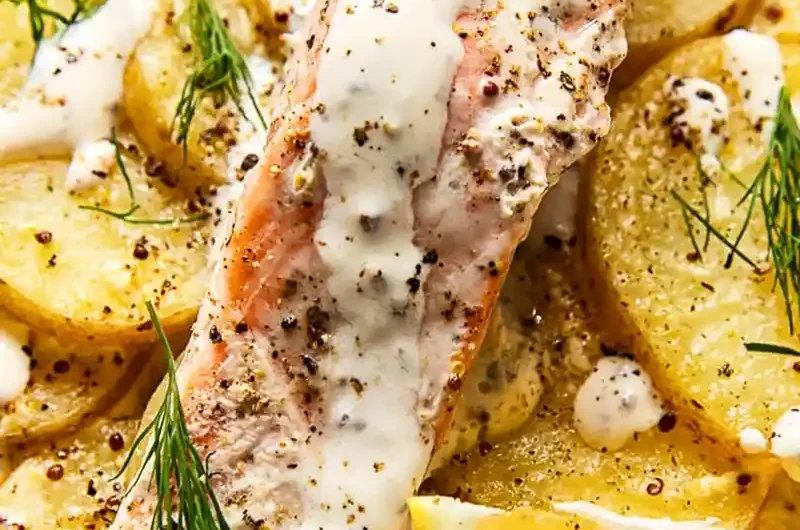
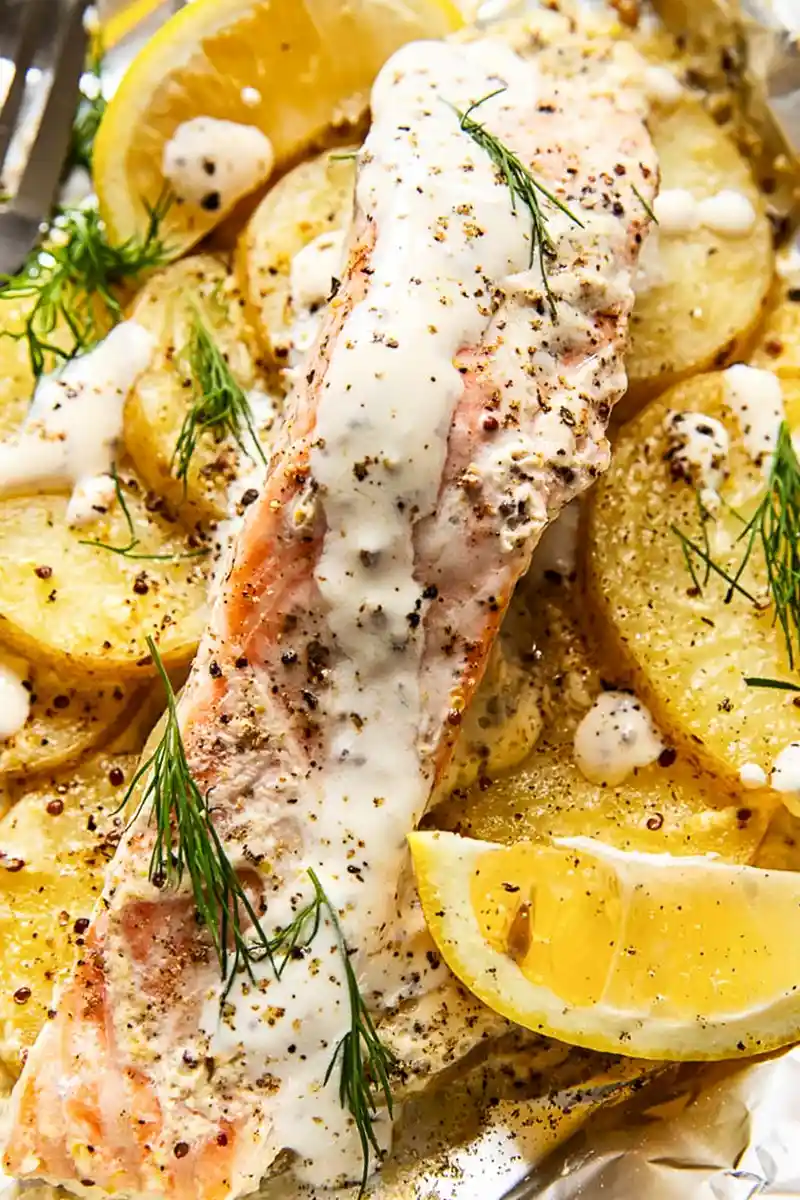
These tender salmon and potato foil packets are a convenient meal option for outdoor cooking or a simple home dinner. The steaming process inside the foil ensures the fish remains juicy and the vegetables cook through evenly.
List of ingredients
- 125ml / 1/2 cup sour cream (full fat) – creates a rich, creamy sauce base.
- 80ml / 1/3 cup milk – adjusts the consistency of the sauce for better coating.
- 2 tbsp mayonnaise – adds stability and a smooth texture to the cream mixture.
- 1 tsp whole grain mustard – provides a subtle tang and textural contrast.
- 4 potatoes (or sweet potatoes) – sliced thin to ensure they cook in time.
- 125g / 1/2 lbs green beans (optional) – adds a crisp, nutritious element to the packet.
- salt to taste – essential for enhancing the flavors of the fish and vegetables.
- 4 x 120g / 4 oz salmon fillets – the primary protein for each portion.
- 2-3 sprigs dill – used for a fresh, aromatic finish.
- 8 sheets foil – necessary for double-wrapping to prevent leaks.
step-by-step instructions
- Prepare the Heat: If using a campfire, wait until the flames have died down and you have a bed of hot coals. For oven cooking, preheat your oven to 200C/400F.
- Whisk the Sauce: Combine the sour cream, milk, mayonnaise, and whole grain mustard in a small bowl. Stir until smooth and set aside.
- Prep the Potatoes: Wash the potatoes thoroughly. Peel sweet potatoes if you prefer, then slice all potatoes into thin rounds, approximately 1/4 inch thick.
- Assemble the Foil Base: Cut 8 sheets of aluminum foil. Create four double-layered sheets large enough to hold the ingredients. Place sliced potatoes on the foil, overlapping them slightly.
- Season and Sauce: Sprinkle salt over the potatoes and pour 4 tablespoons of the prepared cream mixture over each potato layer.
- Include Vegetables: If using green beans, divide them evenly among the four packets and place them on top of the potatoes. Fold the foil edges to create a sealed packet.
- First Stage Cooking: Place the packets on the hot coals or in the oven. Cook for 20 minutes if using sweet potatoes, or 25 minutes for regular potatoes.
- Add the Salmon: Use tongs to remove the packets and carefully open them. Place one salmon fillet on top of the vegetables, season with salt, and drizzle with the remaining cream sauce.
- Final Cooking Stage: Fold the foil loosely to seal the salmon inside. Return the packets to the heat for an additional 10 minutes.
- Serve: Carefully open the packets and serve immediately with fresh lemon wedges and sprigs of dill.
Expert Tips for Foil Packet Cooking
Double Wrapping to Prevent Leaks
Using two sheets of foil for each packet is critical to prevent the sauce from leaking out into the fire. This double layer also protects the food from burning if the heat source is uneven.
Slicing Potatoes Consistently
Aim for exactly 1/4 inch thickness for all potato slices. If some are thicker than others, you will end up with some pieces that are mushy and others that remain raw.
Managing Campfire Coals
Avoid placing foil packets directly into active flames, as this will char the foil and burn the exterior of the food. Wait for a deep bed of glowing embers to ensure a steady, indirect heat.
Checking Salmon Doneness
The salmon is perfectly cooked when it reaches an internal temperature of 145F (63C) or when it flakes easily with a fork. Avoid overcooking to maintain the moist texture.
Alternative Ingredient Options
Swapping Salmon for Other Fish
You can substitute salmon with other firm fish like trout or Arctic char. These fish have similar fat contents and cooking times, making them excellent alternatives for foil packets.
Using Different Root Vegetables
Parsnips or carrots can be used instead of potatoes. Ensure these are sliced very thin or julienned to match the cooking time of the other ingredients.
Vegetable Substitutes for Green Beans
Asparagus tips or sliced zucchini are great alternatives to green beans. These vegetables cook quickly and pair well with the creamy mustard sauce.
Dairy-Free Cream Sauce Alternatives
Replace sour cream and milk with a mixture of cashew cream or thick coconut cream. Use a vegan mayonnaise to keep the sauce creamy and rich without dairy.
Flavor Variations and Enhancements
Adding Citrus Zest
Adding fresh lemon zest into the cream sauce provides a bright, citrusy note that cuts through the richness of the salmon. This adds a layer of complexity to the overall flavor profile.
Incorporating Garlic or Onion
Thinly sliced shallots or minced garlic can be layered with the potatoes. These aromatics infuse the entire packet with a savory depth during the steaming process.
Spicing Up the Sauce
For a bit of heat, add a pinch of smoked paprika or a dash of cayenne pepper to the sauce mixture. This complements the smokiness of campfire cooking perfectly.
Herb Combinations for Salmon
While dill is traditional, fresh parsley or chives also work well. Try a mix of these herbs to create a more garden-fresh taste in every bite.
Serving and Presentation Ideas
Pairing with Fresh Salads
Serve these packets with a crisp cucumber and tomato salad. The acidity of a vinaigrette-based salad balances the creaminess of the foil packet meal.
Creating a Platter Display
For a rustic presentation, place the closed foil packets on a wooden board. Let guests open their own packets to enjoy the immediate release of aromatic steam.
Adding a Final Garnish
Freshly chopped chives or a sprinkle of cracked black pepper added just before serving enhances the visual appeal. A final squeeze of fresh lemon juice brightens the dish.
Side Dish Suggestions
Grilled corn on the cob or steamed broccoli are excellent additions. Since you already have a heat source, these can be cooked alongside the packets.
Storage and Food Safety
Cooling and Refrigerating Leftovers
Allow any remaining salmon and potatoes to cool to room temperature before transferring them to an airtight container. This prevents condensation from making the food soggy.
Maximum Storage Duration
Cooked salmon and potatoes can be safely stored in the refrigerator for up to two days. Beyond this, the quality of the fish and the texture of the potatoes decline.
Avoiding Cross-Contamination
Use separate cutting boards and utensils for the raw salmon and the vegetables. Thoroughly wash all surfaces after handling raw fish to maintain hygiene.
Safe Temperature Handling
Keep the salmon fillets chilled in a cooler with ice packs until you are ready to assemble the packets. This is especially important during camping trips in warm weather.
Reheating Guide
Oven Reheating Methods
Place leftovers in a baking dish, cover with foil, and heat at 325F (160C) for about 10-15 minutes. This gently warms the fish without drying it out.
Microwave Heating Tips
Use a microwave-safe dish and heat on medium power in short intervals. Stir gently to avoid breaking the salmon fillets into small pieces.
Avoiding Overcooking the Fish
Reheat the salmon only until it is warm to the touch. Overheating salmon during the second cook can make the protein rubbery and dry.
Restoring the Creamy Texture
If the sauce has thickened too much during storage, add a teaspoon of milk or water before reheating. This helps the sauce return to its original creamy consistency.
Make-Ahead Preparation
Pre-Mixing the Sauce
Prepare the sour cream and mustard mixture at home and store it in a sealed jar. This reduces the preparation time and mess at the campsite.
Pre-Slicing Vegetables
Slice the potatoes in advance and store them in a container filled with water. This prevents the potatoes from oxidizing and turning brown before cooking.
Marinating the Salmon
Lightly brush the salmon fillets with olive oil and lemon juice before packing. This protects the fish and adds an extra layer of flavor.
Packing for Camping
Organize your ingredients in airtight containers to maximize space in your cooler. Pre-cutting the foil sheets also saves time and effort outdoors.
Troubleshooting Common Issues
Potatoes Remaining Hard
If the potatoes are not tender, they may have been sliced too thick. In the future, ensure a 1/4 inch thickness or increase the first stage cooking time by 5 minutes.
Salmon Becoming Too Dry
Dry salmon is usually a result of overcooking or a poor seal on the foil. Ensure the packets are closed tightly to trap the steam and monitor the cooking time closely.
Foil Packets Burning Through
Burning occurs when the heat is too intense or the foil is too thin. Always use heavy-duty aluminum foil and cook over coals rather than open flames.
Sauce Separating During Cooking
Separation can happen if the sauce is overheated too quickly. Ensure the sauce is well-emulsified before adding and that the packets are double-wrapped for steady heat.
Frequently Asked Questions
Can I use frozen salmon fillets?
Yes, but it is highly recommended to thaw them completely in the refrigerator first. Cooking frozen fillets may result in uneven cooking and excess water in the packet.
Do I need to peel the potatoes?
For regular potatoes, peeling is optional as the skins are edible and add nutrients. Sweet potatoes should be peeled for a better texture.
What is the best type of foil to use?
Heavy-duty aluminum foil is the best choice. It is more resistant to punctures and can withstand the high heat of campfire coals better than standard foil.
How do I know when the salmon is cooked?
The salmon should change color from translucent pink to an opaque light pink. It should flake easily when pressed with a fork.
Print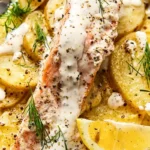
Creamy Salmon and Potato Foil Packets
- Total Time: 45 minutes
- Yield: 4 servings 1x
- Diet: General
Description
Easy and delicious salmon and potatoes baked in foil packets are the ultimate recipe to take on a camping trip.
Ingredients
- 1/2 cup sour cream (full fat)
- 1/3 cup milk
- 2 tbsp mayonnaise
- 1 tsp whole grain mustard
- 4 potatoes (or sweet potatoes)
- 1/2 lbs green beans (optional)
- salt to taste
- 4 pieces salmon fillet (4 oz each)
- 2–3 sprigs dill
- 8 sheets foil
Instructions
- Step: Ensure campfire coals are ready or preheat oven to 200C/400F.
- Step: Mix sour cream, milk, mayonnaise, and whole grain mustard; set aside.
- Step: Wash potatoes, peel if using sweet potatoes, and slice into thin 1/4 inch slices.
- Step: Double layer 8 sheets of foil, arrange sliced potatoes, season with salt, and pour 4 tbsp of the sour cream mixture over each.
- Step: Add green beans if using, fold foil into packets, and cook for 20 minutes (sweet potatoes) or 25 minutes (regular potatoes).
- Step: Open packets, top each with a salmon fillet, season with salt and remaining sour cream mixture.
- Step: Fold loosely and cook for an additional 10 minutes.
- Step: Serve with lemon and dill.
Notes
Cook foil packets over coals rather than open flames. Use tongs when handling hot foil packets to avoid burns.
- Prep Time: 10 minutes
- Cook Time: 35 minutes
- Category: Main Course
- Method: Baking
- Cuisine: American
Nutrition
- Serving Size: 1 packet
- Calories: 424 kcal
- Sugar: 4 g
- Sodium: 747 mg
- Fat: 16 g
- Saturated Fat: 5 g
- Unsaturated Fat: 10 g
- Trans Fat: 1 g
- Carbohydrates: 40 g
- Fiber: 5 g
- Protein: 29 g
- Cholesterol: 85 mg
Keywords: salmon, potatoes, camping recipe, foil packets, campfire cooking, outdoor meals