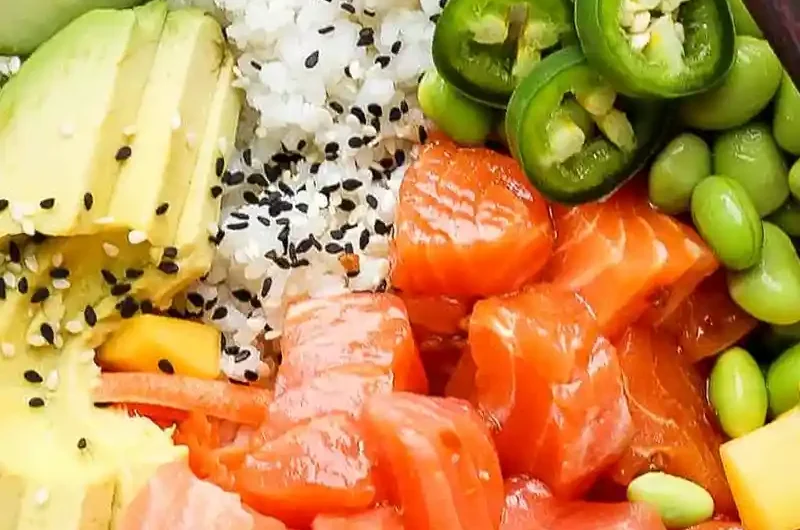
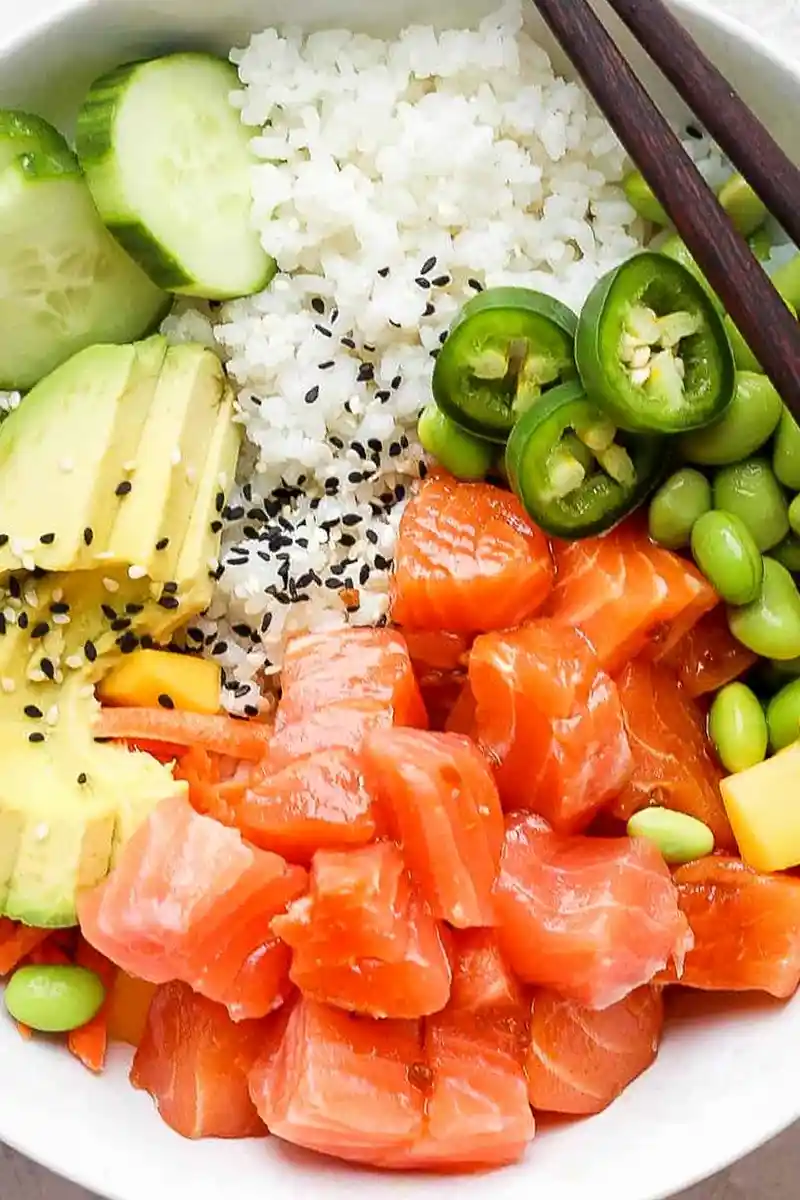
This Salmon Poke Bowl is a refreshing and nutrient-dense meal that brings the flavors of a sushi restaurant into your home. It combines marinated raw salmon with crisp vegetables and seasoned rice for a balanced, vibrant dinner.
List of ingredients
- 1/4 cup soy sauce (sub tamari for gluten-free) – provides the primary salty and savory base.
- 1 teaspoon rice vinegar – adds a mild, tangy acidity to balance the fats.
- 1/2 teaspoon garlic, minced – introduces a sharp, aromatic flavor.
- 1/2 teaspoon lime juice – provides a bright, citrusy lift.
- 1/4 teaspoon sesame oil – adds a deep, nutty toasted aroma.
- 1/4 teaspoon ginger, grated – brings a warm, spicy zing to the marinade.
- 1/8 teaspoon sriracha – adds a subtle hint of chili heat.
- 8 ounces sushi grade salmon – the essential high-protein main component.
- 2 cups cooked sushi rice – cooked according to package instructions for a sticky texture.
- 1 cup edamame, shelled – adds extra protein and a pop of green color.
- 1 cup cucumber, sliced – provides a cooling, crisp contrast.
- 1 avocado, sliced – contributes a creamy, rich mouthfeel.
- 1/4 cup cilantro, chopped – adds a fresh, herbal finishing touch.
- Jalapeño, sliced (optional) – provides additional heat for those who prefer spice.
- Sesame seeds (optional) – used as a decorative and flavorful garnish.
step-by-step instructions
- Make Sauce: In a small bowl, add 1/4 cup soy sauce, 1 teaspoon rice vinegar, 1/2 teaspoon garlic, 1/2 teaspoon lime juice, 1/4 teaspoon sesame oil, 1/4 teaspoon ginger, and 1/8 teaspoon sriracha. Whisk all ingredients together until well combined and set the mixture aside.
- Marinate Salmon: Slice 8 ounces of sushi grade salmon into uniform bite-sized cubes and place them in a medium bowl. Pour the prepared sauce over the salmon cubes and let them marinate while you prepare the remaining bowl ingredients.
- Build Bowls: Divide 2 cups of cooked sushi rice equally between two serving bowls. Top the rice with the marinated salmon, 1 cup edamame, 1 cup cucumber, sliced avocado, 1/4 cup cilantro, and sliced jalapeño if using. Garnish the finished bowls with black sesame seeds and serve with additional soy sauce on the side if desired.
Optimal Salmon Selection
Ensuring Sushi-Grade Quality
Always verify with your fishmonger that the salmon is specifically labeled as sushi-grade. This typically means the fish has been flash-frozen at extremely low temperatures to eliminate potential parasites. This process ensures the raw fish is safe for consumption.
Identifying Freshness by Sight and Smell
Fresh salmon should have a vibrant, consistent color without any brown spots or dull patches. The flesh should be firm to the touch and spring back when pressed. It should have a mild, clean scent rather than a strong or fishy odor.
Proper Salmon Storage Before Use
Store your salmon in the coldest part of the refrigerator, ideally on a bed of ice or in a sealed container. Keep it wrapped tightly in plastic wrap to prevent oxidation and exposure to air. Use the fish as soon as possible after purchase for maximum freshness.
Perfecting the Sushi Rice
Rinsing the Rice for Better Texture
Place the raw sushi rice in a fine-mesh strainer and rinse it under cold running water. Continue rinsing until the water runs clear, which removes excess surface starch. This step prevents the rice from becoming overly gummy or clumpy after cooking.
Seasoning Rice with Vinegar and Sugar
For a traditional taste, fold a mixture of rice vinegar, sugar, and salt into the rice while it is still warm. Use a slicing motion with a rice paddle to incorporate the seasoning without crushing the grains. This adds the characteristic tang found in professional sushi.
Cooling Rice to Room Temperature
Allow the seasoned rice to cool to room temperature before adding the raw salmon. Adding hot rice directly under the fish can slightly cook the salmon and alter its texture. Spreading the rice on a baking sheet can speed up this cooling process.
Customizing Your Bowl Toppings
Adding Crunchy Vegetables
Incorporate thinly sliced radishes or shredded carrots to add more texture and color to the bowl. Purple cabbage provides a striking visual contrast and a peppery crunch. These additions increase the nutrient density and variety of the meal.
Incorporating Sweet Fruit Elements
Diced mango or fresh pineapple chunks can be added for a tropical sweetness that complements the salty soy marinade. These fruits balance the heat from the sriracha and jalapeño. Keep the fruit pieces the same size as the salmon for easy eating.
Using Pickled Additions
Pickled ginger or pickled red onions add a sharp, acidic punch that cuts through the richness of the salmon and avocado. These components act as palate cleansers between bites. You can find these pre-made or make them quickly with vinegar and sugar.
Dietary Substitutions and Alternatives
Gluten-Free Sauce Options
Substitute the soy sauce with tamari or coconut aminos to make this recipe gluten-free. Tamari provides a flavor profile very similar to soy sauce but without the wheat. Coconut aminos offer a slightly sweeter, lower-sodium alternative.
Low-Carb Base Alternatives
Replace the white sushi rice with cauliflower rice or a bed of mixed spring greens for a lower-carbohydrate option. Quinoa is another hearty alternative that provides extra protein and fiber. Ensure the base is seasoned or lightly dressed to match the bowl’s flavor profile.
Substituting Salmon with Other Fish
Ahi tuna or yellowtail are excellent alternatives to salmon for this poke bowl. Tuna has a leaner texture and a distinct flavor that pairs well with the same marinade. Adjust the marinating time slightly as leaner fish may absorb sauce faster.
Professional Assembly Techniques
Layering for Visual Appeal
Arrange the ingredients in distinct sections or clusters on top of the rice rather than mixing them together. This creates a professional, colorful presentation. Place the marinated salmon in the center as the focal point of the dish.
Preventing Avocado Browning
Squeeze a small amount of lime or lemon juice over the avocado slices immediately after cutting. This acidity prevents enzymatic browning and keeps the avocado looking bright green. Alternatively, store the avocado in an airtight container with plastic wrap pressed against the surface.
Balancing Flavors in Every Bite
Ensure a balanced proportion of rice to toppings so that no single ingredient overwhelms the others. Aim for a ratio where each bite contains a bit of fish, a vegetable, and the seasoned rice. This creates a harmonious flavor experience.
Meal Prep and Storage Guide
Preparing Components in Advance
You can cook the rice and prepare the marinade up to two days in advance. Store the chopped cucumber and shelled edamame in separate airtight containers in the refrigerator. This reduces the final assembly time to just a few minutes.
Safe Salmon Storage Durations
Keep the marinated raw salmon refrigerated at 40°F (4°C) or below. For the best quality and food safety, consume raw marinated fish within 24 hours. Do not freeze the salmon after it has been marinated in soy sauce.
Reheating the Rice Base
If using pre-cooked refrigerated rice, reheat it gently in the microwave with a tablespoon of water. Cover the rice to trap steam, which restores the fluffy texture. Let the rice cool before assembling the bowl with the raw fish.
Troubleshooting Common Issues
Fixing Overly Salty Sauce
If the marinade tastes too salty, add a small amount of water or a squeeze of extra lime juice. A pinch of brown sugar or honey can also help neutralize the saltiness. Always taste the sauce before pouring it over the fish.
Managing Mushy Rice
If the rice turns out too mushy, you may have used too much water or skipped the rinsing process. Next time, reduce the water ratio by two tablespoons. For currently mushy rice, let it sit uncovered for 10 minutes to let some moisture evaporate.
Avoiding Salmon Over-Marination
Avoid marinating the salmon for more than 30 minutes to prevent the salt from curing the fish. Long marination can change the texture from tender and raw to firm and slightly cooked. Timing the marinade with the veggie prep is usually sufficient.
Frequently Asked Questions
Can I use frozen salmon?
Yes, provided it was frozen specifically as sushi-grade. Thaw the salmon slowly in the refrigerator overnight before cubing it. Avoid thawing at room temperature to maintain food safety.
How long can raw salmon marinate?
The ideal marination time is between 15 and 30 minutes. This allows the flavors to penetrate the surface without altering the raw texture of the fish. Avoid marinating for several hours.
Can I cook the salmon instead?
Yes, you can sear the cubed salmon in a pan or roast it in the oven before adding it to the bowl. Use the same marinade as a glaze during the cooking process for a cooked version of the dish.
What is the best rice for poke?
Short-grain Japanese sushi rice is the best choice due to its high starch content and sticky texture. This allows the rice to hold the toppings and marinade effectively. Avoid using long-grain or basmati rice if you want a traditional poke feel.
Print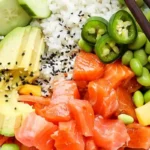
Fresh Salmon Poke Bowl
- Total Time: 15 minutes
- Yield: 2 servings 1x
- Diet: Dairy-Free
Description
Salmon Poke Bowl – an easy, flavorful salmon poke bowl recipe! Learn how to make your own poke bowls at home!
Ingredients
- 1/4 cup soy sauce (sub tamari for gluten-free)
- 1 teaspoon rice vinegar
- 1/2 teaspoon garlic (minced)
- 1/2 teaspoon lime juice
- 1/4 teaspoon sesame oil
- 1/4 teaspoon ginger (grated)
- 1/8 teaspoon sriracha
- 8 ounces sushi grade salmon
- 2 cups cooked sushi rice
- 1 cup edamame (shelled)
- 1 cup cucumber (sliced)
- 1 avocado (sliced)
- 1/4 cup cilantro (chopped)
- jalapeño (sliced, optional)
- sesame seeds (optional)
Instructions
- Make Sauce: In a small bowl, add ¼ cup soy sauce, 1 teaspoon rice vinegar, ½ teaspoon garlic, ½ teaspoon lime juice, ¼ teaspoon sesame oil, ¼ teaspoon ginger, and ⅛ teaspoon siracha; whisk to combine and set aside.
- Marinate Salmon: Slice 8 ounces sushi grade salmon into cubes and place in a medium bowl. Pour Sauce over top and set aside while prepping the remaining ingredients.
- Build Bowls: Divide 2 cups cooked sushi rice, marinated salmon, 1 cup edamame, 1 cup cucumber, diced avocado, ¼ cup cilantro and jalapeño (if using) between two bowls. Garnish with black sesame seeds, if desired. Serve with additional soy sauce if you want.
Notes
Consume raw food at your own risk. Use sushi-grade salmon.
- Prep Time: 15 minutes
- Cook Time: 0 minutes
- Category: Dinner/Entree
- Method: Counter Top
- Cuisine: Asian-Inspired
Nutrition
- Serving Size: 1 serving
- Calories: 613 kcal
- Sugar: 4 g
- Sodium: 1695 mg
- Fat: 25 g
- Saturated Fat: 3 g
- Unsaturated Fat: 22 g
- Trans Fat: 0 g
- Carbohydrates: 59 g
- Fiber: 12 g
- Protein: 39 g
- Cholesterol: 62 mg
Keywords: salmon poke bowl, sushi bowl, easy dinner, Asian-inspired, healthy seafood