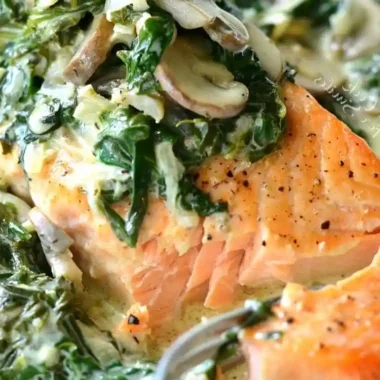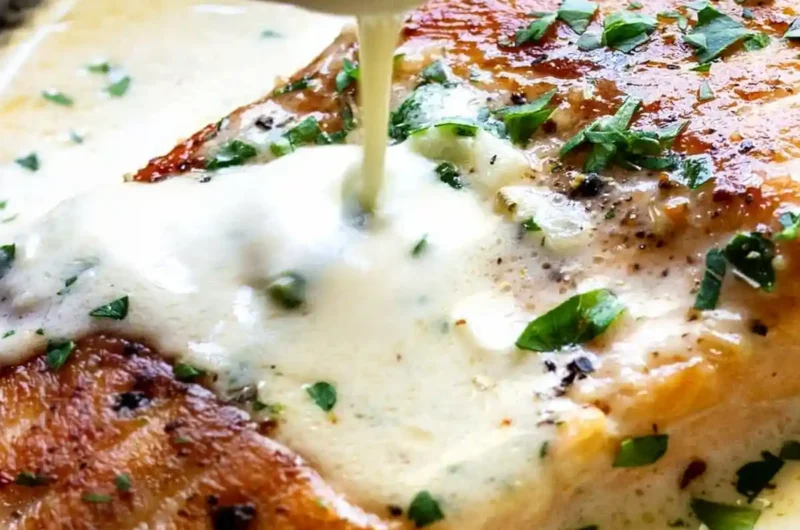
This quick pan-seared salmon is coated in a rich, smooth garlic butter cream sauce. It is a restaurant-quality meal that comes together in just 20 minutes. Perfect for an indulgent dinner or a special occasion.
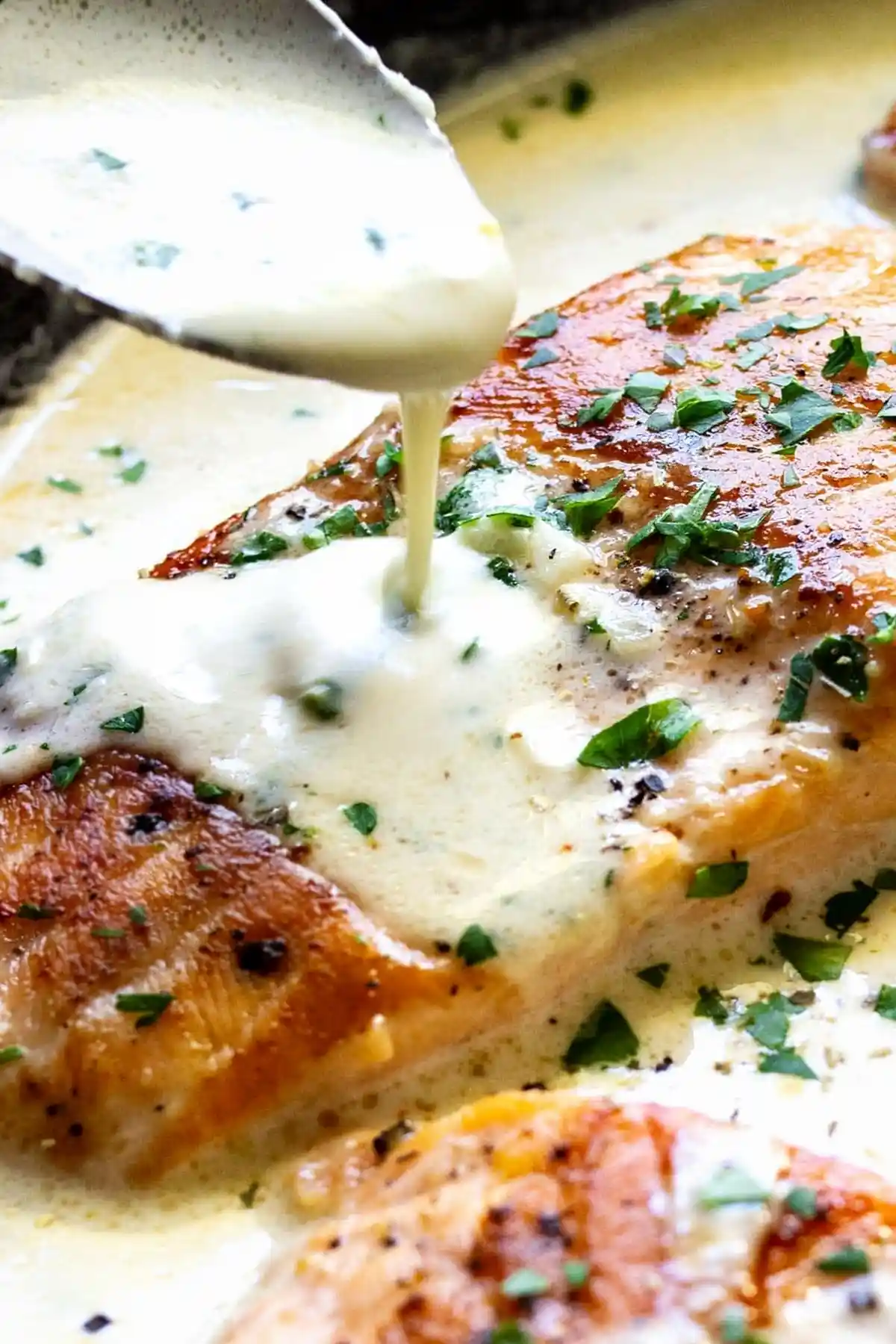
List of ingredients
- 4 salmon fillets (5-8 oz. each) – skin-on or skinless based on preference.
- Salt and pepper – for basic seasoning.
- 1 tablespoon olive oil – used for searing the fish.
- 2 tablespoons butter – for basting and adding richness.
- 3-4 cloves garlic, minced – provides a strong aromatic base.
- 1/2 cup non-alcoholic white wine alternative (such as a mix of chicken broth and lemon juice) – optional, for acidity.
- 1/2 cup chicken broth – creates the base of the sauce.
- 1 cup heavy cream – provides a thick, creamy texture.
- 1/2 cup Parmesan cheese, grated – adds a salty, nutty depth.
- 2 tablespoons fresh parsley, chopped – used for garnish and freshness.
step-by-step instructions
- Season: Generously apply salt and pepper to both sides of the salmon fillets.
- Sear: Heat olive oil in a skillet over medium-high heat. Pan-fry the salmon until golden brown, about 4 minutes per side depending on thickness. Drain excess oil, leaving just a small amount for the garlic.
- Baste: Melt butter in the pan. Tilt the pan toward you and spoon the melted butter over the salmon fillets repeatedly.
- Sauté Garlic: Remove the salmon fillets from the pan and set them aside. Sauté the minced garlic for about 30 seconds until fragrant.
- Deglaze: If using the non-alcoholic white wine alternative, add it now and simmer for 2 minutes until the liquid evaporates.
- Simmer Sauce: Reduce the heat to medium-low. Pour in the chicken broth and heavy cream.
- Melt Cheese: Stir in the grated Parmesan cheese until fully melted. Season the mixture with chopped parsley, salt, and pepper to taste.
- Thicken: Let the sauce simmer for 2-3 minutes until it reaches a thickened consistency.
- Finish: Place the salmon fillets back into the pan and simmer for a few more minutes until warmed through.
- Serve: Spoon the sauce over the salmon, garnish with extra parsley, and serve immediately.
Ingredient Selection and Preparation Tips
Choosing the Right Salmon Cut
Opt for center-cut fillets for uniform thickness, which ensures even cooking. Salmon with skin helps keep the fish moist during the searing process. Ensure the fillets are at room temperature for a few minutes before cooking to avoid uneven heat distribution.
Selecting Fresh Garlic
Freshly minced garlic provides a sharper, more authentic flavor than pre-minced jarred versions. If you only have garlic powder, use about 1/4 teaspoon per clove. However, fresh garlic is highly recommended for the best aromatic result.
Using High-Quality Butter
Unsalted butter allows you to control the sodium levels in the sauce more effectively. Use a grass-fed butter for a richer, more buttery flavor profile. Ensure the butter is melted slowly to avoid burning the milk solids.
Parmesan Cheese Preferences
Freshly grated Parmesan melts more smoothly into the cream sauce than pre-shredded versions. Pre-shredded cheeses often contain cornstarch or other anti-clumping agents. These additives can make the sauce slightly grainy or thick in an unnatural way.
Fresh Parsley Selection
Italian flat-leaf parsley is preferred for its robust flavor and clean look. Curly parsley works as a substitute but offers a milder taste. If fresh herbs are unavailable, dried parsley can be used, though it should be added earlier in the simmering process.
Recommended Side Dish Pairings
Creamy Mashed Potatoes
Mashed potatoes are ideal for soaking up the garlic butter sauce. Prepare them with a bit of butter and cream to complement the richness of the salmon. They provide a soft contrast to the seared crust of the fish.
Fluffy White Rice
Steamed basmati or jasmine rice serves as a neutral base that lets the sauce shine. The grains absorb the creamy liquid, ensuring no sauce goes to waste. This is a great option for those who prefer a gluten-free side.
Crusty Artisan Bread
A toasted baguette or sourdough bread is perfect for dipping into the remaining cream sauce. Brush the bread with olive oil and toast it in the oven for a few minutes. The crunch of the bread balances the smoothness of the sauce.
Sautéed Green Vegetables
Asparagus, broccoli, or green beans add a necessary freshness to the plate. Sauté them with a touch of lemon juice and salt to cut through the richness of the cream. These vegetables provide a nutritional balance to the meal.
Light Pasta Noodles
Thin pasta like angel hair or linguine works well when tossed directly in the sauce. Boil the pasta until al dente and combine it with the sauce before adding the salmon. This transforms the dish into a hearty pasta meal.
Flavor Customizations and Variations
Alternative Fresh Herbs
Replace parsley with fresh dill or thyme for a different aromatic profile. Dill pairs exceptionally well with salmon and provides a traditional seafood flavor. Thyme adds a subtle earthiness that complements the garlic butter.
Adding Extra Aromatics
Sauté finely diced shallots or yellow onions along with the garlic. This adds a subtle sweetness and deeper complexity to the base of the sauce. You can also add a pinch of onion powder to the salmon before searing.
Incorporating Citrus Elements
Squeeze fresh lemon juice over the salmon just before serving for a bright finish. Alternatively, add lemon slices directly into the cream sauce while it simmers. Capers can also be added to the sauce for a salty, briny zest.
Adding a Spicy Kick
Stir in a pinch of red pepper flakes during the garlic sautéing step. This adds a gentle heat that balances the creaminess of the Parmesan and heavy cream. For more heat, garnish with sliced fresh jalapeños.
Integrating Leafy Greens
Stir a handful of baby spinach into the sauce during the final simmering stage. The heat from the sauce will wilt the spinach quickly. This adds color and extra nutrients to the dish without altering the core flavor.
Professional Cooking Techniques
Achieving the Perfect Golden Sear
Ensure the skillet is very hot before adding the olive oil and salmon. Do not overcrowd the pan, as this lowers the temperature and causes the fish to steam instead of sear. Press the fillets down slightly with a spatula to ensure maximum surface contact.
The Butter Basting Method
Basting involves spooning melted butter over the fish repeatedly during the final minutes of cooking. This process infuses the salmon with flavor and helps cook the top of the fillet. It also creates a professional, glossy finish on the seafood.
Controlling Sauce Consistency
If the sauce is too thin, simmer it for an additional minute or two over medium-low heat. If it becomes too thick, stir in a tablespoon of chicken broth or water to thin it out. Always keep the heat low once the cream is added to prevent separation.
Preventing Salmon Overcooking
Salmon is best when it is opaque on the outside but still slightly moist in the center. Use a meat thermometer to check for an internal temperature of 145 degrees Fahrenheit. Removing the fish slightly early allows it to finish cooking via residual heat.
Storage and Reheating Advice
Refrigerator Storage Guidelines
Store leftovers in an airtight container in the refrigerator for up to two days. Keep the salmon and the sauce together to prevent the fish from drying out. Ensure the food is cooled slightly before sealing the container.
Best Reheating Methods
Avoid using a microwave for reheating, as it can make the salmon rubbery and break the cream sauce. Instead, place the salmon and sauce in a skillet over low heat. Add a splash of water or broth to loosen the sauce and cover with a lid.
Freezing Considerations
It is not recommended to freeze the salmon once it has been cooked in a cream sauce. The heavy cream and cheese often separate during the freezing and thawing process. For the best quality, consume the dish fresh or refrigerate it.
Common Questions and Troubleshooting
Why did my cream sauce curdle?
Curdling usually happens when the heat is too high or the sauce boils too vigorously. To prevent this, reduce the heat to medium-low before adding the heavy cream. Stir constantly to ensure the fats are emulsified correctly.
Can I use a different type of fish?
Yes, this sauce works well with other firm white fish like halibut, cod, or trout. Adjust the cooking time based on the thickness of the fillet. The searing and basting method remains the same for most thick fish cuts.
How do I know when the salmon is done?
The salmon should flake easily with a fork at the thickest part of the fillet. The color should change from translucent pink to an opaque light pink. A meat thermometer is the most accurate way to verify doneness.
What can I use instead of heavy cream?
Half-and-half can be used as a substitute, though the sauce will be slightly thinner. Evaporated milk is another option for a lighter version. If using half-and-half, simmer on very low heat to minimize the risk of curdling.
How do I remove the fishy taste?
Pat the salmon fillets completely dry with paper towels before seasoning. This helps achieve a better sear and reduces the release of fishy oils. Adding a squeeze of lemon juice at the end also helps neutralize strong seafood odors.
Print
Creamy Garlic Butter Salmon
- Total Time: 20 minutes
- Yield: 4 servings 1x
- Diet: Gluten-Free
Description
Restaurant-worthy, 20-minute creamy garlic butter salmon with pan-seared salmon smothered in a rich and smooth cream sauce.
Ingredients
- 4 salmon fillets (5–8 oz. each)
- Salt and pepper
- 1 tablespoon olive oil
- 2 tablespoons butter
- 3–4 cloves garlic, minced
- 1/2 cup white grape juice or additional chicken broth (alcohol-free alternative)
- 1/2 cup chicken broth
- 1 cup heavy cream
- 1/2 cup Parmesan cheese, grated
- 2 tablespoons fresh parsley, chopped
Instructions
- Step 1: Season both sides of the salmon fillets with salt and pepper.
- Step 2: Over medium-high heat in a skillet, pan-fry the salmon in olive oil until golden brown, about 4 minutes per side, depending on the thickness of your salmon. Drain some of the excess oil from the pan, leaving a little to saute the garlic.
- Step 3: Melt butter in the pan, tilt the pan towards you and spoon the butter generously over the salmon fillets.
- Step 4: Remove salmon from the pan. Sauté the garlic until fragrant, about 30 seconds.
- Step 5: Add the white grape juice or additional broth and simmer for 2 minutes.
- Step 6: Reduce heat to medium-low and pour in chicken stock and heavy cream.
- Step 7: Add Parmesan cheese and stir to melt the cheese into the sauce. Season with parsley and salt and pepper to taste.
- Step 8: Simmer for 2-3 minutes until the sauce thickens. Add salmon back to the pan and simmer for a few more minutes until the salmon is warmed through.
- Step 9: Spoon the sauce over the salmon, top with more parsley then dish and serve hot.
Notes
Swap parsley for thyme or dill. Sauté diced shallots or onions with garlic for more flavor. Add capers or lemon slices to the sauce for zest. Add red pepper flakes for heat or baby spinach for more substance.
- Prep Time: 5 minutes
- Cook Time: 15 minutes
- Category: Main Course
- Method: Pan-searing
- Cuisine: American
Nutrition
- Serving Size: 1 fillet
- Calories: 650 kcal
- Sugar: 6 g
- Sodium: 980 mg
- Fat: 48 g
- Saturated Fat: 24 g
- Unsaturated Fat: 24 g
- Trans Fat: 0 g
- Carbohydrates: 12 g
- Fiber: 1 g
- Protein: 32 g
- Cholesterol: 145 mg
Keywords: creamy garlic butter salmon, pan-seared salmon, seafood dinner, quick recipes