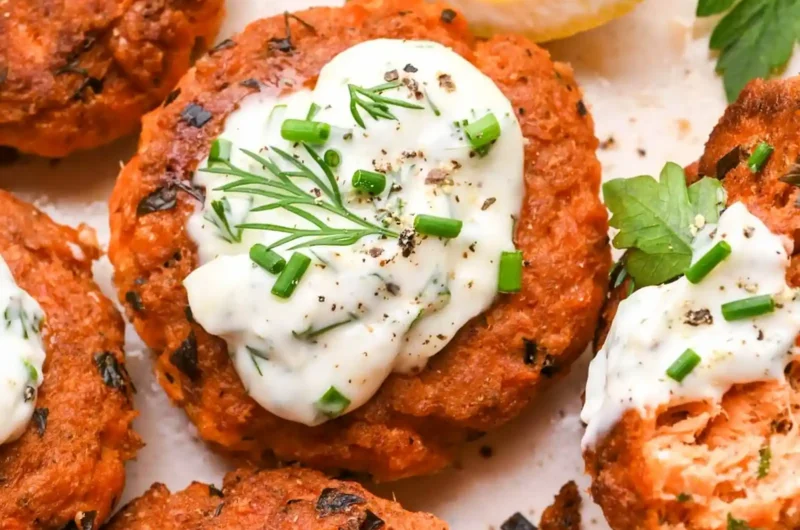
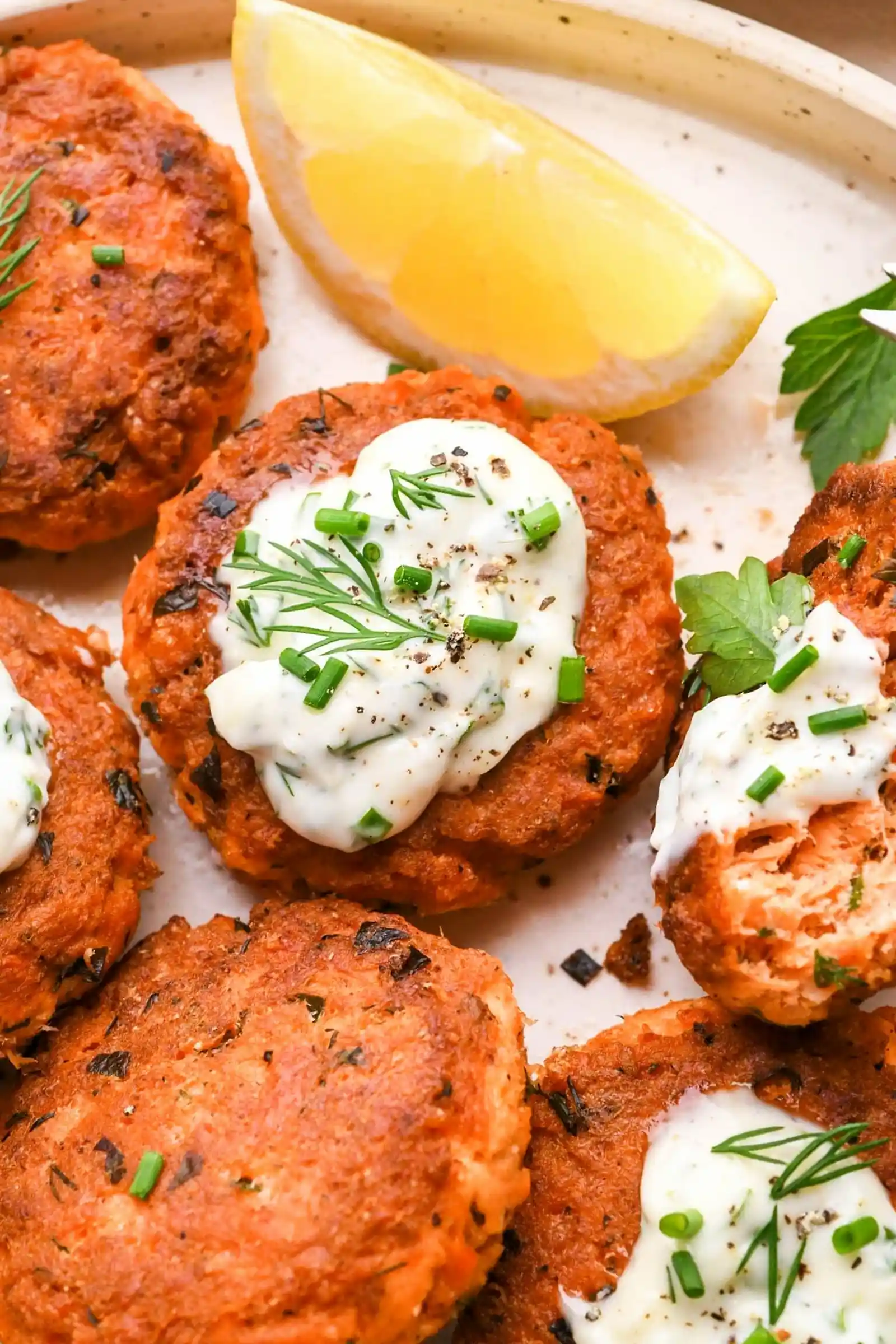
These gluten-free salmon cakes are crispy on the outside and tender on the inside. They are made without breadcrumbs or flour, making them a nutrient-dense, low-carb option for any meal.
List of ingredients
- 1 pound salmon filet or 2 packed cups leftover cooked and flaked salmon – the main protein source.
- 1 tablespoon avocado oil – used for rubbing the fresh salmon filet.
- 1/2 teaspoon kosher salt – for seasoning the filet.
- 1/4 teaspoon black pepper – for seasoning the filet.
- 1 large egg, lightly beaten – serves as the primary binding agent.
- 1 tablespoon avocado oil mayonnaise – adds moisture and helps the cakes stick.
- 2 teaspoons fresh lemon juice – provides a bright, acidic balance.
- 1 teaspoon Dijon mustard – adds a sharp, savory depth.
- 3 tablespoons mixed herbs (dill, chives, and parsley) – can be substituted with 3 teaspoons of dried herbs.
- 1/2 teaspoon garlic powder – for savory aromatic flavor.
- 1/2 teaspoon onion powder – for savory aromatic flavor.
- 1/2 teaspoon kosher salt – for seasoning the patty mixture.
- 1/4 teaspoon black pepper – for seasoning the patty mixture.
- 2-4 tablespoons avocado oil – used for pan-frying the cakes.
- Garlic herb aioli, fresh herbs, and lemon wedges – for serving and garnishing.
step-by-step instructions
- Cook and flake the salmon: Preheat your oven to 475 degrees. Place the salmon filet on a baking sheet, rub with avocado oil, kosher salt, and black pepper, and bake for 15-20 minutes until cooked through. Let the fish cool slightly, then use your hands or two forks to flake the salmon, leaving the skin behind, and place it in a bowl in the refrigerator.
- Prepare the binder and mix: In a large mixing bowl, combine the beaten egg, mayonnaise, lemon juice, Dijon mustard, fresh herbs, garlic powder, onion powder, salt, and pepper. Stir in the flaked salmon until thoroughly combined. Move the entire mixture to the refrigerator to chill for 20-30 minutes, or longer if needed, to make the patties easier to handle.
- Shape and fry the cakes: Form the chilled salmon mixture into 4-6 medium to large patties by pressing them firmly. Heat 2 tablespoons of avocado oil in a large skillet over medium-high heat. Carefully add the cakes without crowding the pan, frying for 3-4 minutes per side until golden brown, flipping carefully with two spatulas to prevent breaking.
- Serve: Remove the cakes from the pan and serve immediately with garlic herb aioli and fresh lemon wedges.
Salmon Selection and Preparation
Using Fresh Salmon Fillets
Fresh fillets provide the best texture and flavor for these cakes. Baking them quickly at a high temperature ensures they stay moist while becoming easy to flake. Always discard the skin after cooking as it does not integrate into the patty mixture.
Adjusting for Canned Salmon
To use canned salmon, replace the fresh filet with three 6-ounce cans, drained well and flaked. Because canned salmon has a different moisture content, increase the binder by using two eggs instead of one and adding an extra 1/2 tablespoon of mayonnaise. This maintains the structural integrity of the cakes.
Using Leftover Cooked Salmon
Leftover salmon is an excellent way to reduce food waste. Ensure any skin or bones are completely removed before measuring out two packed cups of flaked fish. If the salmon was previously overcooked, the addition of mayonnaise in the binder will help restore the necessary moisture.
Optimizing Cake Texture
The Importance of Chilling the Mixture
Chilling the salmon mixture for at least 20 to 30 minutes allows the egg and mayonnaise to set. This step is critical for preventing the patties from falling apart when they hit the hot oil. For the firmest cakes, you can chill the mixture for several hours.
Managing the Binder Ratio
If you find that the mixture is too delicate to form into patties, add a small amount of mayonnaise one teaspoon at a time. The mayonnaise acts as a glue that holds the flaked salmon and herbs together. Avoid adding too much, as this can make the cakes too soft to sear.
Precise Flipping Techniques
Because these cakes do not contain flour or breadcrumbs, they are more fragile than traditional patties. Using two spatulas—one on each side—allows you to flip the cake in one fluid motion. This reduces the risk of the patty breaking in half during the cooking process.
Flavor Enhancement Strategies
Balancing Fresh and Dried Herbs
Fresh dill, chives, and parsley provide a bright, clean flavor that complements the richness of the salmon. If using dried herbs, reduce the quantity to 3 teaspoons total, as dried herbs are more concentrated. Mix the herbs thoroughly into the wet ingredients before adding the salmon.
Enhancing Tang with Acidity
The combination of lemon juice and Dijon mustard cuts through the fat of the salmon and mayonnaise. For those who prefer a more pronounced citrus flavor, add a few extra drops of lemon juice to the mixture. Always serve with fresh lemon wedges for an extra burst of acidity at the table.
Adding Savory Depth
Garlic and onion powders provide a consistent savory base without adding the moisture of fresh aromatics. These powders distribute evenly throughout the mixture, ensuring every bite is seasoned. Ensure the powders are fresh for the best aromatic impact.
Recommended Serving Ideas
Creating a Salmon Burger
These cakes can be served as burgers by placing them on a gluten-free bun or a large lettuce wrap. Add a slice of tomato, red onion, and a generous dollop of garlic aioli. This transforms the recipe from a light appetizer into a hearty main course.
Pairing with Roasted Green Vegetables
Roasted asparagus, broccolini, or sautéed spinach provide a nutrient-dense accompaniment to the cakes. The bitterness of charred greens balances the savory notes of the fish. Roast these vegetables at the same temperature as the salmon for efficiency.
Serving Over Fresh Greens
Place the warm salmon cakes on a bed of mixed baby greens, cucumber, and radishes. A simple vinaigrette of lemon and olive oil complements the flavors of the cake. This option is ideal for a lighter lunch or a dinner party starter.
Storage and Preservation
Refrigerating Cooked Cakes
Leftover cooked salmon cakes can be stored in an airtight container in the refrigerator for 3 to 4 days. Ensure the cakes are completely cooled before sealing the container to prevent excess moisture buildup. This keeps the interior tender while allowing you to reheat the exterior.
Flash Freezing Uncooked Patties
To freeze uncooked cakes, place them on a parchment-lined sheet pan with space between each patty. Freeze for one hour until firm, then transfer them to a freezer-safe bag. This prevents the cakes from sticking together and allows you to cook them individually.
Freezing Cooked Salmon Cakes
Cooked cakes can be frozen for up to two months. Similar to the uncooked method, flash freeze them on a tray before bagging them. Thaw them slowly in the refrigerator overnight before reheating to maintain the best texture.
Best Reheating Practices
Restoring Crispness with a Skillet
The most effective way to reheat these cakes is in a skillet over medium-low heat with a small amount of oil. This restores the golden-brown crust that may have softened in the fridge. Heat for 2-3 minutes per side until warmed through.
Using the Oven for Bulk Reheating
For reheating multiple cakes at once, use the oven at 350 degrees. Place the cakes on a baking sheet and heat until they are warmed through, typically about 10 minutes. This method is more convenient than the skillet for larger groups.
Quick Microwave Heating
While the microwave is the fastest method, it will result in a softer texture without the crisp edges. Heat for 1 to 2 minutes until hot. This is best if you are serving the cakes over a salad where the crunch is less critical.
Troubleshooting Common Issues
Preventing the Cakes from Breaking
If the cakes break frequently, check the consistency of your salmon flaking. Large chunks of salmon can create weak points in the patty. Ensure the salmon is flaked into smaller pieces and that the mixture has been chilled sufficiently.
Avoiding Overcooked Salmon
Since the salmon is cooked twice—once as a filet and once as a cake—be careful not to over-fry the patties. Cook them only until the exterior is golden brown. The interior is already cooked, so you only need to heat it through.
Fixing a Too-Wet Mixture
If the mixture feels too wet to shape, it may be due to excess moisture in the canned salmon or too much lemon juice. Add a small amount of additional flaked salmon or a teaspoon of almond flour to absorb the extra liquid.
Frequently Asked Questions
Can I use olive oil instead of avocado oil?
Yes, but avocado oil is preferred due to its higher smoke point. When frying at medium-high heat, olive oil may smoke or burn more quickly. If using olive oil, ensure it is a refined version suitable for high-heat cooking.
How do I make these without eggs?
You can replace the egg with a flax egg (1 tablespoon ground flaxseed mixed with 3 tablespoons water) or a commercial egg replacer. Note that the cakes may be slightly more fragile without the protein structure of the egg.
Can I bake these instead of frying?
Yes, you can bake the patties at 400 degrees for about 12-15 minutes. While they will be cooked through, they will not have the same golden-brown crust as pan-fried cakes. Lightly brush the tops with oil for better color.
What is the best way to flake the salmon?
Using two forks is the most efficient method. Hold the salmon with one fork and use the other to gently pull the meat away from the skin and bone. This ensures a consistent flake size throughout the mixture.
Print
Gluten Free Salmon Cakes without Breadcrumbs
- Total Time: 1 hour
- Yield: 4 servings 1x
- Diet: Dairy-Free, Gluten Free, Paleo, Whole30
Description
These gluten-free salmon cakes are a delicious and easy salmon recipe made with fresh (or canned!) salmon, herbs, and no breadcrumbs, panko, or flour. Crispy on the outside and loaded with flavor, they are wholesome and family-friendly.
Ingredients
- 1 pound salmon filet or 2 packed cups leftover cooked and flaked salmon
- 1 tablespoon avocado oil
- 1/2 teaspoon kosher salt
- 1/4 teaspoon black pepper
- 1 large egg, lightly beaten
- 1 tablespoon avocado oil mayonnaise
- 2 teaspoons fresh lemon juice
- 1 teaspoon Dijon mustard
- 3 tablespoons mixed herbs (dill, chives, and parsley) or 3 teaspoons dried
- 1/2 teaspoon garlic powder
- 1/2 teaspoon onion powder
- 1/2 teaspoon kosher salt
- 1/4 teaspoon black pepper
- 2–4 tablespoons avocado oil for cooking
- Garlic herb aioli, fresh herbs, and lemon wedges for serving
Instructions
- Bake Salmon: Preheat the oven to 475 degrees. Place salmon filet on a baking sheet, rub with avocado oil, kosher salt, and black pepper, and bake until cooked through (about 15-20 minutes). Allow to rest, then flake salmon using hands or forks, discarding the skin.
- Prepare Mixture: In a large bowl, combine egg, mayonnaise, lemon juice, Dijon mustard, fresh herbs, garlic powder, onion powder, salt, and pepper. Stir in the flaked salmon and refrigerate for 20-30 minutes (or up to several hours).
- Form and Fry: Form the chilled mixture into 4-6 medium to large cakes. Heat 2 tablespoons avocado oil in a large skillet over medium-high heat. Fry cakes for 3-4 minutes per side until golden brown, flipping carefully.
- Serve: Serve with herbed aioli and lemon wedges as desired.
Notes
For canned salmon: Use three 6-ounce cans (drained and flaked), 2 eggs, and an additional 1/2 tablespoon mayonnaise. Store leftovers in the refrigerator for 3-4 days or freeze (individually) for up to 2 months. Reheat in a skillet or oven for best texture.
- Prep Time: 30 minutes
- Cook Time: 30 minutes
- Category: Dinner
- Method: Stove top
- Cuisine: American
Nutrition
- Serving Size: 1 serving
- Calories: 340 kcal
- Sugar: 2 g
- Sodium: 1150 mg
- Fat: 26 g
- Saturated Fat: 6 g
- Unsaturated Fat: 20 g
- Trans Fat: 0 g
- Carbohydrates: 3 g
- Fiber: 1 g
- Protein: 24 g
- Cholesterol: 65 mg
Keywords: gluten free, paleo, whole30, salmon cakes, low carb, dairy free