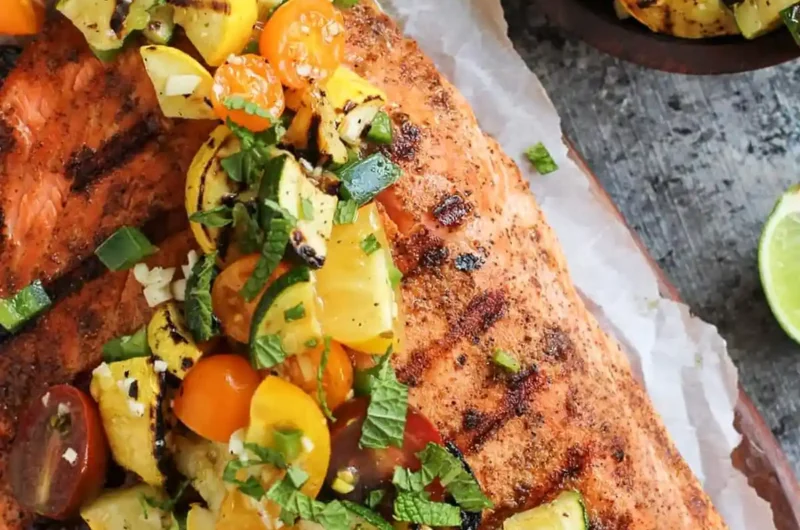
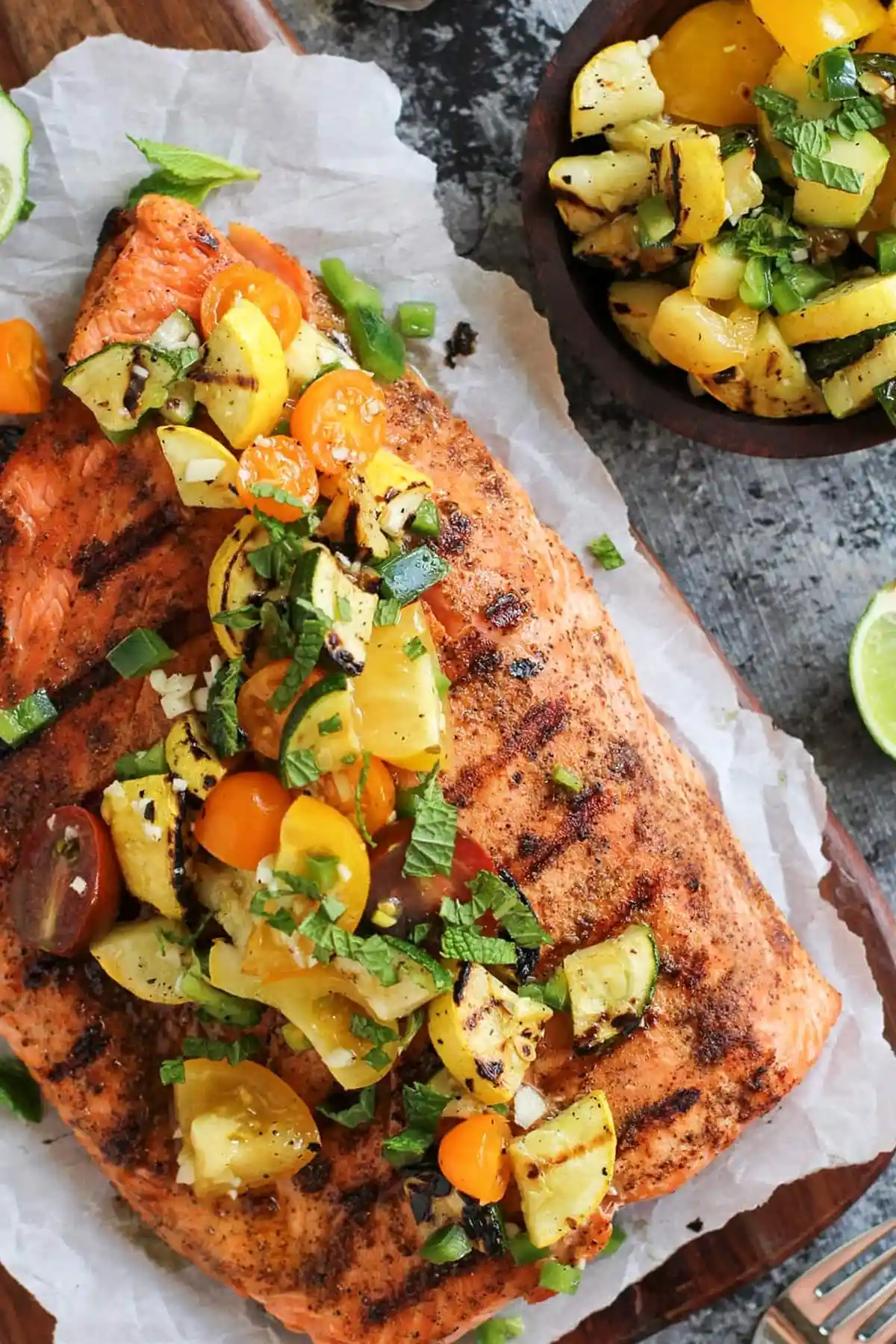
This recipe provides a foolproof method for grilling succulent salmon topped with a fresh zucchini and tomato salsa. It is a nutrient-dense main course that combines smoky charred flavors with a bright, acidic topping.
List of ingredients
- 1½ pounds skin-on salmon fillet – provides a protective barrier during grilling.
- 2 Tbsp avocado oil – used for coating the fish due to its high smoke point.
- 1 tsp garlic powder – adds savory depth to the rub.
- 1 tsp onion powder – complements the garlic for a well-rounded flavor.
- 1 tsp chili powder – introduces a mild earthy warmth.
- 1/8 to ¼ tsp cayenne pepper (optional) – adds a touch of heat for those who prefer spice.
- 1/2 tsp sea salt – enhances all the other seasoning flavors.
- 1 medium zucchini squash – grilled and chopped for the salsa.
- 1 medium yellow squash – grilled and chopped for the salsa.
- 1½ cups cherry tomatoes – halved or quartered for juicy bursts of flavor.
- 1 jalapeno – seeded and chopped to provide a fresh kick.
- 1 clove large garlic – minced for sharp aromatic flavor in the salsa.
- 1/4 cup red onion – finely chopped for a crisp bite.
- 4 leaves large mint – finely chopped for a refreshing herbal finish.
- 3 Tbsp lime juice – provides necessary acidity to balance the fats.
- 2 Tbsp olive oil – used for grilling the squash and mixing the salsa.
- 2 tsp pure maple syrup (optional) – adds a hint of sweetness to contrast the lime.
- sea salt – used to season the squash and final salsa.
step-by-step instructions
- Prepare the Grill: Use a wire brush to clean any remaining food particles from the grates. Spray the grill liberally with cooking oil to prevent sticking. For gas grills, preheat to medium-high heat between 400 and 450 degrees Fahrenheit. If using a charcoal grill, heat coals in a chimney for 15-20 minutes until they are mostly white.
- Mix the Seasoning: In a small bowl, combine the garlic powder, onion powder, chili powder, cayenne pepper, and sea salt. Stir until the spices are evenly mixed.
- Season the Fish: Drizzle avocado oil over the salmon fillets. Use your hands to ensure the oil coats the entire surface of the flesh. Sprinkle the prepared seasoning blend evenly over the fish. If preparing in advance, store the salmon in a sealed container or plastic bag in the refrigerator.
- Initial Grill Sear: Place the salmon fillet on the hottest part of the grill with the skin-side down. Position the fillet parallel to the grill grates to make flipping easier. Close the grill lid and cook for 3 to 6 minutes until the skin is crispy and the flesh becomes opaque.
- Flip and Finish: Carefully flip the salmon using a spatula. Cook for an additional 2 to 4 minutes. Use a meat thermometer in the thickest part of the fillet to check for doneness; it is fully cooked at 145 degrees Fahrenheit, or 125 degrees Fahrenheit for medium-rare.
- Grill the Squash: While the fish cooks, cut zucchini and yellow squash into 1/4 to 1/2-inch thick rounds. Lightly coat the rounds with olive oil and sprinkle with salt and pepper. Grill for about 2 minutes per side until clear grill marks appear, then transfer to a board and chop.
- Assemble the Salsa: Place the chopped grilled squash into a mixing bowl. Add the cherry tomatoes, jalapeno, minced garlic, red onion, chopped mint, lime juice, olive oil, maple syrup, and a pinch of sea salt. Toss until all ingredients are well combined.
- Serve: Transfer the grilled salmon to a serving platter and spoon the zucchini tomato salsa generously over the top.
Selection and Preparation Guide
Select Skin-On Fillets to Prevent Sticking
Choosing salmon with the skin intact is crucial for grilling. The skin acts as a natural barrier that prevents the delicate flesh from sticking to the grill grates and falling through. It also helps retain moisture during the high-heat cooking process.
Understand the Differences Between Salmon Species
King salmon is the fattiest option, resulting in the moistest fillet. Sockeye salmon is leaner with a deeper red color and a more intense flavor. Coho salmon offers a milder taste and a firm texture, making it a versatile choice for grilling.
Identify High-Quality Fat Marbling
Look for fillets with uniform light pink flesh and visible white lines of fat running through the meat. This marbling is essential for flavor and ensures the fish does not dry out under the direct heat of the grill. Avoid fillets with discoloration or gaping holes in the flesh.
Optimize Fillet Size for Easier Handling
Using fillets that are 1.5 pounds or smaller makes the flipping process much more manageable. Larger pieces are prone to breaking or tearing when moved. If you have a very large fillet, slice it into individual portions before seasoning and grilling.
Grilling Technique Mastery
Utilize High-Smoke Point Oils
Avocado oil is preferred over olive oil for the initial searing because it has a much higher smoke point. Olive oil can burn and create bitter flavors when exposed to the 400-450 degree temperatures of a grill. Use olive oil only for the lower-heat squash or the raw salsa mix.
Maintain Consistent Medium-High Grill Heat
A temperature range of 400 to 450 degrees Fahrenheit is ideal for achieving a crispy exterior while keeping the interior tender. If the grill is too cool, the fish will steam rather than sear, resulting in soft skin. If it is too hot, the exterior may burn before the center reaches the safe temperature.
Position Fillets Parallel to Grates
Placing the salmon parallel to the grill bars simplifies the flipping process significantly. When the fish is perpendicular, you have to navigate across many bars, increasing the risk of the fillet breaking. Parallel placement allows the spatula to slide under the fish smoothly.
Monitor Internal Temperature with a Digital Probe
The only way to guarantee perfect doneness is by using an instant-read digital thermometer. Insert the probe into the thickest part of the fillet. This removes the guesswork and prevents overcooking, which can lead to a dry, chalky texture.
Manage Heat on a Charcoal Grill
When using charcoal, create a two-zone fire by piling coals on one side of the grill. This provides a direct high-heat zone for searing the skin and an indirect lower-heat zone where you can move the fish if it begins to cook too quickly on the outside.
Customizing the Salmon Salsa
Substitute Fresh Herbs in the Salsa
While mint provides a refreshing contrast, you can swap it for fresh cilantro or flat-leaf parsley. Cilantro pairs well with the lime and jalapeno for a more zesty, Latin-inspired flavor. Basil is another excellent choice for a more Mediterranean-style accompaniment.
Incorporate Tropical Fruits for Contrast
Adding diced mango or pineapple to the salsa adds a sweetness that complements the smoky flavor of the grilled fish. The natural sugars in these fruits caramelize slightly if you grill them alongside the squash. This creates a vibrant, summer-themed dish.
Add Avocado for Creamier Texture
Diced avocado adds a rich, buttery texture that balances the acidity of the lime juice. To prevent the avocado from browning, fold it into the salsa immediately before serving. This addition also makes the meal more filling and satisfying.
Control Spicy Heat with Jalapeno Seeds
The heat of a jalapeno is concentrated in the seeds and the internal white membranes. For a mild salsa, ensure you remove all seeds and ribs before chopping. For a spicier version, leave a few seeds in the mix to increase the pungent heat.
Serving and Pairing Suggestions
Pair with Nutrient-Dense Complex Grains
Serve the grilled salmon atop a bed of quinoa or wild rice to add heartiness to the meal. These grains absorb the juices from the fish and the salsa, creating a cohesive flavor profile. Brown rice or farro are also excellent alternatives for added texture.
Complement with Roasted Root Vegetables
Roasted sweet potatoes or carrots provide a sweet, earthy contrast to the acidic salsa. Toss them in a bit of olive oil and salt before roasting them in the oven at 400 degrees Fahrenheit. This adds a different dimension of caramelization to the plate.
Balance the Meal with a Leafy Green Salad
A simple salad of mixed baby greens, cucumbers, and a light vinaigrette cleanses the palate between bites of rich salmon. Use a lemon-based dressing to echo the lime notes in the salsa. This keeps the overall meal feeling light and fresh.
Storage and Reheating Tips
Store Salmon in Airtight Containers
Place leftover grilled salmon in a glass airtight container to maintain freshness for up to four days in the refrigerator. Ensure the fish is completely cooled before sealing the lid to prevent excess moisture from building up, which can make the skin soggy.
Prevent Overcooking During Reheating
To reheat salmon without drying it out, use a low-temperature oven (around 275 degrees Fahrenheit) for a few minutes. Avoid high-heat microwaving, as this often results in a rubbery texture. Gently warming the fish ensures it remains moist.
Keep Salsa Separate During Storage
Store the zucchini tomato salsa in a separate container from the grilled salmon. This prevents the acid in the lime juice from breaking down the texture of the fish over time. Mix them together only at the moment of serving.
Troubleshooting Common Issues
Clean Grates to Stop Fish from Sticking
If your salmon is sticking to the grill, it is likely due to leftover carbonized food on the grates. Use a heavy-duty wire brush to scrub the grill while it is hot. Applying a thin layer of avocado oil to the grates immediately before adding the fish also creates a non-stick surface.
Prevent Dryness by Avoiding Overcooking
Salmon continues to cook for a few minutes after being removed from the heat due to carry-over cooking. To avoid dryness, remove the fish when the internal temperature is about 5 degrees below your target. Let it rest for a few minutes before serving.
Wait for the Sear to Prevent Skin Tearing
If the skin tears when you try to flip the fish, you likely haven’t waited long enough for the sear to form. When the skin is properly caramelized, it will naturally release from the grill grate. Be patient and avoid moving the fish too early.
Frequently Asked Questions
How long does salmon take to grill?
A standard 1-inch thick salmon fillet typically takes 8 to 12 minutes total. This usually consists of 3 to 6 minutes on the skin side and 2 to 4 minutes on the flesh side, depending on your preferred level of doneness.
Can I use frozen salmon?
Yes, but it must be completely thawed before it hits the grill. Thaw the fillets in the refrigerator overnight. Cooking frozen salmon directly on the grill often leads to an uneven cook, where the outside is burnt and the inside remains raw.
What is the safest internal temperature?
The FDA recommends an internal temperature of 145 degrees Fahrenheit for cooked fish. However, many chefs prefer medium-rare at 125 degrees Fahrenheit for a more tender texture. Always use a thermometer to ensure safety and quality.
Print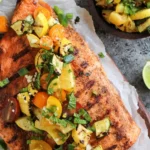
Perfectly Grilled Salmon with Zucchini Tomato Salsa
- Total Time: 25 minutes
- Yield: 4 servings 1x
- Diet: Gluten-free
Description
An easy, goof-proof grilled salmon recipe that results in amazing salmon each and every time, served with a fresh grilled zucchini and tomato salsa.
Ingredients
- 1½ pounds skin-on salmon fillet
- 2 Tbsp avocado oil
- 1 tsp garlic powder
- 1 tsp onion powder
- 1 tsp chili powder
- 1/8 to ¼ tsp cayenne pepper (optional)
- 1/2 tsp sea salt
- 1 medium zucchini squash
- 1 medium yellow squash
- 1½ cups cherry tomatoes, halved or quartered
- 1 jalapeno, seeded and chopped
- 1 clove large garlic, minced
- 1/4 cup red onion, finely chopped
- 4 leaves large mint, finely chopped
- 3 Tbsp lime juice
- 2 Tbsp olive oil
- 2 tsp pure maple syrup (optional)
- sea salt
Instructions
- Prepare Grill: Brush the grill with a wire brush, spray liberally with cooking oil, and preheat to medium-high (400 to 450 degrees F).
- Season Salmon: Mix seasoning and salt in a bowl, drizzle salmon with avocado oil to coat, and sprinkle with the seasoning blend.
- Grill Salmon: Place salmon skin-side down, parallel to the grill grates, cover the lid, and cook for 3 to 6 minutes.
- Flip and Finish: Carefully flip the salmon and cook for an additional 2 to 4 minutes until the internal temperature reaches 145 degrees F (or 125 degrees F for medium-rare).
- Grill Vegetables: Coat zucchini and yellow squash rounds with olive oil, salt, and pepper; grill for about 2 minutes per side until grill marks appear.
- Prepare Salsa: Chop the grilled squash and combine in a bowl with cherry tomatoes, jalapeno, garlic, red onion, mint, lime juice, olive oil, maple syrup, and sea salt.
- Serve: Transfer salmon to a platter and top with the grilled zucchini salsa.
Notes
Use skin-on fillets to prevent sticking and achieve a crispy texture. Avocado oil is recommended for its high smoke point.
- Prep Time: 15 minutes
- Cook Time: 10 minutes
- Category: Main Dishes
- Method: Grilling
- Cuisine: American
Nutrition
- Serving Size: 1 serving
- Calories: 407 kcal
- Sugar: 6 g
- Sodium: 820 mg
- Fat: 29 g
- Saturated Fat: 6 g
- Unsaturated Fat: 23 g
- Trans Fat: 0 g
- Carbohydrates: 12 g
- Fiber: 3 g
- Protein: 31 g
- Cholesterol: 75 mg
Keywords: grilled salmon, salmon recipe, zucchini tomato salsa, healthy dinner, BBQ salmon