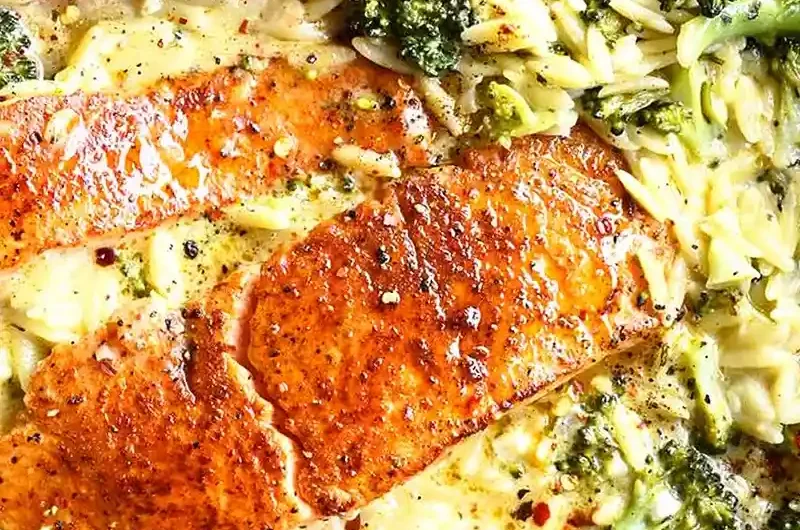
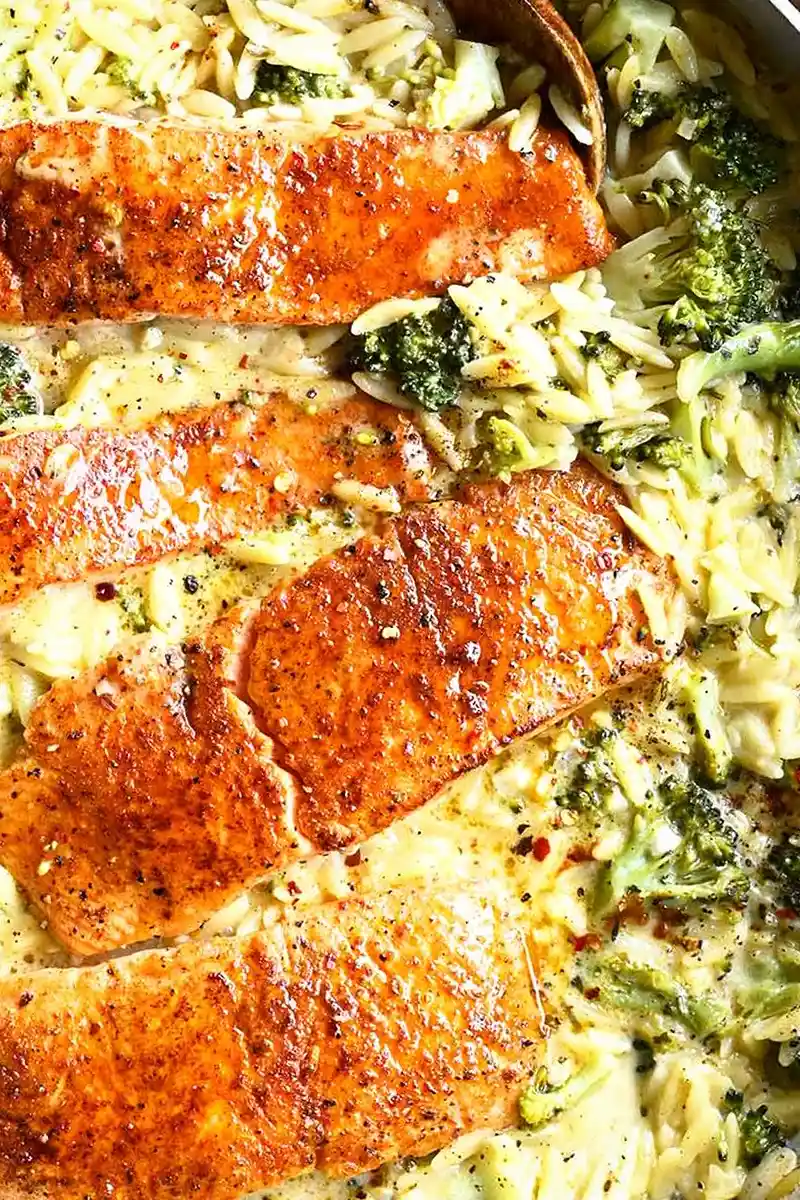
This streamlined one-pot meal combines pan-seared salmon fillets with a creamy blend of orzo, broccoli, and sharp cheddar cheese. It is a nutrient-dense dinner that comes together in just 30 minutes with minimal cleanup. Perfect for busy weeknights when you need a satisfying and hearty main course.
List of ingredients
- 1 tbsp olive oil – used for high-heat searing.
- 1 tbsp unsalted butter – adds richness and helps with browning.
- 4 skinless salmon fillets – ensure they are similar in size for even cooking.
- 1 tsp salt – divided between the salmon and the orzo.
- 1 tsp black pepper – for basic seasoning.
- 1 tsp sweet paprika – provides a mild flavor and golden color.
- 1 tsp garlic powder – adds a savory depth to the fish.
- 1 brown onion – finely chopped for the aromatic base.
- 4 garlic cloves – minced to release essential oils.
- 1 cup orzo – a small rice-shaped pasta that creates a creamy texture.
- 1 tbsp Italian seasoning – a blend of dried herbs for depth.
- ¼ tsp cayenne pepper – adds a subtle hint of heat.
- ½ cup chicken broth – used for deglazing the pan (alcohol-free substitute).
- 1 small broccoli – cut into florets and roughly chopped into bite-sized pieces.
- 3 cups chicken broth – the primary cooking liquid for the orzo.
- ½ cup half-and-half – creates a smooth, creamy sauce.
- 1 cup freshly shredded cheddar – provides the primary cheese flavor.
- ½ cup freshly grated Parmesan – adds a salty, nutty finish.
- chili flakes – for optional spicy garnish.
- freshly ground black pepper – for final seasoning.
step-by-step instructions
- Prepare the ingredients: Pat the salmon fillets dry with paper towels to ensure a better sear. Season both sides of the fillets with black pepper, paprika, garlic powder, and ½ teaspoon of the salt. Finely chop the onion, mince the garlic, and cut the broccoli into small, uniform florets.
- Sear the salmon: Heat the olive oil and unsalted butter over medium-high heat in a large skillet. Place the salmon fillets in the pan and cook for 3-4 minutes per side until golden brown. Transfer the cooked fillets to a clean plate and set them aside.
- Sauté aromatics and toast orzo: In the same skillet, add the chopped onion and minced garlic, sautéing for 2 minutes until fragrant. Stir in the orzo, cayenne pepper, Italian seasoning, and the remaining ½ teaspoon of salt, cooking for 1 minute to toast the pasta.
- Deglaze the pan: Pour in ½ cup of chicken broth. Simmer for 2 minutes while stirring and scraping the browned bits (fond) from the bottom of the skillet with a wooden spoon to incorporate the flavor.
- Simmer the orzo and broccoli: Add the broccoli florets and the remaining 3 cups of chicken broth. Bring the mixture to a boil, then reduce heat to medium-low. Cook uncovered for about 10 minutes, stirring occasionally to prevent the orzo from sticking, until the pasta is almost al dente and most liquid is absorbed.
- Prepare the cheese: While the orzo is simmering, shred the cheddar cheese and grate the Parmesan cheese from the block to ensure they melt smoothly.
- Final assembly: Stir in the half-and-half, shredded cheddar, and grated Parmesan until the sauce is completely incorporated and creamy. Return the seared salmon fillets to the skillet and simmer over low heat for 3 more minutes or until the fish is heated through.
- Garnish and serve: Top the dish with plenty of freshly ground black pepper and a sprinkle of chili flakes. Serve immediately while hot.
Advanced Salmon Searing Techniques
Pat Salmon Dry for Better Crust
Removing surface moisture from salmon fillets is critical for achieving a professional sear. Excess water creates steam when it hits the pan, which prevents the Maillard reaction and results in a pale, boiled appearance. Use a clean paper towel to press firmly on all sides of the fish before seasoning.
Manage Pan Temperature
Ensure your skillet is properly preheated before adding the oil and butter. You should see the butter foaming and the oil shimmering just before the fish goes in. If the pan is too cold, the salmon will stick and the flesh may tear when you attempt to flip it.
Avoid Over-Flipping
Press the salmon fillets down gently with a spatula when they first hit the pan to ensure total surface contact. Leave them undisturbed for the full 3-4 minutes per side. Flipping too frequently prevents the development of a crispy outer layer and can lead to overcooking the center.
Optimizing Orzo Texture
The Importance of Toasting
Cooking the raw orzo with the aromatics for one minute before adding liquids is a process called toasting. This step brings out a nutty flavor in the pasta and helps the individual grains maintain their structural integrity. It prevents the orzo from becoming overly mushy during the simmering process.
Releasing Natural Starches
Stirring the orzo occasionally while it simmers in the chicken broth is not just about preventing sticking. The agitation encourages the release of starches from the pasta, which naturally thickens the cooking liquid. This results in a glossy, luscious sauce without needing excessive amounts of heavy cream.
Managing Liquid Absorption
The ratio of broth to orzo is key for a creamy result. If the liquid absorbs too quickly and the pasta is still hard, add an extra ¾ cup of broth. Conversely, if the sauce is too thin after 10 minutes, simmer for another 2 minutes uncovered to reduce the volume.
Cheese Sauce Quality Control
Use Freshly Grated Block Cheese
Avoid pre-shredded cheese packages, as these contain cellulose or potato starch to prevent clumping. These anti-caking agents hinder the melting process and often result in a grainy or sandy texture in the final sauce. Grating your own cheddar and Parmesan ensures a velvety, smooth emulsion.
Control the Melting Temperature
Add the cheese and half-and-half over low heat to avoid breaking the sauce. If the skillet is too hot, the fats in the cheddar can separate from the proteins, causing the sauce to become oily. Stir constantly until the cheese is fully integrated and the sauce is homogenous.
Adjusting Sauce Viscosity
Depending on the brand of cheese used, the sauce may vary in thickness. If the result is too thick, stir in a tablespoon of warm chicken broth or milk. If you prefer a thicker consistency, let the dish sit for 5 minutes before serving, as the sauce will thicken slightly as it cools.
Vegetable and Protein Variations
Integrating Fresh Spinach
To add more greens, stir in two cups of fresh baby spinach during the final 3 minutes of cooking. The residual heat from the orzo and cheese sauce will wilt the spinach perfectly without overcooking it. This adds a boost of iron and a vibrant color to the dish.
Using Frozen Broccoli
If fresh broccoli is unavailable, frozen florets can be used as a substitute. Thaw them completely and pat them dry before adding them to the pan. Reduce the simmering time by 2-3 minutes, as frozen vegetables release more water and cook faster than fresh ones.
Substituting with Shrimp
For a different protein, use large peeled and deveined shrimp. Sear the shrimp for only 1-2 minutes per side, then remove them from the pan. Return the shrimp to the skillet at the very end, as they require much less time to heat through than salmon fillets.
Serving and Pairing Ideas
Pairing with Leafy Greens
Balance the richness of the cheddar sauce with a crisp, acidic side salad. A mixture of arugula or Romaine with a lemon-vinaigrette or a light Caesar dressing provides a refreshing contrast. The acidity cuts through the creaminess of the orzo, cleansing the palate between bites.
Adding Citrus Accents
Fresh lemon juice is a natural companion to both salmon and broccoli. Squeeze a fresh lemon wedge over the plated dish just before eating. The citric acid enhances the flavor of the Parmesan and brightens the overall taste profile of the meal.
Garnish for Texture and Heat
Beyond chili flakes and black pepper, consider topping the dish with sliced green onions or fresh parsley. These additions provide a fresh, sharp contrast to the savory cheese. A sprinkle of toasted breadcrumbs can also add a necessary crunch to the soft texture of the orzo.
Storage and Reheating Instructions
Proper Refrigeration
Store any leftovers in an airtight container in the refrigerator for up to 24 hours. Because orzo is highly absorbent, the pasta will continue to soak up the sauce as it sits. This may result in a thicker, denser consistency the next day.
Reheating in a Skillet
The best way to reheat this dish is in a nonstick skillet over medium-low heat. Add a splash of milk, cream, or chicken broth to the pan to loosen the sauce. Stir gently and cover with a lid for 3-5 minutes until the salmon and pasta are heated through.
Microwave Reheating Tips
If using a microwave, place the portions in a microwave-safe bowl and add a teaspoon of water or broth. Cover the bowl with a damp paper towel to trap steam. Heat in 30-second intervals, stirring in between, to avoid overheating the salmon, which can make the fish rubbery.
Troubleshooting the Recipe
What to Do if the Sauce Breaks
If the cheese sauce looks oily or separated, it is likely due to overheating. To fix this, remove the pan from the heat and whisk in a small amount of cold half-and-half or a teaspoon of cornstarch slurry (cornstarch mixed with water). Stir vigorously to re-emulsify the sauce.
Managing Overcooked Salmon
If the salmon fillets cook too quickly during the initial sear, remove them from the pan immediately. When returning them to the skillet at the end, place them on top of the orzo rather than stirring them in. This prevents the fillets from breaking apart and prevents further overcooking.
Fixing Dry Orzo
If the orzo has absorbed all the liquid and seems dry before the cheese is added, do not panic. Simply stir in an extra ¼ cup of chicken broth or milk. Ensure the liquid is simmering gently before adding the cheese to keep the temperature stable.
Frequently Asked Questions
Can I use whole wheat orzo?
Yes, you can use whole wheat orzo, but be aware that it has a nuttier flavor and a firmer texture. You may need to add an additional ¼ cup of chicken broth and increase the simmering time by 2-3 minutes to ensure the pasta is fully tender.
Is it possible to freeze this dish?
Freezing is not recommended for this recipe. The dairy-based sauce and the broccoli tend to separate and become watery upon thawing. Additionally, the texture of the salmon and orzo degrades significantly when frozen and reheated.
Which type of cheddar works best?
A sharp or extra-sharp cheddar is ideal because its strong flavor can stand up to the richness of the salmon and the earthiness of the broccoli. Avoid mild cheddars, as they may get lost in the overall flavor profile of the dish.
Can I substitute the half-and-half?
You can substitute half-and-half with heavy cream for a thicker, richer sauce, or with whole milk for a lighter version. If using milk, you may want to increase the amount of Parmesan cheese to help thicken the consistency of the sauce.
Print
One Pot Broccoli Cheddar Salmon Orzo
- Total Time: 30 minutes
- Yield: 4 servings 1x
- Diet: General
Description
Beyond delicious, super easy to make and ready in 30 minutes. Pan-seared salmon fillets served with smooth orzo, plenty of broccoli and creamy cheddar cheese. A hug in a bowl!
Ingredients
- 1 tbsp olive oil
- 1 tbsp unsalted butter
- 4 skinless salmon fillets
- 1 tsp salt (divided)
- 1 tsp black pepper
- 1 tsp sweet paprika
- 1 tsp garlic powder
- 1 brown onion, finely chopped
- 4 garlic cloves, minced
- 1 cup orzo
- 1 tbsp Italian seasoning
- ¼ tsp cayenne pepper
- ½ cup chicken broth (as substitute for white wine)
- 1 small broccoli, cut into florets, then roughly chopped
- 3 cups chicken broth
- ½ cup half-and-half
- 1 cup freshly shredded cheddar
- ½ cup freshly grated Parmesan
- chili flakes (for serving)
- freshly ground black pepper (for serving)
Instructions
- Step: Pat the salmon fillets dry and season both sides with pepper, paprika, garlic powder and ½ teaspoon salt.
- Step: Finely chop the onion, mince the garlic, and roughly chop the broccoli florets into small bite-sized pieces.
- Step: Heat oil and butter over medium high in a large skillet or pan, cook salmon fillets 3-4 minutes per side, and remove to a plate.
- Step: Sauté garlic and onion for 2 minutes, stir in orzo, cayenne pepper, Italian seasoning and remaining salt for 1 minute, then deglaze with chicken broth and simmer for 2 minutes.
- Step: Add broccoli and chicken broth, bring to a boil, then reduce heat to medium-low and cook uncovered for about 10 minutes until most liquid is absorbed.
- Step: Shred the cheddar and grate the Parmesan cheese.
- Step: Stir in half-and-half, shredded cheddar, and grated Parmesan, then return salmon to the skillet and simmer over low for 3 more minutes.
- Step: Top with freshly ground black pepper and chili flakes and serve.
Notes
Use freshly-grated cheese for the creamiest result; pre-shredded cheese may not melt as smoothly. Chicken broth can be replaced with vegetable broth.
- Prep Time: 10 minutes
- Cook Time: 20 minutes
- Category: Dinner
- Method: One Pot
- Cuisine: American
Nutrition
- Serving Size: 1 serving
- Calories: 517 kcal
- Sugar: 4 g
- Sodium: 1336 mg
- Fat: 22 g
- Saturated Fat: 6 g
- Unsaturated Fat: 16 g
- Trans Fat: 0.1 g
- Carbohydrates: 36 g
- Fiber: 3 g
- Protein: 42 g
- Cholesterol: 115 mg
Keywords: broccoli, pasta, quick meals, salmon