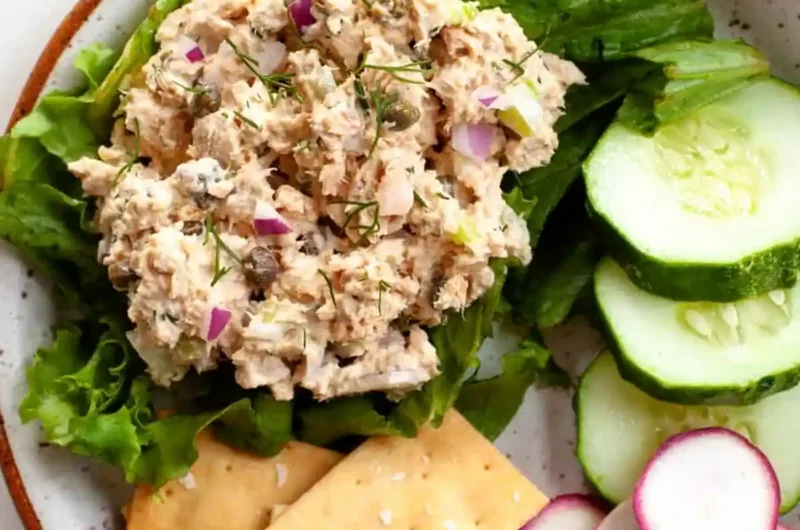
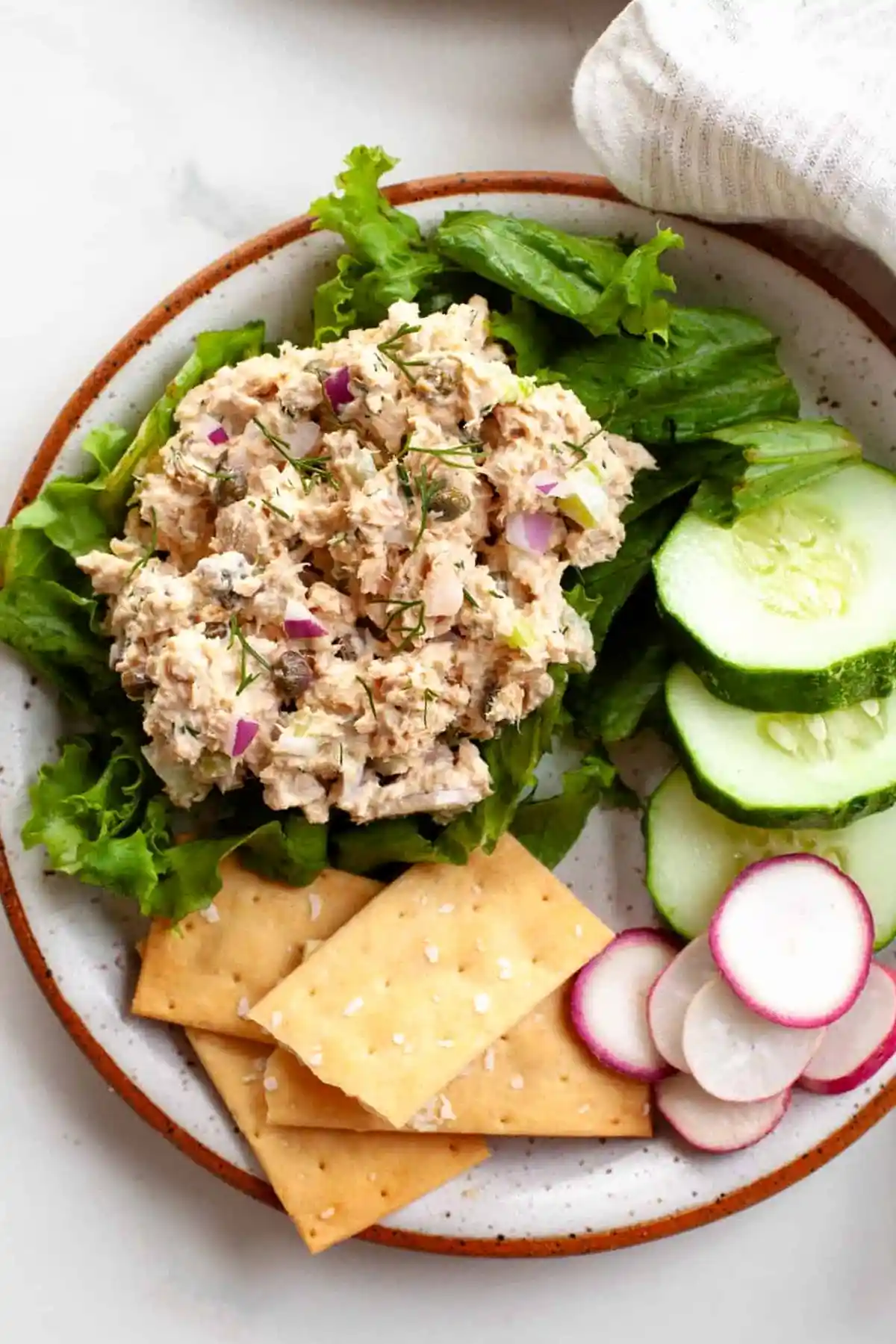
This nutrient-dense canned salmon salad is a perfect solution for a fast, healthy lunch. It blends creamy textures with briny accents to create a satisfying meal in under ten minutes.
List of ingredients
- 2 (5-6 ounce) cans salmon, drained – use wild-caught pink salmon for best quality.
- 3 tablespoons chopped red onion – provides a sharp, pungent crunch.
- 3 tablespoons chopped celery – adds freshness and a crisp texture.
- 1 1/2 tablespoons capers – delivers a salty, briny pop of flavor.
- 1 tablespoon fresh dill – adds a tangy, aromatic herbal note.
- 1/3 cup mayonnaise – creates the creamy base that binds the salad.
- 2 tablespoons dijon mustard – contributes a sharp, spicy tang.
- 1 tablespoon lemon juice – brightens the overall flavor with acidity.
- pepper, to taste – enhances all the other seasoning elements.
step-by-step instructions
- Combine ingredients: In a small mixing bowl, add the drained salmon, chopped red onion, diced celery, capers, fresh dill, mayonnaise, dijon mustard, lemon juice, and pepper.
- Mix and adjust: Stir all the components together until thoroughly combined. Taste the mixture and add more mayonnaise for extra creaminess or additional pepper as desired.
- Serve: Plate the salad on a bed of fresh lettuce, serve with sliced cucumbers and crackers, or scoop it into a sandwich roll.
Flavor and Texture Modifications
Swap Mayonnaise for Greek Yogurt
If you prefer a tangier taste or need an egg-free alternative, substitute the mayonnaise with plain Greek yogurt. This change increases the protein content and reduces the overall fat. Use a 1:1 ratio for the substitution to maintain the same creamy consistency.
Adjusting the Onion Variety
Red onion provides a distinct color and a sharp bite, but you can use white or yellow onions for a more traditional flavor. For a milder, sweeter taste, substitute with sweet Vidalia onions. Ensure the onion is finely diced so it does not overpower the delicate salmon.
Adding Extra Vegetable Crunch
To add more volume and texture, consider mixing in finely diced red bell peppers or shredded carrots. Diced cucumbers can also add a refreshing water-based crunch that pairs well with the lemon juice. Keep the vegetables small so the salad remains easy to scoop and spread.
Substituting Capers for Olives
If capers are unavailable or too salty for your preference, chopped green olives are an excellent alternative. Olives provide a similar briny profile that cuts through the richness of the mayonnaise. Use a similar quantity of finely chopped olives to keep the flavor balanced.
Optimal Serving Suggestions
Low Carb Vegetable Bases
For a grain-free meal, serve the salmon salad inside large Romaine lettuce leaves or hollowed-out bell pepper halves. Slicing a cucumber lengthwise and scooping out the seeds creates a natural boat for the salad. These options provide a crisp contrast to the creamy fish mixture.
Bread and Grain Pairings
This salad works exceptionally well on toasted whole-grain bread or a buttery croissant for a more indulgent lunch. For a lighter snack, serve it with seed-based crackers or rye crisps. Toasted sourdough adds a fermented tang that complements the dijon mustard.
Creative Wrap Ideas
Instead of traditional bread, try wrapping the salmon salad in a whole-wheat tortilla or a large collard green leaf. Adding a layer of fresh spinach or sprouts inside the wrap adds extra nutrients and a peppery flavor. Secure the wrap with a toothpick for easier handling.
Pairing with Side Dishes
Complement this salad with a side of fresh fruit, such as apple slices or grapes, to balance the salty capers. A small bowl of mixed greens with a light vinaigrette also makes the meal more complete. For a heartier lunch, pair it with a cup of vegetable soup.
Storage and Freshness Guidelines
Refrigeration and Container Choice
Store any leftover salmon salad in an airtight glass or BPA-free plastic container. Proper sealing prevents the salad from absorbing other odors in the fridge and keeps the ingredients from drying out. Keep the container in the coldest part of the refrigerator.
Shelf Life and Quality
The salmon salad remains fresh and safe to eat for 3 to 4 days when properly refrigerated. You may notice the celery losing some crunch over time as the salt in the salad draws out moisture. Stir the salad gently before serving to redistribute the dressing.
The Role of Acid in Preservation
The lemon juice and dijon mustard in this recipe do more than add flavor; they help maintain the freshness of the salmon. The acidity slows down the degradation of the fats in the fish. However, always smell the salad before consuming if it has been stored for several days.
Avoiding Freezer Storage
Do not freeze this salmon salad, as the mayonnaise and lemon juice will separate upon thawing. This separation ruins the creamy emulsion and results in a watery, unappealing texture. It is best to make the salad in small batches for immediate consumption.
Pantry Selection and Quality
Choosing the Best Canned Salmon
Look for wild-caught pink salmon to ensure a cleaner flavor and a higher density of nutrients. Wild salmon generally contains fewer additives and a more natural omega-3 profile than farmed varieties. Check the label for ‘boneless and skinless’ if you prefer a smoother texture.
Water-Packed vs. Oil-Packed
Water-packed salmon is the preferred choice for this recipe to avoid adding excess oil to the creamy base. If you only have oil-packed salmon, drain it very thoroughly using a fine-mesh strainer. You may want to slightly reduce the amount of mayonnaise used to compensate for the remaining oil.
Managing Canned Fish Odors
To minimize the strong scent of canned fish, rinse the drained salmon briefly under cold water before adding it to the bowl. Ensure your mixing bowl is chilled, which helps keep the salmon stable. Adding the fresh dill immediately helps mask any overly fishy aromas.
Checking for Quality Indicators
Always inspect the can for dents or bulges before purchasing, as these can indicate safety issues. Once opened, the salmon should have a mild, salty smell and a pale pink color. Discard any canned fish that has an off-putting or overly pungent ammonia scent.
Nutritional Value and Benefits
Omega-3 Fatty Acids
Canned salmon is a potent source of omega-3 fatty acids, specifically EPA and DHA. These essential fats are critical for supporting cardiovascular health and maintaining cognitive function. Including salmon in your diet helps reduce inflammation throughout the body.
Protein for Satiety
The high protein content in salmon helps you feel full longer, making this salad an ideal lunch for weight management. Protein supports muscle repair and maintains metabolic health. Combining fish with fiber-rich celery and onion creates a balanced nutritional profile.
Micronutrient Density
Salmon provides significant amounts of Vitamin D and B vitamins, which are essential for bone health and energy production. The added lemon juice provides a small boost of Vitamin C, which aids in the absorption of minerals. Fresh dill adds a touch of antioxidants to the mix.
Heart-Healthy Fats
By using salmon and a controlled amount of mayonnaise, you get a blend of healthy unsaturated fats. These fats are necessary for the absorption of fat-soluble vitamins like A, D, E, and K. Substituting with Greek yogurt further optimizes the heart-health benefits.
Troubleshooting Common Issues
Fixing a Watery Consistency
If your salad becomes too liquid, it is usually because the canned salmon or celery was not drained properly. You can fix this by stirring in an extra tablespoon of mayonnaise or a teaspoon of Greek yogurt to thicken the emulsion. For future batches, pat the drained salmon dry with a paper towel.
Reducing an Overly Fishy Taste
If the salmon flavor is too dominant, increase the amount of lemon juice or add a pinch more dijon mustard. These acidic components neutralize the trimethylamine that causes the ‘fishy’ smell. Adding a few more capers or a sprinkle of fresh parsley can also balance the flavor.
Balancing Excess Saltiness
Capers and canned salmon both contain sodium, which can sometimes lead to an overly salty result. To balance this, add more chopped celery or cucumber to dilute the salt concentration. You can also add a small pinch of sugar or a drop of honey to counteract the salinity.
Correcting a Bland Flavor
If the salad tastes flat, it likely needs more acidity or seasoning. Add a few more drops of lemon juice or a pinch of black pepper to wake up the other flavors. Ensure your dijon mustard is fresh, as old mustard loses its pungent kick over time.
Frequently Asked Questions
Can I use fresh salmon instead of canned?
Yes, you can use fresh salmon by poaching or baking it until fully cooked. Once cooked, let the fish cool completely and flake it with a fork before adding it to the other ingredients. Ensure the fresh salmon is drained of any excess moisture.
Is this recipe suitable for meal prep?
Yes, this salad is excellent for meal prep as it stays fresh for several days. Prepare the salmon mixture in a large batch and store it in the fridge. To keep your bread or lettuce from getting soggy, store the salad separately and assemble your sandwich right before eating.
Can I make this salad vegan?
To make this vegan, replace the salmon with mashed chickpeas or hearts of palm. Substitute the mayonnaise with a vegan mayo or a cashew-based cream. Keep the onion, celery, capers, and lemon juice as they are to maintain the classic flavor profile.
What are the best crackers for salmon salad?
Whole-grain rye crackers or multi-seed crisps provide the best structural support and flavor contrast. Water crackers are a good neutral choice if you want the salmon flavor to stand out. Avoid overly sweet crackers, as they clash with the briny capers.
Print
Quick Canned Salmon Salad
- Total Time: 7 minutes
- Yield: 2–4 servings 1x
- Diet: Gluten Free
Description
Ready in less than 10 minutes, this canned salmon salad is a go-to for a nutrition-packed lunch. Made with fresh dill, capers, celery and onion, it’s packed with delicious flavor.
Ingredients
- 2 (5-6 ounce) cans salmon, drained
- 3 tablespoons chopped red onion
- 3 tablespoons chopped celery
- 1 1/2 tablespoons capers
- 1 tablespoon fresh dill
- 1/3 cup mayonnaise
- 2 tablespoons dijon mustard
- 1 tablespoon lemon juice
- pepper, to taste
Instructions
- Combine: In a small mixing bowl, add salmon, red onion, celery, capers, dill, mayonnaise, dijon mustard, lemon juice, and pepper, and stir to combine.
- Adjust: Add additional mayonnaise or seasoning as desired.
- Serve: Serve on a bed of lettuce, with veggies like cucumbers, crackers, or serve on a sandwich.
Notes
To make egg-free, use Greek yogurt instead of mayonnaise. Use wild-caught pink canned salmon, packed in water.
- Prep Time: 7 minutes
- Cook Time: 0 minutes
- Category: Snack
- Method: No cook
- Cuisine: American
Nutrition
- Serving Size: 1 serving
- Calories: 330 kcal
- Sugar: 3 g
- Sodium: 500 mg
- Fat: 20 g
- Saturated Fat: 3 g
- Unsaturated Fat: 17 g
- Trans Fat: 0 g
- Carbohydrates: 5 g
- Fiber: 1 g
- Protein: 18 g
- Cholesterol: 33 mg
Keywords: canned salmon salad, quick lunch, high protein, omega-3, gluten free