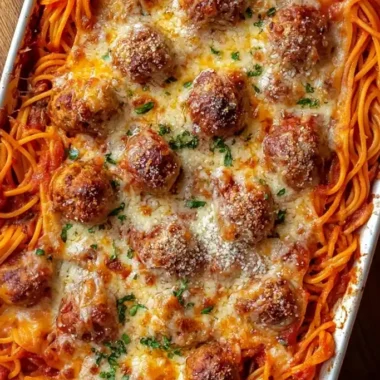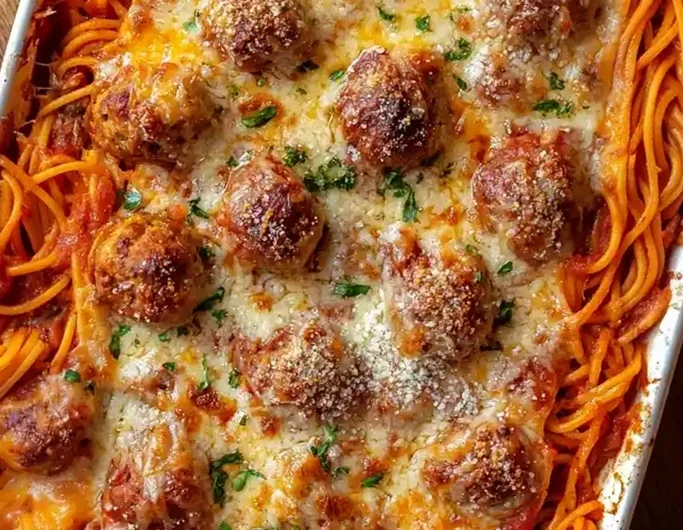
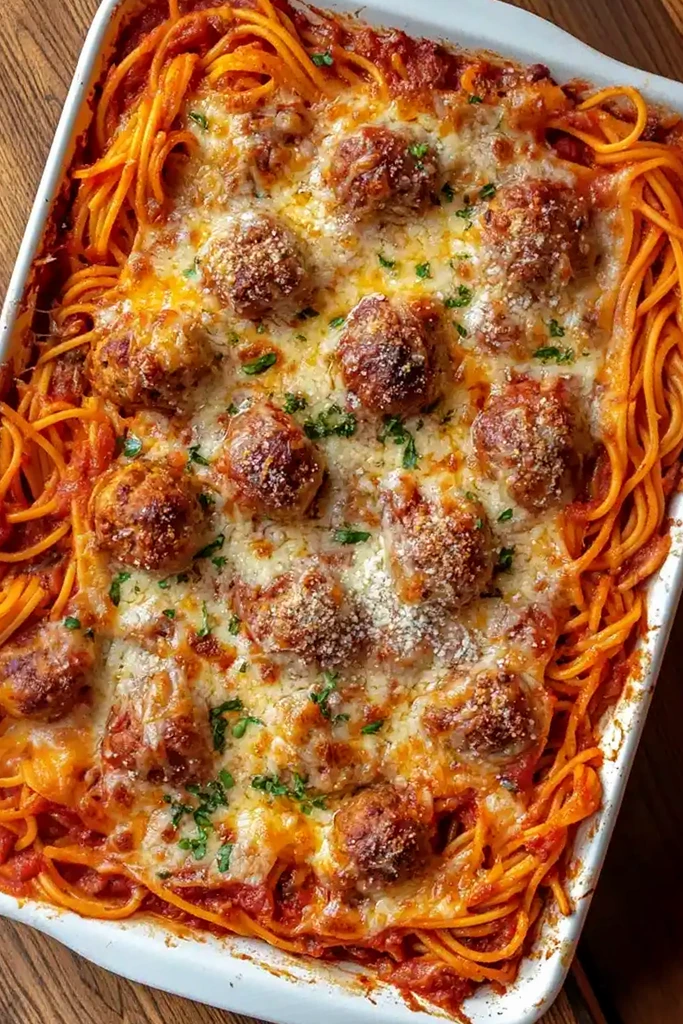
This hearty baked spaghetti and meatballs casserole is a satisfying meal for any night of the week. It combines juicy homemade beef meatballs with al dente pasta and bubbly melted cheese for a comforting dinner.
List of ingredients
- 1 lb 450 g ground beef – high quality lean beef for meatballs.
- 1/2 cup 50 g breadcrumbs – used to bind the meat.
- 1/4 cup 25 g grated Parmesan cheese – adds a salty, nutty flavor to the beef.
- 1 large egg – helps hold the meatball structure together.
- 2 cloves garlic, minced – provides a fresh aromatic base.
- 1 tsp Italian seasoning – a blend of dried herbs for classic flavor.
- 1/2 tsp salt – enhances the savory notes of the meat.
- 1/4 tsp black pepper – adds a subtle warmth.
- 2 tbsp olive oil – used for searing the meatballs in the skillet.
- 12 oz 340 g spaghetti – standard pasta noodles.
- 3 cups 700 ml marinara sauce – a rich, thick tomato sauce.
- 2 cups 200 g shredded mozzarella cheese – for the melted, stretchy topping.
- 1/2 cup 50 g grated Parmesan cheese – for an extra layer of flavor on top.
- 1 tbsp olive oil – tossed with pasta to prevent clumping.
- 1/2 tsp garlic powder – seasons the sauce layer.
- 1 tsp Italian seasoning – additional herbs for the casserole.
- Fresh basil or parsley – for a fresh, colorful garnish.
step-by-step instructions
- Prepare the Meatballs: In a large bowl, combine the ground beef, breadcrumbs, Parmesan, egg, minced garlic, Italian seasoning, salt, and pepper. Roll the mixture into balls about 1-2 inches in diameter. Heat 2 tablespoons of olive oil in a skillet over medium heat and sear the meatballs on all sides for about 8 minutes until browned.
- Cook the Spaghetti: Boil a large pot of salted water and cook the spaghetti for 1-2 minutes less than the package instructions to ensure it remains al dente. Drain the pasta well and toss it with 1 tablespoon of olive oil to prevent the strands from sticking together.
- Preheat the Oven: Set your oven to 375°F (190°C) and ensure the oven rack is in the center position for even heat distribution.
- Assemble the Casserole: Spread 1 cup of marinara sauce across the bottom of a 9×13-inch baking dish. Layer half of the cooked spaghetti evenly over the sauce, then place the seared meatballs on top of the pasta. Pour the remaining marinara sauce over the meatballs, sprinkle with garlic powder and Italian seasoning, and top with shredded mozzarella and Parmesan cheese.
- Bake: Cover the baking dish with aluminum foil and bake for 15 minutes. Remove the foil and continue baking for another 10-15 minutes, or until the cheese is fully melted and golden brown.
- Garnish and Serve: Remove the dish from the oven and let it cool for 5 minutes to allow the sauce to set. Garnish with freshly chopped basil or parsley and serve warm.
Essential Cooking Techniques for Best Results
Searing Meatballs Correctly
Heat the olive oil in a skillet until it begins to shimmer but does not smoke. Avoid the common mistake of overcrowding the pan, as this drops the temperature and causes the meat to steam instead of brown. Sear the meatballs on all sides to develop a rich crust, which locks in juices and adds a complex flavor profile to the final dish.
Achieving Perfect Al Dente Pasta
It is critical to undercook the spaghetti slightly during the boiling stage. Because the pasta will continue to cook in the oven while absorbing the marinara sauce, boiling it to full softness will result in a mushy texture. Aim for a firm bite in the center of the noodle before adding it to the casserole dish.
Strategic Layering for Texture
Starting with a layer of sauce at the bottom of the pan creates a moisture barrier that prevents the pasta from sticking to the glass or ceramic. By splitting the pasta into layers and placing the meatballs in the middle, you ensure that the meat remains juicy and is evenly distributed throughout every serving. The final cheese layer acts as an insulator, keeping the moisture trapped inside.
Customizing Your Pasta Casserole
Integrating Fresh Vegetables
You can easily boost the nutritional value by adding sautéed vegetables like spinach, mushrooms, or zucchini. Sauté these ingredients separately before adding them to the pasta layers to ensure they are fully cooked and their excess moisture has evaporated. This prevents the sauce from becoming watery during the baking process.
Adding Heat with Spicy Elements
For those who prefer a spicier profile, stir crushed red pepper flakes directly into the marinara sauce before assembling. You can also substitute a portion of the ground beef with spicy Italian sausage to infuse the meatballs with a bolder heat. Adjust the amount of pepper flakes based on your personal tolerance for spice.
Using Plant-Based Dairy Substitutes
To make this dish dairy-free, replace the mozzarella and Parmesan with high-quality plant-based cheese alternatives. Look for brands specifically designed for melting to avoid a grainy texture. Some vegan cheeses require a slightly higher temperature or a splash of water to soften properly, so monitor the topping closely.
Experimenting with Different Pasta Shapes
While spaghetti is traditional, you can use penne, rigatoni, or fusilli for a different mouthfeel. These tubular or twisted shapes are excellent for trapping pockets of sauce and cheese. Ensure you adjust the boiling time according to the specific pasta shape used to maintain the al dente texture.
Serving and Pairing Suggestions
Preparing Garlic Toast
A side of crispy garlic bread complements the richness of the baked pasta. Slice a fresh baguette and spread a mixture of salted butter, minced garlic, and a pinch of parsley on each piece. Toast them in the oven for 5-7 minutes until the edges are golden and the center is soft.
Adding a Fresh Garden Salad
Balance the heavy flavors of the cheese and beef with a bright, tangy salad. A classic Caesar salad or a simple garden mix with cucumbers, cherry tomatoes, and a lemon vinaigrette provides a necessary acidic contrast. This cleanses the palate between bites of the savory casserole.
Roasted Vegetable Accompaniments
Serve the casserole alongside roasted broccoli, asparagus, or Brussels sprouts for a balanced meal. Toss the vegetables in olive oil, salt, and pepper, then roast them at 400°F until the edges are charred. These greens add a crisp texture and earthiness to the plate.
Family-Friendly Beverage Pairings
Pair this meal with refreshing non-alcoholic drinks to keep it kid-friendly. Sparkling apple cider or a chilled lemonade provides a sweetness that cuts through the saltiness of the Parmesan. For a more sophisticated option, sparkling water with a squeeze of lime is a refreshing choice.
Storage and Preservation Guide
Refrigerating Leftovers Safely
Once the casserole has cooled to room temperature, transfer any leftovers into an airtight glass or plastic container. Store the container in the main part of the refrigerator, avoiding the door where temperature fluctuations occur. This keeps the pasta and meat fresh and prevents contamination.
Freezing the Assembled Dish
You can freeze the casserole before baking it by covering the dish tightly with plastic wrap and then a layer of heavy-duty aluminum foil. Store it in the freezer for up to two months. To cook, thaw the dish in the refrigerator overnight before following the standard baking instructions.
Maximum Storage Duration
Cooked pasta and meat dishes typically last 3 to 4 days in the refrigerator. After this period, the quality of the pasta degrades, and the risk of spoilage increases. Always ensure the food is reheated to an internal temperature of 165°F to ensure safety.
Reheating Methods for Quality
Using the Oven for Crispy Cheese
To maintain the texture of the cheese, reheat portions in a small baking dish at 350°F. Cover with foil for the first 10 minutes to heat the center, then remove the foil for the final 5 minutes to crisp the top. This method prevents the pasta from drying out while restoring the golden crust.
Microwave Quick Heating
For a faster option, place a serving in a microwave-safe bowl and cover it with a damp paper towel. Heat on medium power in one-minute intervals, stirring occasionally to distribute the heat evenly. The damp towel creates a small steam chamber that prevents the noodles from becoming hard.
Restoring Moisture with Extra Sauce
Pasta naturally absorbs moisture as it sits in the refrigerator, which can make leftovers feel dry. Add a tablespoon of fresh marinara sauce or a teaspoon of water before reheating. This restores the original sauce-to-pasta ratio and improves the overall mouthfeel.
Make-Ahead Preparation Advice
Assembling the Casserole in Advance
You can assemble the entire dish up to 24 hours before you plan to serve it. Keep it covered in the refrigerator to allow the flavors of the herbs and garlic to meld. For the best results, add the final layer of shredded cheese just before placing it in the oven to prevent the cheese from absorbing too much moisture.
Preparing Meatballs in Batches
Save time on the day of the meal by preparing and searing the meatballs in large batches. Once cooled, store them in a freezer bag or airtight container. You can add them directly to the casserole from the fridge, which eliminates the need for skillet frying during the final assembly.
Storing Pre-cooked Pasta
If you boil the spaghetti a day early, toss it generously with olive oil to prevent the strands from fusing together. Store the pasta in a sealed container or zip-top bag. If the pasta clumps together during storage, a quick rinse with warm water can separate the strands before layering.
Troubleshooting Common Issues
Preventing Dry Noodles
If you find your pasta is consistently too dry, increase the amount of marinara sauce by half a cup. Ensure you are not overbaking the dish; removing the foil at the correct time is key. Additionally, tossing the pasta in oil before assembly creates a protective coating that retains moisture.
Managing Sauce Consistency
If your marinara sauce is too thin, simmer it in a saucepan for 10-15 minutes to reduce the water content before adding it to the dish. If adding vegetables, ensure they are well-drained to avoid introducing extra liquid. A thick sauce helps the meatballs stay suspended in the pasta rather than sinking.
Avoiding Burnt Cheese Toppings
Keep a close eye on the oven during the final 10 minutes of baking. If the mozzarella begins to brown too quickly, simply replace the aluminum foil to slow down the heating process. Using a lower rack position in the oven can also prevent the cheese from being too close to the top heating element.
Fixing Meatball Texture
If the meatballs are too crumbly, it is likely due to a lack of binder or over-mixing the meat. Avoid over-working the beef, as this can make the meatballs tough. Ensure the egg is well-beaten before adding it to the mixture to provide a consistent hold.
Frequently Asked Questions
Can I use frozen meatballs?
Yes, you can use high-quality frozen beef meatballs. Thaw them completely in the refrigerator and sear them in a pan first to add a roasted flavor and better texture before adding them to the casserole.
What is the best mozzarella for baking?
Low-moisture mozzarella is the best choice for this recipe. Fresh mozzarella contains too much water and can make the casserole soggy, whereas low-moisture mozzarella melts evenly and browns beautifully.
Can I make this dish gluten-free?
Absolutely. Replace the standard spaghetti with your favorite certified gluten-free pasta and use gluten-free breadcrumbs in the meatball mixture. The rest of the ingredients are naturally gluten-free.
How do I prevent meatballs from falling apart?
The key is to not overmix the meat and breadcrumbs. Use a light hand when combining the ingredients and ensure you are using a large enough egg to bind the pound of beef. Chilling the rolled meatballs for 30 minutes before searing can also help them hold their shape.
Print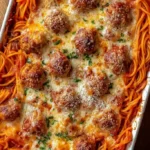
Cheesy Baked Spaghetti and Meatballs
- Total Time: 55 minutes
- Yield: 6 servings 1x
- Diet: General
Description
This Baked Spaghetti and Meatballs is a comforting Italian-American dish that combines tender spaghetti, juicy homemade meatballs, and a rich marinara sauce, all topped with bubbly, melted cheese. It’s an easy-to-make casserole perfect for weeknight dinners or gatherings.
Ingredients
- 1 lb 450 g ground beef
- 1/2 cup 50 g breadcrumbs
- 1/4 cup 25 g grated Parmesan cheese
- 1 large egg
- 2 cloves garlic, minced
- 1 tsp Italian seasoning
- 1/2 tsp salt
- 1/4 tsp black pepper
- 2 tbsp olive oil (for frying)
- 12 oz 340 g spaghetti
- 3 cups 700 ml marinara sauce
- 2 cups 200 g shredded mozzarella cheese
- 1/2 cup 50 g grated Parmesan cheese
- 1 tbsp olive oil (to prevent sticking)
- 1/2 tsp garlic powder
- 1 tsp Italian seasoning
- Fresh basil or parsley (optional garnish)
Instructions
- Prepare the Meatballs: In a large bowl, mix ground beef, breadcrumbs, Parmesan, egg, garlic, Italian seasoning, salt, and pepper until combined. Roll the mixture into 1-2 inch meatballs. Heat olive oil in a skillet over medium heat. Sear the meatballs on all sides until browned (about 8 minutes).
- Cook the Spaghetti: Boil the spaghetti in a large pot of salted water for 1-2 minutes less than the package instructions for al dente. Drain and toss with 1 tablespoon olive oil to prevent sticking.
- Preheat the Oven: Preheat your oven to 375°F (190°C).
- Assemble the Casserole: Spread 1 cup of marinara sauce on the bottom of a 9×13-inch baking dish. Add half the cooked spaghetti, spreading it evenly. Arrange the seared meatballs on top of the spaghetti. Pour the remaining marinara sauce over the meatballs and spaghetti. Sprinkle garlic powder and Italian seasoning over the sauce. Top with shredded mozzarella and Parmesan cheese.
- Bake: Cover the dish with foil and bake for 15 minutes. Remove the foil and bake for an additional 10-15 minutes, or until the cheese is melted and golden brown.
- Garnish and Serve: Let the casserole cool for 5 minutes. Garnish with fresh basil or parsley, if desired.
Notes
To prevent dryness, toss the cooked spaghetti with a bit of marinara sauce before layering. For meal prep, assemble the dish a day ahead and refrigerate before baking.
- Prep Time: 20 minutes
- Cook Time: 35 minutes
- Category: Main Course
- Method: Baking
- Cuisine: American, Italian
Nutrition
- Serving Size: 1 serving
- Calories: 450 kcal
- Sugar: 8 g
- Sodium: 820 mg
- Fat: 18 g
- Saturated Fat: 7 g
- Unsaturated Fat: 11 g
- Trans Fat: 0 g
- Carbohydrates: 40 g
- Fiber: 4 g
- Protein: 25 g
- Cholesterol: 85 mg
Keywords: Baked Spaghetti and Meatballs