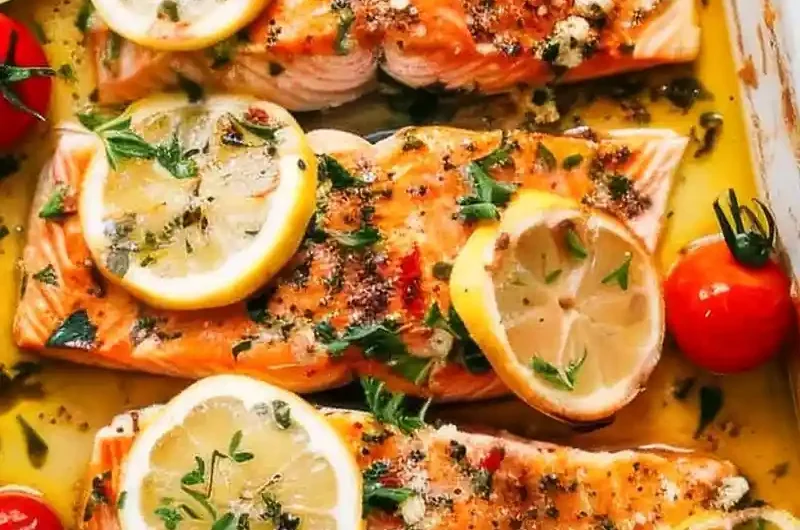
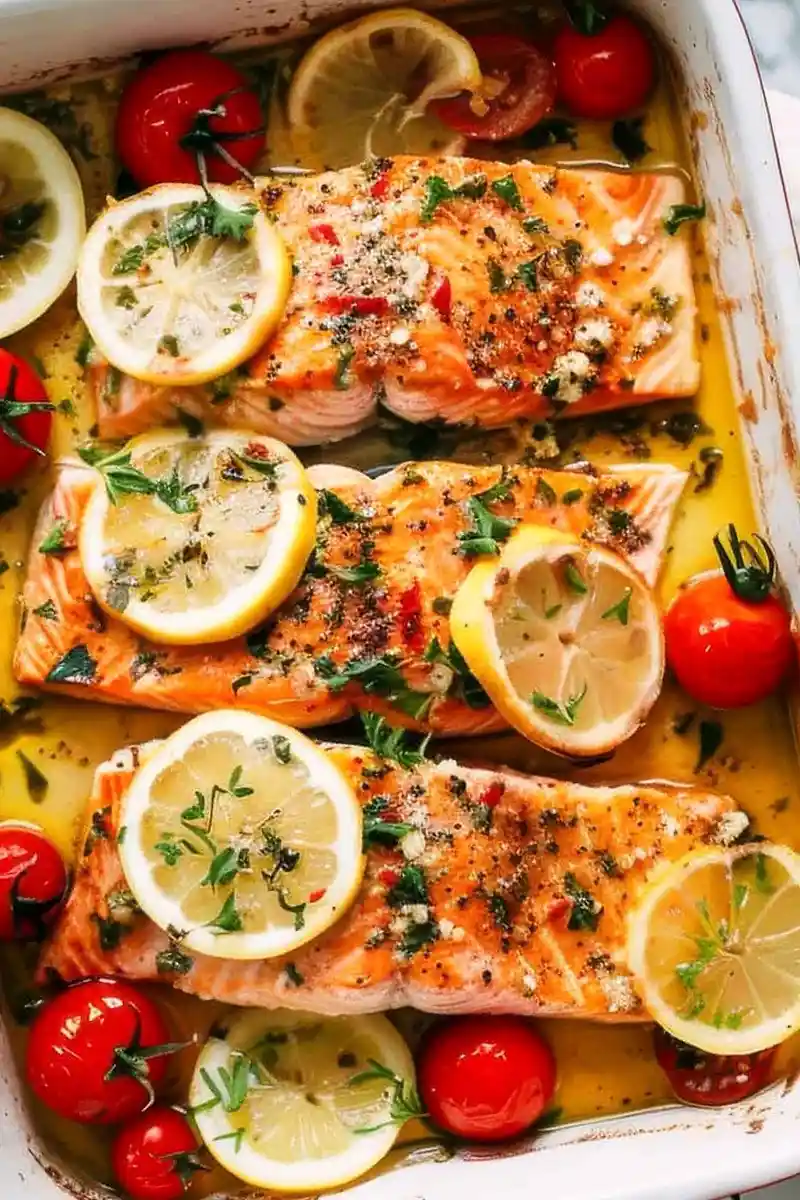
Enjoy a nutritious Mediterranean dinner with this simple one-pan salmon recipe. It combines zesty lemon, aromatic garlic, and roasted cherry tomatoes for a fresh and healthy meal. This dish is ready in under 30 minutes, making it an ideal choice for busy weeknights.
List of ingredients
- 4 salmon fillets (approximately 6 oz. each) – use center-cut for even cooking.
- 3 tablespoons olive oil – provides a healthy base for the marinade.
- Juice of 1 lemon – adds essential acidity and brightness.
- 2 cloves garlic (minced) – provides a robust aromatic flavor.
- 1 tablespoon fresh dill (chopped) – adds a classic Greek herby note.
- 1 teaspoon dried oregano (or Italian seasoning) – adds an earthy, savory depth.
- 1 cup cherry tomatoes – these burst and sweeten during roasting.
- Salt and pepper to taste – basic seasonings to enhance all flavors.
- Lemon slices, feta cheese, and Kalamata olives – used for final garnishing.
step-by-step instructions
- Prepare the pan and fish: Preheat your oven to 400°F (204°C). Pat the salmon fillets dry with paper towels and place them skin-side down on a baking pan lined with parchment paper. Scatter the cherry tomatoes around the salmon fillets on the pan.
- Create the marinade: In a small mixing bowl, whisk together the olive oil, lemon juice, minced garlic, chopped dill, dried oregano, salt, and pepper. Mix until the ingredients are well blended.
- Coat the ingredients: Brush or generously pour the prepared marinade over the salmon fillets, ensuring every piece is well-coated. Drizzle any remaining marinade over the cherry tomatoes.
- Bake the salmon: Transfer the baking pan to the preheated oven and bake for approximately 12-15 minutes. The salmon is done when it flakes easily with a fork and the tomatoes are slightly charred.
- Rest and serve: Remove the pan from the oven and allow the salmon to rest for 5 minutes. Serve the fillets on plates garnished with the roasted cherry tomatoes, fresh lemon slices, and Kalamata olives. Sprinkle with crumbled feta cheese before serving.
Oven Baking Mastery
Use a Meat Thermometer for Precision
To avoid overcooking, use an instant-read thermometer. For medium-rare salmon, aim for an internal temperature of 125°F (52°C). For medium, target 135°F (57°C), and for well-done, reach 145°F (63°C).
Patting Salmon Dry for Better Texture
Moisture on the surface of the fish creates steam, which can prevent the skin from crisping. Use heavy-duty paper towels to pat the fillets completely dry before adding the marinade. This ensures a better sear and a firmer texture.
Managing Oven Hot Spots
Every oven has areas that heat more quickly than others. If you notice one side of the pan browning faster, rotate the baking sheet halfway through the cooking time. This ensures all fillets and tomatoes cook uniformly.
Choosing the Right Baking Sheet
Use a rimmed baking sheet to prevent olive oil and tomato juices from leaking onto the oven floor. Lining the pan with parchment paper or silicone mats makes cleanup easier and prevents the fish from sticking to the metal.
Ingredient Selection and Substitutions
Selecting the Best Salmon Fillets
Choose fillets with consistent thickness to ensure they cook at the same rate. Fresh, wild-caught salmon often has a deeper color and a more robust flavor, while farmed salmon is typically richer in fat and more tender.
Replacing Fresh Dill
If fresh dill is unavailable, you can use dried dill, although you should reduce the quantity to one-third. Fresh parsley is another excellent alternative that provides a clean, green flavor compatible with Mediterranean profiles.
Using Different Tomato Varieties
Grape tomatoes are a great substitute for cherry tomatoes as they hold their shape slightly longer. If using Roma tomatoes, slice them into halves or quarters to ensure they roast through in the same time as the salmon.
Alternative Fish Options
This marinade works well with other firm white fish or oily fish. Try substituting salmon with trout for a milder taste or halibut for a denser, steak-like texture. Adjust baking times slightly based on the thickness of the alternative fillet.
Adding a Spicy Element
For those who prefer a bit of heat, add a pinch of red pepper flakes to the marinade. This adds a subtle warmth that complements the acidity of the lemon and the saltiness of the feta.
Serving Suggestions and Pairings
Pairing with Grains
Serve this Greek salmon alongside a fluffy rice pilaf or quinoa. These grains absorb the extra lemon-garlic juices from the pan, making them a flavorful accompaniment to the protein.
Fresh Salad Accompaniments
A traditional Greek salad with cucumbers, red onions, and bell peppers balances the richness of the salmon. The crisp, raw vegetables provide a refreshing contrast to the roasted elements of the dish.
Roasted Vegetable Pairings
Add sliced zucchini or asparagus to the baking sheet for a complete one-pan meal. Ensure these vegetables are cut into sizes that cook in roughly 15 minutes to match the salmon’s timing.
Plating for Presentation
Place the salmon fillet in the center of the plate and arrange the roasted tomatoes around it. Top with a slice of fresh lemon and a handful of olives to create a visually appealing, restaurant-style presentation.
Storage and Reheating Guide
Refrigerator Storage Duration
Store leftover salmon and tomatoes in an airtight container in the refrigerator. The dish will maintain its quality for 3 to 4 days when kept chilled.
Best Reheating Methods
To maintain the texture, reheat the salmon in a skillet over medium-low heat with a teaspoon of olive oil. Alternatively, use an air fryer at 350°F for 3-5 minutes to restore some of the surface crispness.
Avoiding Overcooking During Reheat
Salmon can become dry and rubbery if reheated too aggressively. If using a microwave, use a medium power setting and heat in 30-second intervals, covering the fish to trap moisture.
Freezing Leftovers
While possible, freezing cooked salmon can alter its texture, making it softer. If you choose to freeze it, wrap it tightly in foil and plastic wrap, and thaw it slowly in the fridge before reheating.
Make-Ahead Preparation
Preparing the Marinade in Advance
You can whisk the olive oil, lemon, garlic, and herbs together up to 24 hours in advance. Store the mixture in a glass jar in the refrigerator and shake well before applying to the fish.
Prepping the Veggies
Wash and dry your cherry tomatoes and slice your garnishes ahead of time. Keep the tomatoes in a sealed container to prevent them from drying out before they hit the oven.
Marinating the Salmon
Letting the salmon sit in the marinade for 10 to 30 minutes before baking allows the flavors to penetrate deeper. Do not marinate for several hours, as the acid in the lemon juice can begin to break down the proteins, making the fish mushy.
Troubleshooting Common Issues
Fixing Dry Salmon
If the salmon frequently comes out dry, reduce the baking time by 2 minutes. Always check for flakiness with a fork rather than relying solely on the timer, as fillet thickness varies.
Dealing with Burst Tomatoes
If you prefer your tomatoes whole, add them to the pan 5 minutes after the salmon has started cooking. If you like them heavily charred and burst, leave them in for the full duration.
Improving Marinade Adhesion
If the marinade slides off the fish, ensure the fillets are patted completely dry. You can also lightly season the fish with salt and pepper before applying the oil-based marinade to create a better bond.
Frequently Asked Questions
What type of salmon should I buy?
Opt for fresh or frozen fillets from a sustainable source. Center-cut fillets are recommended for this recipe because they provide a uniform thickness for even baking.
How do I know when the salmon is perfectly cooked?
The salmon is done when it reaches your desired internal temperature and the flesh flakes easily with a fork. It should change from a translucent raw look to an opaque pink.
Can I make this ahead of time?
Yes, you can prepare the marinade and prep the ingredients in advance. You can also cook the dish fully and store it in the fridge to be reheated later.
Can I use frozen salmon?
Absolutely, but ensure the fillets are thoroughly thawed in the refrigerator before cooking. Baking frozen salmon directly can lead to uneven cooking and excess water on the pan.
Print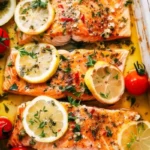
Easy Baked Greek Salmon
- Total Time: 25 minutes
- Yield: 4 servings 1x
- Diet: General
Description
This Greek salmon is the perfect Mediterranean recipe. With aromatic herbs, olive oil, and a zesty hint of lemon, and the sweetness of roasted tomatoes!
Ingredients
- 4 salmon fillets (approximately 6 oz. each)
- 3 tablespoons olive oil
- Juice of 1 lemon
- 2 cloves garlic (minced)
- 1 tablespoon fresh dill (chopped)
- 1 teaspoon dried oregano (or Italian seasoning)
- 1 cup cherry tomatoes
- Salt and pepper to taste
- Lemon slices, feta cheese and Kalamata olives for garnishing
Instructions
- Preparation of Salmon and Tomatoes: Preheat your oven to 400°F (204°C). Pat the salmon fillets dry using paper towels and place them skin-side down on a baking pan lined with parchment paper. Scatter the cherry tomatoes around the salmon fillets on the pan.
- Preparing the Marinade: In a small mixing bowl, combine the olive oil, lemon juice, minced garlic, chopped dill, dried oregano, salt, and pepper. Mix until all ingredients are well blended. Brush or generously pour the marinade over the salmon fillets, ensuring they are well-coated. Drizzle any remaining marinade over the cherry tomatoes.
- Baking the Salmon and Tomatoes: Transfer the baking pan into the preheated oven and bake the salmon and tomatoes for approximately 12-15 minutes. The salmon should easily flake with a fork, and the tomatoes should be slightly charred.
- Serving: Remove from the oven and allow the salmon to rest for 5 minutes. Serve the salmon fillets on plates, garnished with roasted cherry tomatoes, lemon slices, and Kalamata olives. Sprinkle with some feta.
Notes
The ideal internal temperature for medium-rare salmon is around 125°F (52°C). For medium, 135°F (57°C), and for well-done, 145°F (63°C). Store leftovers in an airtight container in the refrigerator for up to 3 days.
- Prep Time: 10 minutes
- Cook Time: 15 minutes
- Category: Dinner
- Method: Baking
- Cuisine: Greek
Nutrition
- Serving Size: 1 fillet
- Calories: 345 kcal
- Sugar: 1 g
- Sodium: 80 mg
- Fat: 21 g
- Saturated Fat: 3 g
- Unsaturated Fat: 16 g
- Trans Fat: 0 g
- Carbohydrates: 2 g
- Fiber: 1 g
- Protein: 34 g
- Cholesterol: 94 mg
Keywords: Greek salmon, baked salmon, Mediterranean dinner, sheet pan salmon, healthy seafood