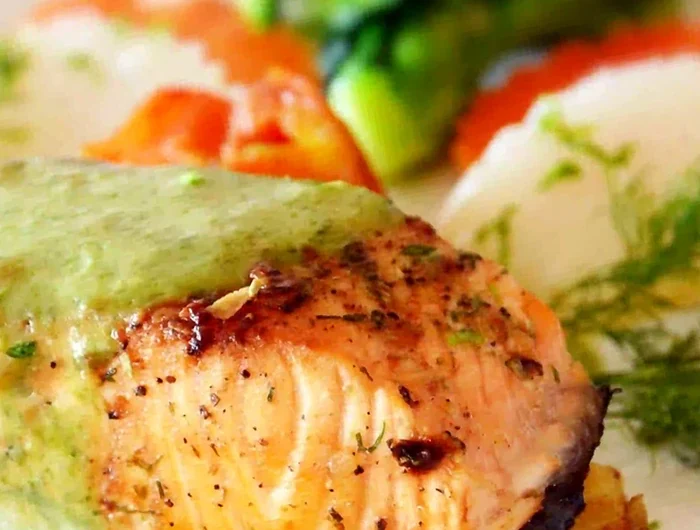
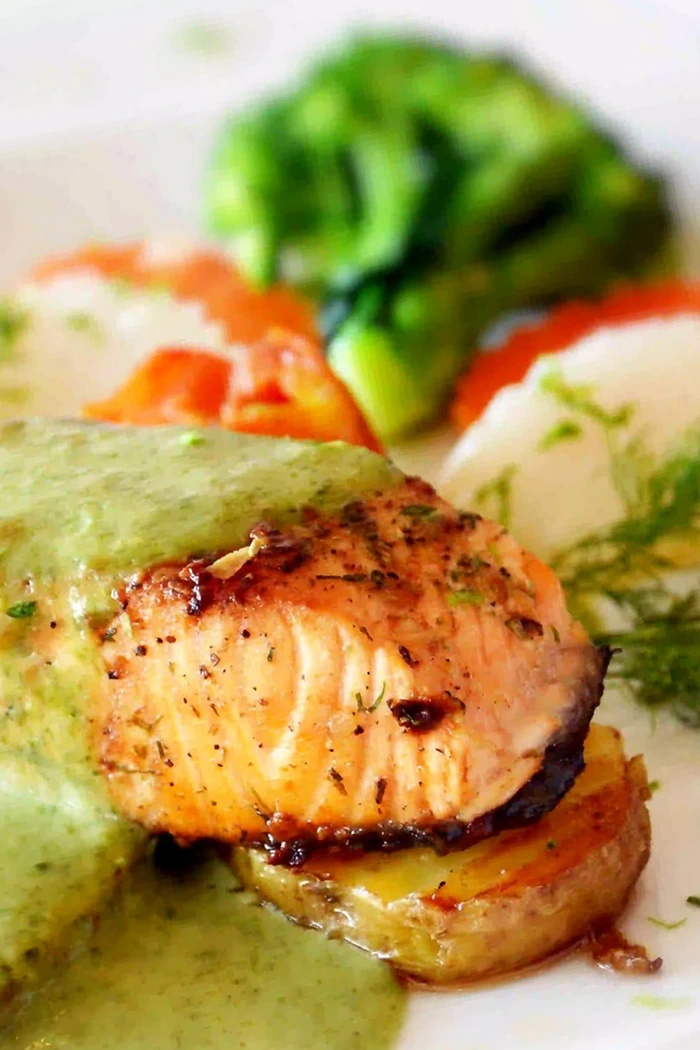
This nutrient-dense meal combines flaky pan-seared fillets with a zesty, smooth avocado topping. It is an efficient option for healthy weeknight dinners that requires minimal prep time.
List of ingredients
- 2 avocado – ripe and softened.
- 1 lime – used for fresh juice.
- 2 garlic clove – minced finely.
- 1 teaspoon salt – divided for sauce and fish.
- 1/2 teaspoon black pepper – divided for sauce and fish.
- 1/2 teaspoon smoked paprika – for color and smoky flavor.
- 2 tablespoon olive oil – for searing the fillets.
- 1/2 cup sour cream – provides thickness and tang.
- 1 1/2 lb salmon fillet – skin-on for best results.
step-by-step instructions
- Prepare the avocado cream: Halve and pit the avocados. Scoop the avocado flesh into a food processor. Juice the lime and mince the garlic cloves. Add the lime juice, minced garlic, sour cream, 1/2 teaspoon of salt, and 1/4 teaspoon of black pepper to the food processor. Blend until smooth and creamy.
- Season the salmon: Season both sides of the salmon fillets with the remaining 1/2 teaspoon of salt, 1/4 teaspoon of black pepper, and smoked paprika.
- Cook the salmon: Heat the olive oil in a large skillet over medium-high heat. Add the seasoned salmon fillets to the skillet, skin-side down. Cook for 4-5 minutes, or until the skin is crispy and the fish easily releases from the pan. Flip the fillets and cook for an additional 2-3 minutes, or until the salmon is cooked through and easily flakes with a fork.
- Serve: Serve the salmon fillets hot, topped with a generous dollop of the avocado cream.
Guide to Selecting Quality Salmon
Choosing Between Wild and Farmed Salmon
Wild salmon typically has a deeper red color and a more robust flavor. Farmed salmon often has more fat marbling, which can make the fillets more forgiving during the pan-searing process as they are less likely to dry out.
Identifying Freshness by Sight and Smell
Look for fillets with a bright, consistent color and no dull grey patches. The flesh should feel firm to the touch and spring back immediately when pressed. Fresh salmon should smell like the ocean, not fishy or sour.
Selecting the Right Cut
Center-cut fillets provide a uniform thickness, ensuring the fish cooks evenly across the entire piece. If using a tail piece, reduce the cooking time slightly to prevent the thinner end from overcooking.
Perfecting the Avocado Cream
Testing Avocado Ripeness
Gently squeeze the avocado in the palm of your hand. It should yield slightly to pressure but not feel mushy. If the stem nub pops off easily to reveal green underneath, it is ready for use.
Achieving a Smooth Texture
Use a food processor or high-speed blender to ensure no lumps remain. If the mixture is too thick, add a teaspoon of water or extra lime juice to reach your desired consistency.
Preventing Sauce Discoloration
The citric acid in the lime juice acts as a natural preservative that slows down browning. Keep the sauce in an airtight container with plastic wrap pressed directly onto the surface to block out air.
Advanced Pan-Searing Techniques
Managing Pan Temperature
Wait until the olive oil shimmers or slightly wisps before adding the fish. If the oil is too cold, the skin will stick to the pan; if it is too hot, the spices will burn before the fish cooks through.
Ensuring Crispy Skin
Press down lightly on the fillets with a spatula for the first 30 seconds of cooking. This ensures the entire surface of the skin maintains contact with the heat, resulting in an even, golden-brown crust.
Identifying the Natural Release Point
Do not force the salmon to flip. Once the skin has properly seared and developed a crust, the fillet will naturally release from the pan surface without sticking.
Determining the Correct Doneness
Use a fork to gently press the top of the fillet. If the flesh flakes easily along the natural lines, it is done. For precise results, use a meat thermometer to hit an internal temperature of 145 degrees Fahrenheit.
Ingredient Substitutions
Dairy-Free Cream Options
Replace sour cream with an equal amount of plain Greek yogurt for a higher protein version. For a vegan option, use a cashew-based cream or a thick coconut cream.
Alternative Citrus Choices
If lime is unavailable, lemon juice provides a similar acidity that cuts through the richness of the avocado. For a sweeter profile, a small amount of orange juice can be mixed with lemon.
Replacing Smoked Paprika
Sweet paprika can be used for color without the smoke flavor. If you want a bit of heat, a pinch of cayenne pepper or chili powder can be added to the seasoning mix.
Recommended Side Dish Pairings
Roasted Root Vegetables
Carrots or parsnips roasted with honey and thyme complement the richness of the avocado cream. Their natural sweetness balances the tang of the lime and sour cream.
Nutrient-Dense Grain Bases
Serve the salmon over a bed of fluffy quinoa or wild rice. These grains absorb the extra sauce and add a nutty flavor and satisfying texture to the plate.
Fresh Green Vegetables
Steamed asparagus or sautéed spinach provides a crisp contrast to the tender fish. A squeeze of fresh lemon over the greens helps tie the components together.
Storage and Preservation
Storing Cooked Salmon
Place leftover salmon in a shallow, airtight container and refrigerate immediately. Cooked salmon remains safe to eat for three to four days when stored at 40 degrees Fahrenheit or below.
Preserving Avocado Sauce
Store the sauce in a glass jar with a tight lid. Since avocado oxidizes quickly, only blend what you plan to use within 48 hours for the best flavor and color.
Reheating Instructions
Avoid using a microwave, which can make the fish rubbery. Instead, warm the salmon in a 275-degree Fahrenheit oven for 10-15 minutes, then add the cold avocado cream fresh on top.
Troubleshooting Common Issues
Handling Sticking Fish
If the salmon sticks to the pan, it usually means the pan wasn’t hot enough or the skin was damp. Pat the skin completely dry with paper towels before seasoning and adding to the oil.
Fixing a Bitter Sauce
Bitterness in the sauce often comes from over-processing the garlic or using an under-ripe avocado. Balance the flavor by adding a tiny pinch of sugar or a small amount of honey.
Preventing Overcooked Fillets
Remove the salmon from the heat just before it reaches your desired doneness. Carry-over cooking will continue to raise the internal temperature for a few minutes after it leaves the pan.
Frequently Asked Questions
Can I use frozen salmon fillets?
Yes, but ensure they are completely thawed and patted dry before seasoning. Cooking frozen fillets directly from the freezer often results in uneven cooking and soggy skin.
Is it necessary to leave the skin on?
The skin protects the delicate flesh from the direct heat of the pan, preventing it from drying out. While you can remove it, the skin-on method produces a better texture.
Can I make the avocado cream in advance?
You can prepare the cream up to 24 hours ahead. Ensure it is stored with minimal air exposure to keep the green color vibrant.
What if my avocados are too firm?
Place firm avocados in a brown paper bag with a banana or apple for 24-48 hours. This traps ethylene gas, which speeds up the ripening process.
How do I prevent the garlic from burning?
In this recipe, the garlic is blended into the cold sauce rather than sautéed, which eliminates the risk of burning. If you choose to sauté it, add it only in the last minute of cooking.
Print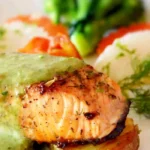
Pan-Seared Salmon with Creamy Avocado Sauce
- Total Time: 30 minutes
- Yield: 4 servings 1x
- Diet: Gluten-Free
Description
This delicious and healthy salmon dish features tender, flaky fish fillets topped with a creamy, rich avocado sauce.
Ingredients
- 2 avocado
- 1 lime
- 2 garlic clove
- 1 teaspoon salt
- 1/2 teaspoon black pepper
- 1/2 teaspoon smoked paprika
- 2 tablespoon olive oil
- 1/2 cup sour cream
- 1 1/2 lb salmon fillet
Instructions
- Step: Halve and pit the avocados. Scoop the avocado flesh into a food processor. Juice the lime and mince the garlic cloves. Add the lime juice, minced garlic, sour cream, 1/2 teaspoon of salt, and 1/4 teaspoon of black pepper to the food processor. Blend until smooth and creamy.
- Step: Season both sides of the salmon fillets with the remaining 1/2 teaspoon of salt, 1/4 teaspoon of black pepper, and smoked paprika.
- Step: Heat the olive oil in a large skillet over medium-high heat. Add the seasoned salmon fillets to the skillet, skin-side down. Cook for 4-5 minutes, or until the skin is crispy and the fish easily releases from the pan. Flip the fillets and cook for an additional 2-3 minutes, or until the salmon is cooked through and easily flakes with a fork.
- Step: Serve the salmon fillets hot, topped with a generous dollop of the avocado cream.
Notes
The salmon is seasoned with simple spices and pan-seared to perfection, while the avocado cream adds a delightful tang and creaminess to the dish.
- Prep Time: 15 minutes
- Cook Time: 15 minutes
- Category: Lunch
- Method: Pan-searing
- Cuisine: American
Nutrition
- Serving Size: 1 serving
- Calories: 590 kcal
- Sugar: 1 g
- Sodium: 600 mg
- Fat: 44 g
- Saturated Fat: 10 g
- Unsaturated Fat: 34 g
- Trans Fat: 0 g
- Carbohydrates: 12 g
- Fiber: 4 g
- Protein: 35 g
- Cholesterol: 100 mg
Keywords: salmon, avocado cream, pan-seared salmon, healthy lunch