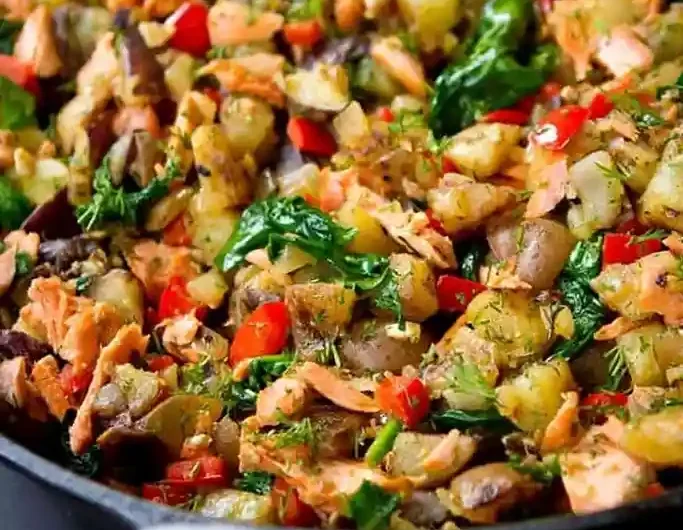
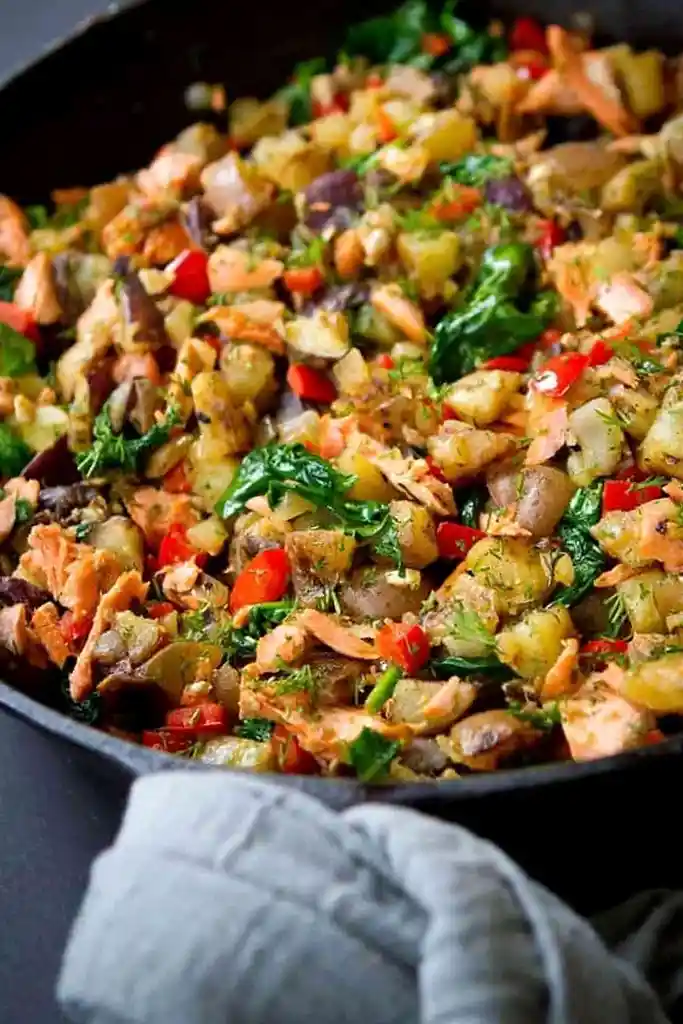
This nutrient-dense skillet hash combines flaky salmon, crispy potatoes, and fresh greens for a complete meal. It serves as a balanced option for a hearty brunch or a light dinner.
List of ingredients
- 1 1/2 pounds Creamer potatoes – cut into 1/2-inch dice
- 1/2 pounds salmon fillets – skin on or off
- 1/8 teaspoon salt – for seasoning the salmon
- 1/8 teaspoon ground pepper – for seasoning the salmon
- 2 1/2 teaspoon canola oil – divided for various stages
- 1/2 yellow onion – diced for aromatic base
- 1 red bell pepper – diced for sweetness and color
- 3 garlic cloves – minced
- 2 cups spinach – fresh leaves
- 2 tablespoons minced fresh dill – for bright herbal notes
- 1/2 teaspoon salt – for final seasoning
- 1/2 teaspoon ground pepper – for final seasoning
step-by-step instructions
- Parboil Potatoes: Bring a large saucepan of lightly salted water to a boil over high heat. Add the diced potatoes and cook until just tender, approximately 6 to 8 minutes, then drain thoroughly.
- Sear Salmon: Season the salmon with 1/8 teaspoon salt and 1/8 teaspoon ground pepper. Heat 1 teaspoon canola oil in a large skillet, preferably cast-iron, over medium-high heat. Add the salmon skin side down if applicable and cook until opaque about 3/4 of the way up the fish, about 5 minutes. Flip the fish and cook for an additional 2 minutes. Transfer to a plate and break into pieces once cool enough to handle.
- Sauté Aromatics: Add 1/2 teaspoon oil to the same skillet and add the diced onion and red bell pepper. Cook until tender, about 4 to 5 minutes. Stir in the minced garlic and cook for 1 minute more.
- Brown Potatoes: Add the remaining 1 teaspoon of oil and stir in the parboiled potatoes. Cook, stirring occasionally, until the potatoes start to brown, about 8 to 10 minutes.
- Combine and Finish: Stir in the flaked salmon, spinach, minced dill, 1/2 teaspoon salt, and 1/2 teaspoon ground pepper. Cook until the spinach is just wilted, then serve immediately.
Potato Preparation and Cooking Techniques
Selecting the Best Potato Varieties
Creamer potatoes are ideal for this hash because they maintain their shape while offering a buttery texture. Their small size allows for quick, uniform dicing which ensures they cook evenly in the skillet. You can also use baby red potatoes or Yukon Gold for similar results.
Achieving Consistent Dice Sizes
Cutting potatoes into uniform 1/2-inch cubes is critical for consistent browning. If the pieces vary in size, smaller pieces will overcook and mush while larger pieces remain raw in the center. Use a sharp chef’s knife and a stable cutting board to maintain precision.
The Role of Parboiling
Parboiling the potatoes for 6 to 8 minutes softens the interior starch before they hit the hot oil. This step ensures the inside is fully cooked through without needing to over-brown the exterior. It significantly reduces the total frying time in the skillet.
Drying Potatoes Before Searing
After draining the parboiled potatoes, let them steam-dry for a few minutes. Excess surface moisture creates steam in the pan, which prevents the potatoes from developing a golden-brown crust. Patting them dry with a paper towel can further enhance the crispiness.
Salmon Searing Strategies
Optimizing the Salmon Sear
Using a medium-high heat setting is essential for creating a proper sear on the salmon. The oil should be shimmering before the fish is added to prevent sticking and ensure a golden exterior. Avoid overcrowding the pan to maintain a high surface temperature.
Managing the Salmon Skin
Starting with the skin side down allows the fat in the skin to render, protecting the flesh from direct heat. Pressing down gently on the fillet for the first 30 seconds ensures maximum skin contact with the pan. This results in a crispier texture and better flavor.
Preventing Overcooked Fish
Salmon continues to cook after being removed from the heat due to carry-over cooking. Removing the fillets when they are nearly opaque prevents the fish from becoming dry or rubbery. Breaking the fish into pieces after it has rested slightly helps preserve the moist flakes.
Properly Flaking the Salmon
Use a fork or your fingers to break the cooked salmon into bite-sized chunks. Avoid over-mixing the fish into the hash to keep distinct pieces of salmon visible in the final dish. This preserves the textural contrast between the flaky fish and crispy potatoes.
Vegetable and Herb Integration
Developing Flavor with Aromatics
Sautéing the onion and red bell pepper before adding the potatoes allows the natural sugars to caramelize. This creates a savory foundation that enhances the overall taste of the hash. Cooking them until tender ensures there are no raw vegetable notes in the finished meal.
Adding Red Bell Peppers for Balance
Red bell peppers provide a mild sweetness that offsets the saltiness of the salmon and potatoes. They also add vibrant color to the dish, making the presentation more appealing. Ensure the dice size of the pepper matches the onion for uniform cooking.
Wilting Spinach Correctly
Spinach should be added at the very end of the cooking process. Because it has a high water content and delicate leaves, it only requires a minute or two of heat to wilt. Overcooking spinach leads to a slimy texture and a loss of bright green color.
Maximizing Fresh Dill Flavor
Fresh dill provides a lemony, herbaceous brightness that pairs naturally with salmon. Adding the minced dill at the final stage prevents the delicate oils from evaporating under high heat. This ensures the herbal flavor remains prominent in every bite.
Kitchen Tool Recommendations
Benefits of Cast-Iron Skillets
A cast-iron skillet is highly recommended for this recipe due to its superior heat retention. It distributes heat evenly and creates a more consistent brown crust on the potatoes than non-stick pans. Once properly seasoned, it provides a natural non-stick surface for searing fish.
Using Stainless Steel Alternatives
If you do not have cast iron, a heavy-bottomed stainless steel skillet is a viable alternative. Stainless steel allows for excellent searing, though it requires careful temperature management to prevent the salmon from sticking. Use a slightly higher amount of oil if necessary.
Selecting Heat-Resistant Spatulas
Use a wide metal or high-heat silicone spatula to flip the salmon and stir the potatoes. A wide surface area makes it easier to flip the fillets without breaking them. For the potatoes, a spatula that can scrape the bottom of the pan helps incorporate the browned bits of onion and garlic.
Recipe Customizations and Variations
Substituting Different Leafy Greens
If spinach is unavailable, kale or Swiss chard are excellent alternatives. Kale requires a longer cooking time than spinach, so add it a few minutes earlier in the process. These greens offer a heartier texture that stands up well to the chunky potatoes.
Using Alternative Fresh Herbs
While dill is classic, fresh parsley or chives also work well with this flavor profile. Parsley adds a clean, peppery finish, while chives provide a mild onion-like depth. You can use a combination of these herbs for a more complex aromatic profile.
Replacing Canola Oil with Other Fats
Avocado oil or grapeseed oil are great substitutes for canola oil because they have high smoke points. These oils allow you to sear the salmon and brown the potatoes at high temperatures without the oil breaking down. Avoid using extra virgin olive oil for the high-heat searing phases.
Adding Protein Toppings
To turn this into a full breakfast, top the salmon hash with a poached or over-easy egg. The runny yolk creates a rich sauce that complements the crispy potatoes and flaky fish. This addition increases the protein content and adds a creamy element to the dish.
Storage and Reheating Methods
Refrigeration and Shelf Life
Store leftover salmon potato hash in an airtight container in the refrigerator for up to three days. Ensure the dish is completely cooled before sealing the lid to prevent excess moisture from building up. This moisture can make the potatoes soggy during storage.
Restoring Crispiness During Reheating
Avoid using a microwave for reheating, as it can make the potatoes soft and the salmon rubbery. Instead, reheat the hash in a skillet over medium heat with a teaspoon of oil. This allows the potatoes to regain their crisp exterior and the salmon to warm through gently.
Avoidance of Freezing Salmon Hash
Freezing is not recommended for this dish because the texture of the parboiled potatoes changes significantly. Upon thawing, the potatoes often become grainy or mealy. Additionally, the cooked spinach may release excessive water, affecting the overall consistency.
Troubleshooting Common Issues
Correcting Mushy Potatoes
If the potatoes are too soft, you may have over-boiled them during the parboiling stage. To fix this, increase the skillet heat and cook them longer without stirring too frequently. This allows a harder crust to form, which helps mask the soft interior.
Preventing Garlic from Burning
Garlic burns much faster than onions and peppers, becoming bitter if overheated. Always add the minced garlic after the other vegetables have already softened. Cooking it for only one minute ensures the aroma is released without scorching the cloves.
Managing Oil Splatter
Searing salmon can cause oil splatter if the fish is too wet. Pat the fillets completely dry with paper towels before seasoning and placing them in the pan. Using a skillet with slightly higher sides can also help contain the oil during the high-heat phase.
Frequently Asked Questions
Can I use frozen salmon?
Yes, but you must thaw the salmon completely in the refrigerator and pat it dry before searing. Cooking frozen salmon directly in the pan will release too much water, preventing a proper sear and steaming the fish instead.
Can I use frozen diced potatoes?
Frozen diced potatoes can be used as a shortcut to the parboiling step. Sauté them directly in the skillet over medium-high heat until browned, then proceed with the rest of the recipe. Note that the texture may be slightly different than fresh creamer potatoes.
How can I make this dish spicier?
To add heat, stir in a pinch of red pepper flakes when sautéing the garlic. Alternatively, you can drizzle the finished dish with Sriracha or a dash of cayenne pepper for an extra kick. Freshly sliced jalapeños added with the bell peppers also provide a spicy crunch.
Print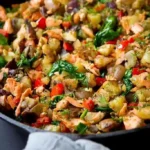
Hearty Salmon and Potato Skillet Hash
- Total Time: 35 minutes
- Yield: 6 cups 1x
- Diet: Gluten Free
Description
Serve up this flavorful and healthy Skillet Salmon Potato Hash with a green salad for brunch or a light dinner.
Ingredients
- 1 1/2 pounds Creamer potatoes, cut into 1/2-inch dice
- 1/2 pounds salmon fillets
- 1/8 teaspoon salt
- 1/8 teaspoon ground pepper
- 2 1/2 teaspoon canola oil, divided
- 1/2 yellow onion, diced
- 1 red bell pepper, diced
- 3 garlic cloves, minced
- 2 cups spinach
- 2 tablespoons minced fresh dill
- 1/2 teaspoon salt
- 1/2 teaspoon ground pepper
Instructions
- Boil: Bring a large saucepan of lightly salted water to a boil over high heat. Add the diced potatoes and cook until just tender, 6 to 8 minutes. Drain.
- Sear: Season the salmon with 1/8 teaspoon salt and 1/8 teaspoon ground pepper. Heat 1 teaspoon canola oil in a large skillet set over medium-high heat. Add the salmon (skin side down if it has skin) and cook until the fish is opaque about 3/4 of the way up the fish, about 5 minutes. Flip the fish and cook for 2 minutes. Transfer to a plate and break up into pieces.
- Sauté: Add 1/2 teaspoon oil to the skillet, and add the onion and pepper. Cook until tender, 4 to 5 minutes. Add the garlic and cook for 1 minute.
- Brown: Add the remaining 1 teaspoon oil and stir in the potatoes. Cook, stirring occasionally, until the potatoes start to brown, 8 to 10 minutes.
- Combine: Stir in the salmon, spinach, dill, 1/2 teaspoon salt and 1/2 teaspoon ground pepper, until the spinach is just wilted. Serve.
Notes
A hot skillet, preferably cast-iron, is recommended for the best browning power. Boiling the diced potatoes until just tender before browning is the key to a great hash.
- Prep Time: 10 minutes
- Cook Time: 25 minutes
- Category: Breakfast, Entrees
- Method: Skillet
- Cuisine: American
Nutrition
- Serving Size: 1 cup
- Calories: 174.5 kcal
- Sugar: 3.2 g
- Sodium: 273.1 mg
- Fat: 4.8 g
- Saturated Fat: 0.8 g
- Unsaturated Fat: 4.0 g
- Trans Fat: 0 g
- Carbohydrates: 20.2 g
- Fiber: 3 g
- Protein: 13.3 g
- Cholesterol: 21.5 mg
Keywords: Gluten Free, Salmon, Potato Hash, Brunch