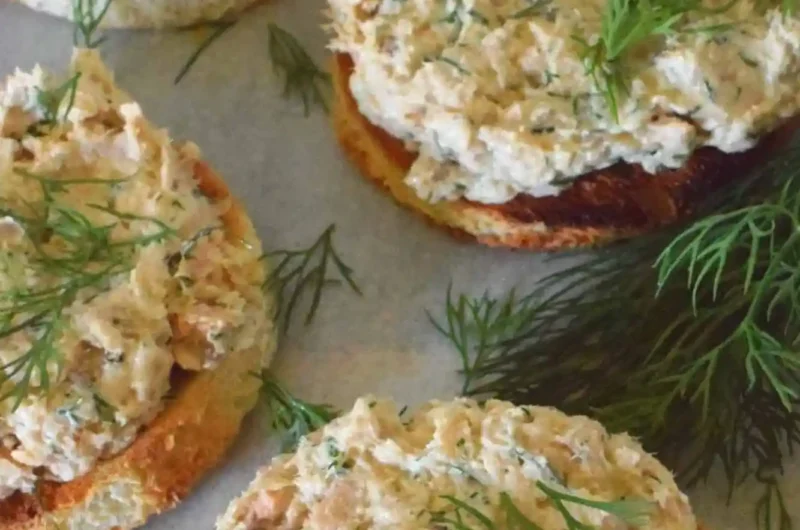
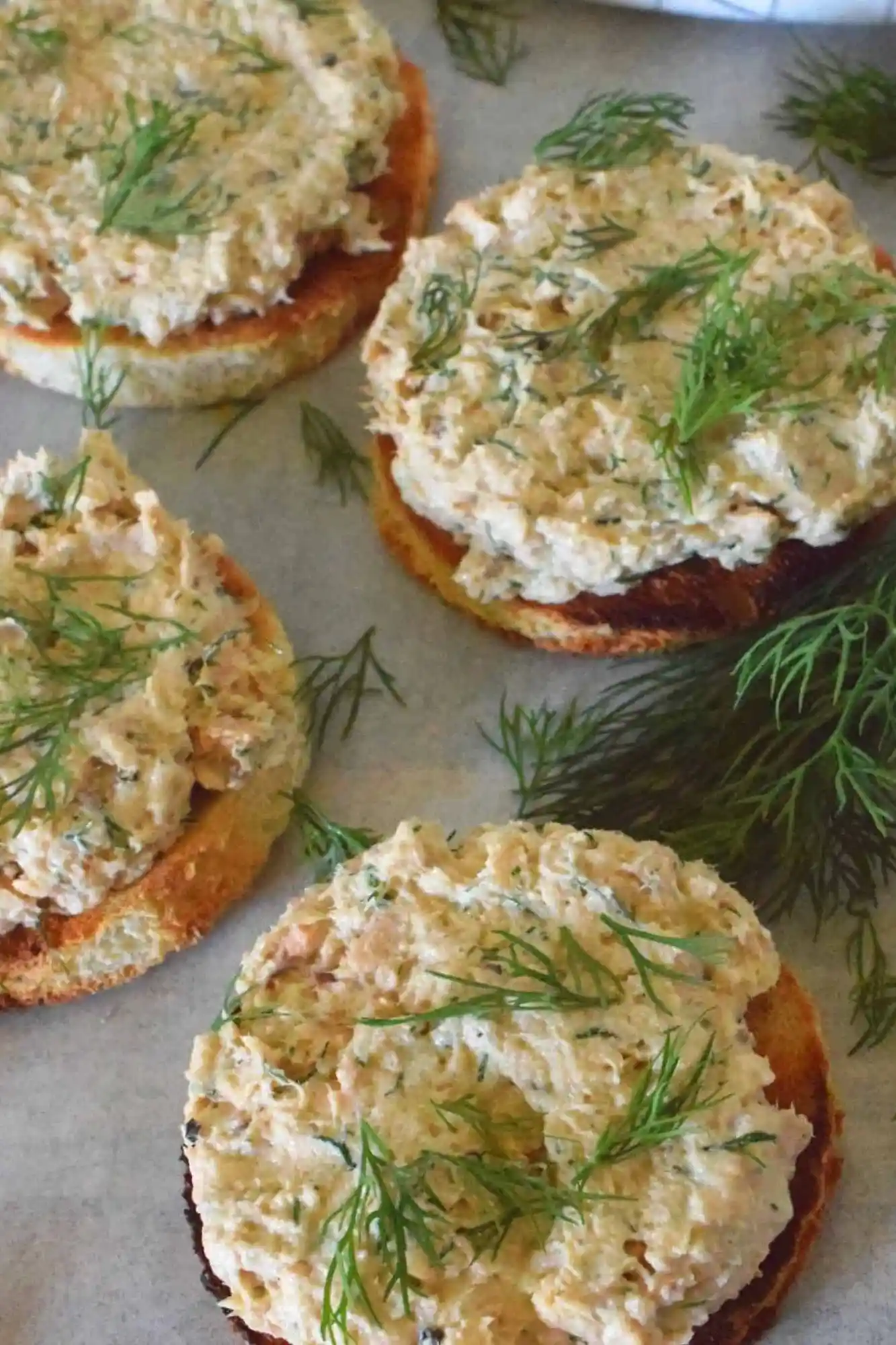
This protein-rich salmon salad is a quick pantry-based meal that works perfectly for lunches or light dinners. It is specifically designed to be served as an open-faced sandwich on hearty toast for maximum texture.
List of ingredients
- 2 cans salmon, drained and bones removed (roughly 416 grams or 16 ounces) – use pink or red canned salmon.
- 1/3 cup mayonnaise – provides the creamy base and binding.
- 1/2 cup chopped fresh dill – adds a bright, herbal finish.
- 1/2 teaspoon dry mustard – provides a sharp, tangy depth.
- 1/4 teaspoon ground black pepper – for basic seasoning.
step-by-step instructions
- Flake the fish: Add the drained salmon to a mixing bowl and use a fork to flake the meat into smaller pieces. Set this bowl aside.
- Prepare the dressing: In a separate bowl, whisk together the mayonnaise, chopped fresh dill, dry mustard, and black pepper until smooth.
- Combine: Pour the mayonnaise mixture over the flaked salmon and stir gently until the fish is evenly coated.
- Chill: Cover the bowl tightly and place it in the refrigerator for one hour to allow the flavors to meld.
- Serve: Smear the chilled salmon salad liberally onto toasted bread and garnish with additional fresh dill.
Optimizing Salmon Preparation
Removing Bones and Skin Thoroughly
To ensure a smooth texture, carefully sift through the drained salmon with a fork. Gently lift out the main spinal bone and any smaller rib bones before flaking the meat. While these bones are soft and edible, removing them ensures a consistent consistency for those who prefer it.
Draining the Canned Liquid
Drain the cans thoroughly using a fine-mesh strainer or by pressing the lid down firmly. Excess liquid can make the mayonnaise dressing slide off the fish, resulting in a watery salad. A dry base allows the dressing to adhere better to each flake of salmon.
Managing Salmon Texture
Avoid over-mixing the salmon after adding the dressing. Stir with a folding motion to keep some of the larger chunks intact. Over-working the mixture can turn the salad into a paste rather than a flaky salad.
Herb and Seasoning Guidelines
The Importance of Fresh Dill
Fresh dill provides a crisp, citrusy flavor that is essential to this recipe. The volatile oils in fresh dill are more potent and vibrant than those found in dried versions. It acts as a primary flavor profile rather than just a garnish.
Substituting Dried Dill Weed
If fresh dill is unavailable, use 6 to 8 level teaspoons of dried dill weed. Avoid using dill seed, as the flavor is entirely different and more pungent. Start with a smaller amount and taste frequently, as dried herbs concentrate the flavor.
Balancing the Dry Mustard
Dry mustard is more concentrated than prepared mustard. Ensure it is whisked thoroughly into the mayonnaise to avoid small, bitter clumps of powder. If the tang is too strong, add an extra tablespoon of mayonnaise to mellow the flavor.
Bread and Serving Suggestions
Selecting Hearty Grains
Choose a substantial bread like rye, multi-grain, or a seed-heavy loaf to support the weight of the salmon. Breads containing oats, flax, or sunflower seeds provide a nutty contrast to the creamy salad. Avoid very soft white breads which may collapse under the moisture of the salad.
Achieving the Perfect Toast
Toast the bread until it is deeply browned and rigid. This structural integrity is necessary for the open-faced style of serving. Let the toast cool slightly before applying the salmon to prevent the mayonnaise from melting and soaking into the bread.
Creating Round Toast Rounds
Use a large circular pastry cutter or a wide-mouthed glass to cut the bread into uniform circles. This creates a professional presentation for an open-faced sandwich. Toast these rounds evenly on a baking sheet or in a toaster oven.
Low-Carb Serving Alternatives
For a grain-free option, scoop the salmon salad into hollowed-out cucumber boats or large romaine lettuce leaves. Celery stalks also serve as an excellent vessel for this mixture. These options maintain the crunch without the need for toasted bread.
Customizing the Salmon Salad
Adding Textural Crunch
Incorporate finely diced celery or red onion for added snap. These vegetables provide a refreshing contrast to the richness of the mayonnaise. Ensure the dice is very small so it distributes evenly throughout the salad.
Incorporating Acidic Elements
Add a teaspoon of fresh lemon juice or a splash of apple cider vinegar to brighten the flavor. The acidity cuts through the fat of the mayonnaise and enhances the flavor of the salmon. This is especially helpful if you are using a very rich brand of mayo.
Replacing Mayonnaise with Greek Yogurt
For a tangier, higher-protein version, substitute half or all of the mayonnaise with plain Greek yogurt. This reduces the overall fat content while adding a natural creaminess. You may need to add a pinch more salt to compensate for the lack of sodium in yogurt.
Storage and Freshness
Refrigeration Requirements
Store the salmon salad in an airtight glass or plastic container to prevent it from absorbing other smells from the fridge. Ensure the container is sealed tightly to maintain moisture levels. Keep it in the coldest part of the refrigerator, away from the door.
Maximum Shelf Life
This salad is best consumed within three to five days of preparation. Because it contains mayonnaise and fish, it is highly perishable. If the salad develops a sour smell or the color changes, discard it immediately.
Preventing Oxidation
Press a piece of plastic wrap directly onto the surface of the salad before sealing the lid. This eliminates the air gap and prevents the top layer from drying out or oxidizing. This technique keeps the fresh dill looking vibrant for longer.
Troubleshooting Common Issues
Fixing a Watery Consistency
If the salad is too loose, stir in an extra tablespoon of mayonnaise or a teaspoon of Greek yogurt. This usually happens if the salmon was not drained sufficiently. You can also strain the final mixture through a coarse sieve to remove excess moisture.
Correcting Over-Seasoning
If the black pepper or mustard is too dominant, increase the volume of the base. Adding more flaked salmon or a bit more mayonnaise will dilute the concentrated flavors. A small amount of honey or maple syrup can also balance excessive bitterness from mustard.
Handling Salmon Smell
To minimize the strong scent of canned salmon, ensure the fresh dill is generously applied. The herbal notes of dill naturally neutralize the fishy aroma. Chilling the salad for the full hour is also critical for this aromatic balance.
Frequently Asked Questions
Can I use fresh cooked salmon instead of canned?
Yes, you can use poached or grilled salmon. Simply cook the fillet, let it cool completely, and flake it with a fork before following the rest of the recipe steps.
Is this recipe suitable for freezing?
No, this salad should not be frozen. The mayonnaise will separate and break during the freezing and thawing process, resulting in an oily and unappealing texture.
What other herbs can I use if I dislike dill?
Fresh parsley or chives are the best alternatives. Parsley provides a clean, grassy taste, while chives add a mild onion-like flavor that complements the salmon well.
Can I make this without any mayonnaise?
You can replace the mayonnaise with mashed avocado or a blend of olive oil and lemon juice. However, the texture will be less creamy and will not hold together as firmly on the toast.
Do I have to remove all the bones?
The bones in canned salmon are soft and safe to eat, providing extra calcium. Removing them is a matter of personal preference regarding texture rather than safety.
How do I keep the dill from wilting?
Chop the dill immediately before adding it to the dressing. If you are preparing the salad in advance, keep extra garnish dill in a damp paper towel inside a sealed bag in the fridge.
What is the best type of canned salmon to buy?
Wild-caught pink or sockeye salmon usually offers the best flavor and texture. Look for brands that use salt as the only preservative to keep the flavor clean.
Can I add capers to this recipe?
Yes, adding a tablespoon of drained capers adds a salty, briny pop that pairs well with salmon. Just reduce the amount of added salt or mustard to maintain balance.
How can I make the salad creamier without more mayo?
Stir in a tablespoon of cream cheese or sour cream. This adds a rich, velvety texture without the specific flavor profile of mayonnaise.
Can I serve this cold or at room temperature?
It is best served cold, straight from the refrigerator. This ensures the mayonnaise remains stable and the flavors stay crisp, especially when placed on hot toast.
Print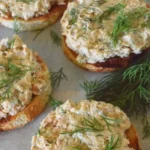
Canned Salmon Salad
- Total Time: 1 hour 20 minutes
- Yield: 8 servings 1x
- Diet: General
Description
Canned Salmon Salad never tasted this good before! Prepared with lots of fresh dill and liberally smeared onto toasted bread, this is one open-faced sandwich I could eat again and again!
Ingredients
- 2 cans salmon, drained and bones removed (roughly 416 grams or 16 ounces)
- 1/3 cup mayonnaise
- 1/2 cup chopped fresh dill
- 1/2 teaspoon dry mustard
- 1/4 teaspoon ground black pepper
Instructions
- Step 1: Add the salmon to a bowl and use a fork to flake it. Set aside.
- Step 2: In another bowl, whisk together the remaining ingredients.
- Step 3: Add the mayonnaise mixture to the salmon and stir to combine.
- Step 4: Cover and refrigerate for one hour.
- Step 5: When ready, smear liberally on toast and garnish with extra fresh dill.
Notes
Nutritional information does not account for the bread.
- Prep Time: 20 minutes
- Cook Time: 0 minutes
- Category: Main Course
- Method: Mixing
- Cuisine: North American
Nutrition
- Serving Size: 1 serving
- Calories: 124 kcal
- Sugar: 1 g
- Sodium: 223 mg
- Fat: 9 g
- Saturated Fat: 1 g
- Unsaturated Fat: 8 g
- Trans Fat: 0 g
- Carbohydrates: 1 g
- Fiber: 1 g
- Protein: 10 g
- Cholesterol: 39 mg
Keywords: canned salmon salad, fresh dill, open-faced sandwich, salmon salad