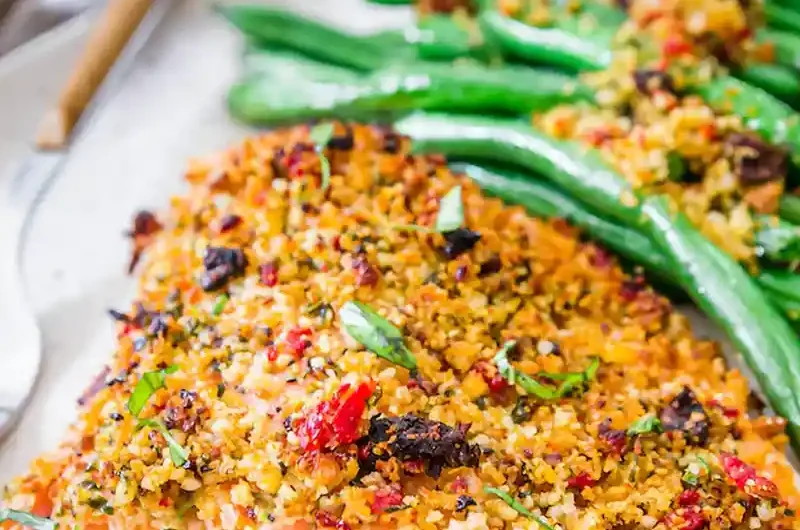
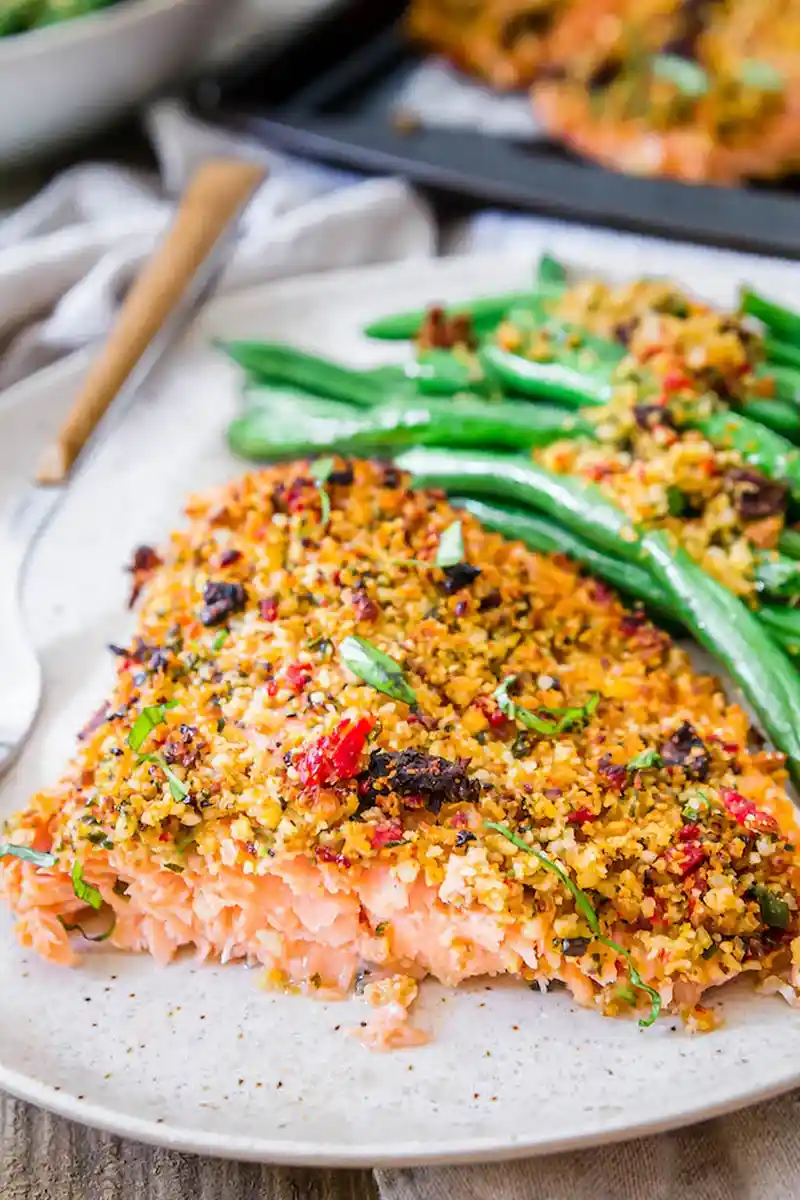
This baked salmon dish combines savory parmesan and tangy sun-dried tomatoes for a quick, nutrient-dense dinner. It utilizes a single sheet pan to roast both the fish and the vegetables simultaneously for easy cleanup.
List of ingredients
- 1.5 pounds wild salmon filet – use a center-cut piece for even cooking.
- 3 tablespoons extra virgin olive oil, divided – used for the crust and the vegetables.
- ½ cup breadcrumbs – Panko works well for extra crunch.
- ¾ cup freshly grated parmesan – fresh grating provides better melting and flavor.
- 1/3 cup roughly chopped sun-dried tomatoes – ensure these are dry, not packed in olive oil.
- ½ cup loosely packed fresh basil – adds a fresh, aromatic herbal note.
- 1 clove garlic, minced – provides a sharp, savory base.
- ¼ teaspoon salt – enhances all the flavors in the crust.
- 1/8 teaspoon freshly ground black pepper – adds a slight spicy kick.
- 12 ounces trimmed fresh green beans – a healthy, crisp accompaniment.
step-by-step instructions
- Prepare Oven: Preheat oven to 400°F. Line a large baking sheet with parchment paper to prevent sticking.
- Create the Crust: Combine breadcrumbs, parmesan, sun-dried tomatoes, basil, garlic, salt and pepper in a food processor. Process the mixture while slowly drizzling in 1 tablespoon of extra virgin olive oil until it is well combined.
- Bread the Salmon: Place salmon on the baking sheet. Season liberally with salt and pepper. Press the sun-dried tomato mixture firmly all over the salmon so the entire filet is coated.
- Add Vegetables: Scatter green beans around the salmon on the baking sheet and drizzle with the remaining 2 tablespoons of olive oil. Season the beans with salt and pepper, to taste.
- Bake: Bake for 10 minutes until salmon is cooked through and the beans are just starting to brown.
- Finish: Remove from the oven. Serve the green beans with any leftover sun-dried tomato/parmesan mixture.
Salmon Selection and Quality
Distinguishing Between Wild and Farmed Salmon
Wild salmon typically has a deeper red color and a leaner texture compared to farmed salmon. It often contains higher levels of naturally occurring Omega-3 fatty acids and minerals. Farmed salmon is usually fattier and has a milder flavor profile.
Choosing the Best Cut for Even Cooking
A center-cut filet is ideal because it maintains a consistent thickness from end to end. This ensures that the entire piece of fish reaches the target temperature at the same time. Avoid tapered ends if you want perfectly uniform results.
Identifying Fresh Salmon by Sight and Smell
Fresh salmon should have a mild, briny scent and should not smell fishy or overly strong. The flesh should be firm to the touch and spring back immediately when pressed. Look for a vibrant color without any dull or grayish patches.
Enhancing the Crust Texture
Utilizing Panko for a Crispier Finish
Panko breadcrumbs are coarser and airier than traditional breadcrumbs, which leads to a lighter and crunchier crust. They do not absorb as much oil, keeping the topping from becoming greasy. This creates a distinct contrast with the tender salmon.
Managing the Oil-to-Crumb Ratio
The oil in the food processor acts as a binder to hold the cheese and crumbs together. If the mixture is too dry, it will fall off the fish during baking. If it is too wet, it will steam rather than crisp up.
Techniques for a Firm Crust Adherence
Pat the salmon completely dry with paper towels before adding seasonings or the crust. Moisture on the surface of the fish can create a barrier that prevents the breading from sticking. Press the mixture firmly into the flesh with the back of a spoon.
Alternative Vegetable Accompaniments
Using Fresh Asparagus Spears
Asparagus is an excellent substitute for green beans and cooks in a similar timeframe. Ensure the woody ends are trimmed off before placing them on the sheet pan. Drizzle them with olive oil and lemon juice for extra brightness.
Incorporating Halved Brussels Sprouts
Brussels sprouts provide a nutty flavor and a denser texture. Slice them in half vertically so the flat side makes contact with the pan for better caramelization. They may require an extra 2-5 minutes of baking time depending on their size.
Adding Roasted Cauliflower Florets
Cauliflower florets soak up the olive oil and seasoning well, becoming tender and browned. Cut them into small, uniform pieces to ensure they cook through within 10 to 15 minutes. They pair exceptionally well with the parmesan crust.
Using Thinly Sliced Carrots
Carrots add a natural sweetness that balances the acidity of the sun-dried tomatoes. Slice them into thin rounds or matchsticks so they soften quickly in the oven. Toss them in the same olive oil and pepper mixture as the other vegetables.
Dietary Adaptations and Substitutions
Replacing Breadcrumbs with Almond Flour
For a low-carb or gluten-free version, substitute the breadcrumbs with an equal amount of almond flour. This maintains a similar crumbly texture while significantly reducing the total carbohydrate count. It also adds a subtle nutty flavor.
Using Finely Ground Nuts for a Low-Carb Crust
Ground walnuts or pecans can be used as a replacement for traditional crumbs. These nuts provide a richer taste and additional healthy fats to the dish. Pulse them in the food processor until they reach a coarse meal consistency.
Selecting Dairy-Free Parmesan Alternatives
Nutritional yeast or a vegan parmesan substitute can be used for those avoiding dairy. Nutritional yeast provides a similar savory, cheesy flavor without the animal products. Ensure the substitute has a dry consistency to avoid a soggy crust.
Substituting Fresh Basil with Dried Herbs
If fresh basil is unavailable, you can use dried basil or a mixture of dried oregano and parsley. Use about one-third of the amount of dried herbs compared to fresh, as the flavor is more concentrated. Stir them into the processor mixture.
Mastering the Cooking Process
Using a Digital Thermometer for Accuracy
Insert a meat thermometer into the thickest part of the filet to check for doneness. The USDA recommends an internal temperature of 145°F for salmon. This is the most reliable way to avoid overcooking the fish.
Adjusting Timing for Different Filet Thicknesses
Very thick filets may need an additional 2-3 minutes in the oven to reach the center. Conversely, thinner pieces can overcook quickly, so start checking them at the 8-minute mark. Adjust the heat slightly if the crust browns too fast.
Preventing the Fish from Drying Out
Remove the salmon from the oven as soon as it reaches the target temperature. Carry-over cooking will continue to raise the internal temperature by a few degrees while the fish rests. This ensures the salmon remains moist and flaky.
Managing Oven Hot Spots
Every oven has areas that are hotter than others, which can lead to uneven browning. Rotate the baking sheet halfway through the cooking process if you notice one side browning faster. Position the rack in the center for balanced heat distribution.
Plating and Side Dish Suggestions
Pairing with a Mediterranean Greek Salad
A fresh salad with cucumbers, cherry tomatoes, olives, and feta provides a cool contrast to the warm salmon. The acidity of a red wine vinaigrette cuts through the richness of the parmesan crust. This makes the meal feel lighter and more balanced.
Serving with Garlic and Olive Oil Pasta
Toss linguine or spaghetti with sautéed garlic, olive oil, and a pinch of red pepper flakes. The simple flavors of the pasta complement the complex sun-dried tomato topping without overshadowing it. Garnish with a sprinkle of fresh parsley.
Combining with Steamed Brown Rice
Brown rice adds a hearty, earthy element and provides complex carbohydrates for a filling meal. Cook the rice in vegetable broth instead of water for more depth. Serve the salmon directly on top of a bed of rice to soak up the juices.
Adding a Fresh Lemon Squeeze
Squeeze a fresh lemon wedge over the salmon immediately after removing it from the oven. The citric acid brightens the flavors of the basil and sun-dried tomatoes. It also adds a professional touch to the final presentation.
Preservation and Reheating Methods
Optimal Refrigeration Practices
Place leftover salmon and vegetables in an airtight container once they have cooled to room temperature. Store them in the main part of the refrigerator rather than the door for a consistent temperature. They will remain fresh for 2 to 3 days.
Reheating via the Conventional Oven
Preheat the oven to 350°F and place the salmon on a baking sheet. Heat for 5-8 minutes or until the fish is warmed through. This method helps maintain the integrity of the parmesan crust better than other options.
Using an Air Fryer for Maximum Crispness
Place the salmon in the air fryer basket at 350°F for 3-5 minutes. The circulating hot air quickly crisps the crust back up. Be careful not to overheat the fish, as it can dry out rapidly in an air fryer.
Avoiding the Microwave for Fish
Microwaves often heat fish unevenly and can turn the texture rubbery. Furthermore, the crust will lose its crispness and become soft. If you must use a microwave, use a low power setting and heat in short bursts.
Troubleshooting Common Issues
Preventing the Topping from Burning
If the crust is browning too quickly, loosely cover the salmon with a piece of aluminum foil. This protects the topping from the direct heat of the oven while allowing the interior to finish cooking. Monitor the fish closely every few minutes.
Fixing a Soggy or Loose Crust
A soggy crust often results from too much oil or moisture on the fish. Ensure the salmon is patted dry and the food processor mixture is a coarse paste rather than a liquid. Avoid over-processing the ingredients into a puree.
Ensuring the Salmon Does Not Stick to the Pan
High-quality parchment paper is essential for this recipe to ensure a clean release. If you do not have parchment, lightly grease the baking sheet with oil or cooking spray. Avoid using wax paper, as it can melt in the oven.
Frequently Asked Questions
Can I use sun-dried tomatoes packed in oil?
Yes, you can use oil-packed sun-dried tomatoes, but you must pat them dry with a paper towel first. Excess oil can make the crust too greasy and prevent it from crisping. You can also reduce the amount of extra olive oil added to the processor.
Can I prepare the salmon in advance?
You can prepare the crust and apply it to the salmon several hours before cooking. Store the prepared filets in the refrigerator on a tray. This allows the flavors to meld and makes the final cooking process even faster.
Which parmesan cheese works best for this recipe?
Freshly grated Parmesan Reggiano is the best choice for flavor and melting capabilities. Pre-shredded cheeses often contain anti-clumping agents like cornstarch, which can affect the texture of the crust. Grating your own cheese ensures a better result.
Can I substitute the wild salmon with Atlantic salmon?
Atlantic salmon works perfectly well in this recipe and is often more accessible. It typically has a higher fat content, which can make the fish even more tender. The cooking time remains the same, though you may want to check for doneness slightly earlier.
Print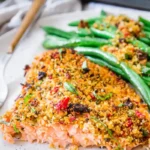
Sun-Dried Tomato Parmesan Crusted Salmon
- Total Time: 25 minutes
- Yield: 4 servings 1x
- Diet: General
Description
Sun-Dried Tomato Parmesan Crusted Salmon is the flavorful fish dinner you’ve been looking for! Served with fresh vegetables, this flaky baked salmon is such a filling meal.
Ingredients
- 1.5 pounds wild salmon filet
- 3 tablespoons extra virgin olive oil, divided
- ½ cup breadcrumbs
- ¾ cup freshly grated parmesan
- 1/3 cup roughly chopped sun-dried tomatoes (dry, not packed in olive oil)
- ½ cup loosely packed fresh basil
- 1 clove garlic, minced
- ¼ teaspoon salt
- 1/8 teaspoon freshly ground black pepper
- 12 ounces trimmed fresh green beans
Instructions
- Prep: Preheat oven to 400°F. Line a large baking sheet with parchment paper.
- Process: Combine breadcrumbs, parmesan, sun-dried tomatoes, basil, garlic, salt and pepper in a food processor. Process, slowly drizzling in 1 tablespoon of extra virgin olive oil until well combined.
- Coat: Place salmon on the baking sheet. Season liberally with salt and pepper. Press the sun-dried tomato mixture all over salmon so the entire filet is coated.
- Arrange: Scatter green beans around the salmon on the baking sheet and drizzle with remaining 2 tablespoons of olive oil. Season with salt and pepper, to taste.
- Bake: Bake for 10 minutes until salmon is cooked through and beans are just starting to brown.
- Serve: Remove from the oven. Serve green beans with any leftover sun-dried tomato/parmesan mixture.
Notes
For extra crunch, add pine nuts to the breading mixture. The thickest part of the salmon filet should be cooked to an internal temperature of 145°F.
- Prep Time: 15 minutes
- Cook Time: 10 minutes
- Category: Seafood
- Method: Baking
- Cuisine: American
Nutrition
- Serving Size: 1 serving
- Calories: 600 kcal
- Sugar: 4 g
- Sodium: 679 mg
- Fat: 37 g
- Saturated Fat: 9 g
- Unsaturated Fat: 28 g
- Trans Fat: 0 g
- Carbohydrates: 19 g
- Fiber: 3 g
- Protein: 46 g
- Cholesterol: 123 mg
Keywords: baked salmon, parmesan crusted salmon, sun-dried tomato salmon, sheet pan meal, seafood dinner