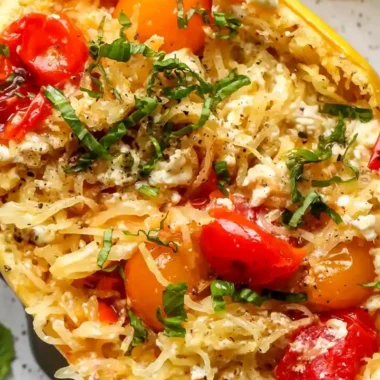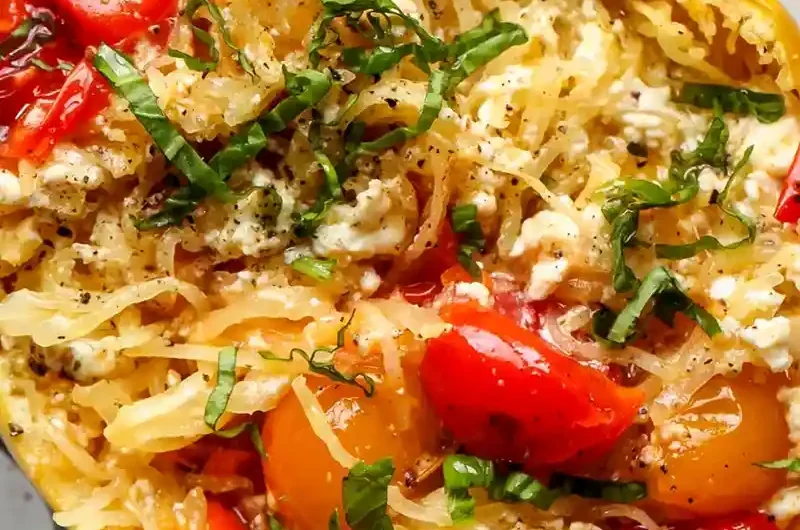
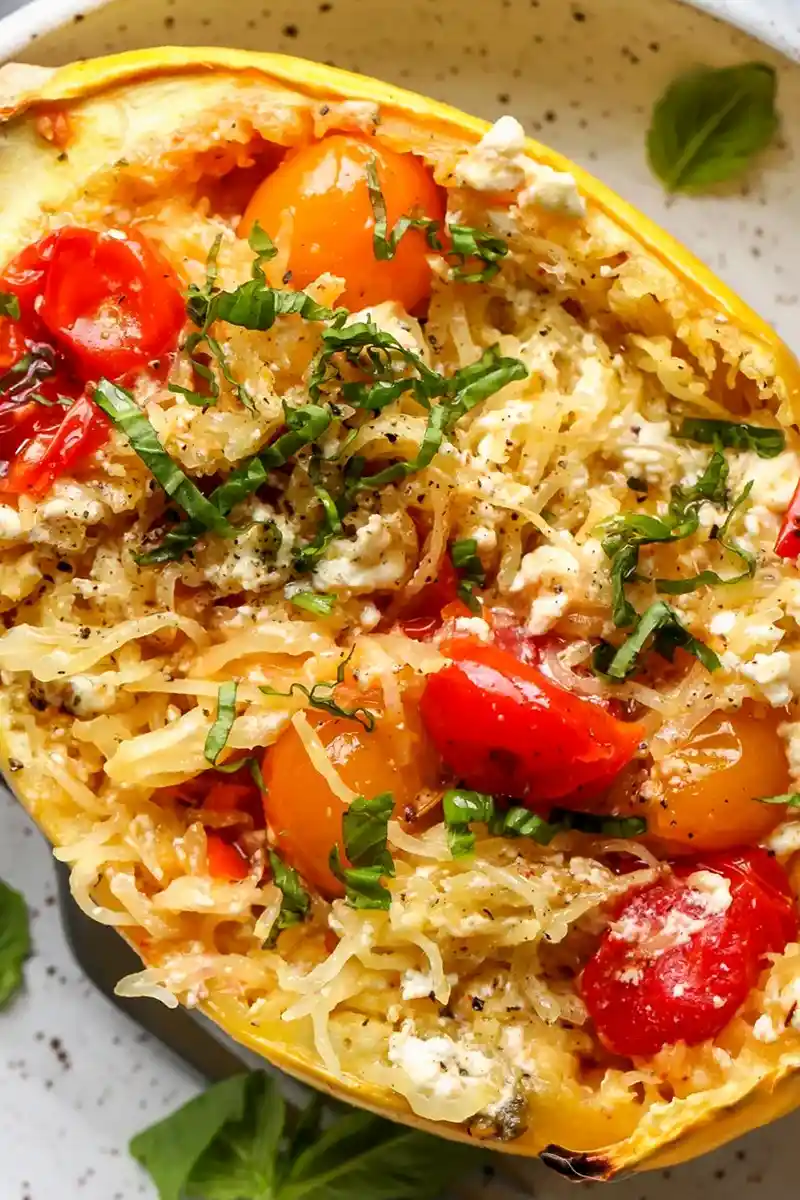
Enjoy a nutrient-dense and low-carb alternative to traditional pasta with this creamy baked squash dish. This recipe combines tangy feta and savory pesto for a satisfying meal that is easy to prepare.
List of ingredients
- 1 medium spaghetti squash, halved lengthwise and seeded – provides the pasta-like base.
- 3 Tbsp. extra-virgin olive oil, divided – used for roasting and the tomato mixture.
- Kosher salt and black pepper to taste – essential for seasoning the squash.
- 8 oz. cherry tomatoes (about 1 1/2 cups) – adds sweetness and acidity.
- 3 Tbsp. pesto (made with microbial-rennet cheese) – provides a concentrated herbal flavor.
- 2 garlic cloves, minced – adds aromatic depth.
- Pinch of chili flakes – introduces a mild heat.
- 2 (2-oz.) wedges feta cheese (from a block, microbial-rennet) – creates a creamy sauce.
- Fresh chopped basil for garnish – adds a final fresh note.
step-by-step instructions
- Prepare the Oven and Squash: Preheat your oven to 400°F. Place the halved squash on a rimmed baking sheet and remove all seeds and stringy fibers. Brush the cut side of each half with 1 Tbsp. of olive oil and season generously with salt and pepper.
- Create the Tomato-Pesto Mix: In a medium mixing bowl, stir together the cherry tomatoes, pesto, minced garlic, chili flakes, the remaining 2 Tbsp. of olive oil, and a pinch of salt. Mix until the tomatoes are evenly coated.
- Assemble the Boats: Place one 2-oz. wedge of feta cheese in the center of each squash half. Divide the tomato-pesto mixture equally between the two halves, spooning it around and over the cheese.
- Bake: Roast in the oven for approximately 55 minutes. The dish is ready when the squash flesh is tender and the cherry tomatoes have burst.
- Combine and Garnish: Use a fork to scrape the cooked squash strands into the melted feta and tomato mixture. Mix everything directly in the squash boat, or transfer to a bowl if space is limited. Garnish with fresh basil and extra black pepper before serving.
Optimizing Your Squash Preparation
Selecting the Ideal Spaghetti Squash
Choose a squash that feels heavy for its size, which indicates a juicy interior. The skin should be a uniform yellow-gold color without any soft spots or deep bruises. A medium-sized squash typically works best for individual portions.
Ensuring Knife Safety During Slicing
Spaghetti squash has a hard, slick exterior that can cause knives to slip. Always use a very sharp chef’s knife and a sturdy cutting board. Place a damp paper towel or a non-slip mat under the board to keep it firmly in place while you cut.
Testing for Perfect Doneness
The squash is cooked when the flesh separates easily into strands with minimal resistance. To check, probe the thickest part of the squash wall with the prongs of a fork. If the fork slides in easily, it is ready; otherwise, roast for another 10 to 15 minutes.
Cheese and Flavor Substitutions
Using Alternative Creamy Cheeses
If you prefer a different flavor profile, you can replace the feta with goat cheese for a more earthy taste. Cream cheese or Boursin cheese also work well to create a rich, creamy sauce. Ensure any cheese selected is made with microbial rennet for dietary consistency.
Plant-Based Cheese Alternatives
For a vegan version, replace the feta wedges with a high-quality plant-based feta alternative. Cashew-based feta brands often mimic the tang and texture of traditional feta. The roasting process will still soften the vegan cheese into a creamy consistency.
Adjusting the Herbal Profile
If you do not have pesto on hand, you can substitute it with one teaspoon of dried Italian seasoning. To keep the richness, add an extra tablespoon of olive oil and a teaspoon of lemon juice. This maintains the Mediterranean flavor without the basil-pine nut base.
Adding Protein to the Dish
Incorporating Poultry Sausage
Chicken or turkey sausage is an excellent addition for extra protein. Brown the sausage slices in a skillet separately before the final mixing step. Fold the cooked sausage into the squash strands and feta mixture just before serving.
Adding Seafood Options
Sautéed shrimp pairs beautifully with the tomato and feta flavors. Cook the shrimp in a pan with a bit of garlic and butter until pink. Top each squash boat with the shrimp after the squash has been mixed and plated.
Using Beef or Legume-Based Proteins
Beef meatballs or roasted chickpeas can be used to make the meal more filling. Bake the meatballs alongside the squash or roast chickpeas until crispy. Stir them into the squash boats during the final mixing stage for added texture.
Serving and Pairing Suggestions
Complementary Side Salads
A light arugula salad with a lemon vinaigrette balances the richness of the baked feta. The peppery notes of arugula cut through the creamy cheese and sweet tomatoes. Toss in some shaved carrots or cucumber for extra crunch.
Low-Carb Bread Alternatives
Instead of traditional garlic bread, serve this dish with roasted zucchini slices or cauliflower steaks. Brush them with olive oil and garlic powder, then roast them at 400°F. This keeps the entire meal low-carb while providing a side for scooping.
Non-Alcoholic Beverage Pairings
A chilled sparkling water with a squeeze of fresh lime complements the acidity of the tomatoes. Alternatively, an iced herbal tea with mint leaves pairs well with the pesto. These options refresh the palate between bites of the rich cheese.
Storage and Preservation
Refrigeration Guidelines
Transfer any leftovers from the squash boats into an airtight glass container. Store them in the refrigerator for up to three days. Keep the garnish separate and add fresh basil only when reheating to prevent wilting.
Freezing for Long-Term Use
Spaghetti squash freezes well if cooled completely before packing. Place the mixed squash and feta in a heavy-duty zip-top freezer bag, squeezing out as much air as possible. It can be stored in the freezer for up to three months.
Best Reheating Methods
For the best texture, reheat leftovers in a skillet over medium heat with a splash of water or olive oil. This prevents the squash from drying out. Alternatively, use a microwave on medium power, stirring halfway through to ensure even heating.
Troubleshooting and Technical Tips
Preventing Watery Squash
Some squash release more moisture than others, which can thin the sauce. To prevent this, you can roast the squash halves face-down for the first 30 minutes. This allows excess water to drain away before you add the feta and tomatoes.
Stopping Tomatoes from Burning
If your oven runs hot, the cherry tomatoes may brown too quickly. To avoid this, loosely cover the squash boats with a piece of aluminum foil. Remove the foil during the last 15 minutes of baking to allow the tomatoes to burst and caramelize.
Fixing Undercooked Squash Flesh
If the feta is melted but the squash is still firm, do not remove it from the oven. Increase the temperature to 425°F for the final 10 minutes. This helps soften the squash without overcooking the cheese topping.
Frequently Asked Questions
Can I use frozen spaghetti squash?
Yes, you can use pre-frozen squash, but you must thaw it completely and pat it dry first. Since it won’t roast in the same way, you may need to sauté the strands in a pan before mixing them with the baked feta and tomato mixture.
Is this dish naturally gluten-free?
Yes, this recipe is naturally gluten-free as it uses a vegetable base instead of wheat pasta. Just ensure that your store-bought pesto is certified gluten-free and does not contain hidden thickeners or additives.
How do I identify a ripe spaghetti squash?
Look for a squash with a hard, thick skin that does not indent when pressed. The color should be a deep, consistent yellow. Avoid any squash that feels unusually light or has a soft, spongy texture on the outer rind.
Print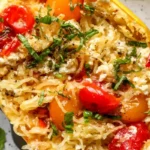
Tomato-Pesto Baked Feta Spaghetti Squash
- Total Time: 70 minutes
- Yield: 2 servings 1x
- Diet: Vegetarian, Low Carb
Description
Tomato-Pesto Baked Feta Spaghetti Squash calls for minimal ingredients, yet delivers such satisfying results. Easy, low carb, and the most delicious way to double down on your veggie intake!
Ingredients
- 1 medium spaghetti squash, halved lengthwise and seeded
- 3 Tbsp. extra-virgin olive oil, divided
- Kosher salt and black pepper to taste
- 8 oz. cherry tomatoes (about 1 1/2 cups)
- 3 Tbsp. pesto
- 2 garlic cloves, minced
- Pinch of chili flakes
- 2 (2-oz.) wedges feta cheese (from a block of feta)
- Fresh chopped basil for garnish
Instructions
- Prep: Preheat oven to 400ºF. Place the squash halves on a rimmed baking sheet and scoop out the seeds and stringy insides. Brush the cut side of each squash half with 1 Tbsp. olive oil, and season with salt and pepper.
- Mix: In a medium bowl, combine tomatoes, pesto, garlic, chili flakes, remaining 2 Tbsp. olive oil, and a pinch of salt.
- Assemble: Place a wedge of feta cheese inside each squash half, followed by the tomato-pesto mixture, divided equally between each half.
- Bake: Bake until the squash flesh is tender and the tomatoes burst, about 55 minutes.
- Combine: Use a fork to scrape the squash strands into the feta and tomato mixture, and continue mixing until everything is combined. Garnish with fresh basil and extra cracked black pepper.
Notes
Cheese alternatives: goat cheese, cream cheese, or Boursin. For protein, add cooked chicken sausage, shrimp, chicken, or meatballs. Store in the refrigerator for up to 3 days or freeze for up to 3 months.
- Prep Time: 15 minutes
- Cook Time: 55 minutes
- Category: Entree
- Method: Baking
- Cuisine: Mediterranean
Nutrition
- Serving Size: 1 squash half
- Calories: 498 kcal
- Sugar: 12 g
- Sodium: 920 mg
- Fat: 36 g
- Saturated Fat: 10 g
- Unsaturated Fat: 26 g
- Trans Fat: 0 g
- Carbohydrates: 26.5 g
- Fiber: 5 g
- Protein: 15 g
- Cholesterol: 70 mg
Keywords: spaghetti squash, baked feta, low carb, Mediterranean, vegetarian