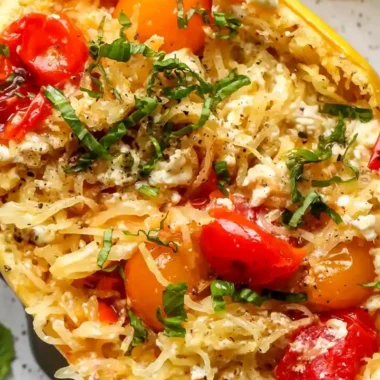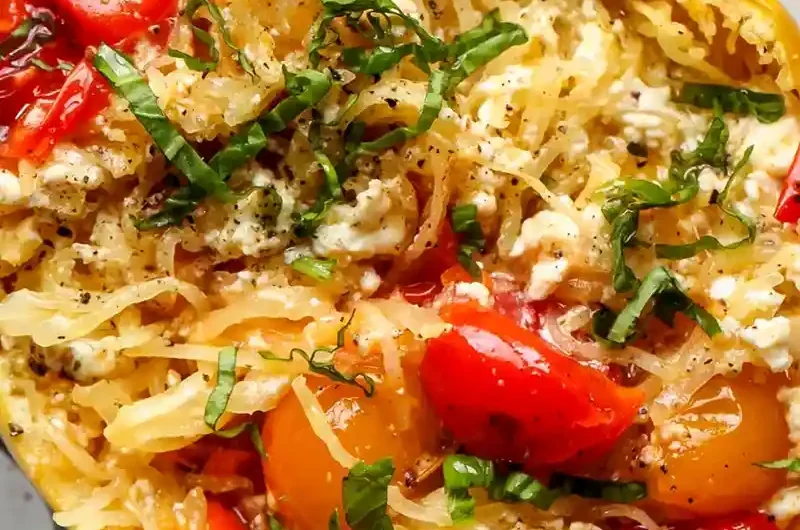
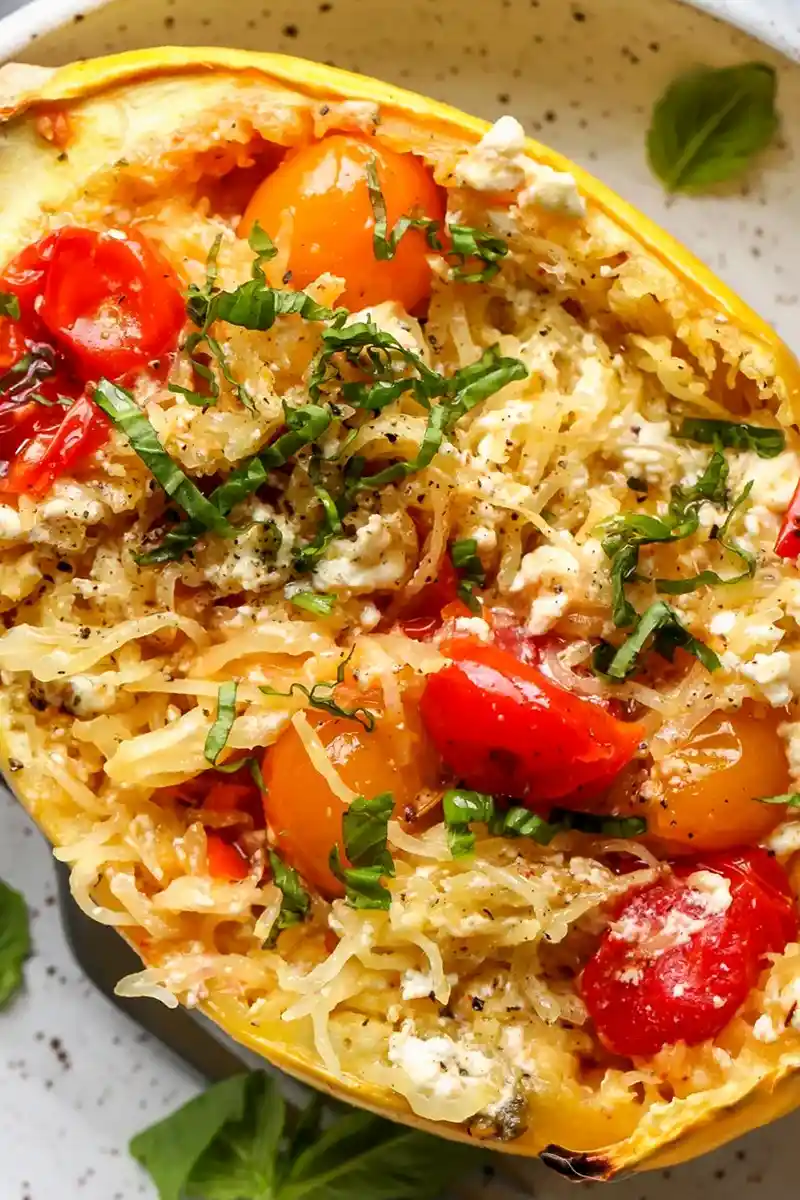
This vibrant spaghetti squash dish transforms simple pantry staples into a comforting, nutritious meal that feels gourmet without the effort. By roasting a whole squash with creamy feta and savory pesto, you achieve a perfect balance of textures and intense Mediterranean-inspired flavors in every bite. It is an excellent choice for a weeknight dinner that is naturally low in carbohydrates but high in satisfying taste.
List of ingredients
- 1 medium spaghetti squash, halved lengthwise and seeded
- 3 Tbsp. extra-virgin olive oil, divided
- Kosher salt and black pepper to taste
- 8 oz. cherry tomatoes (about 1 1/2 cups)
- 3 Tbsp. pesto
- 2 garlic cloves, minced
- Pinch of chili flakes
- 2 (2-oz.) wedges feta cheese (from a block of feta)
- Fresh chopped basil for garnish
step-by-step instructions
- Step 1: Preheat oven to 400ºF. Place the squash halves on a rimmed baking sheet and scoop out the seeds and stringy insides. Brush the cut side of each squash half with 1 Tbsp. olive oil, and season with salt and pepper.
- Step 2: In a medium bowl, combine tomatoes, pesto, garlic, chili flakes, remaining 2 Tbsp. olive oil, and a pinch of salt.
- Step 3: Place a wedge of feta cheese inside each squash half, followed by the tomato-pesto mixture, divided equally between each half.
- Step 4: Bake until the squash flesh is tender and the tomatoes burst, about 55 minutes.
- Step 5: Use a fork to scrape the squash strands into the feta and tomato mixture, and continue mixing until everything is combined.
- Step 6: Garnish with fresh basil and extra cracked black pepper.
Practical Preparation Strategies
Ensuring Even Roasting
To ensure your squash roasts evenly, try to choose a squash that is symmetrical. If your oven has hot spots, rotate your baking sheet halfway through the cooking process. This consistent heat distribution allows the skin to brown slightly without burning the edges of the squash flesh.
Mastering the Squash Strands
The secret to perfect “noodles” is to rake the fork in long, fluid motions starting from the edges and pulling toward the center. If the squash feels firm or the strands do not easily separate, pop it back into the oven for another ten minutes. Patience at this stage ensures the classic spaghetti-like texture that makes this dish so enjoyable.
Selecting and Enhancing Ingredients
Choosing the Best Pesto
When selecting a jarred pesto, look for one that lists fresh basil, high-quality oil, and pine nuts as primary ingredients. If you prefer a nut-free option, many brands now offer versions made with sunflower seeds or extra basil to maintain that deep green, herbaceous profile. Always stir the oil on top of the jar before measuring to ensure you get all that concentrated flavor.
Selecting High-Quality Feta
For the best melting results, always opt for a block of feta stored in brine rather than pre-crumbled varieties. Pre-crumbled cheese is often coated in starch to prevent clumping, which interferes with the way it melts into a smooth, creamy sauce. A block of sheep’s milk feta provides the most authentic tang, but goat’s milk feta can also be used if you prefer a milder, creamier profile.
Variations for Different Flavor Profiles
Incorporating Extra Vegetables
While the tomato base is the star, you can easily stir in handfuls of fresh baby spinach or chopped kale right after you pull the squash from the oven. The residual heat of the tomato mixture will wilt the greens perfectly within just a minute or two of mixing. This is a brilliant way to add volume and extra micronutrients to your meal without changing the core recipe structure.
Adding Textured Toppings
If you enjoy a bit of crunch, consider topping your finished squash boats with toasted pine nuts, crushed walnuts, or even a sprinkle of toasted sunflower seeds. These additions provide a nutty contrast to the softness of the roasted squash and the creaminess of the melted cheese. Freshly toasted breadcrumbs can also work if you crave a classic bistro-style crunch.
Serving Ideas and Meal Planning
Pairing Suggestions
This dish is substantial enough to act as a stand-alone main, but it also pairs beautifully with a simple arugula salad dressed with lemon and olive oil. The bitterness of the arugula balances the richness of the pesto and feta. If you need a more robust meal, consider serving this alongside toasted sourdough bread, which is excellent for mopping up any extra tomato-feta sauce left in the boats.
Make-Ahead Considerations
You can prep the squash by slicing and cleaning it up to a day in advance. Store the prepared, empty halves in the refrigerator wrapped in plastic wrap. You can also mix your tomato and pesto base early in the day and keep it in an airtight container in the fridge, allowing the garlic and herbs to infuse the oil for a deeper flavor profile.
Managing Leftovers
Cooling and Storage
If you have leftovers, allow the squash to cool completely before transferring the mixture to an airtight glass container. It is best to remove the mixture from the squash skin if you plan on storing it for more than twenty-four hours to maintain the best quality. When stored properly, this dish remains delicious for up to three days in the refrigerator.
Efficient Reheating
When you are ready for a second meal, a gentle microwave setting is usually the fastest route, but a quick sear in a non-stick skillet over medium heat can revive the texture. The skillet method helps evaporate any excess liquid that might have formed during storage, resulting in a more concentrated sauce. Add a fresh splash of olive oil to the pan if the mixture seems too dry when you start heating it up.
Common Queries Addressed
Can I make this dairy-free?
Yes, you can substitute the feta with a high-quality vegan feta alternative that is designed to melt. Ensure that your pesto is also made without parmesan or other dairy ingredients to keep the dish entirely plant-based. Many commercial brands now produce excellent vegan pesto options that rely on nutritional yeast for that savory, cheesy finish.
What is the best way to cut a tough squash?
Spaghetti squash can have a very hard rind. If you are struggling, you can pierce the squash with a fork in several places and microwave it on high for about three to five minutes to soften the skin slightly. Once it is slightly warm to the touch, it will be significantly easier to stabilize on your cutting board and slice safely through the center.
Is the liquid from the tomatoes a problem?
The liquid produced by the bursting tomatoes is actually a key component of the sauce, as it emulsifies with the olive oil and melted feta. If you find the result is too watery for your taste, simply drain away a small portion of the liquid before you begin tossing the strands with the sauce. You can also roast the squash for an extra five minutes to encourage more moisture evaporation.
Print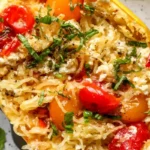
Baked Feta Spaghetti Squash
- Total Time: PT70M
- Yield: 2 servings 1x
- Diet: Vegetarian
Description
Tomato-Pesto Baked Feta Spaghetti Squash calls for minimal ingredients, yet delivers such satisfying results. Easy, low carb, and the most delicious way to double down on your veggie intake!
Ingredients
- 1 medium spaghetti squash, halved lengthwise and seeded
- 3 Tbsp. extra-virgin olive oil, divided
- Kosher salt and black pepper to taste
- 8 oz. cherry tomatoes (about 1 1/2 cups)
- 3 Tbsp. pesto
- 2 garlic cloves, minced
- Pinch of chili flakes
- 2 (2-oz.) wedges feta cheese (from a block of feta)
- Fresh chopped basil for garnish
Instructions
- Step 1: Preheat oven to 400ºF. Place the squash halves on a rimmed baking sheet and scoop out the seeds and stringy insides. Brush the cut side of each squash half with 1 Tbsp. olive oil, and season with salt and pepper.
- Step 2: In a medium bowl, combine tomatoes, pesto, garlic, chili flakes, remaining 2 Tbsp. olive oil, and a pinch of salt.
- Step 3: Place a wedge of feta cheese inside each squash half, followed by the tomato-pesto mixture, divided equally between each half.
- Step 4: Bake until the squash flesh is tender and the tomatoes burst, about 55 minutes.
- Step 5: Use a fork to scrape the squash strands into the feta and tomato mixture, and continue mixing until everything is combined.
- Step 6: Garnish with fresh basil and extra cracked black pepper.
Notes
If you’re not a fan of feta, you can use goat cheese, cream cheese, or a creamy plant-based cheese alternative. Store leftovers in an airtight container in the refrigerator for up to 3 days. Spaghetti squash can be frozen for up to 3 months.
- Prep Time: PT15M
- Cook Time: PT55M
- Category: Entree
- Method: Baking
- Cuisine: Mediterranean
Nutrition
- Serving Size: 1 squash half
- Calories: 498 kcal
- Sugar: 12 g
- Sodium: 920 mg
- Fat: 36 g
- Saturated Fat: 10 g
- Unsaturated Fat: 24 g
- Trans Fat: 0 g
- Carbohydrates: 26.5 g
- Fiber: 5 g
- Protein: 15 g
- Cholesterol: 45 mg
Keywords: spaghetti squash, baked feta, vegetarian, mediterranean, low carb, pesto