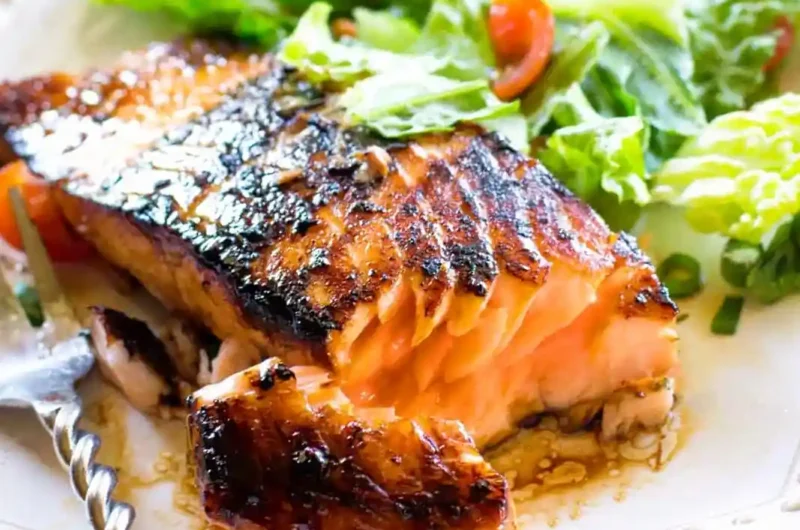
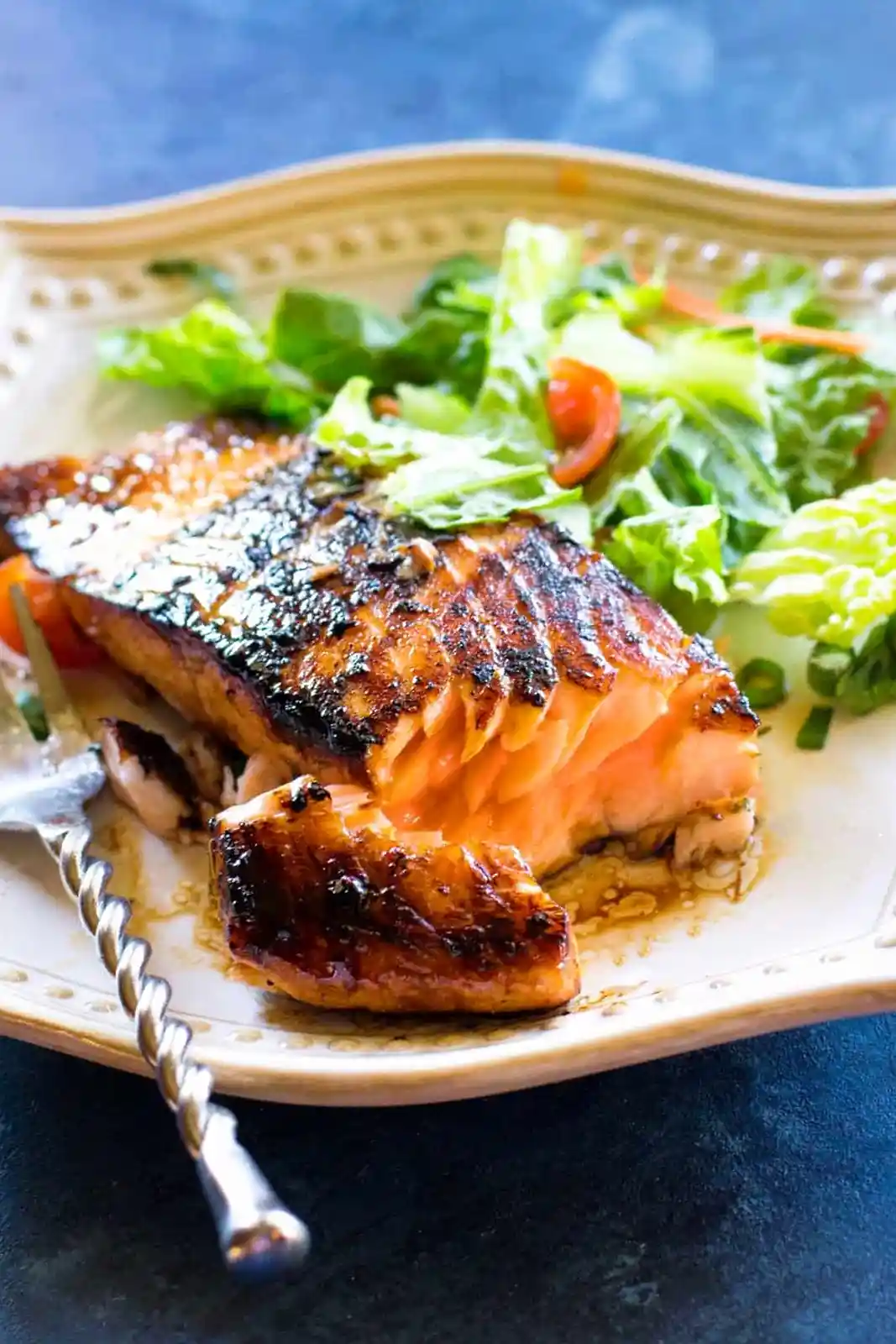
This Grilled Asian Salmon combines sweet and savory flavors for a healthy and satisfying seafood meal. It is a versatile dish that can be prepared on an outdoor grill or quickly baked in the oven.
List of ingredients
- 1/4 cup brown sugar – provides sweetness and aids in caramelization.
- 1/4 cup olive oil – prevents sticking and adds moisture.
- 1/4 cup soy sauce – adds a deep, savory saltiness.
- 2 teaspoons lemon pepper – adds a bright, citrusy zing.
- 1 teaspoon dried thyme – provides a subtle earthy note.
- 1 teaspoon dried basil – adds a sweet, peppery herb flavor.
- 1 teaspoon dried parsley – contributes a fresh, grassy taste.
- 1/2 teaspoon garlic powder – adds a pungent, aromatic depth.
- 4 (6 ounce) salmon fillets – the main protein source.
step-by-step instructions
- Prepare the marinade: Whisk together the brown sugar, olive oil, soy sauce, lemon pepper, dried thyme, dried basil, dried parsley, and garlic powder in a mixing bowl. Pour the mixture into a resealable plastic bag.
- Marinate the fish: Add the salmon fillets to the bag, turning them to ensure they are fully coated with the marinade. Squeeze out any excess air, seal the bag tightly, and refrigerate for at least 1 hour, turning the fillets occasionally.
- Prepare the grill: Preheat an outdoor grill to medium heat and lightly oil the grate to prevent the fish from sticking.
- Cook the salmon: Remove the salmon from the marinade and shake off any excess liquid. Discard the leftover marinade. Grill the fillets until they are browned and flake easily with a fork, which typically takes 4-5 minutes per side.
- Alternative oven method: If you prefer not to grill, bake the marinated fillets in a 400 degree oven for 8-10 minutes, depending on the thickness of the fillets.
Selecting the Best Salmon Fillets
Identifying Freshness
Fresh salmon should have a vibrant, consistent color without any brown or grey spots. It should smell like the ocean rather than having a strong fishy odor. The flesh should feel firm to the touch and spring back when pressed.
Wild-Caught versus Farmed
Wild-caught salmon often has a deeper red color and a more intense flavor due to its natural diet. Farmed salmon tends to be lighter in color and has a higher fat content, which can make it more forgiving during the grilling process.
Skin-On versus Skinless
Keeping the skin on provides a protective barrier between the heat and the delicate flesh. This helps prevent the fish from falling apart on the grill and allows for a crispier exterior. You can easily remove the skin after cooking if preferred.
Optimizing the Marination Process
The Role of Brown Sugar
Brown sugar is essential for creating the charred, caramelized crust on the exterior of the salmon. Because sugar breaks down at high heat, it creates a sweet glaze that balances the saltiness of the soy sauce.
Managing Salt Levels
Soy sauce acts as a brine, drawing moisture into the fish and enhancing the overall flavor. To avoid over-salting, ensure you shake off excess marinade before placing the fillets on the grill.
The Impact of Dried Herbs
Dried thyme, basil, and parsley infuse the fish with depth without the moisture that fresh herbs might introduce. These herbs adhere well to the oil and sugar, ensuring a consistent layer of flavor on each fillet.
Mastering the Grill Setup
Establishing Medium Heat
Medium heat is critical to avoid burning the sugars in the marinade before the interior is cooked. If the grill is too hot, the outside will blacken while the center remains raw.
Preparing the Grill Grate
Clean the grill grate thoroughly with a wire brush to remove old food debris. Apply a thin layer of oil using a paper towel held by tongs to create a non-stick surface for the fish.
Controlling Sugar Flare-Ups
Sugar-based marinades can cause flare-ups when oil or sugar drips onto the burners. Keep a safe zone on your grill with no heat where you can move the salmon if the flames become too intense.
Alternative Preparation Methods
Detailed Oven Baking Process
Preheat your oven to 400 degrees Fahrenheit and line a baking sheet with parchment paper or aluminum foil. Place the fillets on the sheet and bake for 8-10 minutes. This method is more consistent and prevents the risk of fish sticking to a grate.
Adapting for the Air Fryer
Place the marinated fillets in an air fryer basket at 380 degrees Fahrenheit. Cook for approximately 8-12 minutes, flipping halfway through if your model does not circulate air evenly. This provides a texture similar to grilling with less mess.
Pan-Searing for Speed
Heat a cast-iron skillet over medium-high heat with a tablespoon of oil. Sear the salmon for 4-5 minutes per side until the edges are caramelized. This method allows you to baste the fish with any remaining marinade for extra flavor.
Ingredient Substitutions
Low-Sodium Alternatives
You can replace the soy sauce with coconut aminos for a lower-sodium, soy-free alternative. Coconut aminos are slightly sweeter, so you may want to reduce the brown sugar by a tablespoon to maintain balance.
Substituting the Sweetener
If you prefer a different type of sweetness, honey or maple syrup can replace the brown sugar. These liquids will make the marinade thinner but will still provide the necessary sugars for caramelization.
Swapping the Herbs
If you do not have the specific herbs listed, a blend of Italian seasoning can work as a substitute. Alternatively, using only garlic powder and lemon pepper creates a simpler, more citrus-forward flavor profile.
Choosing Different Oils
While olive oil is standard, avocado oil is an excellent choice for grilling due to its higher smoke point. This reduces the likelihood of the oil smoking or tasting bitter at high temperatures.
Serving Suggestions
Best Grain Pairings
Serve this salmon over a bed of steamed jasmine rice or quinoa to soak up the extra flavors. Brown rice provides a nuttier taste that complements the savory soy marinade.
Vegetable Accompaniments
Steamed bok choy or roasted asparagus are classic pairings that mirror the Asian flavor profile. Sautéed snap peas with a touch of sesame oil also add a nice crunch to the meal.
Fresh Toppings for Balance
Garnish the finished fillets with sliced green onions or toasted sesame seeds. A squeeze of fresh lime or lemon juice just before serving cuts through the sweetness of the brown sugar.
Storage and Preservation
Refrigerating Leftovers
Store cooked salmon in an airtight container in the refrigerator for up to three to four days. Ensure the fish is completely cooled before sealing the container to prevent excess moisture buildup.
Freezing Cooked Salmon
While fresh is best, cooked salmon can be frozen for up to two months. Wrap the fillets tightly in plastic wrap and place them in a freezer-safe bag to prevent freezer burn.
Maximum Storage Duration
Raw marinated salmon should not sit in the refrigerator for more than 24 hours. The salt and acids in the marinade can begin to change the texture of the fish, making it too soft.
Reheating Instructions
Oven Reheating Method
Preheat the oven to 275 degrees Fahrenheit. Place the salmon on a baking sheet and warm it for 10-15 minutes, which gently heats the fish without overcooking it.
Microwave Tips for Texture
If using a microwave, use a medium power setting and heat in 30-second intervals. Cover the fish with a damp paper towel to keep the moisture locked in and prevent the salmon from becoming rubbery.
Avoiding Overcooking
Salmon dries out quickly when reheated. Always aim for a lower temperature and a shorter duration than the original cooking time to preserve the flakey texture.
Troubleshooting Common Issues
Dealing with Dry Salmon
If the salmon is too dry, it was likely cooked for too long. To fix this in the future, use a meat thermometer to ensure the internal temperature reaches 145 degrees Fahrenheit and then remove it immediately.
Fixing Too-Salty Marinades
If the marinade tastes overly salty, add a teaspoon of honey or a splash of water to dilute the soy sauce. You can also serve the fish with a neutral side dish like plain white rice to balance the salt.
Correcting Burnt Sugar Crust
If the outside burns before the inside is done, reduce your grill heat and move the fillets to a cooler part of the grate. You can also wipe away excess marinade from the surface before grilling.
Frequently Asked Questions
How long can I marinate salmon?
The ideal marination time is 1 to 6 hours. Marinating for too long, especially beyond 24 hours, can break down the protein fibers and make the fish mushy.
Can I use frozen salmon fillets?
Yes, but you must thaw them completely in the refrigerator before marinating. Marinating frozen fish is ineffective as the flavors cannot penetrate the frozen flesh.
Is it okay to use a different type of fish?
This marinade works well with other firm fish like swordfish, tuna steaks, or halibut. Adjust the cooking time based on the thickness of the alternative fillet.
How do I remove salmon skin?
Use a sharp knife to slide between the skin and the flesh starting from the tail end. It is much easier to do this after the fish has been grilled, as the skin will pull away cleanly.
Print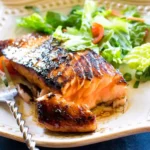
Grilled Asian Salmon with Savory Brown Sugar Marinade
- Total Time: 15 minutes
- Yield: 4 servings 1x
- Diet: Low Carb
Description
This Grilled Asian Salmon is a little sweet and a little savory marinated with soy sauce, brown sugar, and herbs.
Ingredients
- 1/4 cup brown sugar
- 1/4 cup olive oil
- 1/4 cup soy sauce
- 2 teaspoons lemon pepper
- 1 teaspoon dried thyme
- 1 teaspoon dried basil
- 1 teaspoon dried parsley
- 1/2 teaspoon garlic powder
- 4 (6 ounce) salmon fillets
Instructions
- Marinate: Whisk together all the ingredients except for the fish in a bowl, and pour into a resealable plastic bag. Add the salmon fillets, turning to coat with the marinade, squeeze out excess air, and seal the bag. Marinate in the refrigerator for at least 1 hour, turning occasionally.
- Prepare Grill: Preheat an outdoor grill for medium heat, and lightly oil the grate. Remove the salmon from the marinade, and shake off excess. Discard the remaining marinade.
- Grill: Grill the salmon on the preheated grill until browned and the fish flakes easily with a fork, about 4-5 minutes on each side.
Notes
This can also be cooked in a 400 degree oven for 8-10 minutes depending on the thickness of your salmon.
- Prep Time: 5 minutes
- Cook Time: 10 minutes
- Category: Main Course
- Method: Grilling
- Cuisine: Asian
Nutrition
- Serving Size: 1 fillet
- Calories: 537 kcal
- Sugar: 20 g
- Sodium: 900 mg
- Fat: 30 g
- Saturated Fat: 6 g
- Unsaturated Fat: 24 g
- Trans Fat: 0 g
- Carbohydrates: 25 g
- Fiber: 1 g
- Protein: 25 g
- Cholesterol: 60 mg
Keywords: grilled salmon, asian salmon, healthy seafood, low carb, high protein