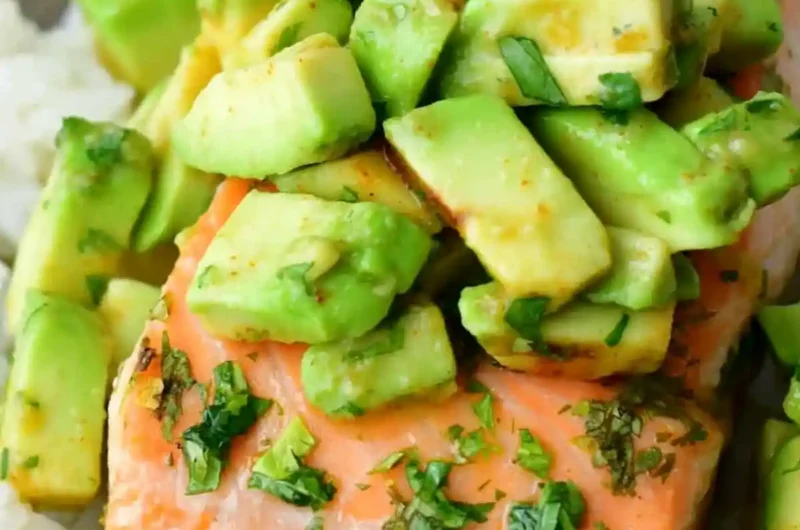
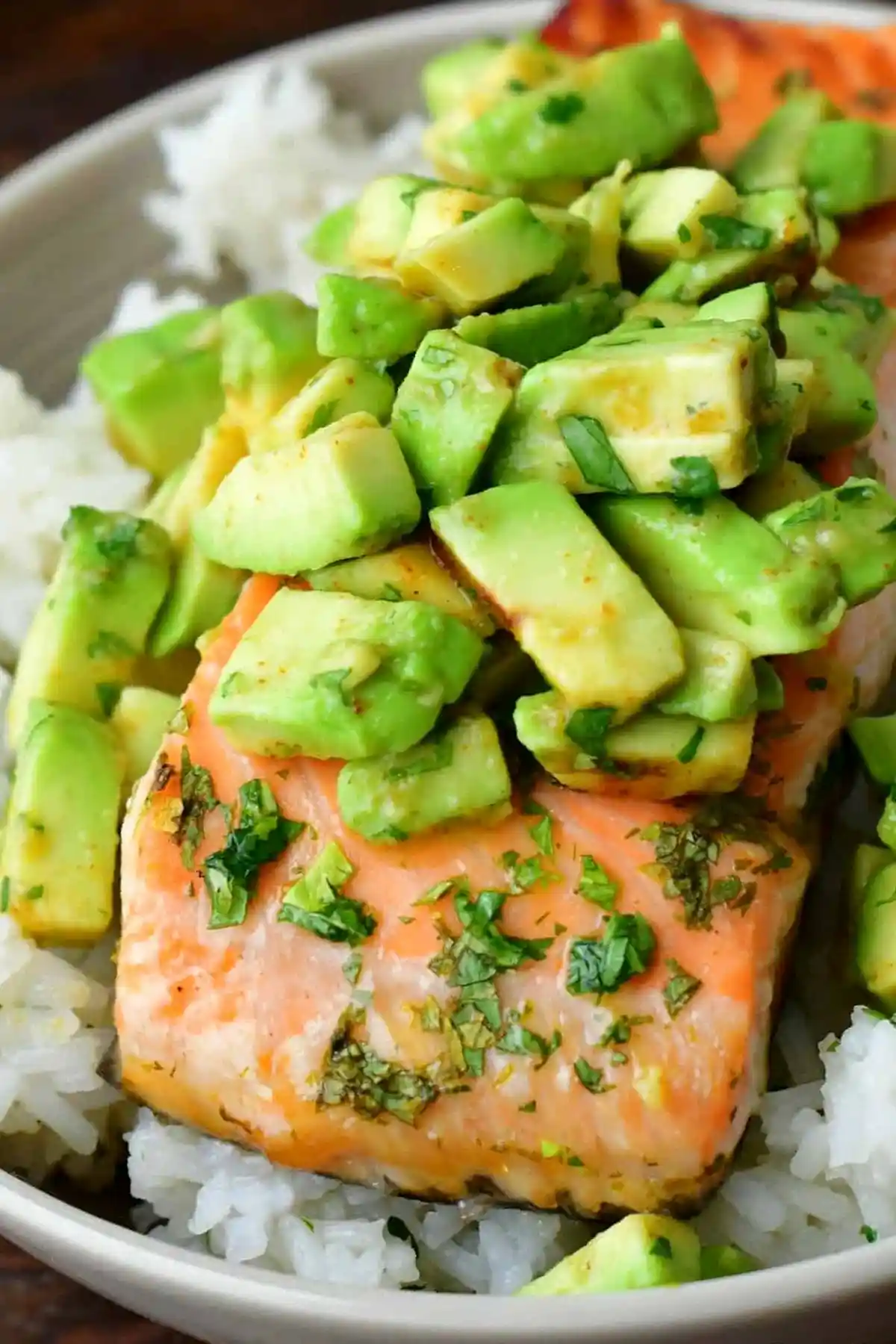
This nutrient-dense bowl combines baked honey-lime salmon with zesty cilantro rice and a creamy avocado topping. It is a quick-cooking meal perfect for a healthy weeknight dinner.
List of ingredients
- 1 cup jasmine rice – for a floral, fluffy base.
- 1 1/2-2 cups water – follow package instructions for the rice.
- Salt – to taste for the rice water.
- 1/2 lime, juice only – for the rice glaze.
- 2 Tbsp minced fresh cilantro – adds brightness to the rice.
- 1 Tbsp honey – provides a subtle sweetness for the rice.
- 3 Tbsp chicken or vegetable stock – used to reduce the rice sauce.
- 1 lb salmon fillets, skin on – the skin protects the meat during baking.
- 1 Tbsp lime juice – for the salmon glaze.
- 1 Tbsp honey – creates a caramelized crust on the fish.
- 2 Tbsp minced fresh cilantro – adds herbal flavor to the salmon.
- Salt – to taste for seasoning the fish.
- 1 ripe avocado – provides a creamy texture for the topping.
- 1 tbsp lime juice – prevents avocado browning and adds tang.
- 1 tbsp minced fresh cilantro – fresh garnish for the avocado.
- 1/4-1/2 tsp chili powder – adjust based on preferred heat level.
- Salt – to taste for the avocado topping.
step-by-step instructions
- Cook the rice: Prepare the jasmine rice in salted water following the specific instructions on the package.
- Prepare the rice glaze: While the rice finishes, combine the stock, lime juice, honey, and cilantro in a small pan over medium-high heat.
- Reduce the sauce: Simmer the glaze for about one minute to reduce the liquid slightly and concentrate the flavors.
- Combine rice and sauce: Pour the reduction over the cooked rice and fold it in gently with a fork.
- Set up the oven: Preheat your oven to 425°F and line a rimmed baking sheet with parchment paper for easy cleanup.
- Position the salmon: Rub a small amount of oil on the salmon skin and place the fillets skin-side down on the baking sheet.
- Season the fish: Sprinkle salt on all exposed sides of the fillets.
- Glaze the salmon: Mix the lime juice, honey, and cilantro, then spoon the mixture over the top of the fillets, letting it drip down the sides.
- Bake the fillets: Bake for 12 to 18 minutes, depending on the thickness; thinner fillets finish closer to 12 minutes.
- Mix the avocado topping: Dice the ripe avocado and toss it in a bowl with lime juice, cilantro, chili powder, and salt.
- Assemble the bowls: Divide the cilantro rice between two bowls, place a salmon fillet on top, and add a generous scoop of the avocado mixture.
Salmon Cooking and Doneness Guides
Using a Digital Instant-Read Thermometer
Inserting a thermometer into the thickest part of the fillet is the most accurate way to check doneness. For fully cooked salmon, look for a reading of 145°F. If you prefer a medium texture that is more succulent and silky, remove the fish when it reaches between 125°F and 135°F.
The Manual Press Test
Gently press the center of the fillet with your finger or a spatula. When the meat is properly cooked, it should feel firm to the touch but still have a slight bit of give. If the flesh feels squishy or too soft, return it to the oven for a few more minutes.
Checking for Natural Flaking
Look for the white lines of fat running through the salmon fillet. When the fish is done, the meat will separate easily along these lines when nudged with a fork. This flaking action is a clear sign that the proteins have set and the fish is ready.
Observing Color and Opacity
Raw salmon is translucent, but it becomes opaque as it cooks. The ideal result is an exterior that looks completely opaque while the very center retains a slight shine. Avoid cooking until the center is completely matte, as this often indicates overdone fish.
Identifying White Albumin Protein
You may notice white, bead-like substances pushing out of the salmon as it bakes. This is albumin, a natural protein that coagulates and emerges when the muscle fibers contract. It is completely harmless and can be scraped off before serving if you prefer a cleaner look.
Key Ingredient Insights
The Importance of Skin-On Fillets
Cooking salmon with the skin on provides a protective barrier between the delicate flesh and the hot baking sheet. This prevents the bottom of the fillet from overcooking or sticking. Additionally, the fatty layer just beneath the skin helps lock in moisture and flavor during the high-heat roasting process.
Selecting the Right Rice
Jasmine rice is recommended for its slightly floral aroma and naturally fluffy texture, which complements the citrus notes of the dish. If you prefer a nuttier taste, brown rice is a great alternative. For a low-carb option, cauliflower rice works well as long as you reduce the cooking liquid.
Choosing a Perfectly Ripe Avocado
Select an avocado that yields gently to light pressure in the palm of your hand. An under-ripe avocado will be too firm to chop and will lack the creamy consistency needed for the topping. Avoid avocados with excessive soft spots, as these may indicate over-ripeness or bruising.
Balancing Honey and Lime
The combination of honey and lime creates a sweet-tart glaze that cuts through the richness of the salmon. Honey provides a sticky quality that helps the glaze adhere to the fish and caramelize in the oven. Lime juice provides the necessary acidity to brighten the heavy fats in the fish and avocado.
The Role of Fresh Cilantro
Fresh cilantro is used in all three components of this bowl to create a cohesive flavor profile. It adds a bright, herbal note that prevents the honey from becoming too cloying. Always use fresh leaves and tender stems for the best aromatic impact.
Customization and Substitutions
Low-Carb Grain Alternatives
To reduce the carbohydrate content, swap the jasmine rice for cooked quinoa or steamed cauliflower rice. Quinoa adds a slightly nutty flavor and more protein to the bowl. When using cauliflower rice, sauté it briefly with the lime-honey reduction rather than boiling it.
Herb Substitutes for Cilantro
If you have a genetic aversion to cilantro, fresh flat-leaf parsley is the most practical substitute. While parsley lacks the citrusy punch of cilantro, it provides a similar fresh, green color and a mild peppery taste. Fresh basil can also work for a more Mediterranean-style bowl.
Adding Extra Vegetable Crunch
Increase the nutritional value and texture by adding raw vegetables to the bowl. Sliced cucumbers, halved cherry tomatoes, thinly sliced red bell peppers, or shredded red cabbage provide a refreshing contrast to the soft salmon and rice. These additions add volume without significantly increasing calories.
Managing the Heat Level
The chili powder in the avocado topping allows for easy heat adjustment. Use 1/4 teaspoon for a mild flavor that doesn’t overpower the avocado. For those who prefer a spicier kick, increase the amount to 1/2 teaspoon or swap the powder for a pinch of cayenne pepper.
Different Salmon Cooking Methods
While baking is the standard for this recipe, you can use a blackened method for more intensity. Rub the salmon with a Cajun-style spice blend and sear it in a cast-iron skillet. Alternatively, you can pan-sear the skin first to achieve a crispy texture before finishing it in the oven.
Serving and Presentation
Using Avocado Dressing
For extra creaminess, drizzle a homemade avocado lime dressing over the assembled bowl. A simple blend of avocado, Greek yogurt, lime juice, and a splash of water creates a smooth sauce. This ties the salmon and rice together more effectively than the chunky topping alone.
Plating for Visual Appeal
To make the dish look professional, place the rice in the center of a wide, shallow bowl. Lay the salmon fillet across the top and place the avocado mixture on one side. Garnish with extra cilantro leaves and a fresh lime wedge for a pop of bright color.
Pairing with Light Side Salads
Because this bowl is rich in healthy fats from the salmon and avocado, it pairs well with a light side salad. A simple mix of arugula or baby spinach with a lemon vinaigrette cleanses the palate. Avoid heavy creamy dressings to keep the meal feeling light and fresh.
Storage and Reheating Advice
Proper Refrigeration Techniques
Store the salmon, cooked rice, and avocado topping in separate airtight containers to maintain their quality. This prevents the rice from absorbing too much moisture from the fish. The salmon and rice can be kept in the refrigerator for up to three days.
Reheating Salmon and Rice
To avoid drying out the fish, reheat the salmon and rice in the microwave using short 30-second bursts. Use a medium-low power setting if possible. Once the food is warmed through, remove it from the microwave immediately to prevent the salmon from becoming rubbery.
Managing the Avocado Topping
Avocado topping does not reheat well and will lose its fresh flavor and color when microwaved. Always store the avocado mixture separately and keep it chilled. Add the fresh, cold topping to the bowl only after the salmon and rice have been reheated.
Preparation Efficiency
Make-Ahead Strategies
You can cook the jasmine rice a day in advance and store it in the fridge. When you are ready to eat, simply reheat the rice with a splash of water to restore its fluffiness before folding in the lime-honey reduction. This reduces the active cooking time on the night of the meal.
Thawing Frozen Salmon Correctly
If using frozen fillets, thaw them slowly in the refrigerator overnight. Never thaw salmon in warm water, as this can damage the texture of the fish. Once thawed, use paper towels to pat the fillets completely dry; this is essential for the glaze to stick and for the skin to stay intact.
Frequently Asked Questions
Can I use brown rice instead of jasmine rice?
Yes, brown rice is a great alternative that adds more fiber to the dish. You will need to adjust the cooking time according to the package instructions, as brown rice takes significantly longer than jasmine rice. The honey-lime reduction will soak into brown rice just as effectively.
Why is there white stuff coming out of my salmon?
The white substance is called albumin, which is a protein that is pushed out of the muscle fibers during the cooking process. It is especially common in salmon that has been previously frozen. It is completely safe to eat, though you can scrape it off for aesthetic reasons.
Can I cook the salmon skin-side up?
You can cook the salmon skin-side up, but it is not recommended for this specific recipe. Cooking skin-side down protects the flesh from the heat of the pan. If you prefer the skin-side up approach, flip the fillets halfway through the baking time to ensure the bottom doesn’t overcook.
How do I stop the avocado from browning?
The lime juice in the topping acts as an antioxidant that slows down the oxidation process. To further prevent browning, press a piece of plastic wrap directly onto the surface of the avocado mixture so no air can reach it. Always add the topping just before serving.
Print
Honey Lime Salmon and Avocado Rice Bowls
- Total Time: 40 minutes
- Yield: 2 servings 1x
- Diet: Gluten Free
Description
Beautiful baked salmon with honey, lime, and cilantro flavors over a bed of fluffy cilantro rice and topped with flavorful avocado topping.
Ingredients
- 1 cup jasmine rice
- 1 1/2–2 cups water
- Salt
- 1/2 lime, juice only
- 2 Tbsp minced fresh cilantro
- 1 Tbsp honey
- 3 Tbsp vegetable stock
- 1 lb salmon fillets (skin on)
- 1 Tbsp lime juice
- 1 Tbsp honey
- 2 Tbsp minced fresh cilantro
- Salt (to taste)
- 1 ripe avocado
- 1 tbsp lime juice
- 1 tbsp minced fresh cilantro
- 1/4–1/2 tsp chili powder
- Salt (to taste)
Instructions
- Step: Cook jasmine rice in salted water per package instructions.
- Step: Whisk together vegetable stock, lime juice, honey, and cilantro in a small pan and simmer over medium-high heat for about a minute to reduce, then fold gently into the cooked rice.
- Step: Preheat oven to 425°F and line a rimmed baking sheet with parchment paper.
- Step: Rub salmon skin with oil and place fillets skin-side down on the baking sheet, seasoning all sides with salt.
- Step: Mix lime juice, honey, and cilantro together and spread the mixture over the top of the salmon.
- Step: Bake salmon for 12 to 18 minutes, depending on thickness.
- Step: Chop the avocado and toss with lime juice, cilantro, chili powder, and salt.
- Step: Divide rice among two bowls, top with a salmon fillet, and add the avocado mixture.
Notes
Store components in separate airtight containers for up to 3 days. Reheat salmon and rice in short microwave bursts to avoid drying out the fish.
- Prep Time: 10 minutes
- Cook Time: 30 minutes
- Category: Dinner, Main Course
- Method: Baking
- Cuisine: American, Asian, Mediterranean
Nutrition
- Serving Size: 1 bowl
- Calories: 897 kcal
- Sugar: 18 g
- Sodium: 135 mg
- Fat: 29 g
- Saturated Fat: 4 g
- Unsaturated Fat: 25 g
- Trans Fat: 0 g
- Carbohydrates: 103 g
- Fiber: 8 g
- Protein: 54 g
- Cholesterol: 124 mg
Keywords: salmon, avocado, rice bowl, honey lime salmon, healthy dinner, gluten free