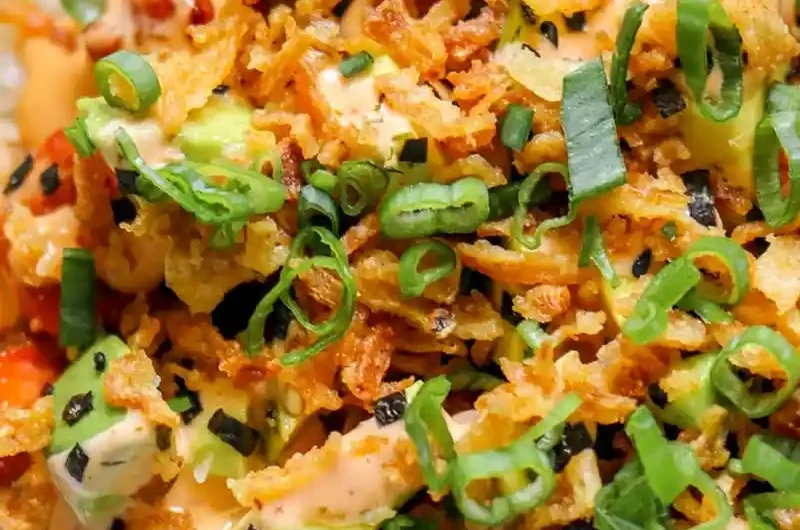
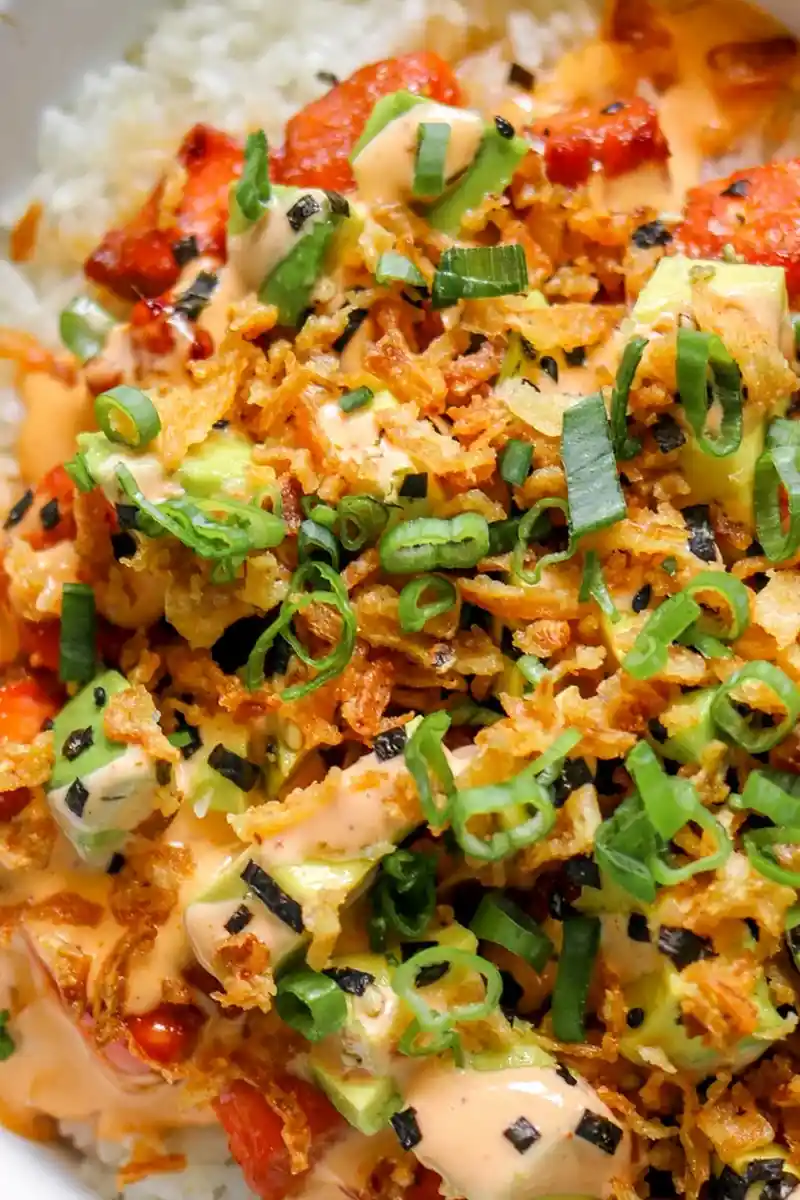
This teriyaki salmon sushi bake is a modern twist on traditional sushi, combining caramelized fish and seasoned rice in one baked dish. It is specifically portioned for two people, making it an ideal option for a quick dinner or date night.
List of ingredients
- 3/4 lb Salmon (such as Coho) – skin removed and cut into 1-inch cubes.
- 3 tbsp Teriyaki Sauce (or Japanese BBQ Sauce) – used for marinating and glazing.
- 1 tbsp Brown Sugar – helps create a sticky, caramelized crust.
- 1/4 tsp Kosher Salt – balances the sweetness of the glaze.
- 1/4 tsp Garlic Powder – adds a subtle savory depth to the salmon.
- 3 cups Cooked Sushi Rice – provides the sticky, seasoned base.
- 1 small Avocado – cubed for creamy texture.
- 3 tbsp Spicy Mayo – for a creamy, spicy finish.
- 1 tbsp Furikake – adds a salty, toasted seaweed and sesame flavor.
- 2 tbsp Crispy Fried Onion Bits – provides a necessary textural contrast.
- 2 tbsp Scallions – finely diced for a fresh, sharp accent.
step-by-step instructions
- Prep the Salmon: Carefully remove the skin from the salmon fillets and cut the fish into 1-inch cubes.
- Marinate: In a medium-sized bowl, combine the cubed salmon, teriyaki sauce, and salt, then stir to coat and set aside.
- Layer the Base: Place the cooked sticky rice into a small baking dish and pat it down firmly to create a flat, even surface.
- Assemble the Top: Spread the marinated teriyaki salmon over the rice layer and evenly sprinkle the garlic powder and brown sugar across the fish.
- Broil the Bake: Turn your oven broiler on and place the baking dish on the top rack for approximately 6 minutes until the topping begins to caramelize.
- Add Final Toppings: Remove the dish from the oven and immediately add the cubed avocado, a drizzle of spicy mayo, furikake, crispy fried onions, and diced scallions.
- Serve: Present the dish immediately while the salmon is hot and the toppings are fresh.
Selecting the Best Salmon
Coho Salmon Benefits
Coho salmon is an excellent choice for this recipe because it has a medium fat content. This allows the fish to remain moist under the high heat of the broiler without becoming overly oily. Its flavor is more pronounced than Atlantic salmon, which complements the bold teriyaki glaze.
Using Sockeye Salmon
Sockeye salmon is leaner and has a deeper red color and a stronger flavor profile. Because it is leaner, it can overcook more quickly, so monitor the broiler closely. It provides a firmer texture that holds up well when cubed into small pieces.
Atlantic Salmon Characteristics
Atlantic salmon is widely available and has a higher fat content, leading to a buttery texture. This fat helps protect the fish from drying out during the quick broiling process. It has a milder taste that allows the teriyaki and spicy mayo to take center stage.
King Salmon Qualities
King salmon is the richest of all salmon varieties, offering large flakes and a very luxurious mouthfeel. Due to its high oil content, it caramelizes beautifully with the brown sugar. It is a premium choice for those who prefer a very tender, melt-in-your-mouth result.
Rice Preparation and Alternatives
Perfecting Sticky Sushi Rice
For the best results, use short-grain Japanese rice. Rinse the rice several times until the water runs clear to remove excess surface starch, which prevents the rice from becoming gummy. Once cooked, fold in a mixture of rice vinegar, sugar, and salt to achieve the traditional sushi flavor.
Using Frozen Sticky Rice
Frozen pre-cooked sticky rice is a convenient time-saver for this recipe. Microwave it according to the package directions and then stir it thoroughly to break up any clumps. Ensure the rice is warm before pressing it into the baking dish to help it adhere better.
Coconut Rice Variation
Replacing standard sushi rice with coconut rice adds a tropical sweetness to the dish. Use a combination of coconut milk and water during the cooking process. This pairs exceptionally well with the teriyaki glaze and the creaminess of the avocado.
Brown Rice Substitution
If you prefer a whole grain, short-grain brown rice can be used. Note that brown rice has a nuttier flavor and a chewier texture than white sushi rice. You may need to press it down more firmly in the dish to ensure it forms a cohesive base.
Mastering the Broiling Process
Managing Oven Rack Position
The position of the rack is critical for achieving caramelization without burning the fish. Place the rack in the top third of the oven, roughly 4 to 6 inches from the broiler element. This ensures the sugar in the glaze bubbles and browns quickly while the fish cooks through.
Preventing Overcooking
Because the salmon is cut into small 1-inch cubes, it cooks very rapidly. Start checking the salmon at the 4-minute mark. The fish is done when it is opaque and the top has developed a dark, sticky glaze, but the center remains moist.
Controlling Sugar Burn
Brown sugar caramelizes quickly under direct heat. If you notice the edges are darkening too fast, move the rack down one level. This allows the heat to penetrate the salmon more evenly without scorching the sugar glaze.
Choosing the Right Baking Dish
A ceramic or glass baking dish is ideal for this recipe as it distributes heat evenly. Use a small, shallow dish so the rice and salmon layers are relatively thick. This prevents the rice from drying out and becoming hard during the broiling process.
Ingredient Substitutions and Tweaks
Replacing Teriyaki Sauce
If you do not have store-bought teriyaki sauce, you can make a quick version using soy sauce, honey, and grated ginger. Ensure the sauce is thick enough to coat the salmon without pooling at the bottom of the dish. A Japanese BBQ sauce also works as a direct 1:1 replacement.
Sugar-Free Glaze Options
To reduce the sugar content, omit the brown sugar and use a small amount of maple syrup or a monk fruit sweetener. You can also rely solely on the natural sugars in a high-quality teriyaki sauce. The result will be less caramelized but still flavorful.
Furikake Alternatives
If furikake is unavailable, a mix of toasted sesame seeds and crushed dried seaweed (nori) is a great substitute. Even a simple sprinkle of toasted white sesame seeds will provide the necessary nuttiness. For a saltier kick, a small amount of finely chopped olives can add a different savory note.
Mayo Variations
While spicy mayo is traditional, you can use Yum Yum sauce for a sweeter, tangier profile. For a dairy-free version, use a vegan mayonnaise mixed with sriracha and a drop of sesame oil. This maintains the creamy texture and heat level of the original.
Serving and Presentation Ideas
Serving with Nori Sheets
The most traditional way to eat a sushi bake is by scooping portions into small squares of toasted nori (seaweed). This mimics the experience of eating a sushi roll. Cut the nori into 2-inch squares and toast them briefly in a dry pan for maximum crispness.
Pairing with Side Salads
A crisp Asian-style cucumber salad with rice vinegar and sesame oil balances the richness of the salmon and mayo. Alternatively, a side of steamed edamame with sea salt adds a healthy, protein-rich accompaniment. These sides provide a refreshing contrast to the warm, savory bake.
Complementary Appetizers
Serve this dish alongside miso soup or gyoza to create a full Japanese-inspired meal. The lightness of the miso soup helps cleanse the palate between bites of the rich sushi bake. For a crunchier start, try vegetable tempura with a soy-based dipping sauce.
Plating for Date Night
To make the presentation more elegant, garnish the top with extra sesame seeds and thinly sliced red chilies for a pop of color. Serve the baking dish on a wooden platter with small bowls of extra spicy mayo on the side. Arrange the nori sheets in a neat stack next to the dish.
Storage and Reheating Guide
Refrigeration Guidelines
Store any leftovers in an airtight container in the refrigerator for up to two days. It is highly recommended to remove the fresh toppings like avocado and scallions before storing. This prevents the avocado from oxidizing and the scallions from wilting.
Best Reheating Methods
To reheat, place the salmon and rice portion in an oven or toaster oven at 350 degrees Fahrenheit for about 10 minutes. Avoid using a microwave if possible, as it can make the rice rubbery and the salmon overcooked. If using a microwave, cover the dish with a damp paper towel to retain moisture.
Handling Cold Toppings
Always add fresh toppings after the base has been reheated. Add new cubed avocado and a fresh drizzle of spicy mayo to restore the original texture and flavor. This ensures the contrast between the hot salmon and cold toppings remains intact.
Freezing the Base
The cooked rice and salmon base can be frozen for up to a month. Freeze it in a freezer-safe container and thaw it in the refrigerator overnight before reheating. Do not freeze the avocado or mayo, as their textures will break down and become unappealing.
Troubleshooting Common Issues
Salmon Overcooking
If the salmon becomes dry or tough, it was likely under the broiler for too long. To prevent this, use a timer and check the fish every 2 minutes. If you find the fish is often overdone, try cutting the cubes slightly larger to provide more insulation.
Rice Becoming Too Dry
If the rice hardens during broiling, it may be due to a lack of moisture or an oven that is too hot. You can prevent this by drizzling a teaspoon of water or extra teriyaki sauce over the rice before adding the salmon. This creates a steam barrier that keeps the rice tender.
Sauce Burning Too Quickly
Sugar-based glazes can transition from caramelized to burnt very quickly. If the top is darkening too fast, cover the dish loosely with aluminum foil to deflect some of the direct heat. This allows the fish to cook through while slowing down the browning of the sugar.
Avocado Browning
Avocado can brown quickly once exposed to air. To keep the toppings looking fresh, toss the avocado cubes in a small amount of lime or lemon juice before adding them to the bake. This acidity inhibits oxidation and adds a bright flavor note to the dish.
Frequently Asked Questions
Can I use frozen salmon?
Yes, you can use frozen salmon, but it must be completely thawed and patted dry before cubing. Excess moisture from frozen fish can dilute the teriyaki sauce and prevent the glaze from caramelizing properly.
How do I make the rice stickier?
Ensure you are using a short-grain or medium-grain rice. Washing the rice thoroughly is key, but adding a small amount of sugar and rice vinegar to the cooked rice while it is still hot will create the characteristic sticky texture of sushi rice.
Can I prepare this ahead of time?
You can prepare the salmon marinade and the rice base several hours in advance. Keep them in separate containers in the refrigerator. When you are ready to eat, simply assemble the dish and broil it as directed.
Is this dish gluten-free?
This dish is not naturally gluten-free because teriyaki sauce typically contains wheat. To make it gluten-free, replace the teriyaki sauce with a certified gluten-free tamari-based teriyaki sauce and check that your furikake is also gluten-free.
Print
Teriyaki Salmon Sushi Bake for Two
- Total Time: 16 minutes
- Yield: 2 servings 1x
- Diet: General
Description
This teriyaki salmon sushi bake recipe is inspired by the viral tiktok sushi bake. This easy recipe makes enough for two people.
Ingredients
- 3/4 lb Salmon
- 3 tbsp Teriyaki Sauce
- 1 tbsp Brown Sugar
- 1/4 tsp Kosher Salt
- 1/4 tsp Garlic Powder
- 3 cups Cooked Sushi Rice
- 1 small Avocado, cubed
- 3 tbsp Spicy Mayo
- 1 tbsp Furikake
- 2 tbsp Crispy Fried Onion Bits
- 2 tbsp Scallions, finely diced
Instructions
- Step: Carefully remove skin from salmon then cut into 1” pieces.
- Step: In a medium sized bowl, combine cubed salmon, teriyaki sauce and salt. Set aside.
- Step: In a small baking dish add cooked sticky rice and pat it down to create a flat surface.
- Step: Top with teriyaki salmon and evenly sprinkle with garlic powder and brown sugar.
- Step: Turn your broiler on and place in the oven near the top rack for 6 minutes until it begins to caramelize.
- Step: Remove the baking dish from the oven and add avocado, a drizzle of spicy mayo, furikake, crispy fried shallots, and scallions.
- Step: Serve immediately.
Notes
You can substitute salmon with shrimp, tofu, or tuna. To reduce sugar, you can omit the brown sugar.
- Prep Time: 10 minutes
- Cook Time: 6 minutes
- Category: Main Course
- Method: Broiling
- Cuisine: Japanese-American
Nutrition
- Serving Size: 1 serving
- Calories: 875 kcal
- Sugar: 15 g
- Sodium: 1100 mg
- Fat: 35 g
- Saturated Fat: 8 g
- Unsaturated Fat: 27 g
- Trans Fat: 0 g
- Carbohydrates: 75 g
- Fiber: 6 g
- Protein: 35 g
- Cholesterol: 80 mg
Keywords: salmon, sushi, viral recipe, sushi bake