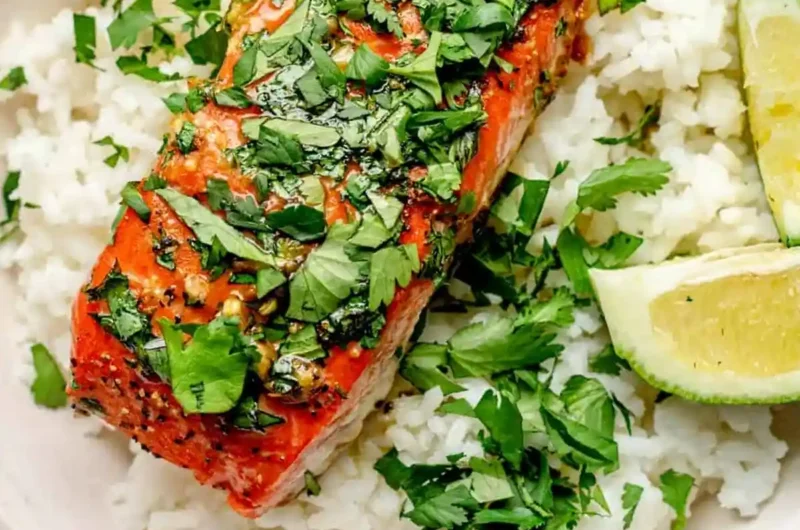
This garlic cilantro baked salmon is a nutritious and fast meal ideal for busy evenings. It combines fresh herbs and savory umami flavors for a restaurant-quality result with minimal effort.
List of ingredients
- 4 salmon fillets – skin-on for the best texture and protection.
- ½ teaspoon salt – used to enhance the natural flavors of the fish.
- ¼ teaspoon black pepper – adds a subtle, warming spice.
- ¼ cup chopped cilantro (plus more for serving) – provides a bright, herby freshness.
- 3 garlic cloves (pressed) – adds a pungent and aromatic depth.
- 2 tablespoons olive oil – helps conduct heat and prevents sticking.
- 1 tablespoon soy sauce – introduces a savory, salty umami element.
step-by-step instructions
- Prepare the oven: Preheat oven to 425°F and spray a baking dish large enough to fit the salmon fillets with cooking spray.
- Prepare the fish: Pat the salmon fillets with a paper towel to dry them, then season with salt and pepper, and place skin side down in the baking dish.
- Apply the marinade: Add the cilantro, garlic, olive oil and soy sauce on top of the seasoned salmon, making sure to disperse evenly among the fillets. You can use your hands to rub the mixture evenly into the salmon.
- Bake: Bake uncovered for 12-15 minutes, until the salmon becomes opaque and flaky.
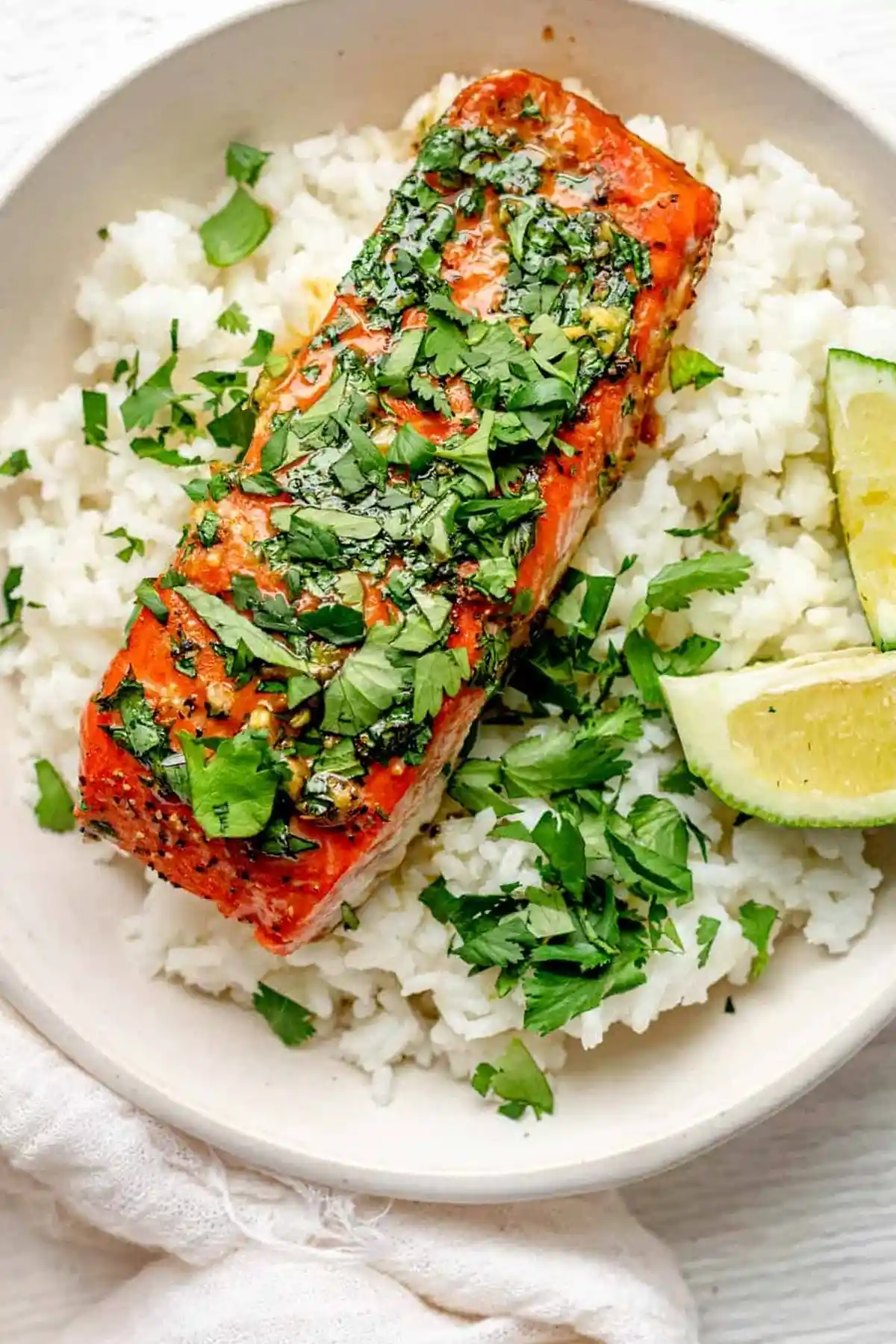
- Serve: Plate the salmon over rice, with lime wedges and some of the pan sauce drippings, if desired.
Expert Techniques for Oven Baking Salmon
Maintaining Skin Integrity for Better Texture
Keeping the skin on the salmon fillets serves two practical purposes. It provides a natural barrier that prevents the delicate flesh from sticking to the baking pan, and the fat within the skin helps baste the fish from below. This results in a moister fillet and an easier cleanup process after cooking.
The Importance of Room Temperature Fillets
Taking the salmon out of the refrigerator 15 to 20 minutes before baking ensures the fish reaches a consistent temperature. If the center is too cold, the outer layers may overcook before the middle is fully done. This technique promotes an even cook throughout the entire thickness of the fillet.
Moisture Control for an Optimal Sear
Using paper towels to thoroughly pat the salmon dry is a critical step. Excess surface moisture can create steam in the oven, which leads to a mushy texture rather than a firm, flaky consistency. Removing this moisture allows the seasonings and oil to adhere better to the fish.
One-Pan Seasoning for Maximum Efficiency
Seasoning the fish directly in the baking dish reduces the number of utensils and bowls required for cleanup. While some prefer to mix the marinade in a separate bowl, applying the garlic, oil, and soy sauce directly onto the fillets allows the juices to pool together in the pan. This creates a flavorful pan sauce that can be drizzled over the final dish.
Ingredient Alternatives and Modifications
Substituting Cilantro with Other Fresh Herbs
If you find the taste of cilantro too strong or have a genetic aversion to it, flat-leaf parsley is the best alternative. Parsley provides a similar green, fresh profile without the soapy taste some perceive in cilantro. Fresh basil or chives can also be used for a different but complementary flavor profile.
Selecting the Optimal Cooking Oil for High Heat
While olive oil is a healthy and flavorful choice, you can use other high-smoke-point oils if preferred. Avocado oil or grapeseed oil are excellent substitutes that can withstand the 425°F oven temperature without breaking down. These oils have a neutral taste that allows the garlic and soy sauce to remain the dominant flavors.
Gluten-Free Soy Sauce Options
To make this recipe gluten-free, replace the standard soy sauce with tamari or liquid aminos. Tamari is a Japanese soy sauce that is typically brewed without wheat, providing the same salty umami taste. Coconut aminos are another alternative, though they are slightly sweeter and less salty than traditional soy sauce.
Adapting the Recipe for Other Fish Types
This garlic and cilantro marinade works well with other hearty fish fillets like trout or cod. Since white fish like cod often cook faster than salmon, you should reduce the baking time by 2-4 minutes. Always check for doneness by ensuring the fish is opaque and flakes easily with a fork.
Recommended Serving Combinations
Pairing Salmon with Fragrant Grain Bases
Serving the salmon over a bed of steamed jasmine or basmati rice helps absorb the soy-garlic pan drippings. The aromatic nature of these long-grain rices complements the herb-heavy marinade. For a nuttier flavor, brown rice or quinoa are excellent nutrient-dense alternatives.
Low-Carbohydrate Base Options
For a low-carb or keto-friendly meal, replace traditional rice with cauliflower rice. Sautéing the cauliflower rice with a bit of lime juice and salt mimics the texture of grain while keeping the calorie count low. Steamed baby spinach or sautéed kale also provide a healthy, low-carb foundation.
Complementary Vegetable Side Dishes
Roasted asparagus or steamed broccoli florets pair perfectly with the savory notes of the soy sauce. These vegetables can often be cooked on the same sheet pan if you have enough space, reducing the number of dishes. Glazing the vegetables with a touch of lemon juice enhances the overall freshness of the meal.
Citrus and Garnish Enhancements
Fresh lime wedges are essential for this recipe as the acidity cuts through the richness of the salmon. Squeezing fresh lime over the cooked fish right before serving awakens the cilantro and garlic flavors. Adding a sprinkle of toasted sesame seeds or sliced green onions can add a professional visual touch and extra texture.
Storage and Preservation Guidelines
Proper Refrigeration Methods
Store any leftover salmon in an airtight glass or plastic container to prevent the fish from absorbing other odors in the fridge. Ensure the salmon is completely cooled before sealing the lid to avoid condensation, which can make the fish soggy. Properly stored leftovers will remain safe and tasty for up to three days.
Best Methods for Reheating Leftover Salmon
To avoid overcooking the fish during reheating, use a low-temperature oven set to 300°F. Place the salmon on a baking sheet and cover it loosely with foil to trap moisture. Heat for 5-10 minutes or until warmed through, as microwave reheating often makes salmon rubbery and tough.
Freezing and Thawing Instructions
While cooked salmon is best eaten fresh, you can freeze the fillets in freezer-safe bags for up to two months. When ready to eat, thaw the fish slowly in the refrigerator overnight rather than on the counter. This prevents the cell structure of the fish from breaking down, preserving the texture.
Common Troubleshooting Solutions
Preventing Overcooked and Dry Fish
The most common issue with baked salmon is overcooking, which leads to a dry, chalky texture. Use a meat thermometer to check the internal temperature; salmon is typically perfectly cooked at 145°F, though many prefer it at 135°F for a more tender center. Always start checking for doneness at the earliest recommended baking time.
Stopping Salmon from Sticking to the Pan
If you find your salmon sticking despite using cooking spray, try lining your baking dish with parchment paper. Parchment paper provides a non-stick surface that is even more reliable than oil. This also makes the cleanup process significantly faster as you can simply discard the paper after cooking.
Balancing Strong Garlic Flavors
If the garlic taste is too intense, you can use sliced garlic instead of pressed garlic. Pressed garlic releases more oils and creates a more pungent flavor that permeates the fish. Sliced garlic mellows out during the baking process, providing a milder, toasted garlic taste.
Fixing Dry Texture in the Final Dish
If the salmon comes out slightly dry, you can remedy this by increasing the amount of pan sauce drizzled over the top. Adding an extra squeeze of fresh lime and a small pat of unsalted butter can also add back the necessary moisture and richness. Serving the fish immediately after it leaves the oven also prevents further drying.
Frequently Asked Questions
Should you use fresh or frozen salmon?
Both options work well, but if using frozen, ensure the fillets are fully thawed before seasoning. Thawing should be done in the refrigerator to maintain the quality of the flesh. Always pat frozen-then-thawed salmon extra dry, as they tend to release more moisture than fresh fillets.
How do I know when the salmon is fully cooked?
The salmon is done when the color changes from translucent red/pink to an opaque light pink. The most reliable method is to press the top of the fillet with a fork; if the layers of the fish flake apart easily, it is ready. A meat thermometer reading of 145°F is the USDA standard for safety.
Can this recipe be prepared ahead of time?
You can prep the salmon by applying the marinade and storing it in the refrigerator for a few hours before baking. This allows the flavors to penetrate deeper into the fish. However, do not bake it in advance, as salmon is best enjoyed immediately after cooking to avoid a rubbery texture.
Is it possible to bake this in an air fryer?
Yes, you can use an air fryer by placing the seasoned fillets in the basket. Cook at 400°F for about 8-12 minutes depending on the thickness of the fillets. Be careful not to overcrowd the basket to ensure the hot air circulates evenly around each piece of fish.
What can I use if I don’t have a garlic press?
If you do not own a garlic press, you can mince the garlic cloves very finely with a sharp knife. After mincing, sprinkle a bit of salt over the garlic and mash it with the flat side of the knife blade. This creates a paste that mimics the effect of a press and ensures the garlic is evenly distributed.
Print
Garlic Cilantro Baked Salmon
- Total Time: 25 minutes
- Yield: 4 servings 1x
- Diet: General
Description
This Garlic Cilantro Oven Baked Salmon is easy to prepare and is a healthy quick option for the busy weekdays that the whole family will enjoy
Ingredients
- 4 salmon fillets
- ½ teaspoon salt
- ¼ teaspoon black pepper
- ¼ cup chopped cilantro (plus more for serving)
- 3 garlic cloves (pressed)
- 2 tablespoons olive oil
- 1 tablespoon soy sauce
Instructions
- Step: Preheat oven to 425°F and spray a baking dish large enough to fit the salmon fillets with cooking spray.
- Step: Pat the salmon fillets with a paper towel to dry them, then season with salt and pepper, and place skin side down in the baking dish.
- Step: Add the cilantro, garlic, olive oil and soy sauce on top of the seasoned salmon, making sure to disperse evenly among the fillets. You can use your hands to rub the mixture evenly into the salmon.
- Step: Bake uncovered for 12-15 minutes, until the salmon becomes opaque and flaky.
- Step: Plate the salmon over rice, with lime wedges and some of the pan sauce drippings, if desired.
Notes
Store any leftovers in an airtight container. They will last up to 3 days in the fridge.
- Prep Time: 5 minutes
- Cook Time: 20 minutes
- Category: Entree
- Method: Baking
- Cuisine: American
Nutrition
- Serving Size: 1 fillet
- Calories: 310 kcal
- Sugar: 1 g
- Sodium: 618 mg
- Fat: 18 g
- Saturated Fat: 3 g
- Unsaturated Fat: 15 g
- Trans Fat: 0 g
- Carbohydrates: 1 g
- Fiber: 0 g
- Protein: 34 g
- Cholesterol: 94 mg
Keywords: Garlic Cilantro Salmon, oven baked salmon, healthy dinner, quick meal