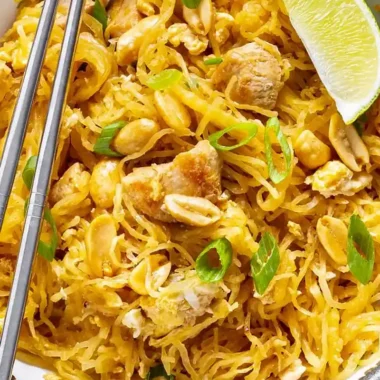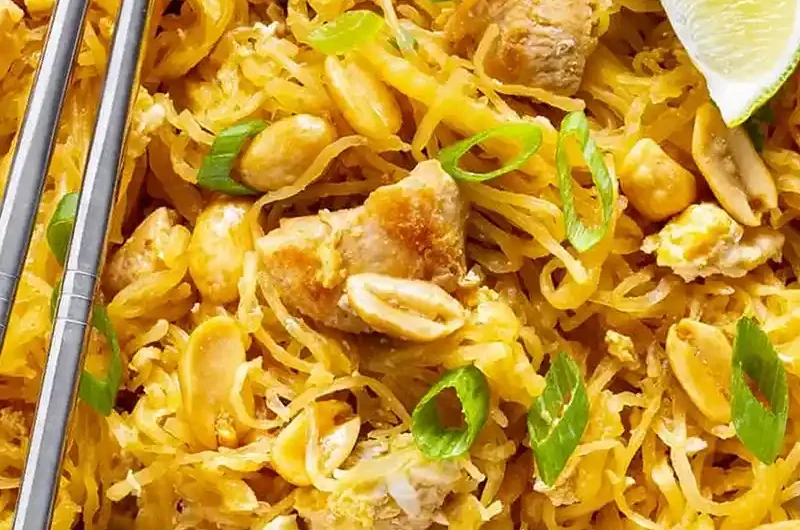
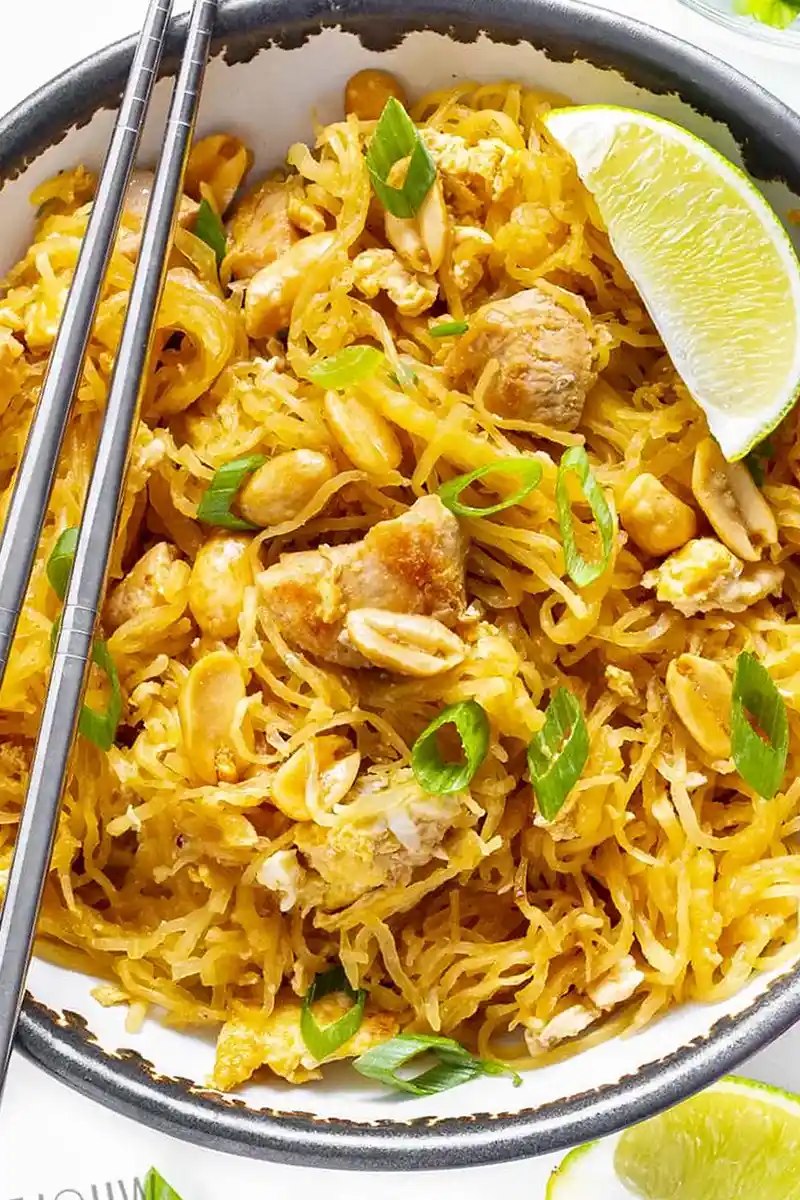
Enjoy a low-carb version of a classic Thai stir-fry using nutrient-dense spaghetti squash. This recipe delivers the traditional savory, sweet, and tangy flavors without the high carb count of rice noodles. It is a practical way to satisfy takeout cravings while maintaining a keto diet.
List of ingredients
- 1 medium Spaghetti squash (4-6 lb) – serves as the low-carb noodle base.
- 2 tsp Avocado oil – used for roasting the squash.
- 1/4 tsp Sea salt – enhances the natural flavor of the squash.
- 3 tbsp Coconut aminos – provides a soy-free, savory-sweet base for the sauce.
- 2 tbsp White wine vinegar – adds the necessary acidity; rice vinegar is a suitable alternative.
- 2 tbsp Fish sauce – delivers the essential salty umami depth.
- 1 tsp Tamarind concentrate – provides the distinctive sour-sweet Thai profile.
- 1 tbsp Peanut butter (optional; unsweetened) – adds creaminess and nuttiness.
- 1/4 tsp Crushed red pepper flakes – introduces a subtle heat.
- 2 tbsp Avocado oil – for stir-frying the aromatics and protein.
- 4 cloves Garlic (minced) – provides a fragrant aromatic base.
- 12 oz Boneless skinless chicken breast (cut into 1 inch pieces) – the primary lean protein.
- 3 large Eggs – scrambled directly into the stir-fry for texture.
- 1/2 cup Roasted peanuts (halved or chopped) – for crunch and garnish.
- 1/4 cup Green onions (chopped) – adds freshness and color.
- 1 medium Lime (cut into wedges) – for a bright, acidic finish.
step-by-step instructions
- Prepare the squash: Cook the spaghetti squash according to your preferred roasting method. Use avocado oil to keep the ingredients consistent and healthy.
- Mix the sauce: Whisk together coconut aminos, vinegar, fish sauce, tamarind concentrate, peanut butter, and red pepper flakes. If the peanut butter is thick, use a blender to ensure the sauce is completely smooth.
- Extract the noodles: Once the squash is cooked, use a fork to scrape the flesh into strands. Keep the noodles covered to retain warmth while you prepare the stir-fry.
- Sauté the garlic: Heat 2 tablespoons of avocado oil in a large wok over medium heat. Add the minced garlic and cook for 30 to 60 seconds until it becomes fragrant.
- Brown the chicken: Increase the heat to medium-high and add the chicken pieces. Cook for approximately 90 seconds per side until they are golden brown and cooked through.
- Cook the eggs: Move the chicken to the side of the pan. Pour the beaten eggs into the open space, scramble them for 1 to 2 minutes, then fold them into the chicken.
- Combine everything: Add the spaghetti squash strands and the prepared sauce to the pan. Toss everything together over heat until the noodles are evenly coated in the sauce.
- Final Garnish: Remove the pan from the heat. Top the dish with roasted peanuts and chopped green onions, and serve with lime wedges on the side.
Alternative Low-Carb Noodle Options
Shirataki Noodles
These noodles are made from konjac yam and are extremely low in calories. To use them, rinse them thoroughly under cold water and stir-fry them in a dry pan first to remove excess moisture before adding the sauce.
Kelp Noodles
Kelp noodles offer a crunchier texture and require no actual cooking. Simply rinse them well and toss them into the pan at the very end of the process just to warm them through.
Spiralized Daikon Radish
Daikon provides a mild flavor that absorbs the Pad Thai sauce very well. Spiralize the radish and sauté it briefly after the chicken is cooked but before adding the eggs to soften the texture.
Zucchini Noodles
Zoodles are a popular choice but can become watery if overcooked. Add them to the pan during the final two minutes of cooking to ensure they maintain a slight bite.
Protein Modifications
Using Shrimp
Shrimp is a traditional protein for Pad Thai and cooks much faster than chicken. Sauté the shrimp for about 2 minutes per side until pink, then remove them from the pan and add them back in at the end to prevent overcooking.
Substituting Tofu
For a plant-based option, use extra-firm tofu pressed to remove excess water. Cut the tofu into cubes and fry them until golden brown before proceeding with the garlic and eggs.
Choosing Chicken Thighs
If you prefer a juicier, more flavorful meat, swap the breast for boneless, skinless chicken thighs. Thighs are more forgiving during the browning process and remain tender at higher temperatures.
Vegetable Enhancements
Adding Bean Sprouts
Bean sprouts add a traditional crunch and freshness to the dish. Toss them in during the final 30 seconds of cooking so they stay crisp and do not wilt completely.
Including Red Bell Peppers
Sliced red bell peppers add a pop of color and a subtle sweetness. Sauté them along with the chicken to ensure they are tender-crisp when the dish is finished.
Using Shredded Carrots
Shredded carrots contribute both nutritional value and a natural sweetness. Add them to the pan at the same time as the spaghetti squash to integrate them into the noodle mixture.
Storage and Meal Prep Advice
Refrigeration Guidelines
Store the leftovers in an airtight container in the refrigerator for up to 5 days. Because spaghetti squash has a high water content, some liquid may collect at the bottom of the container.
Freezing Components Separately
The combined stir-fry does not freeze well because the squash can become mushy. Instead, freeze the cooked chicken and the sauce separately, thawing them overnight before assembling the final dish.
Optimal Reheating Methods
To maintain the best texture, reheat the Pad Thai in a skillet over medium heat. If using a microwave, use a lower power setting and stir frequently to avoid hot spots.
Ingredient Guide and Substitutions
The Role of Tamarind Concentrate
Tamarind provides the signature sour and tangy flavor that defines authentic Pad Thai. If you only have tamarind paste, triple the amount used in the recipe as the concentrate is more potent.
Using Coconut Aminos Instead of Soy
Coconut aminos are a great soy-free alternative that is naturally sweeter and lower in sodium. This helps balance the acidity of the vinegar and the saltiness of the fish sauce.
Selecting the Right Fish Sauce
Fish sauce provides the salty, fermented depth required for this cuisine. Ensure you select a brand that contains no added sugars to keep the recipe keto-friendly.
Peanut Butter Variations
Unsweetened peanut butter adds a rich, creamy element to the sauce. For those avoiding peanuts, almond butter or sunflower seed butter can be used as a direct substitute.
Troubleshooting Your Pad Thai
Preventing Watery Squash Noodles
Spaghetti squash can release a lot of water when heated in a pan. To prevent a soggy result, roast the squash thoroughly and pat the strands dry with a paper towel before adding them to the stir-fry.
Avoiding Overcooked Chicken
Chicken breast can dry out quickly over high heat. Ensure your pieces are uniform in size and remove them from the pan as soon as they reach an internal temperature of 165 degrees Fahrenheit.
Fixing a Too-Thick Sauce
If the sauce becomes too thick after adding the peanut butter, whisk in a teaspoon of water or lime juice. This will thin the consistency without compromising the flavor profile.
Frequently Asked Questions
Can I make this nut-free?
Yes, simply omit the peanut butter from the sauce and the roasted peanuts from the garnish. You can replace the peanut butter with tahini for a similar creamy texture.
How do I store the leftover sauce?
The sauce can be kept in a sealed jar in the refrigerator for up to two weeks. Give it a good shake before using it for a new batch as the ingredients may separate.
Can I use a different oil?
While avocado oil is recommended for its high smoke point, you can use grapeseed oil or refined coconut oil. Avoid using extra virgin olive oil for the stir-fry as it may smoke at high temperatures.
Print
Keto Spaghetti Squash Pad Thai
- Total Time: 42 minutes
- Yield: 6 servings 1x
- Diet: Keto
Description
Make keto Thai food easy with this spaghetti squash Pad Thai! It’s simple to make, with a flavorful sauce, juicy chicken, and tender noodles.
Ingredients
- 1 medium Spaghetti squash (4–6 lb)
- 2 tsp Avocado oil
- 1/4 tsp Sea salt
- 3 tbsp Coconut aminos
- 2 tbsp White wine vinegar
- 2 tbsp Fish sauce
- 1 tsp Tamarind concentrate
- 1 tbsp Unsweetened peanut butter (optional)
- 1/4 tsp Crushed red pepper flakes
- 2 tbsp Avocado oil
- 4 cloves Garlic (minced)
- 12 oz Boneless skinless chicken breast (cut into 1 inch pieces)
- 3 large Eggs
- 1/2 cup Roasted peanuts (halved or chopped)
- 1/4 cup Green onions (chopped)
- 1 medium Lime (cut into wedges)
Instructions
- Cook Squash: Roast the spaghetti squash according to package or preferred instructions; use avocado oil for roasting.
- Prepare Sauce: Whisk together coconut aminos, white wine vinegar, fish sauce, tamarind concentrate, optional peanut butter, and red pepper flakes until smooth.
- Prep Noodles: Once the squash is cooked, use a fork to release the strands, cover to keep warm, and set aside.
- Sauté Garlic: Heat 2 tablespoons of avocado oil in a large wok over medium heat until shimmering, then sauté minced garlic for 30 to 60 seconds.
- Brown Chicken: Increase heat to medium-high, add chicken pieces, and cook for about 90 seconds per side until golden brown and cooked through.
- Cook Eggs: Push chicken to the side of the pan, add eggs to the open side, scramble for 1 to 2 minutes, then mix with the chicken.
- Combine: Add the spaghetti squash noodles and the prepared sauce to the pan, mixing well to coat everything.
- Garnish: Remove from heat and top with roasted peanuts, chopped green onions, and lime wedges.
Notes
If using peanut butter and the sauce is too thick, use a blender to ensure it is completely smooth. For a grain-free option, use white wine vinegar as listed.
- Prep Time: 10 minutes
- Cook Time: 32 minutes
- Category: Main Course
- Method: Stir-fry
- Cuisine: Thai
Nutrition
- Serving Size: 1 cup
- Calories: 220 kcal
- Sugar: 6.7 g
- Sodium: 610 mg
- Fat: 10.9 g
- Saturated Fat: 3.1 g
- Unsaturated Fat: 7.8 g
- Trans Fat: 0 g
- Carbohydrates: 14.5 g
- Fiber: 2.6 g
- Protein: 16.7 g
- Cholesterol: 120 mg
Keywords: keto, pad thai, spaghetti squash, low carb, thai cuisine, gluten-free