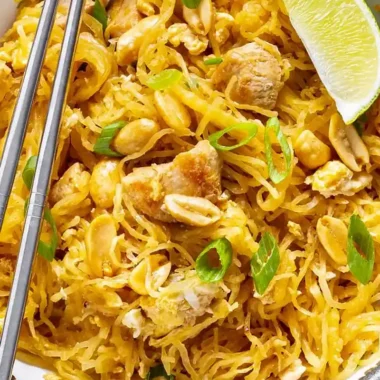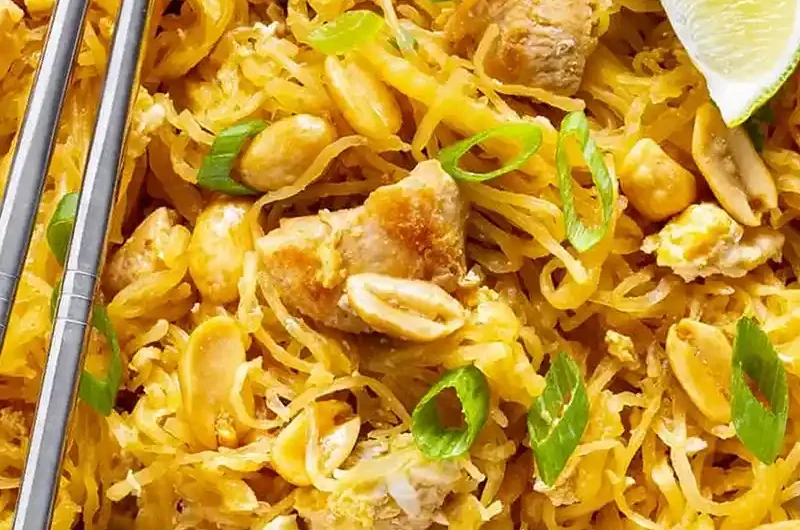
This vibrant dish recreates the classic flavors of a beloved stir-fry using nutrient-dense spaghetti squash instead of traditional rice noodles. It combines tender chicken, a savory-tart sauce, and fresh garnishes to deliver a restaurant-quality meal right in your own kitchen. This version is perfect for anyone seeking a wholesome, satisfying dinner that fits into a low-carbohydrate lifestyle.
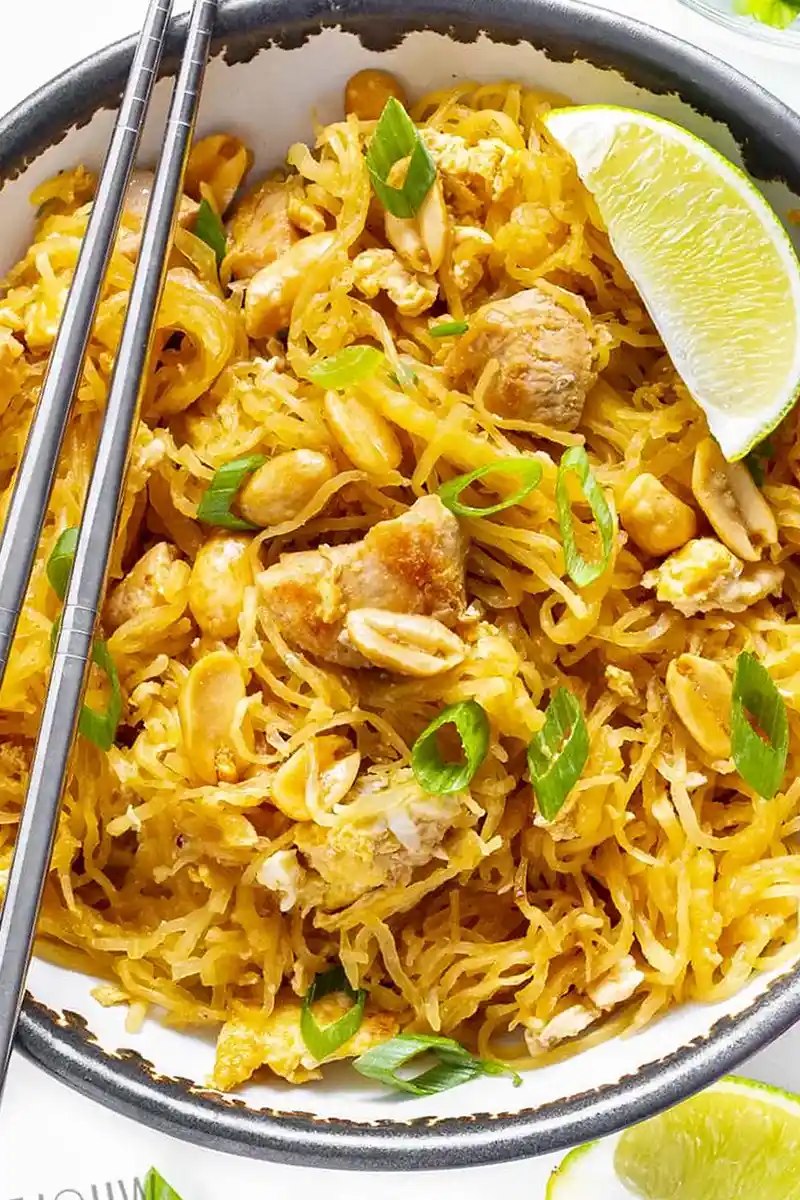
List of ingredients
- 1 medium Spaghetti squash (4-6 lb)
- 2 tsp Avocado oil
- 1/4 tsp Sea salt
- 3 tbsp Coconut aminos
- 2 tbsp Apple cider vinegar
- 2 tbsp Fish sauce
- 1 tsp Tamarind concentrate
- 1 tbsp Peanut butter (optional; unsweetened)
- 1/4 tsp Crushed red pepper flakes
- 2 tbsp Avocado oil
- 4 cloves Garlic (minced)
- 12 oz Boneless skinless chicken breast (cut into 1 inch pieces)
- 3 large Eggs
- 1/2 cup Roasted peanuts (halved or chopped)
- 1/4 cup Green onions (chopped)
- 1 medium Lime (cut into wedges)
step-by-step instructions
- Step: Cook spaghetti squash according to your preferred method until tender. Use a fork to release the strands, cover to keep warm, and set aside.
- Step: In a small bowl, whisk together the coconut aminos, apple cider vinegar, fish sauce, tamarind concentrate, peanut butter (if using), and crushed red pepper flakes until smooth. Set aside.
- Step: Heat 2 tablespoons of avocado oil in a large wok over medium heat until shimmering. Add the minced garlic and saute for 30 to 60 seconds until fragrant.
- Step: Increase heat to medium-high and add the chicken pieces. Cook for about 90 seconds on each side, until golden brown and cooked through.
- Step: Move the chicken to one side of the wok. Add the eggs to the empty side and scramble until set, about 1 to 2 minutes, then mix with the chicken.
- Step: Add the prepared spaghetti squash noodles and the sauce to the pan. Toss well to coat everything evenly.
- Step: Remove from heat and serve topped with roasted peanuts, green onions, and lime wedges.
Refining Your Stir-Fry Technique
Ensuring Even Cooking for Chicken
When cutting your chicken breast, aim for uniform one-inch pieces to ensure that every morsel cooks at the same rate. If the pieces are uneven, the smaller bits may dry out before the larger ones are safe to consume. Pat the chicken dry with a paper towel before adding it to the pan to encourage a better sear rather than steaming the meat.
Achieving Optimal Noodle Texture
To avoid a soggy final product, it is helpful to roast the spaghetti squash until it is just tender but still offers a slight bite. If you overcook the squash during the initial roasting stage, the strands may become mushy when tossed in the wok with the sauce. Once the strands are scraped out, let them sit in a colander for a few minutes to drain any excess moisture before adding them to the stir-fry.
Flavor Adjustments and Variations
Balancing the Sauce Profile
The beauty of this sauce lies in the interplay between the savory fish sauce and the tart tamarind concentrate. If you prefer a sharper tang, increase the amount of apple cider vinegar by half a teaspoon at a time. If the sauce feels too intense, a tiny drop of water or extra coconut aminos can help mellow the profile to your specific liking.
Adapting for Nut-Free Needs
If you have a nut allergy, the peanut butter can be replaced with sunflower seed butter, which provides a similar creamy consistency and rich flavor profile. Simply omit the peanut garnish at the end and replace it with toasted sesame seeds for a satisfying crunch that mimics the experience of the original topping.
Practical Serving Suggestions
Enhancing the Plate Presentation
Because the colors of this dish are relatively neutral, the garnishes play a vital role in presentation. Distribute the green onions and peanuts strategically across each serving to add vibrant pops of color. Serving with lime wedges on the side is essential, as the acidity is meant to be added right before the first bite, keeping the flavors bright and crisp.
Complementing the Meal
Since this dish is quite hearty, it pairs well with light, refreshing sides if you are hosting a larger meal. A simple cucumber salad or a steamed bok choy side dressed with sesame oil can complement the warm flavors of the squash. Keep the side dishes simple to ensure that the delicate balance of the main recipe remains the focus of the meal.
Effective Storage and Reheating
Managing Leftover Portions
If you have leftovers, store them in an airtight glass container to preserve the freshness of the squash. It can be kept in the refrigerator for up to 5 days, though it is best enjoyed within the first 48 hours for maximum texture. Avoid freezing the finished dish, as the moisture released from the squash upon thawing can result in a watery texture that compromises the integrity of the sauce.
Returning to Serving Temperature
When reheating, use a non-stick skillet over medium-low heat rather than the microwave. This approach allows you to evaporate any liquid that accumulated in the container, ensuring the noodles remain coated in sauce rather than swimming in it. Add a splash of fresh lime juice after heating to wake up the flavors, as the acidity can diminish slightly during the warming process.
Common Queries Addressed
Can I use different types of squash?
While spaghetti squash is the gold standard for this recipe due to its natural noodle-like strands, butternut squash can be used in a pinch if it is spiralized. Note that butternut squash is higher in natural sugars and will result in a different nutritional profile and a slightly softer texture than the traditional spaghetti squash.
Why does the sauce separate in the bottle?
Because the sauce uses natural peanut butter and no stabilizers, separation is completely normal. Always give the sauce a vigorous whisk or a quick pulse in a blender before adding it to the pan to ensure the fats and acids are fully emulsified. This step is the secret to a professional-looking, glossy coating on every strand of squash.
Is there a way to make this spicier?
If you prefer a hotter profile, you can double the red pepper flakes or add a teaspoon of fresh minced chili paste to the garlic while it sautes. Be mindful that heat intensity can build up quickly once combined with the other ingredients, so start with a smaller amount and taste the sauce before adding the chicken.
Print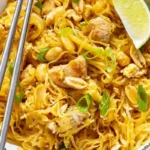
Spaghetti Squash Pad Thai
- Total Time: PT42M
- Yield: 6 servings 1x
- Diet: Keto, Gluten-Free
Description
Make keto Thai food easy with this spaghetti squash Pad Thai! It’s simple to make, with a flavorful sauce, juicy chicken, and tender noodles.
Ingredients
- 1 medium Spaghetti squash (4–6 lb)
- 2 tsp Avocado oil
- 1/4 tsp Sea salt
- 3 tbsp Coconut aminos
- 2 tbsp Apple cider vinegar
- 2 tbsp Fish sauce
- 1 tsp Tamarind concentrate
- 1 tbsp Peanut butter (optional; unsweetened)
- 1/4 tsp Crushed red pepper flakes
- 2 tbsp Avocado oil
- 4 cloves Garlic (minced)
- 12 oz Boneless skinless chicken breast (cut into 1 inch pieces)
- 3 large Eggs
- 1/2 cup Roasted peanuts (halved or chopped)
- 1/4 cup Green onions (chopped)
- 1 medium Lime (cut into wedges)
Instructions
- Step: Cook spaghetti squash according to your preferred method until tender. Use a fork to release the strands, cover to keep warm, and set aside.
- Step: In a small bowl, whisk together the coconut aminos, apple cider vinegar, fish sauce, tamarind concentrate, peanut butter (if using), and crushed red pepper flakes until smooth. Set aside.
- Step: Heat 2 tablespoons of avocado oil in a large wok over medium heat until shimmering. Add the minced garlic and saute for 30 to 60 seconds until fragrant.
- Step: Increase heat to medium-high and add the chicken pieces. Cook for about 90 seconds on each side, until golden brown and cooked through.
- Step: Move the chicken to one side of the wok. Add the eggs to the empty side and scramble until set, about 1 to 2 minutes, then mix with the chicken.
- Step: Add the prepared spaghetti squash noodles and the sauce to the pan. Toss well to coat everything evenly.
- Step: Remove from heat and serve topped with roasted peanuts, green onions, and lime wedges.
Notes
Serving size is 1 cup. Ensure the tamarind concentrate does not have added sugars. If you need a completely nut-free version, omit the peanut butter and roasted peanuts.
- Prep Time: PT10M
- Cook Time: PT32M
- Category: Main Course
- Method: Stir Fry
- Cuisine: Asian
Nutrition
- Serving Size: 1 cup
- Calories: 220 kcal
- Sugar: 6.7 g
- Sodium: 750 mg
- Fat: 10.9 g
- Saturated Fat: 2.5 g
- Unsaturated Fat: 7 g
- Trans Fat: 0 g
- Carbohydrates: 14.5 g
- Fiber: 2.6 g
- Protein: 16.7 g
- Cholesterol: 115 mg
Keywords: keto, low carb, spaghetti squash, pad thai, healthy dinner, asian-inspired, chicken