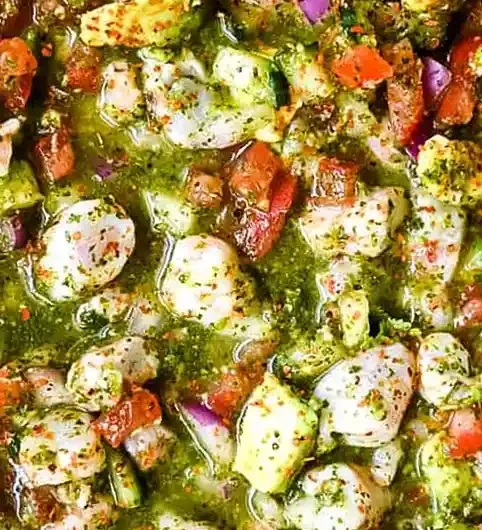
This vibrant Aguachile is a refreshing, high-impact dish hailing from the coastal regions of Sinaloa, Mexico. By marinating raw shrimp in a zesty, pepper-infused citrus liquid, you achieve a delicate “cooked” texture that is perfect for hot days. It serves as a sophisticated, light appetizer that brings bold heat and bright, herbaceous notes to your table.
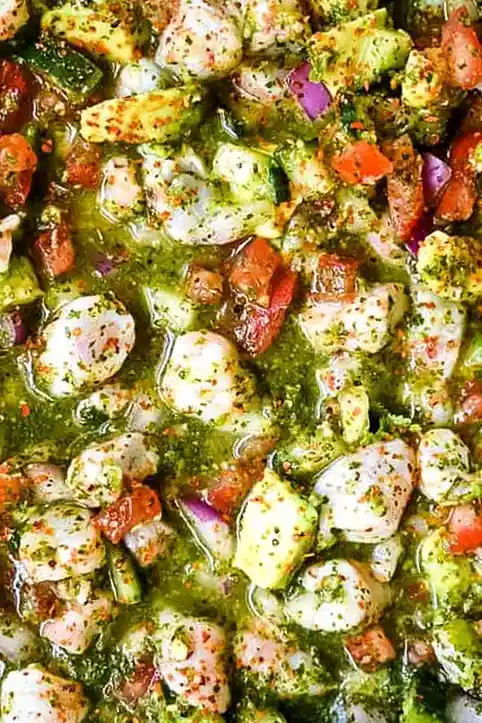
List of ingredients
- 1 pound raw shrimp, peeled, deveined, and chopped
- 10-12 limes, juice of
- 2 lemons, juice of
- 1/2 tsp salt, or to taste
- 1/2 red onion, diced
- 1 cup Roma tomatoes, seeded & diced
- 1 cup cucumber, seeded & diced
- 2 garlic cloves
- 1 large avocado, pitted and cubed
- 1 small bunch of cilantro
- 1/2 jalapeno
- 3 serrano peppers
- 1 tbsp tajin
step-by-step instructions
- Step: Squeeze about 1 cup worth of lime juice (10-12 limes) and add the lemon juice.
- Step: Dice the red onions, cucumbers, and tomatoes.
- Step: Roughly chop half the jalapeno pepper, serrano peppers, and cilantro.
- Step: Process the peppers, cilantro, garlic, half the lime juice, and salt in a blender until smooth.
- Step: Chop the shrimp into bite-sized pieces and place in a glass or plastic dish.
- Step: Pour the remaining citrus juice, the blended aguachile mixture, onions, and cucumber over the shrimp and stir.
- Step: Cover and refrigerate for 30 minutes to allow the shrimp to cure.
- Step: Fold in the tomatoes and avocado, sprinkle with tajin, and serve with tortilla chips or jicama.
Refining Your Technique
Achieving the Perfect Shrimp Texture
The key to high-quality aguachile is the timing of the citrus marinade. If you let the shrimp sit in the acidic mixture for too long, the texture can become rubbery or overly firm. Set a timer for 30 minutes, as this is typically the window where the shrimp reaches a firm, opaque state without losing its natural succulence. Always use high-quality, sustainably sourced shrimp that have been properly deveined and cleaned to ensure the cleanest flavor profile.
Selecting the Right Produce
The success of this dish relies on the freshness of your vegetables, particularly the cucumber and tomatoes. Choose firm, English or Persian cucumbers if possible, as they contain fewer seeds and have a thinner, less bitter skin. When preparing the tomatoes, removing the watery seed pulp is essential to prevent the aguachile from becoming thin or soup-like. A clean, crisp chop on the onions ensures they provide a sharp, pungent bite rather than overwhelming the delicate flavor of the shrimp.
Customizing the Heat Levels
Balancing Pepper Intensity
The heat level in aguachile is highly variable depending on the specific peppers you purchase. Serrano peppers can range from moderately spicy to very hot depending on the season and growing conditions. If you are concerned about the heat, remove the inner ribs and seeds from the serranos before blending them. Start with fewer peppers and taste the sauce before adding the full amount to the shrimp, allowing you to calibrate the spice level to your own preferences.
The Role of Garlic and Herbs
Garlic provides a savory backbone that helps anchor the bright citrus and sharp pepper flavors. While two cloves are suggested, using fresh, pungent garlic is more important than the exact measurement. The cilantro should be well-rinsed and dried before use; blending the stems along with the leaves is encouraged, as the stems hold a significant amount of concentrated flavor that is perfect for the marinade base.
Practical Serving Suggestions
Optimal Accompaniments
Serving aguachile requires sides that can hold up to the liquid without turning soggy. Sturdy corn tostadas are a traditional choice, providing a crunch that offsets the tender shrimp. If you prefer a lighter option, raw jicama rounds or strips act as a perfect, neutral vessel that adds an extra refreshing element. You can also offer thin slices of radish or extra lime wedges on the side for guests who want to heighten the crispness of the dish.
Temperature Control
Aguachile is best served ice-cold. If you are hosting a gathering, ensure that the bowl or platter is kept cold by nesting it in a larger bowl filled with ice. This keeps the shrimp at a safe temperature while maintaining its crisp texture during a long meal. Never serve this dish at room temperature, as the acidity in the marinade can cause the seafood to break down and lose its appealing fresh flavor if left out too long.
Storage and Make-Ahead Advice
Short-Term Storage Solutions
This dish is designed to be consumed shortly after it is prepared for the best texture and safety. If you have leftovers, store them in an airtight, non-reactive glass container in the coldest part of your refrigerator. Aim to consume the leftovers within 24 hours. Note that the avocado will likely begin to oxidize or soften significantly if stored for longer than a few hours, so it is best to add the avocado immediately before serving.
Managing Prep Stages
You can save time by juicing the limes and dicing the firm vegetables like cucumbers and onions up to four hours before you plan to serve. Store these prepped ingredients in separate containers in the refrigerator until you are ready to combine them with the shrimp. The green pepper and cilantro base can also be blended in advance; keep it sealed in the fridge until the final step to maintain its bright green color and fresh aroma.
Troubleshooting Common Issues
Addressing Watery Marinade
If you find that your marinade has become too watery, it is usually because the cucumber or tomato seeds were not removed thoroughly before adding them to the dish. To fix this, strain a portion of the liquid before serving or increase the amount of fresh cilantro blended into the base to help emulsify the mixture. Alternatively, add an extra dash of tajin or salt to balance out the flavors if the liquid feels diluted.
Adjusting Citrus Balance
If the final dish tastes too sour, you can counteract the acidity by adding a small drizzle of high-quality extra virgin olive oil or by increasing the amount of avocado, which adds healthy fats to coat the palate. If it is not acidic enough, add a final squeeze of fresh lime juice directly over the dish right before serving. These small adjustments can help rescue a batch that feels slightly unbalanced or missing a final pop of flavor.
Texture Considerations
If your shrimp feels tough, it was likely left in the acidic bath for too long. To avoid this in the future, remove the shrimp from the liquid if you are not serving it immediately, though this is only possible if you are prepping ahead. If you suspect your shrimp is of a type that cures very quickly, check the color after only 15 or 20 minutes; once it turns opaque throughout, it is ready to eat regardless of the suggested time frame.
Print
Spicy Sinaloa-Style Aguachile Ceviche
- Total Time: PT30M
- Yield: 6 servings 1x
- Diet: Pescatarian
Description
This incredible version of Aguachile is a spicy shrimp ceviche from Sinaloa, Mexico. It is served on crunchy tostadas or with tortilla chips. This exquisite dish is made with the freshest ingredients you will be hooked after one bite.
Ingredients
- 1 pound raw shrimp, peeled, deveined, and chopped
- 10–12 limes, juice of
- 2 lemons, juice of
- 1/2 tsp salt, or to taste
- 1/2 red onion, diced
- 1 cup Roma tomatoes, seeded & diced
- 1 cup cucumber, seeded & diced
- 2 garlic cloves
- 1 large avocado, pitted and cubed
- 1 small bunch of cilantro
- 1/2 jalapeno
- 3 serrano peppers
- 1 tbsp tajin
Instructions
- Step: Squeeze about 1 cup worth of lime juice (10-12 limes) and add the lemon juice.
- Step: Dice the red onions, cucumbers, and tomatoes.
- Step: Roughly chop half the jalapeno pepper, serrano peppers, and cilantro.
- Step: Process the peppers, cilantro, garlic, half the lime juice, and salt in a blender until smooth.
- Step: Chop the shrimp into bite-sized pieces and place in a glass or plastic dish.
- Step: Pour the remaining citrus juice, the blended aguachile mixture, onions, and cucumber over the shrimp and stir.
- Step: Cover and refrigerate for 30 minutes to allow the shrimp to cure.
- Step: Fold in the tomatoes and avocado, sprinkle with tajin, and serve with tortilla chips or jicama.
Notes
Use a plastic or glass dish for curing. Add tomatoes only when ready to serve to ensure the best texture. If preparing in advance, add avocado just before serving.
- Prep Time: PT15M
- Cook Time: PT30M
- Category: Appetizer
- Method: Curing
- Cuisine: Mexican
Nutrition
- Serving Size: 1 serving
- Calories: 147 kcal
- Sugar: 10 g
- Sodium: 1025 mg
- Fat: 6 g
- Saturated Fat: 1 g
- Unsaturated Fat: 4 g
- Trans Fat: 0 g
- Carbohydrates: 28 g
- Fiber: 6 g
- Protein: 13 g
- Cholesterol: 95 mg
Keywords: aguachile, mexican ceviche, spicy shrimp, seafood appetizer, summer recipe