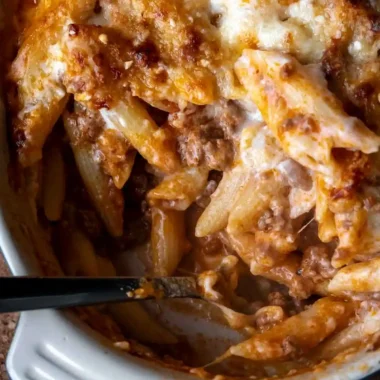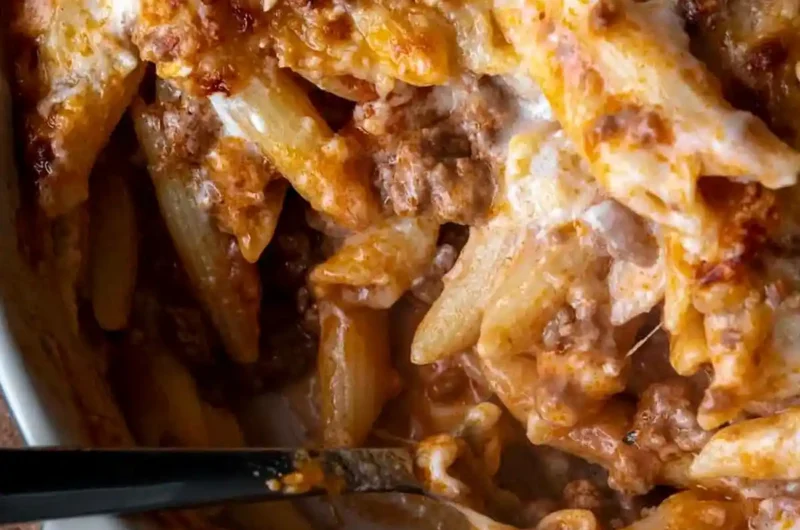
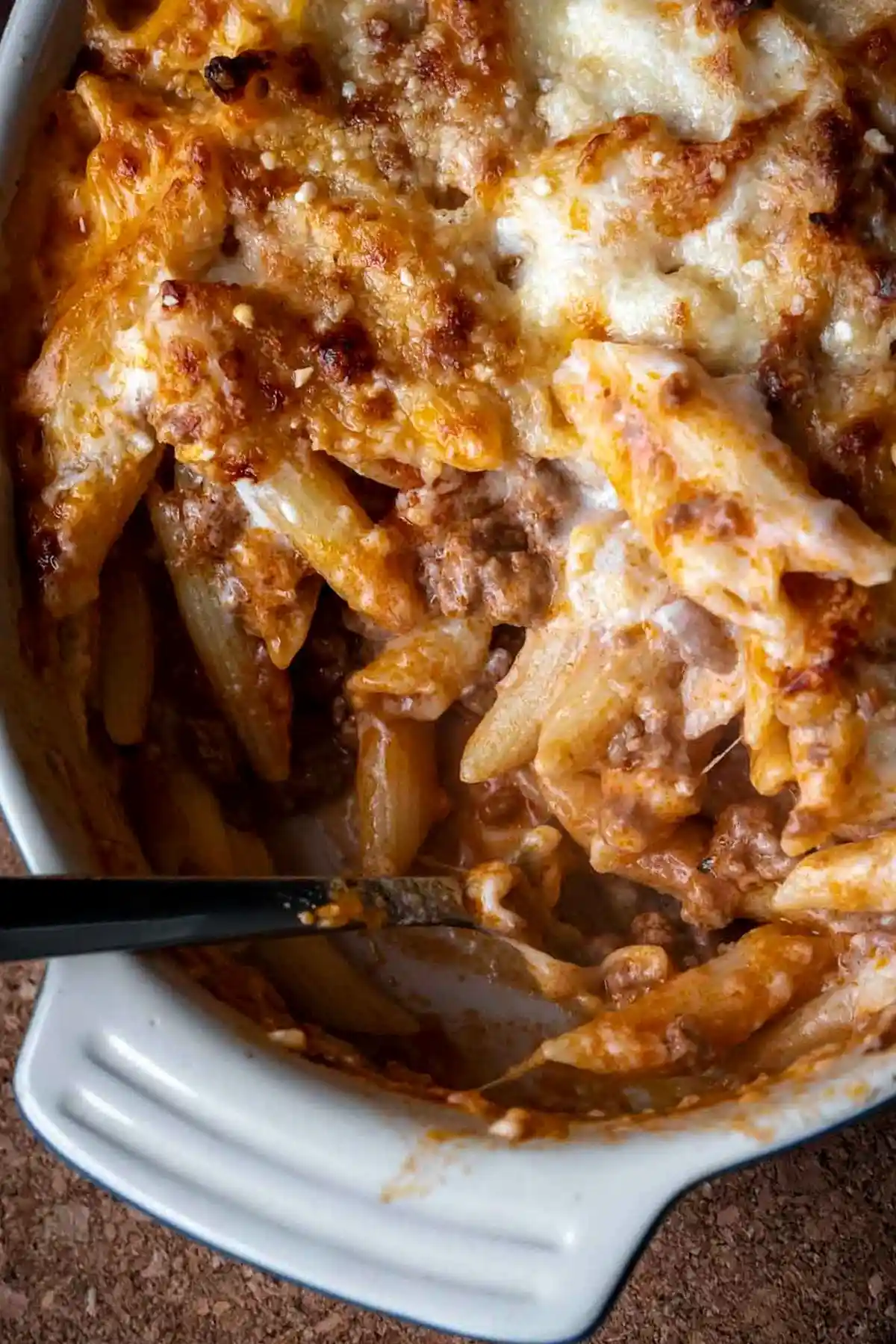
This hearty oven-baked pasta combines a rich meat sauce and creamy white sauce for a satisfying family meal. It serves as a faster alternative to lasagna while delivering the same comforting flavors and golden crust.
List of ingredients
- 6 oz Pasta – use short cuts like penne or rigatoni for the best texture.
- 14 oz Beef Ragù sauce – a thick, slow-simmered meat sauce without pork.
- Grated Parmigiano cheese – used for seasoning and creating the top crust.
- 2 cups Milk – warm or room temperature to prevent lumps in the white sauce.
- 3 tbsp Butter – used to create the roux for the béchamel.
- 3 tbsp Flour – essential for thickening the creamy sauce.
- Salt – added to taste for seasoning.
- Black Pepper – added to taste for a subtle spice.
- Nutmeg – a small pinch to add authentic depth to the white sauce.
step-by-step instructions
- Prepare the roux: Melt the butter in a pot over medium heat. Add the sifted flour and whisk continuously until the mixture is well combined.
- Create the béchamel: Slowly pour in the warm milk while whisking constantly. This prevents lumps from forming during the thickening process.
- Thicken the sauce: Reduce the heat to low and continue whisking until the sauce simmers and thickens enough to coat the back of a spatula.
- Season the white sauce: Stir in salt, black pepper, and ground nutmeg. Remove the sauce from the heat and set it aside.
- Cook the pasta: Boil the pasta in a large pot of salted water. Drain the pasta 3-4 minutes before the package’s recommended cooking time so it remains al dente.
- Prepare the base: Spread a thin layer of the prepared béchamel sauce on the bottom of a baking dish to prevent the pasta from sticking.
- Layer the pasta: Combine the undercooked pasta with the beef ragù sauce and spread the mixture over the base layer of béchamel.
- Add creaminess: Pour slightly more than half of the remaining béchamel sauce over the pasta and mix it in lightly.
- Add the final topping: Spread the rest of the béchamel sauce in an even layer across the top. Finish with a generous sprinkle of grated Parmigiano cheese.
- Bake: Place the dish in an oven preheated to 370°F (190°C). Bake for approximately 20 minutes.
- Brown the crust: If the cheese is not golden enough, place the dish under the broiler for 2-3 minutes until a crispy crust forms.
Pasta Selection and Preparation
Using Short Cut Pasta
Short pastas like penne, rigatoni, or fusilli are ideal because their shapes capture the ragù and béchamel sauces. These varieties maintain their structure better than long pastas during the baking process. They provide a consistent bite throughout the dish.
Preventing Overcooked Pasta
The most critical step is draining the pasta several minutes early. Since the pasta continues to cook in the oven while absorbing the sauces, boiling it fully beforehand leads to a mushy texture. Aim for a firm, al dente center before adding it to the baking dish.
Long Pasta Alternatives
If you prefer using spaghetti or ziti, the process remains the same. Simply ensure the noodles are broken into smaller pieces or stirred thoroughly to avoid clumping. This ensures that every strand is coated in both the meat and cream sauces.
Optimizing the Beef Ragù
Creating a Pork-Free Meat Sauce
To ensure the ragù is suitable for all diets, use high-quality ground beef or a blend of beef and veal. Simmer the meat slowly with carrots, celery, and onions to build a deep flavor profile. Use tomato purée and a splash of vegetable broth for a rich consistency.
Vegetarian Sauce Substitutions
For a meatless version, replace the beef with finely chopped mushrooms, lentils, or a mixture of diced zucchini and eggplant. These vegetables provide a similar earthy depth and hearty texture when simmered with tomato sauce. The béchamel remains the same for creaminess.
Using Store-Bought Sauces
You can use jarred meat sauce to save time, provided it is free from pork products. To improve the taste of store-bought sauce, simmer it with a few fresh basil leaves or a pinch of dried oregano. This adds a homemade touch to the quick preparation.
Béchamel Sauce Mastery
Avoiding Lumps in the Sauce
To ensure a perfectly smooth béchamel, always add the milk gradually. Start with a small amount to create a thick paste before thinning it out with more milk. Using a whisk instead of a spoon helps break up any flour clumps instantly.
Temperature of the Milk
Warming the milk before adding it to the roux helps the sauce thicken more evenly. Cold milk can cause the butter to seize, making it harder to achieve a smooth consistency. You can warm the milk in the microwave or in a separate small pot.
Substituting the Thickener
If you cannot use wheat flour, cornstarch can be used as a substitute. Mix the cornstarch with a small amount of cold milk first to create a slurry. Stir this slurry into the simmering milk and butter until the desired thickness is reached.
Baking and Crust Techniques
Choosing the Right Baking Dish
A stoneware or ceramic casserole dish is best for distributing heat evenly. Oval or rectangular dishes allow for a larger surface area, which increases the amount of crispy cheese on top. Ensure the dish is oven-safe up to at least 400°F.
Achieving a Golden Brown Top
The Parmigiano cheese creates the signature crust. For the best results, use finely grated cheese and spread it in a dense, even layer. If your oven has a convection setting, it can help brown the cheese more uniformly.
Broiler Safety and Timing
When using the broiler for the final crust, stay by the oven and watch the dish closely. The cheese can go from golden to burnt in less than a minute. Use the broiler only for the last 2-3 minutes of the process.
Serving and Pairing Ideas
Fresh Side Salad Pairings
Since this pasta dish is rich and creamy, it pairs well with a crisp green salad. A simple arugula salad with lemon vinaigrette or a classic Caesar salad provides a refreshing acidity. This balances the heaviness of the cheese and meat.
Adding Garlic Bread
Toasted garlic bread is a traditional accompaniment that helps soak up any remaining béchamel sauce. Rub fresh garlic on a toasted baguette and drizzle with olive oil. This adds a savory crunch to the meal.
Non-Alcoholic Beverage Options
Pair this meal with a sparkling water infused with lemon or a chilled grape juice. These drinks cleanse the palate between bites of the rich pasta. A light, non-alcoholic sparkling cider also complements the savory flavors.
Storage and Reheating Guidelines
Refrigeration Steps
Store leftovers in an airtight container in the refrigerator for up to two days. Allow the pasta to cool slightly before sealing the container to prevent excess moisture from forming. This keeps the pasta from becoming too soggy.
Freezing Method
You can freeze portions of the baked pasta for up to two months. Wrap individual servings tightly in foil or place them in freezer-safe bags. Ensure there is as little air as possible in the packaging to prevent freezer burn.
Microwave Reheating
To reheat in the microwave, add a teaspoon of water or milk to the dish before heating. This restores some of the moisture lost during storage. Heat on medium power in short intervals, stirring gently in between.
Oven Reheating
For a crispier texture, reheat the pasta in the oven at 350°F (175°C). Cover the dish with foil to prevent the top from burning while the center warms through. Remove the foil for the last five minutes to crisp the cheese.
Troubleshooting Common Issues
What to do if the sauce is too thin?
If the béchamel is too liquid, continue to simmer it on low heat for a few more minutes while whisking. If it remains thin, you can mix a small amount of cornstarch with water and stir it in. This will thicken the sauce quickly.
How to fix mushy pasta?
If the pasta turns out too soft, it was likely boiled for too long before baking. To prevent this next time, reduce the boiling time by another minute. You can also use a slightly larger pasta shape, like rigatoni, which holds its shape better.
Why is the cheese not browning?
Cheese may not brown if the oven temperature is too low or if the cheese is too moist. Ensure the oven is fully preheated to 370°F. If using fresh mozzarella, pat it dry with a paper towel before adding it to the top.
Frequently Asked Questions
Can I use a different pasta format?
Yes, you can use any pasta shape you prefer, including ziti or farfalle. The method remains the same regardless of the format. Just ensure the pasta is cooked al dente before assembly.
Can I make it in advance?
Yes, you can assemble the dish in the casserole pan and keep it covered in the fridge for up to two days. Bring the dish to room temperature for 30 minutes before placing it in the oven to ensure even heating.
Can I make the Ragù in advance?
The ragù can be made ahead of time and stored in the fridge for two days or frozen for three months. Thaw it in the refrigerator overnight before using it in the pasta bake to maintain the best flavor.
Can I use store-bought white sauce?
You can use store-bought jarred white sauce if you are short on time. However, homemade béchamel typically provides a creamier texture and a more authentic taste. If using store-bought, stir in a pinch of nutmeg to enhance the flavor.
Print
Classic Italian Oven-Baked Pasta
- Total Time: 45 minutes
- Yield: 2 servings 1x
- Diet: General
Description
The flavor of classic Lasagna but much faster and easier made with any short cut pasta you have available. The crispy crust is the best part!
Ingredients
- 6 oz Pasta
- 14 oz Beef Ragù sauce
- Parmigiano Cheese, grated
- 2 cups Milk, warm or room temperature
- 3 tbsp Butter
- 3 tbsp Flour
- Salt
- Black Pepper
- Nutmeg
Instructions
- Step: Melt the butter on medium heat and add the sifted flour, whisk until you get the roux.
- Step: Slowly add the warm milk and keep whisking to avoid lumps.
- Step: Reduce to low heat and keep whisking until it starts simmering and becoming thicker.
- Step: Add the salt, black pepper and ground nutmeg to taste.
- Step: Once the sauce is thick enough to coat a spatula, turn off the heat and set aside.
- Step: Boil the pasta in a large pot of salted water and drain 3-4 minutes before the normal cooking time.
- Step: Spread a layer of béchamel sauce on the bottom of the baking dish.
- Step: Add the pasta cooked al dente, mixed with the ragù sauce.
- Step: Add a bit more than half of the béchamel sauce and mix it lightly with the pasta.
- Step: Add a final layer with the remaining béchamel sauce and finish with a good amount of grated Parmesan cheese.
- Step: Bake in the oven at 370°F / 190°C for about 20 minutes.
- Step: If needed, leave 2-3 minutes under the broiler to get the crispy golden brown crust.
Notes
Boil the pasta for 3-4 minutes less than what’s recommended on the package instructions so it finishes cooking in the oven to reach the correct consistency.
- Prep Time: 10 minutes
- Cook Time: 35 minutes
- Category: Main Course
- Method: Baking
- Cuisine: Italian
Nutrition
- Serving Size: 1 serving
- Calories: 717 kcal
- Sugar: 8 g
- Sodium: 1315 mg
- Fat: 29 g
- Saturated Fat: 17 g
- Unsaturated Fat: 12 g
- Trans Fat: 0 g
- Carbohydrates: 92 g
- Fiber: 5 g
- Protein: 24 g
- Cholesterol: 142 mg
Keywords: pasta al forno, baked pasta, italian cuisine, comfort food, pasta bake