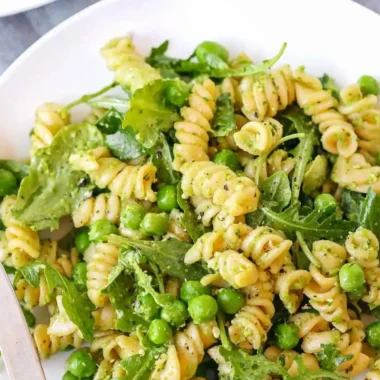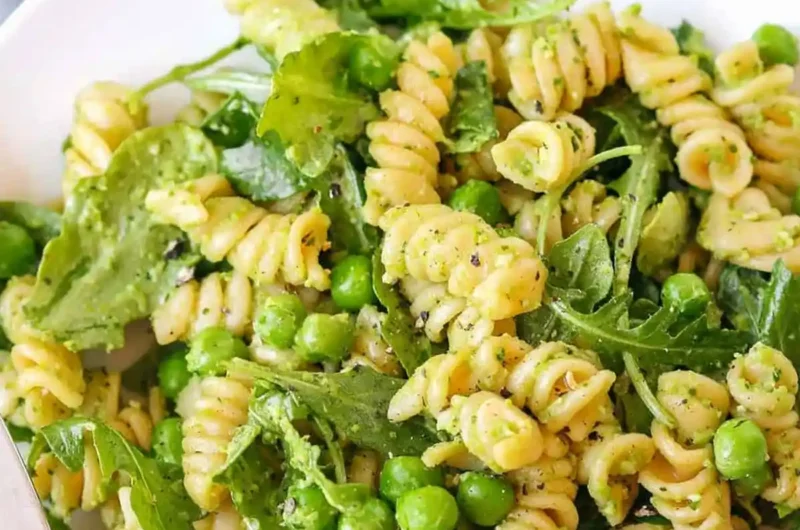
This fresh pasta salad combines peppery arugula and sweet peas with a vibrant homemade pesto. It is a nutritious and quick meal that works perfectly as a main course or a refreshing side dish.
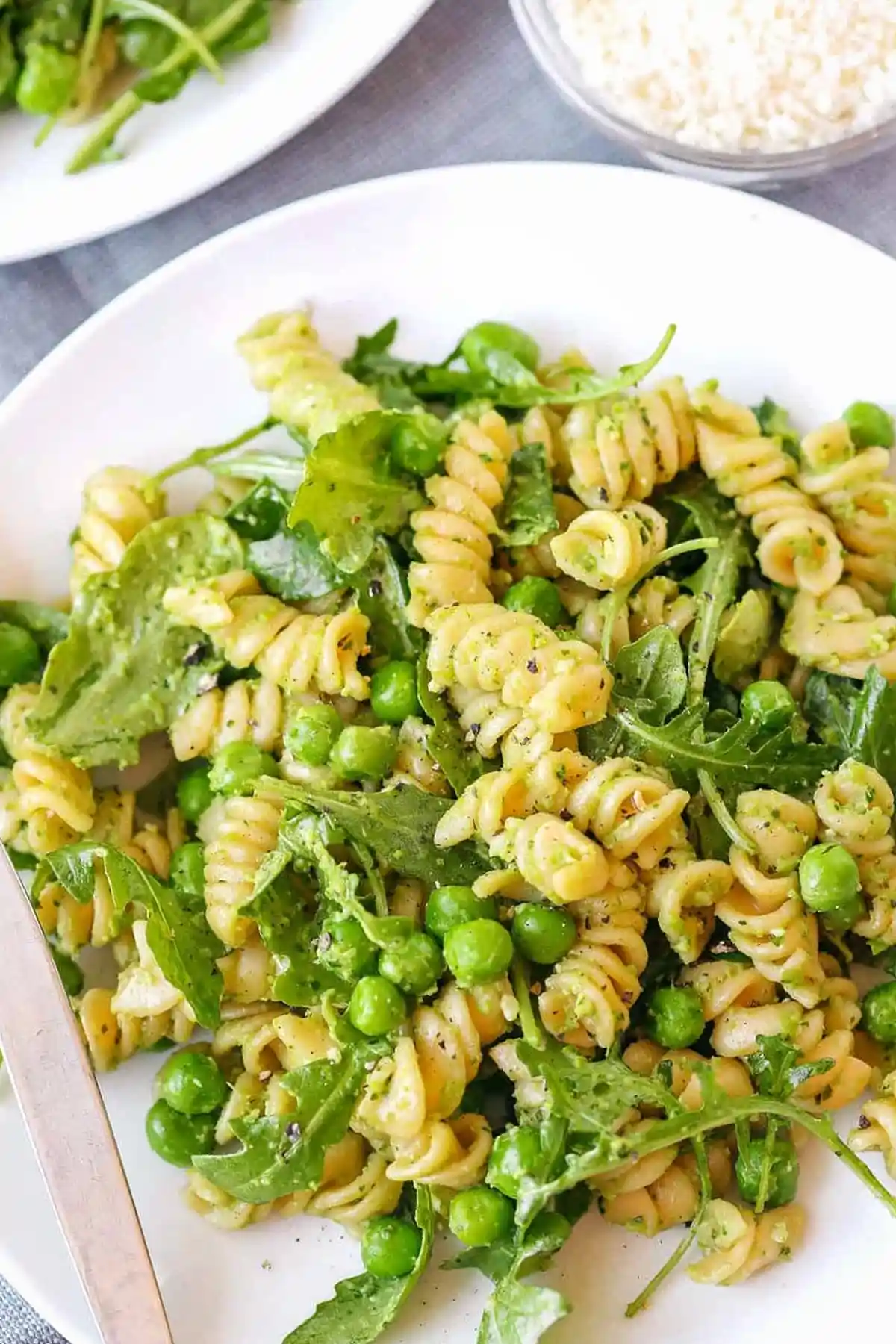
List of ingredients
- 1 lb whole wheat rotini – the spirals help the pesto adhere to the pasta.
- 4 cups loosely packed arugula leaves – used for fresh texture in the final mix.
- 2 cups fresh or frozen peas (thawed) – adds sweetness and color to the salad.
- 2 cups packed arugula leaves – the primary base for the homemade pesto.
- 1 cup fresh or frozen peas (thawed) – provides creaminess and body to the sauce.
- 2 Tbsp fresh mint leaves – adds a bright, aromatic lift to the pesto.
- 3 cloves garlic – provides a pungent, savory depth.
- 1/4 cup pine nuts – adds a rich, buttery flavor and texture.
- 1/3 cup freshly grated Parmesan cheese (made with microbial rennet) – adds salty, umami notes.
- 2 Tbsp lemon juice – provides acidity to balance the oil and nuts.
- 1/2 tsp salt – enhances the natural flavors of the vegetables.
- 1/4 tsp black pepper – adds a subtle, earthy heat.
- 1/3 cup olive oil – the emulsifying agent that creates a creamy consistency.
step-by-step instructions
- Boil the pasta: Bring a large pot of salted water to a boil. Cook the whole wheat rotini according to the package directions until al dente, then drain well.
- Pulse the pesto base: In a food processor, combine the 2 cups of packed arugula, 1 cup of peas, mint leaves, garlic, pine nuts, Parmesan cheese, lemon juice, salt, and pepper. Pulse the mixture until all ingredients are finely chopped.
- Emulsify the sauce: While the processor is still running, slowly pour in the olive oil in a steady stream. Continue blending until the pesto is smooth and emulsified. Add a small amount of water if you prefer a thinner consistency.
- Assemble the salad: In a large mixing bowl, toss together the warm drained pasta, the prepared pesto, the remaining 4 cups of arugula, and the remaining 2 cups of peas.
- Final Seasoning: Season the mixture with additional cracked black pepper and a sprinkle of extra Parmesan cheese before serving.
Ingredient Selection and Substitutions
Optimal Pasta Shapes for Pesto
While whole wheat rotini is recommended, any corkscrew or curly pasta like fusilli or cavatappi works well. These shapes have ridges and twists that capture the thick pesto, ensuring every bite is flavorful. Avoid smooth pastas like spaghetti, as the sauce may slide off.
Arugula and Leafy Green Alternatives
Arugula provides a distinct peppery flavor that defines this dish. If you prefer a milder taste, you can substitute it with baby spinach or a mix of spring greens. Keep in mind that spinach will result in a sweeter, less pungent sauce.
Using Fresh versus Frozen Peas
Both fresh and frozen peas are suitable for this recipe. If using frozen peas, ensure they are fully thawed before adding them to the food processor to avoid temperature shocks. Fresh peas should be blanched for one minute and then shocked in ice water to maintain their bright green color.
Alternative Nut and Seed Options
Pine nuts offer a buttery taste, but they can be expensive or hard to find. Walnuts, almonds, or cashews are excellent substitutes that provide similar richness. For those with nut allergies, toasted sunflower seeds or pumpkin seeds offer a great crunch and flavor.
Mint and Fresh Herb Variations
Fresh mint adds a cooling element that complements the peppery arugula. If you prefer a more traditional pesto flavor, you can use fresh basil or a combination of basil and parsley. Ensure the herbs are washed and patted dry to prevent the pesto from becoming too watery.
Selecting the Right Parmesan Cheese
Use a high-quality Parmesan cheese made with microbial rennet for the best flavor and texture. Freshly grating the cheese from a block results in a smoother blend compared to pre-shredded versions, which often contain anti-clumping agents. This ensures the pesto emulsifies correctly.
Lemon Juice and Zest Enhancements
Lemon juice provides the necessary acidity to cut through the fat of the olive oil and pine nuts. For a more intense citrus punch, add one teaspoon of freshly grated lemon zest to the food processor. This adds a bright, aromatic quality to the finished sauce.
Olive Oil Quality and Choice
Extra virgin olive oil is the best choice for this recipe due to its robust flavor and health benefits. Use a cold-pressed, organic oil for the most authentic taste. If you prefer a more neutral flavor, a light olive oil or avocado oil can be used.
Professional Cooking Tips
Achieving a Perfectly Emulsified Pesto
The key to a creamy pesto is the slow addition of olive oil while the food processor is running. This process creates an emulsion, binding the fats with the liquids. If the sauce looks separated, add a teaspoon of warm pasta water and blend for another few seconds.
Preventing Arugula from Wilting
To keep the fresh arugula leaves crisp in the final salad, toss them in at the very end. If the pasta is boiling hot, let it cool for two to three minutes before adding the greens. This prevents the heat from instantly wilting the leaves.
The Importance of Salting Pasta Water
Salt the pasta water generously to season the noodles from the inside out. This ensures that the pasta doesn’t taste bland when combined with the pesto. The water should taste like the sea for the best results.
Toasting Nuts for Deeper Flavor
Lightly toast your pine nuts or alternative seeds in a dry pan over medium heat for 2-3 minutes. Stir them constantly until they are golden brown and fragrant. This process releases the natural oils and enhances the nuttiness of the pesto.
Controlling the Pesto Thickness
Depending on the size of your food processor, the pesto may be thicker or thinner. If it is too thick to toss with the pasta, add a tablespoon of water or extra olive oil. Avoid adding too much liquid at once to prevent the sauce from becoming runny.
Customization and Variations
Adding Protein for a Hearty Meal
To turn this salad into a more filling dinner, add grilled chicken breast, sautéed shrimp, or chickpeas. Tofu cubes seasoned with garlic and salt also pair well with the pesto. Fold the protein in during the final assembly step.
Incorporating Additional Vegetables
You can increase the nutritional value by adding halved cherry tomatoes, diced red bell peppers, or corn kernels. These additions provide extra color and a variety of textures. Toss them in along with the fresh arugula and peas.
Making the Recipe Vegan
To make a vegan version, replace the Parmesan cheese with nutritional yeast or a cashew-based Parmesan alternative. You can also use a small amount of lemon-infused olive oil to enhance the savory profile. The rest of the ingredients remain the same.
Adjusting the Heat and Spice
If you enjoy a bit of heat, add a pinch of red pepper flakes to the food processor. You can also increase the amount of black pepper or add a dash of cayenne pepper. This contrasts well with the sweetness of the peas.
Serving and Presentation
Serving the Salad Warm
Serving this dish warm highlights the aroma of the mint and garlic. Toss the pasta with the pesto immediately after draining the noodles. This allows the sauce to soak slightly into the warm pasta for a richer taste.
Serving the Salad Cold
For a traditional cold pasta salad, rinse the cooked pasta under cold running water until cooled. This stops the cooking process and prevents the pasta from sticking together. This version is ideal for picnics or summer potlucks.
Garnish and Plating Ideas
Plate the salad in a large shallow bowl and top with a handful of toasted pine nuts. Add a sprinkle of extra Parmesan and a few whole mint leaves for a professional look. Serving with a wedge of lemon on the side allows guests to add extra acidity.
Suggested Side Dish Pairings
This pasta salad pairs beautifully with toasted garlic bread or a crisp garden salad. For a more complete meal, serve it alongside grilled fish or a light vegetable soup. The freshness of the pesto complements most light proteins.
Storage and Maintenance
Refrigeration Guidelines
Store leftovers in an airtight container in the refrigerator for up to 3 to 4 days. To prevent the pasta from absorbing all the sauce, you may want to add a teaspoon of olive oil before sealing. Stir well before serving the next day.
Freezing the Homemade Pesto
The pesto can be frozen separately from the pasta. Spoon the pesto into ice cube trays and freeze until solid, then transfer the cubes to a freezer bag. This allows you to use small portions of the sauce for other dishes throughout the year.
Preventing Pasta from Drying Out
Whole wheat pasta tends to soak up more moisture than white pasta over time. If the salad seems dry after a day in the fridge, stir in a splash of water or a drizzle of olive oil. This restores the creamy consistency of the pesto.
Make-Ahead Preparation Strategy
For the best quality, store the cooked pasta and the pesto in separate containers. Toss them together only an hour or two before serving. This keeps the arugula fresh and prevents the pasta from becoming mushy.
Reheating Instructions
Microwave Reheating Method
Place a portion of the salad in a microwave-safe bowl and sprinkle with a little water. Heat on medium power in 30-second intervals, stirring in between. Avoid overheating, as this can cause the pesto to separate and the arugula to turn brown.
Stovetop Reheating Technique
Place the pasta in a skillet over low heat with a tablespoon of water or olive oil. Stir gently until the pasta is warmed through and the sauce is creamy again. This method provides better control over the temperature than a microwave.
Room Temperature Serving
The best way to enjoy this salad is often at room temperature. Remove the salad from the refrigerator 30 minutes before eating. This allows the flavors to open up without altering the texture of the greens.
Troubleshooting Common Issues
Fixing a Bitter Pesto Taste
If the arugula is too peppery or the pesto tastes bitter, add a small amount of honey or maple syrup. A squeeze of extra lemon juice can also neutralize the bitterness. Balance the flavors by adding a bit more Parmesan cheese.
Solving a Grainy Sauce Texture
A grainy texture usually means the nuts or cheese were not fully processed. Continue blending the sauce for another 30-60 seconds. If the sauce is still grainy, you can pass the pesto through a fine-mesh sieve for a perfectly smooth result.
Preventing Pesto from Browning
Pesto can oxidize and turn brown when exposed to air. To prevent this, ensure there is enough lemon juice in the mixture. You can also pour a thin layer of olive oil over the top of the stored pesto to seal out the oxygen.
Frequently Asked Questions
Can I use regular pasta instead of whole wheat?
Yes, you can use regular white pasta or gluten-free alternatives. Regular pasta will have a softer texture and a milder flavor, which allows the pesto to be the primary focus of the dish.
How do I store the leftover pesto?
Store it in a small glass jar and cover the surface with a layer of olive oil. This creates an airtight seal that keeps the pesto green and fresh for up to a week in the refrigerator.
What can I use if I don’t have a food processor?
You can make a rustic version by finely chopping all the ingredients by hand with a sharp knife. Mix the chopped ingredients in a bowl and slowly whisk in the olive oil until the sauce is combined.
Is this recipe suitable for meal prep?
Yes, it is an excellent meal prep option. It tastes great cold or at room temperature, making it a convenient lunch option for the work week. Just follow the make-ahead storage tips to keep it fresh.
Can I omit the mint from the recipe?
Yes, the mint is optional. If you dislike mint, you can omit it entirely or replace it with a tablespoon of fresh parsley for a more neutral, herbal flavor.
Print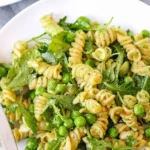
Pea and Arugula Pesto Pasta Salad
- Total Time: 25 minutes
- Yield: 8 servings 1x
- Diet: Vegetarian
Description
This light and fresh Pea and Arugula Pesto Pasta Salad is the perfect meal or side dish that is easy to make, healthy and delicious!
Ingredients
- 1 lb whole wheat rotini
- 4 cups loosely packed arugula leaves
- 2 cups fresh or frozen peas, thawed
- 2 cups packed arugula leaves
- 1 cup fresh or frozen peas, thawed
- 2 Tbsp fresh mint leaves
- 3 cloves garlic
- 1/4 cup pine nuts
- 1/3 cup freshly grated microbial-rennet Parmesan cheese
- 2 Tbsp lemon juice
- 1/2 tsp salt
- 1/4 tsp black pepper
- 1/3 cup olive oil
Instructions
- Step 1: Bring a large pot of salted water to a boil and cook pasta according to the package directions. Drain the cooked pasta.
- Step 2: In the bowl of your food processor, add arugula, peas, mint leaves, garlic, pine nuts, microbial-rennet Parmesan cheese, lemon juice and salt/pepper and pulse until finely chopped. Then with the motor still running, add olive oil in a slow stream until emulsified and creamy.
- Step 3: In a large bowl, toss together warm pasta with pesto, arugula and peas. Season with cracked black pepper and a little extra microbial-rennet Parmesan, serve and enjoy!
Notes
The homemade pesto also tastes great on top of pizza, works as a salad dressing and is a great topping for steak or chicken. For make-ahead, store the cooked pasta and pesto separately and toss together right before serving.
- Prep Time: 10 minutes
- Cook Time: 15 minutes
- Category: Side Dish
- Method: Boiling, Blending
- Cuisine: American
Nutrition
- Serving Size: 1 serving
- Calories: 322 kcal
- Sugar: 4.7 g
- Sodium: 128.1 mg
- Fat: 19 g
- Saturated Fat: 2.9 g
- Unsaturated Fat: 16.1 g
- Trans Fat: 0 g
- Carbohydrates: 30.5 g
- Fiber: 5.8 g
- Protein: 8.8 g
- Cholesterol: 2.9 mg
Keywords: pea and arugula pesto, pasta salad, healthy, whole wheat rotini, spring salad