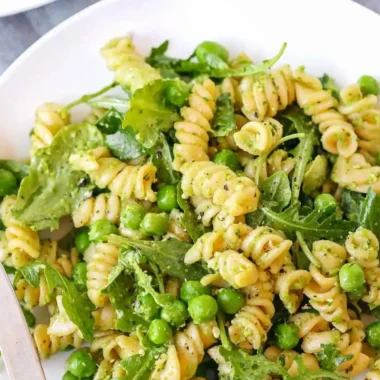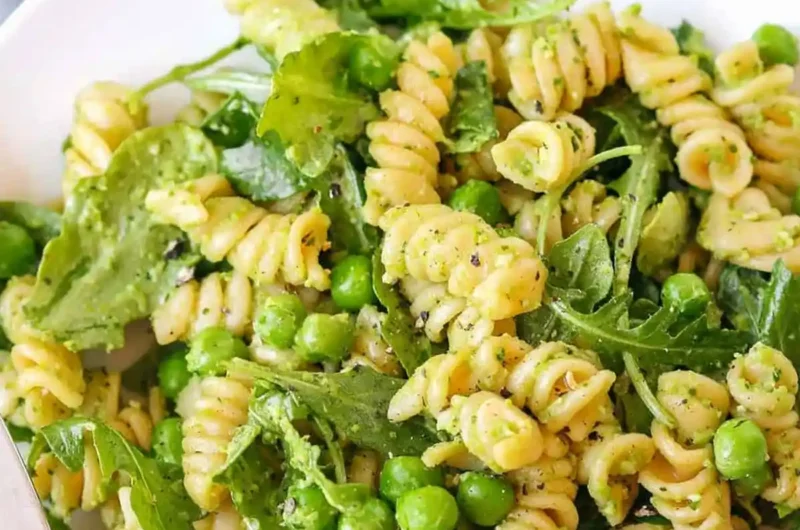
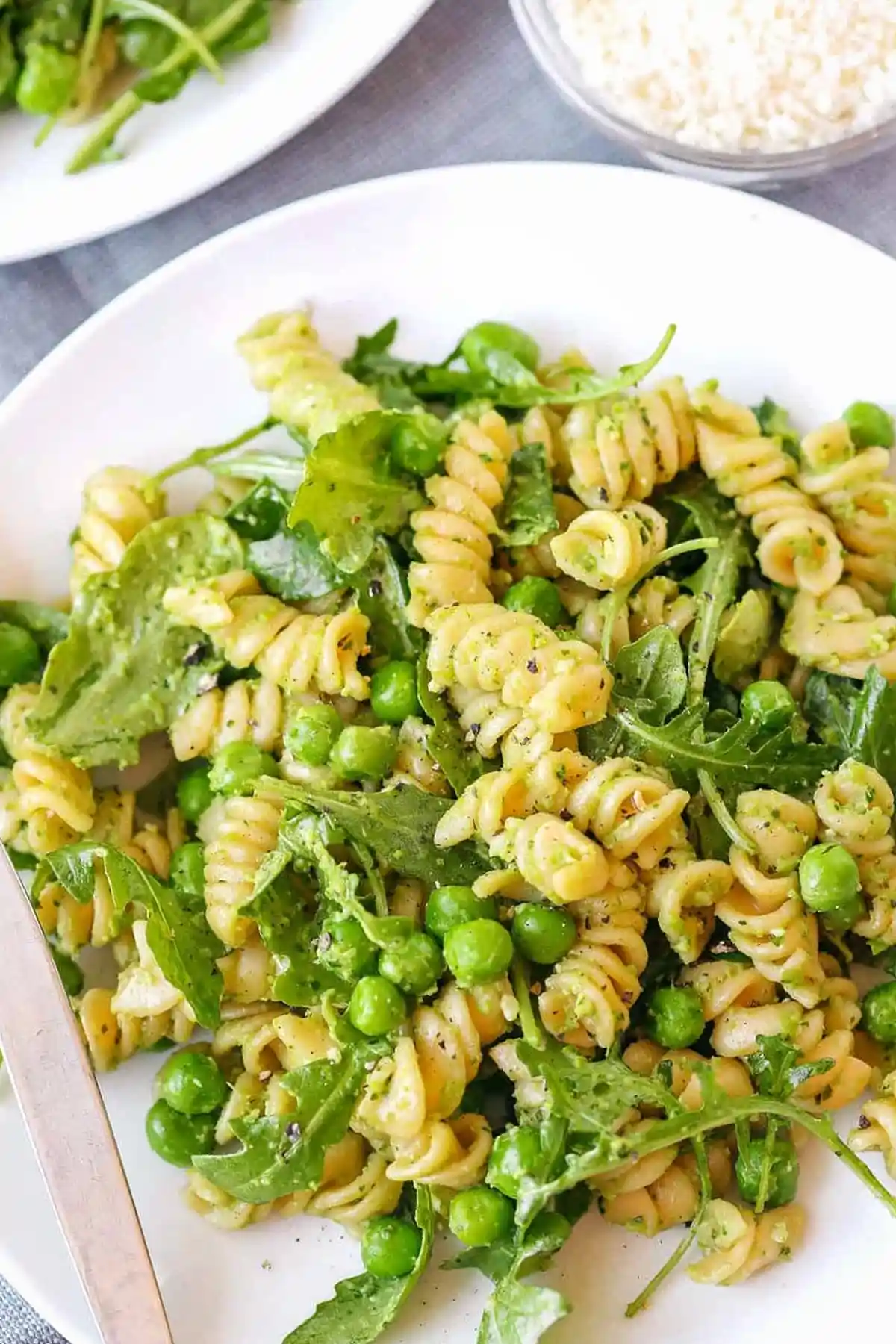
This vibrant pea and arugula pesto pasta salad offers a refreshing take on traditional green pasta, combining the peppery bite of fresh arugula with the natural sweetness of green peas. It serves as an excellent, nutrient-dense meal that comes together in mere minutes, making it an ideal choice for busy weeknights or vibrant weekend gatherings. By highlighting the bright, grassy notes of fresh herbs and high-quality olive oil, this dish provides a sophisticated flavor profile that remains accessible and satisfying for everyone at the table.
List of ingredients
- 1 lb whole wheat rotini
- 4 cups loosely packed arugula leaves
- 2 cups fresh or frozen peas, thawed
- 2 cups packed arugula leaves (for pesto)
- 1 cup fresh or frozen peas, thawed (for pesto)
- 2 Tbsp fresh mint leaves
- 3 cloves garlic
- 1/4 cup pine nuts
- 1/3 cup freshly grated Parmesan cheese
- 2 Tbsp lemon juice
- 1/2 tsp salt
- 1/4 tsp black pepper
- 1/3 cup olive oil
step-by-step instructions
- Step: Bring a large pot of salted water to a boil and cook pasta according to the package directions. Drain the cooked pasta.
- Step: While the water is boiling, in the bowl of your food processor, add arugula, peas, mint leaves, garlic, pine nuts, Parmesan cheese, lemon juice and salt/pepper and pulse until finely chopped.
- Step: With the motor still running, add olive oil in a slow stream until emulsified and creamy.
- Step: In a large bowl, toss together warm pasta with pesto, arugula and peas. Season with cracked black pepper and a little extra Parmesan, serve and enjoy!
Refining Your Technique
Achieving the Perfect Pesto Emulsion
The secret to a truly creamy pesto lies in the speed at which you add the olive oil. Adding it too quickly can result in a broken, oily sauce rather than a smooth, cohesive emulsion. Take your time, pouring in a thin, consistent stream, which allows the fat to fully integrate with the solid ingredients and the lemon juice for a velvety finish.
The Role of Pasta Texture
Using rotini or other curly, spiral-shaped pasta is not just for aesthetic appeal; these shapes feature deep ridges and hollow centers that act as traps for the pesto. This ensures that every bite is as flavorful as possible. When you toss the warm pasta with the cold pesto, the heat helps to slightly wilt the fresh arugula, which creates a harmonious blend of textures.
Managing the Freshness of Herbs
Fresh mint can be quite potent, so if you are sensitive to strong herbal notes, start with a smaller amount and taste the pesto before adding the full two tablespoons. The mint is intended to provide a background brightness rather than dominating the dish. Keep your mint leaves chilled until the moment you place them in the food processor to preserve their essential oils.
Substitutions and Adjustments
Exploring Alternative Nut Options
While pine nuts are the traditional choice for pesto, they can be costly or difficult to find. Walnuts are a fantastic, budget-friendly alternative that offers a similarly rich profile. For those who prefer a more delicate flavor, almonds or even toasted sunflower seeds provide a wonderful crunch without overpowering the fresh arugula and pea notes.
Selecting Green Alternatives for the Base
If arugula is out of season or you find its peppery taste too intense, you can easily swap it for mild baby spinach or a mix of kale and parsley. Spinach provides a neutral, creamy base that lets the sweetness of the peas shine, while a kale and parsley blend offers a more robust, earthy flavor. Always ensure the greens are washed and thoroughly dried to prevent the pesto from becoming watery.
Cheese and Vegan Modifications
For those avoiding dairy, high-quality nutritional yeast can serve as a suitable replacement for Parmesan, providing a similar savory, nutty undertone. If you require a strictly vegetarian cheese, ensure that you are selecting options made with microbial rennet rather than animal-derived enzymes. The salt content in alternative cheeses varies, so adjust your final seasoning accordingly.
Serving and Presentation Ideas
Temperature Variations for Serving
This dish is remarkably versatile regarding temperature, performing well as both a warm main course and a chilled pasta salad. When serving cold, consider tossing in an extra teaspoon of olive oil right before serving to refresh the coating, as the pasta tends to absorb the liquid over time. For warm service, ensure you serve it immediately after tossing so the greens remain crisp but slightly softened by the residual heat of the noodles.
Enhancing the Aesthetic Appeal
Because the dish is bright green, adding a splash of color makes it pop on the dinner table. A final garnish of whole pine nuts, a dusting of finely grated Parmesan, or even a few decorative sprigs of fresh mint will elevate the visual presentation. If you want a bit of extra color, adding a handful of thinly sliced radishes provides a beautiful contrast and a satisfying, crisp crunch that complements the soft peas.
Pairing Suggestions
This salad functions beautifully as a standalone lunch or as a light side dish paired with grilled proteins. If you are serving this for dinner, consider pairing it with lemon-garlic white fish or grilled chicken breast seasoned with Mediterranean herbs. The lightness of the pasta salad ensures the meal feels balanced and not overly heavy, especially during warmer months.
Storage and Make-Ahead Advice
Maintaining Freshness in the Refrigerator
Leftover pasta salad can be kept in an airtight container for up to three days. It is vital to press a piece of plastic wrap directly onto the surface of the leftover pesto if you are storing it separately, as this prevents oxidation and keeps the vibrant green color intact. When storing the combined salad, try to keep it as flat as possible in the container to minimize air contact.
The Strategy for Making Ahead
For the best results when planning a meal, keep the cooked pasta and the prepared pesto in separate containers. The pasta has a tendency to absorb liquid, which can lead to a dry salad if stored combined for too long. By keeping them separate, you can toss the salad together just one hour before serving, which allows the flavors to meld without sacrificing the texture of the greens.
Reviving Leftover Pasta Salad
If your salad has sat in the refrigerator and seems a little thirsty, revive it by adding a small splash of lukewarm water or an extra drizzle of fresh olive oil. Toss the salad vigorously to re-emulsify the ingredients. A squeeze of fresh lemon juice at the end can also wake up the flavors, making the dish taste nearly as fresh as the moment it was first prepared.
Frequently Asked Questions
Can I use dried herbs if fresh mint is unavailable?
While fresh is highly recommended for this specific recipe to achieve the intended bright profile, you can use a small amount of dried peppermint in a pinch. Start with a very small amount, such as 1/4 teaspoon, because dried herbs are far more concentrated than their fresh counterparts and can quickly become overwhelming.
Why did my pesto turn brown after a few hours?
Arugula and fresh herbs contain enzymes that oxidize and turn brown when exposed to air. To minimize this, ensure the lemon juice is thoroughly mixed in, as the acidity helps inhibit the browning process. Storing the pesto with a thin layer of olive oil poured over the top before closing the container also acts as a barrier against air contact.
Can I freeze this pesto for later use?
Yes, pesto freezes quite well for up to two months. Pour the mixture into an ice cube tray, freeze until solid, and then transfer the cubes to a freezer-safe bag. When you are ready to use the pesto, simply let a few cubes thaw in a bowl or add them directly into warm pasta, where the heat will melt them into a perfect sauce.
Print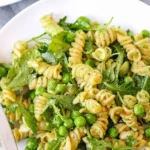
Vibrant Pea and Arugula Pesto Pasta Salad
- Total Time: 25 minutes
- Yield: 8 servings 1x
- Diet: Vegetarian
Description
This light and fresh Pea and Arugula Pesto Pasta Salad is the perfect meal or side dish that is easy to make, healthy and delicious!
Ingredients
- 1 lb whole wheat rotini
- 4 cups loosely packed arugula leaves
- 2 cups fresh or frozen peas, thawed
- 2 cups packed arugula leaves (for pesto)
- 1 cup fresh or frozen peas, thawed (for pesto)
- 2 Tbsp fresh mint leaves
- 3 cloves garlic
- 1/4 cup pine nuts
- 1/3 cup freshly grated Parmesan cheese
- 2 Tbsp lemon juice
- 1/2 tsp salt
- 1/4 tsp black pepper
- 1/3 cup olive oil
Instructions
- Step: Bring a large pot of salted water to a boil and cook pasta according to the package directions. Drain the cooked pasta.
- Step: While the water is boiling, in the bowl of your food processor, add arugula, peas, mint leaves, garlic, pine nuts, Parmesan cheese, lemon juice and salt/pepper and pulse until finely chopped.
- Step: With the motor still running, add olive oil in a slow stream until emulsified and creamy.
- Step: In a large bowl, toss together warm pasta with pesto, arugula and peas. Season with cracked black pepper and a little extra Parmesan, serve and enjoy!
Notes
Store leftovers in a sealed, airtight container in the refrigerator for 3 to 4 days. For meal prep, store the cooked pasta and pesto separately and toss together shortly before serving.
- Prep Time: 10 minutes
- Cook Time: 15 minutes
- Category: Breakfast
- Method: Boiling
- Cuisine: American
Nutrition
- Serving Size: 1/8th of recipe
- Calories: 322 kcal
- Sugar: 4.7 g
- Sodium: 128.1 mg
- Fat: 19 g
- Saturated Fat: 2.9 g
- Unsaturated Fat: 16.1 g
- Trans Fat: 0 g
- Carbohydrates: 30.5 g
- Fiber: 5.8 g
- Protein: 8.8 g
- Cholesterol: 2.9 mg
Keywords: pasta salad, pesto, vegetarian, healthy, pea, arugula