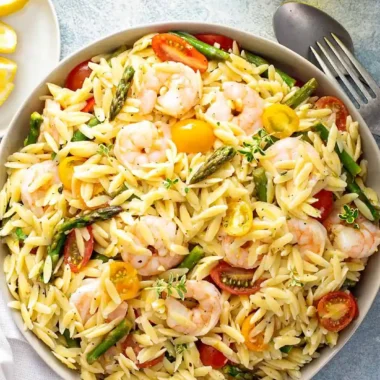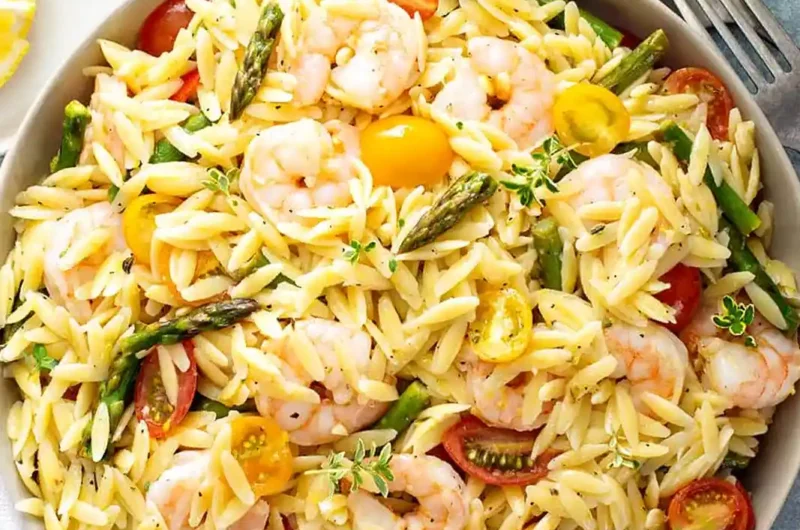
This vibrant orzo salad combines tender pasta with sautéed shrimp and fresh asparagus in a zesty lemon vinaigrette. It is a versatile dish that works equally well as a light lunch or a sophisticated dinner side.
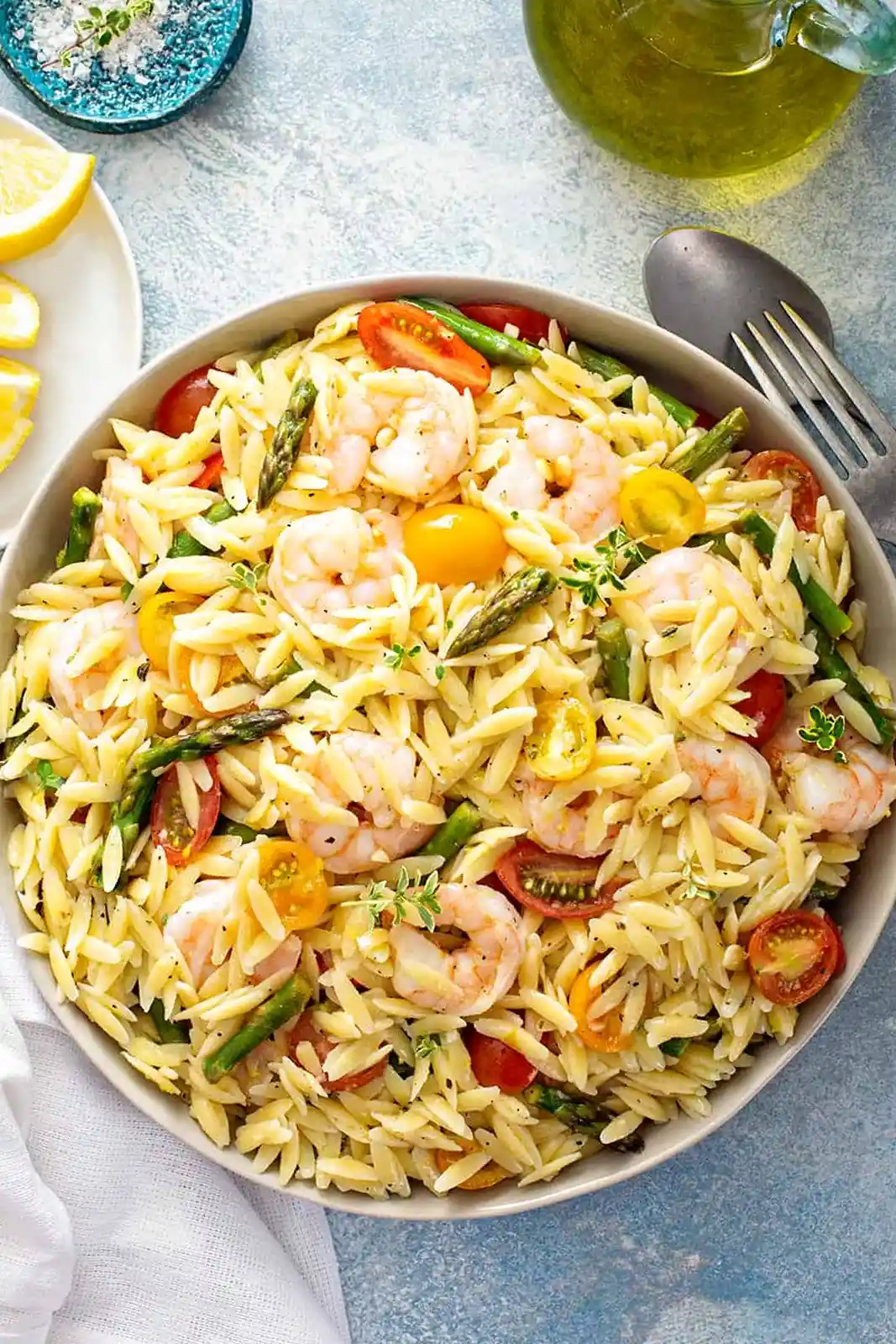
List of ingredients
- 2 cups uncooked orzo pasta – use a standard semolina orzo for a firm bite.
- 1/3 cup fresh lemon juice – freshly squeezed provides the brightest acidity.
- 2 teaspoons lemon zest – grate only the yellow part to avoid bitterness.
- 2 teaspoons grainy mustard – adds a textured, tangy flavor profile.
- 1 1/2 tablespoons fresh thyme, chopped – provides an earthy, herbal note.
- 1/4 teaspoon salt – used for seasoning the dressing base.
- 1/4 teaspoon ground black pepper – adds a subtle spice to the vinaigrette.
- 1/2 cup plus 1 tablespoon extra virgin olive oil – high-quality oil ensures a smooth emulsion.
- 1 bunch asparagus – sliced into 1 1/2-inch pieces for even cooking.
- 1 pound shrimp – peeled and deveined to ensure they are ready for the pan.
- salt, pepper, and cayenne – used to taste for seasoning the shrimp.
- 2 cloves garlic, minced – adds aromatic depth to the sautéed vegetables.
- 1 cup cherry tomatoes, halved – adds sweetness and a burst of color.
step-by-step instructions
- Boil the pasta: Cook the orzo according to the package directions until it is al dente. Avoid overcooking to prevent the salad from becoming mushy.
- Prepare the vinaigrette: In a large mixing bowl, whisk together the lemon juice, lemon zest, grainy mustard, chopped thyme, salt, and pepper. While continuing to whisk, slowly pour in 1/2 cup of olive oil to create a smooth emulsion. Set aside 2 tablespoons of this dressing for the sauté.
- Combine pasta and dressing: Drain the cooked orzo thoroughly. Toss the pasta in the large bowl with the majority of the prepared vinaigrette and set it aside to marinate.
- Sauté the asparagus: Heat the remaining tablespoon of olive oil in a large nonstick skillet over medium-high heat. Add the sliced asparagus and the reserved 2 tablespoons of vinaigrette, cooking for about 2 minutes while stirring frequently.
- Cook the shrimp: Season the shrimp with salt, pepper, and cayenne. Add them to the skillet and cook for approximately 3 minutes until they are pink and opaque. Stir in the minced garlic and cook for an additional 20 seconds until fragrant.
- Finish the mixture: Remove the skillet from the heat and immediately toss in the halved cherry tomatoes. The residual heat will soften them slightly without breaking them down.
- Final assembly: Pour the shrimp and asparagus mixture into the bowl with the dressed orzo. Toss everything together gently to combine and adjust the seasoning if necessary.
- Serve: This dish can be served immediately while warm or chilled in the refrigerator for a refreshing cold salad.
Optimal Cooking Techniques for Orzo
Preventing Pasta Overcooking
Orzo is a small pasta that can transition from al dente to overcooked very quickly. It is recommended to test the pasta one minute before the package directions suggest. This ensures the grains maintain their structure when combined with the warm vegetables and dressing.
Using Broth for Extra Flavor
For a deeper taste, replace the boiling water with vegetable or chicken stock. The pasta will absorb the savory notes of the broth as it cooks. If using stock, reduce the added salt in the vinaigrette to prevent the dish from becoming too salty.
Managing Starch and Texture
Ensure the orzo is drained completely before adding it to the vinaigrette. Excess water can dilute the dressing and prevent the flavors from adhering to the pasta. A quick toss in a colander is sufficient to remove surface moisture.
Ingredient Preparation and Selection
Choosing the Best Asparagus
Select asparagus stalks that are medium to thin in diameter. Thinner stalks cook more quickly and evenly, which prevents the shrimp from overcooking while the asparagus reaches the desired tenderness. Avoid stalks with woody ends by trimming the bottom inch of the bunch.
Preparing Shrimp for Even Searing
Pat the shrimp dry with paper towels before seasoning them with salt, pepper, and cayenne. Removing surface moisture allows the shrimp to sear and brown in the pan rather than steaming in their own juices. This step is critical for achieving a better texture and color.
Selecting Cherry Tomatoes
Use a mix of red and yellow cherry tomatoes to enhance the visual appeal of the salad. Choose tomatoes that are firm but ripe to ensure they provide a fresh, sweet contrast to the acidic lemon dressing. Halving them allows the juices to mingle with the pasta.
Mincing Garlic Correctly
Mince the garlic finely to ensure it distributes evenly throughout the sauté. Adding the garlic at the very end of the cooking process prevents it from burning. Burnt garlic can introduce a bitter taste that overpowers the brightness of the lemon.
Recipe Variations and Customizations
Incorporating Feta or Goat Cheese
Adding crumbled feta or goat cheese provides a creamy, salty element that complements the lemon and thyme. Toss the cheese in at the very end of the process to keep the crumbles intact. This adds a rich layer of flavor and a contrast in texture.
Adding Legumes for Heartiness
Include a can of rinsed chickpeas to increase the protein content and make the salad more filling. Chickpeas add a nutty flavor and a satisfying chew. They integrate well with the orzo and the lemon vinaigrette.
Using Roasted Red Peppers
Stir in chopped roasted red peppers, either homemade or from a jar. Ensure they are well-drained to avoid adding excess moisture to the salad. These peppers add a smoky sweetness that balances the acidity of the lemon juice.
Adding Black Olives for Saltiness
Sliced black olives provide a salty, briny contrast to the sweet cherry tomatoes. They add a dark color contrast that makes the green asparagus and pink shrimp pop visually. Use a mild olive variety to avoid overpowering the other ingredients.
Adding Fresh Greens
Fold in baby arugula or spinach just before serving. Stirring the greens in while the shrimp and asparagus are still warm will cause them to wilt slightly. This integrates the greens into the salad rather than having them sit on top.
Toasting Pine Nuts or Almonds
Sprinkle toasted pine nuts or slivered almonds over the finished salad for added crunch. Toast the nuts in a dry pan over medium heat for 2-3 minutes until golden brown. This adds a professional finishing touch and a toasted aroma.
Serving and Presentation Strategies
Plating for Dinner Parties
To present this as a main course, mound the salad in the center of a large platter. Garnish with extra sprigs of fresh thyme and a few thin lemon slices. This creates a polished look that highlights the fresh components of the dish.
Packing for Potlucks
Store the salad in a glass bowl with a tight-fitting lid to maintain freshness. Since the salad can be served cold, it is an ideal choice for outdoor gatherings. Keep it chilled until just before serving to keep the vegetables crisp.
Temperature Preferences
While the recipe is designed to be served warm, it is equally delicious as a chilled salad. If serving cold, allow the salad to cool to room temperature before refrigerating. This prevents condensation from forming inside the container.
Storage and Preservation
Refrigeration Guidelines
Store any leftovers in an airtight container in the refrigerator. The flavors of the lemon and thyme often deepen overnight, making the leftovers taste even better the next day. Ensure the container is sealed tightly to prevent the pasta from absorbing fridge odors.
Preventing Pasta Clumping
Orzo can clump together when chilled due to the starch. To avoid this, store the salad in a shallow container rather than a deep bowl. This prevents the weight of the pasta from compressing the bottom layers into a dense mass.
Maximum Storage Duration
This shrimp orzo salad is best consumed within three days of preparation. Because it contains cooked seafood and fresh vegetables, it does not have a long shelf life. Discard any remnants that have been stored longer than 72 hours.
Reheating and Refreshing the Salad
Gentle Warming Techniques
To reheat the salad, use a skillet over low heat with a splash of water or vegetable broth. Avoid using a microwave on high power, as this can make the shrimp rubbery and the asparagus mushy. Warm gently until just heated through.
Refreshing Dry Pasta
If the salad seems dry after refrigeration, stir in a teaspoon of extra virgin olive oil or a squeeze of fresh lemon juice. This re-emulsifies the dressing and coats the pasta grains. It restores the glossy appearance and moist texture of the dish.
Troubleshooting Common Issues
Avoiding Rubbery Shrimp
Rubbery shrimp are usually the result of overcooking. Remove the shrimp from the pan the moment they turn opaque and form a ‘C’ shape. If they curl into a tight ‘O’ shape, they are likely overcooked.
Fixing a Broken Vinaigrette
If the olive oil separates from the lemon juice, whisk in a small amount of warm water or an extra pinch of mustard. Mustard acts as an emulsifier that helps bind the oil and acid together. Whisk vigorously until the dressing is smooth.
Preventing Mushy Asparagus
Avoid overcrowding the skillet when sautéing the asparagus. If the pan is too full, the vegetables will steam instead of sear, leading to a soft texture. Cook in batches if necessary to maintain high heat in the pan.
Frequently Asked Questions
Can I use frozen shrimp?
Yes, you can use frozen shrimp. Ensure they are completely thawed and patted dry with paper towels before seasoning and cooking to ensure a proper sear.
What can I substitute for orzo?
You can use pearl couscous or quinoa as a substitute. While the texture differs, both grains pair well with the lemon vinaigrette and the other vegetables.
Is there a substitute for grainy mustard?
Dijon mustard is the best alternative. While it lacks the coarse texture of grainy mustard, it provides a similar tangy flavor profile that works well in the dressing.
How do I prevent the lemon juice from being too tart?
If the dressing tastes too acidic, add a tiny pinch of sugar or honey. This balances the acidity of the lemon without making the salad taste sweet.
Can I use different types of pasta?
Small pasta shapes like ditalini or acini di pepe can work. However, orzo is preferred because its rice-like shape allows the dressing to coat each grain evenly.
Print
Lemon Shrimp and Asparagus Orzo Salad
- Total Time: 30 minutes
- Yield: 6 servings 1x
- Diet: Seafood
Description
This Orzo Salad screams springtime with orzo pasta, juicy shrimp, sweet cherry tomatoes, beautiful ripe asparagus, all tossed in a bright lemon dressing.
Ingredients
- 2 cups uncooked orzo pasta
- 1/3 cup fresh lemon juice
- 2 teaspoons lemon zest
- 2 teaspoons grainy mustard
- 1 1/2 tablespoons fresh thyme, chopped
- 1/4 teaspoon salt
- 1/4 teaspoon ground black pepper
- 1/2 cup plus 1 tablespoon extra virgin olive oil
- 1 bunch asparagus, sliced into 1 1/2-inch pieces
- 1 pound shrimp, peeled and deveined
- salt, pepper, and cayenne, to taste
- 2 cloves garlic, minced
- 1 cup cherry tomatoes, halved
Instructions
- Step 1: Cook orzo according to package directions, al dente.
- Step 2: In the meantime, in a large mixing bowl, combine lemon juice, lemon zest, mustard, thyme, salt, and pepper; whisk. While whisking, slowly add the 1/2 cup olive oil. Whisk until combined and smooth. (Reserve 2 tablespoons.)
- Step 3: Drain orzo completely and toss in the large bowl with the most of the vinaigrette. Set aside.
- Step 4: In a large nonstick skillet, heat the remaining tablespoon of olive oil over medium-high heat. Add asparagus and reserved 2 tablespoons vinaigrette; cook for about 2 minutes, stirring frequently.
- Step 5: Sprinkle the shrimp with salt, pepper, and cayenne to taste; add to the pan. Cook for another 3 minutes until shrimp are pink and opaque, and asparagus is tender. Add in the garlic and cook until fragrant, about 20 seconds. Remove from the heat and toss in the cherry tomatoes.
- Step 6: Add mixture to the bowl of orzo and toss to combine. Taste and adjust seasoning, if necessary.
- Step 7: Serve warm or cold and enjoy!
Notes
Can be served warm or cold. To enhance flavor, cook orzo in vegetable stock. Stores in the refrigerator for up to 3 days in a shallow container.
- Prep Time: 15 minutes
- Cook Time: 15 minutes
- Category: Salad
- Method: Stovetop
- Cuisine: Italian
Nutrition
- Serving Size: 1 serving
- Calories: 448 kcal
- Sugar: 4 g
- Sodium: 611 mg
- Fat: 20 g
- Saturated Fat: 3 g
- Unsaturated Fat: 17 g
- Trans Fat: 0 g
- Carbohydrates: 43 g
- Fiber: 4 g
- Protein: 24 g
- Cholesterol: 191 mg
Keywords: lemon orzo salad, shrimp and asparagus, pasta salad, springtime recipe, Italian salad